Tanzania
Tanzania is East Africa's grandest safari country — home to the Serengeti and the year-round wildebeest migration, the wildlife-filled Ngorongoro Crater, the ancient baobabs and elephant herds of Tarangire, and the vast wild south of Nyerere (Selous). Nobu designs tailored Tanzania journeys — classic safaris, the northern circuit, remote southern wilderness, and bush-and-beach finishes on Zanzibar — for every kind of explorer.
Why visit
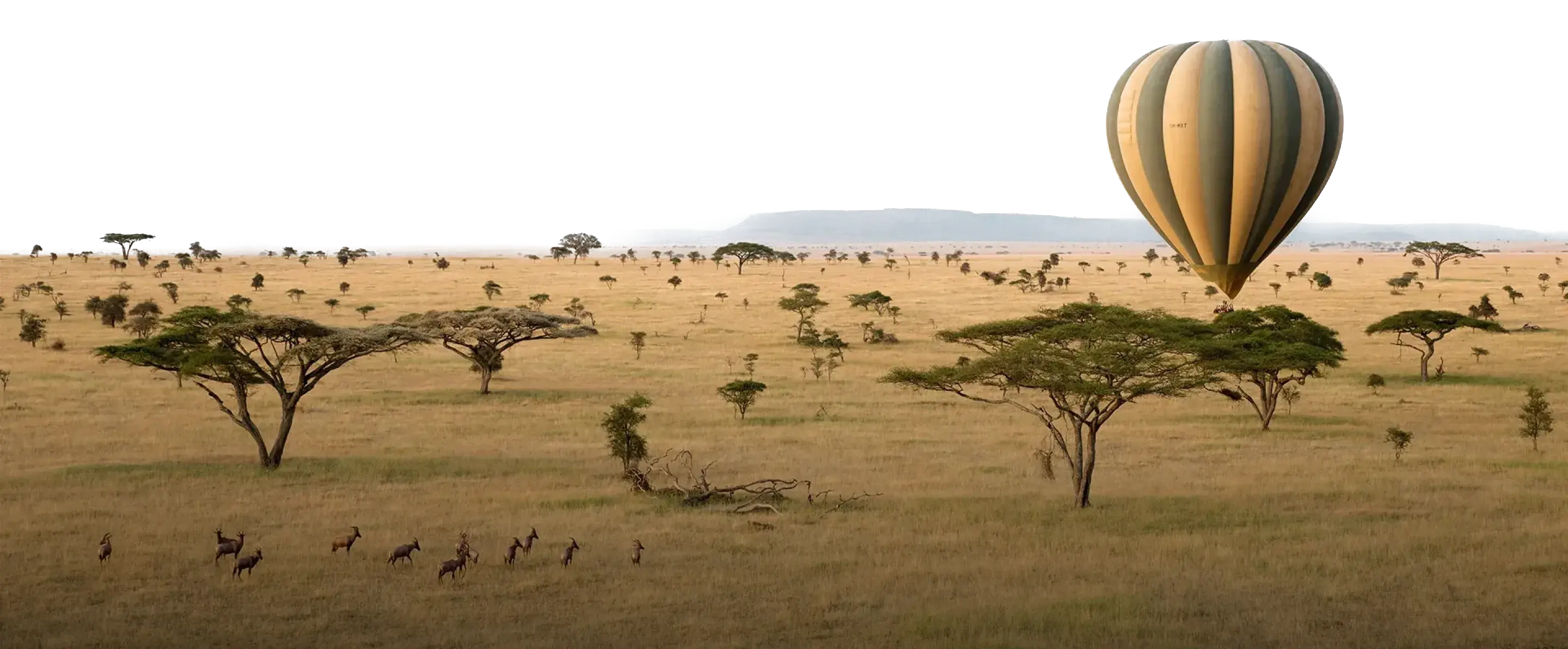
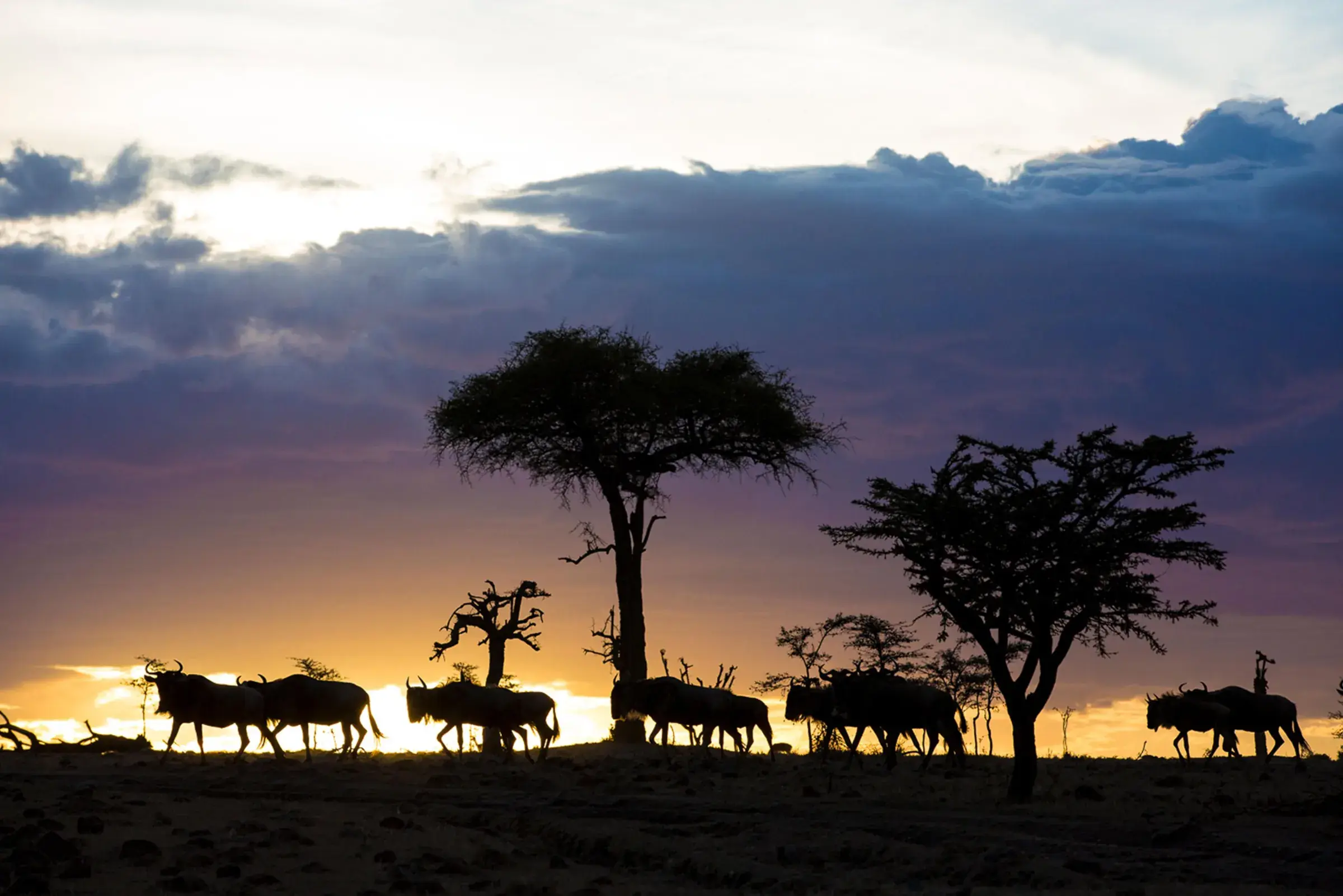
Tanzania is safari at its grandest scale. This is the country of the Serengeti — "the place where the land runs on forever" in the Maa language — where close to two million wildebeest and zebra follow the rains in an unbroken circle, the greatest animal migration left on earth. It is a stage so vast it changes how you measure distance.
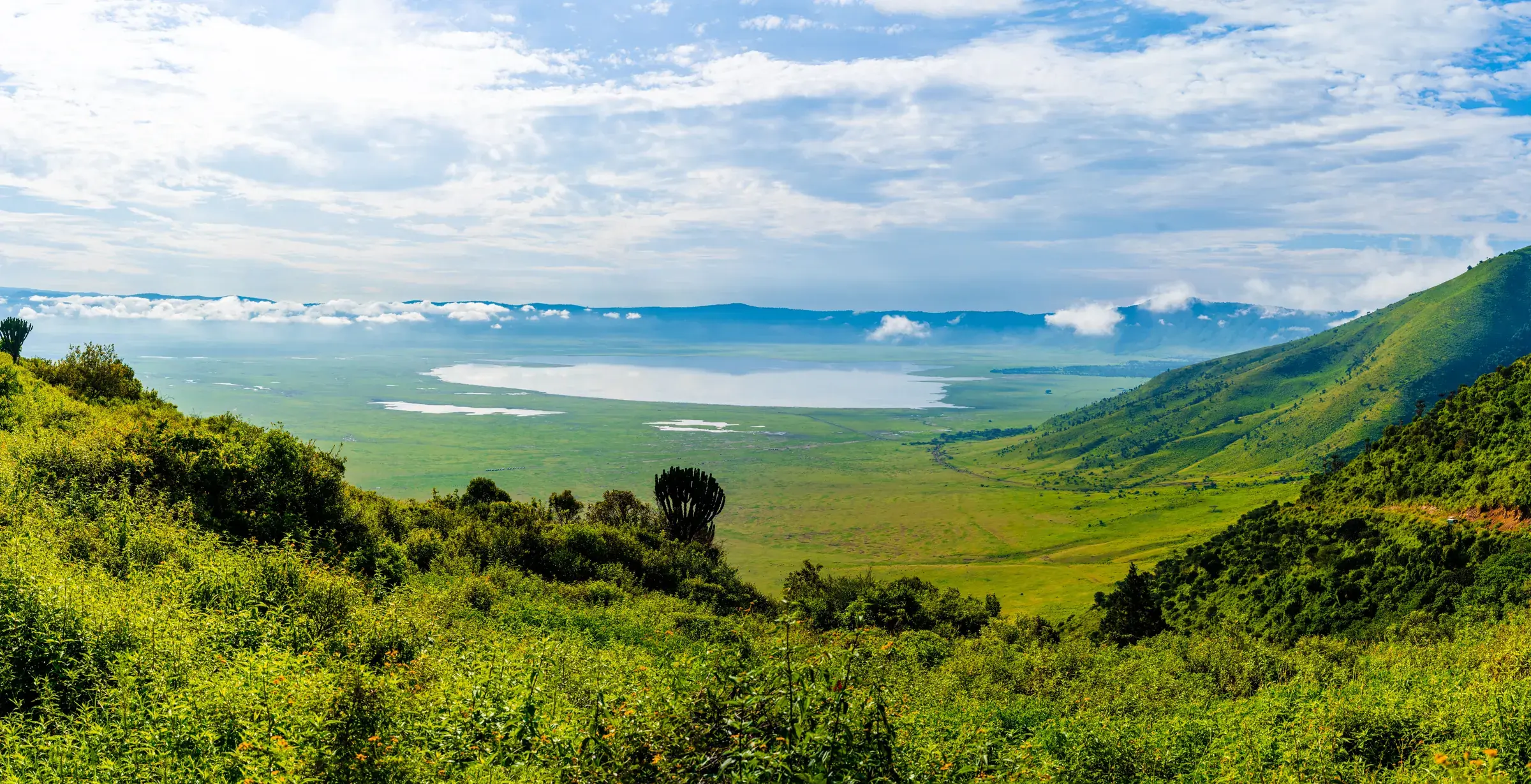
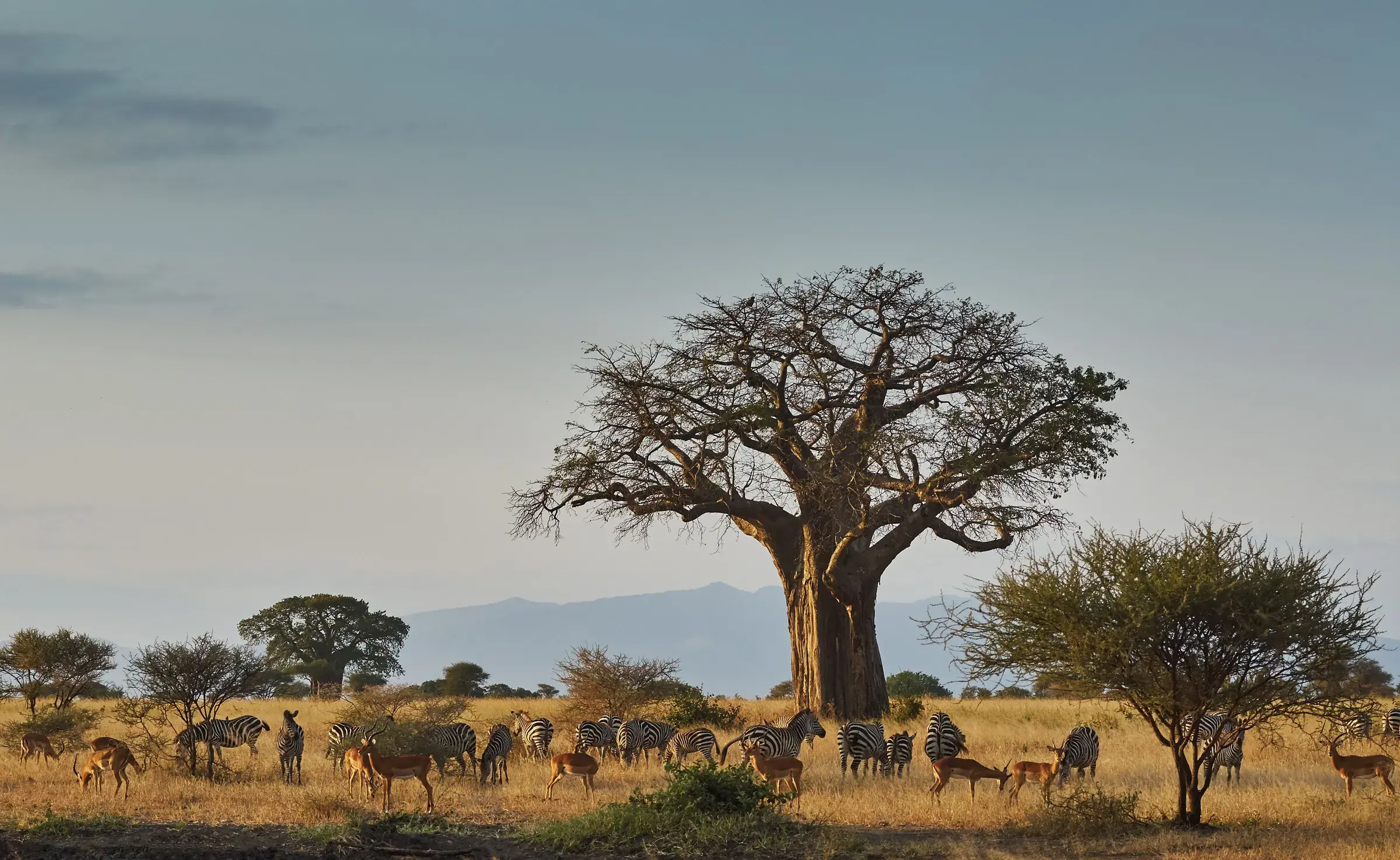
But the Serengeti is only the opening line. Within a day's drive sits the Ngorongoro Crater, a collapsed volcano holding one of the densest concentrations of wildlife on the continent inside its walls. Tarangire fills the dry season with elephant herds and thousand-year-old baobabs. And far to the south, Nyerere unfolds as one of Africa's largest protected wildernesses, traversed by a great river and almost no other vehicles.
What sets Tanzania apart is sheer abundance — and the ease of ending it all on a Zanzibar beach, the Indian Ocean warm and the spice-island air heavy with cloves. This is the Africa of the imagination, met at full scale.
Signature experiences here
- Classic safaris — The northern circuit — Serengeti, Ngorongoro, Tarangire, Manyara — in the company of guides who read the plains like a first language. → Safaris
- Following the migration — Journeys timed to the calving in the south (January–February) or the river crossings in the north (July–October), wherever the herds are moving. → Safaris
- Remote southern wilderness — Nyerere and the deep south, where boat safaris and walking replace the crowds. → Expedition Experiences
- Expeditions on foot — Walking safaris with armed guides where the parks allow, stepping out of the vehicle and into the story. → Expedition Experiences
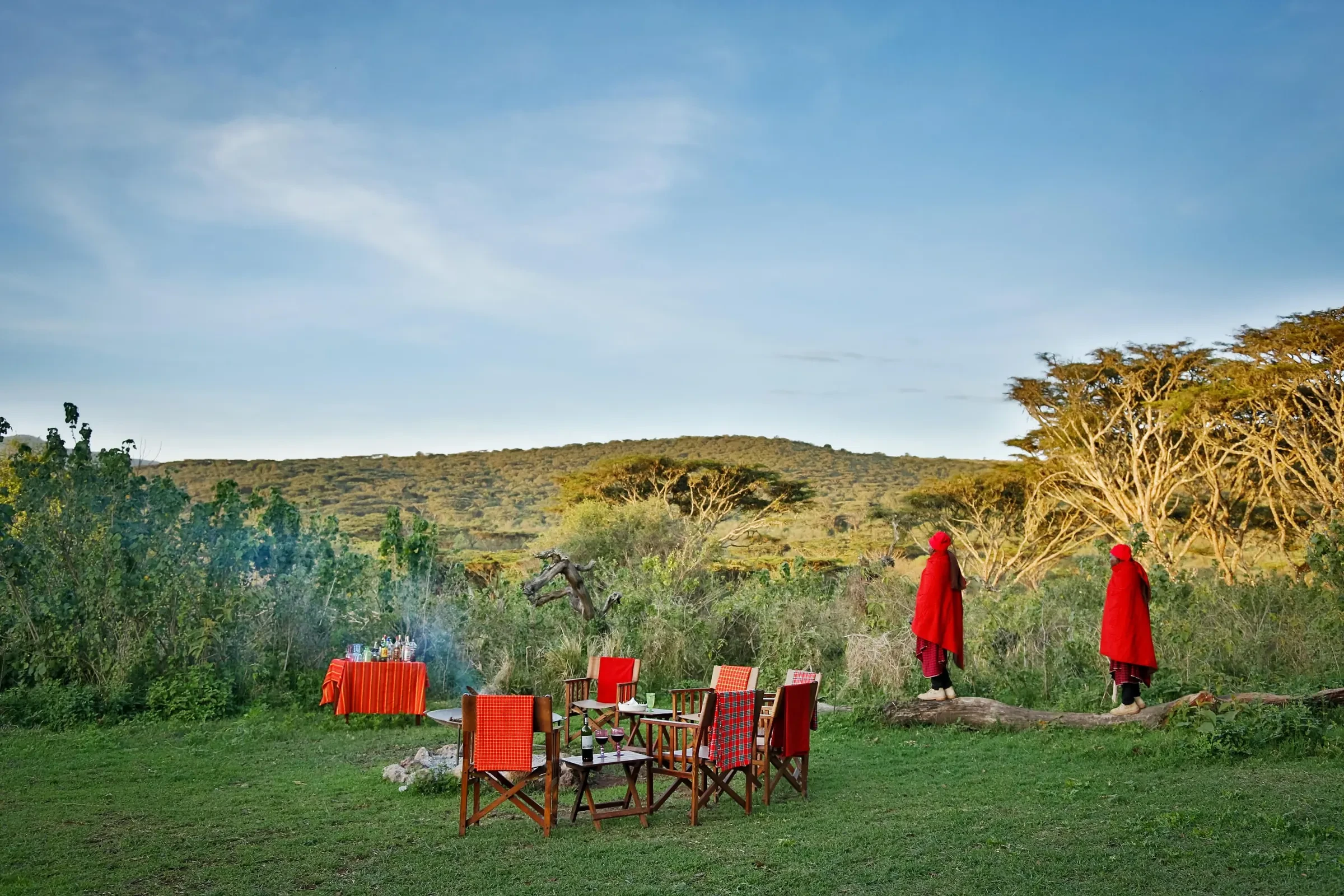
- Cultural encounters — Time with Maasai and Hadzabe communities, on terms of respect, not spectacle. → Cultural Stories
- Bush and beach — Pair the plains with Zanzibar's reefs and Stone Town's history for the classic Tanzanian finish. → Accessible Travel
Featured journeys
- The Great Migration Circuit — Follow the herds across the Serengeti, timed to your season. → Explore
- Northern Crater Highlands — The Crater, Tarangire and the plains, the classic first safari. → Explore
- Wild South Expedition — Nyerere by boat, vehicle and on foot, far from the crowds. → Explore Link: View all Tanzania journeys →
Parks & places
- Serengeti — Endless plains and the stage for the great migration. → Explore
- Ngorongoro Crater — A collapsed volcano holding a world of wildlife within its walls. → Explore
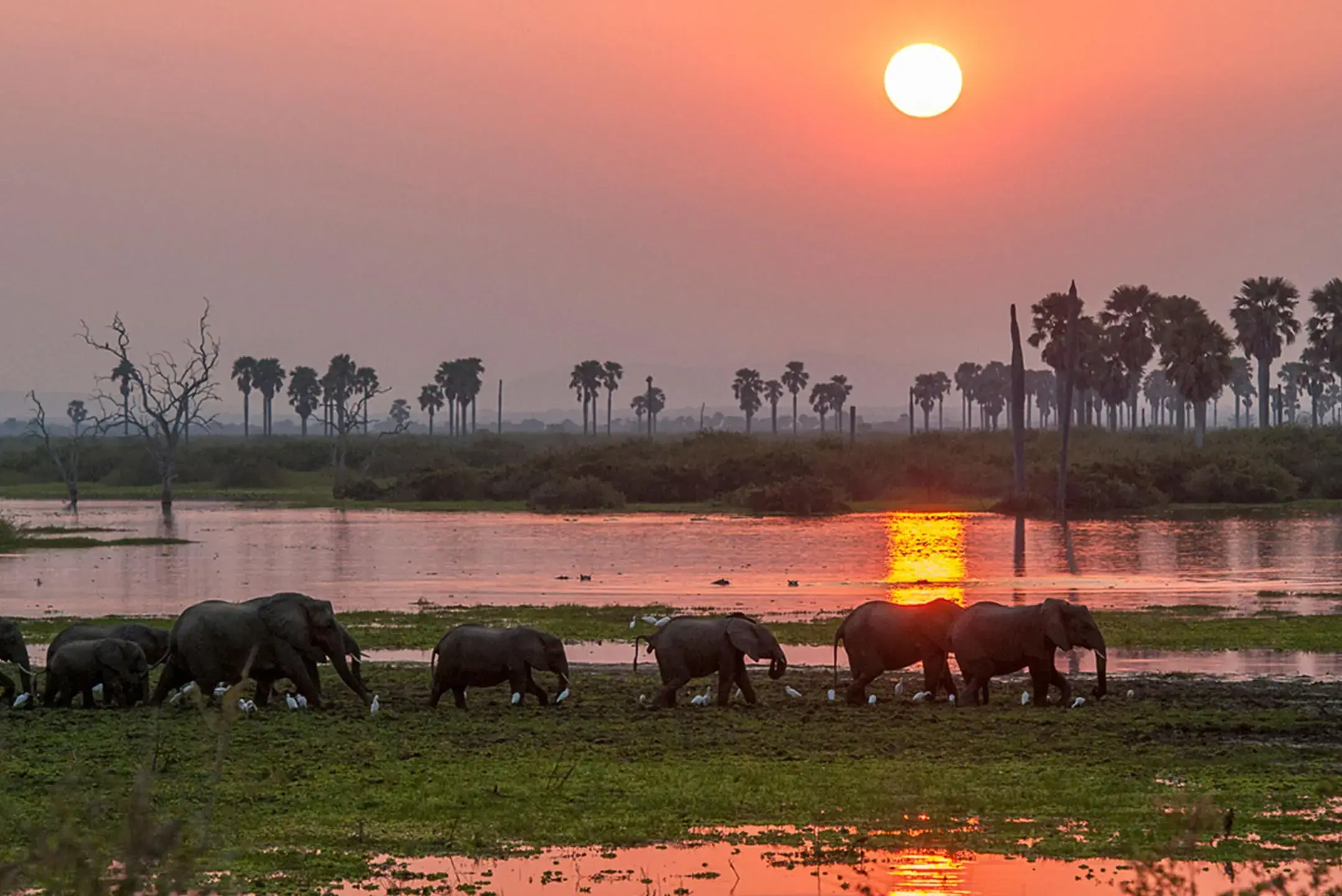
- Tarangire — Elephant herds and ancient baobabs along the river. → Explore
- Lake Manyara — Tree-climbing lions and flamingo-pink shallows beneath the Rift wall. → Explore
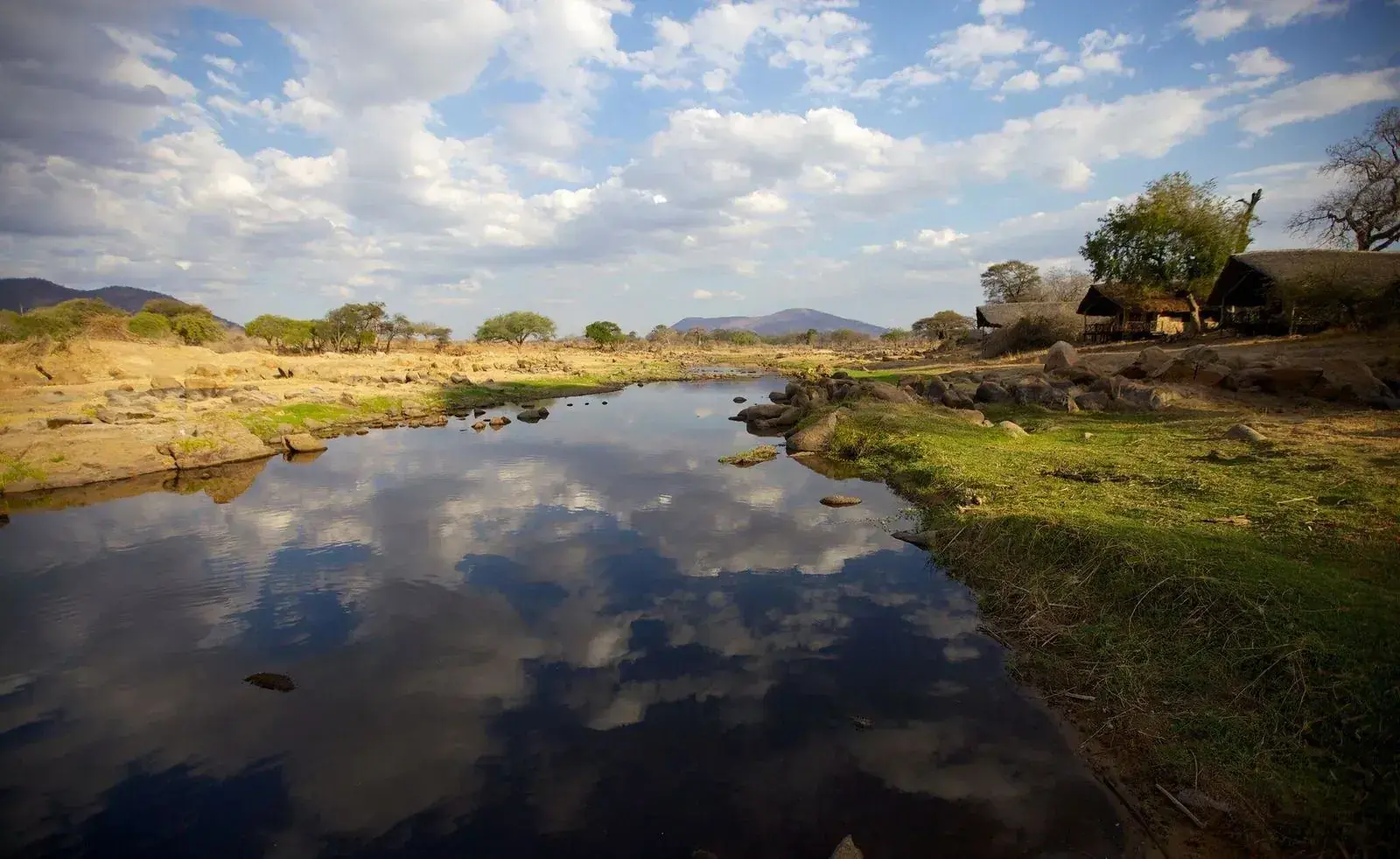
- Nyerere (Selous) — Africa's vast wild south, traversed by the Rufiji River. → Explore
- Zanzibar & the coast — Where the safari exhales into the Indian Ocean. → Explore
Best time to visit
Tanzania rewards travellers year-round, but the seasons shape the story — and on the northern circuit, the migration is always somewhere.
The long dry season (late June–October) is prime: wildlife gathers at water, the bush thins for easier sightings, and the migration's dramatic Mara River crossings fall roughly July to October in the northern Serengeti. This is peak season — the most spectacular, the busiest, and the highest rates.
The green season (November–May) is Tanzania's quieter, softer side: dramatic skies, newborn wildlife and exceptional birding. Its great set-piece is the calving season of January–February, when hundreds of thousands of wildebeest give birth on the southern Serengeti's short-grass plains — and the predators follow. Short rains fall around November, longer rains around April–May. For first-timers chasing the crossings, plan for the dry season; for the calving, the cats and the green, plan for January–February. See our → Best time to visit Tanzania guide for month-by-month detail.
Know before you go
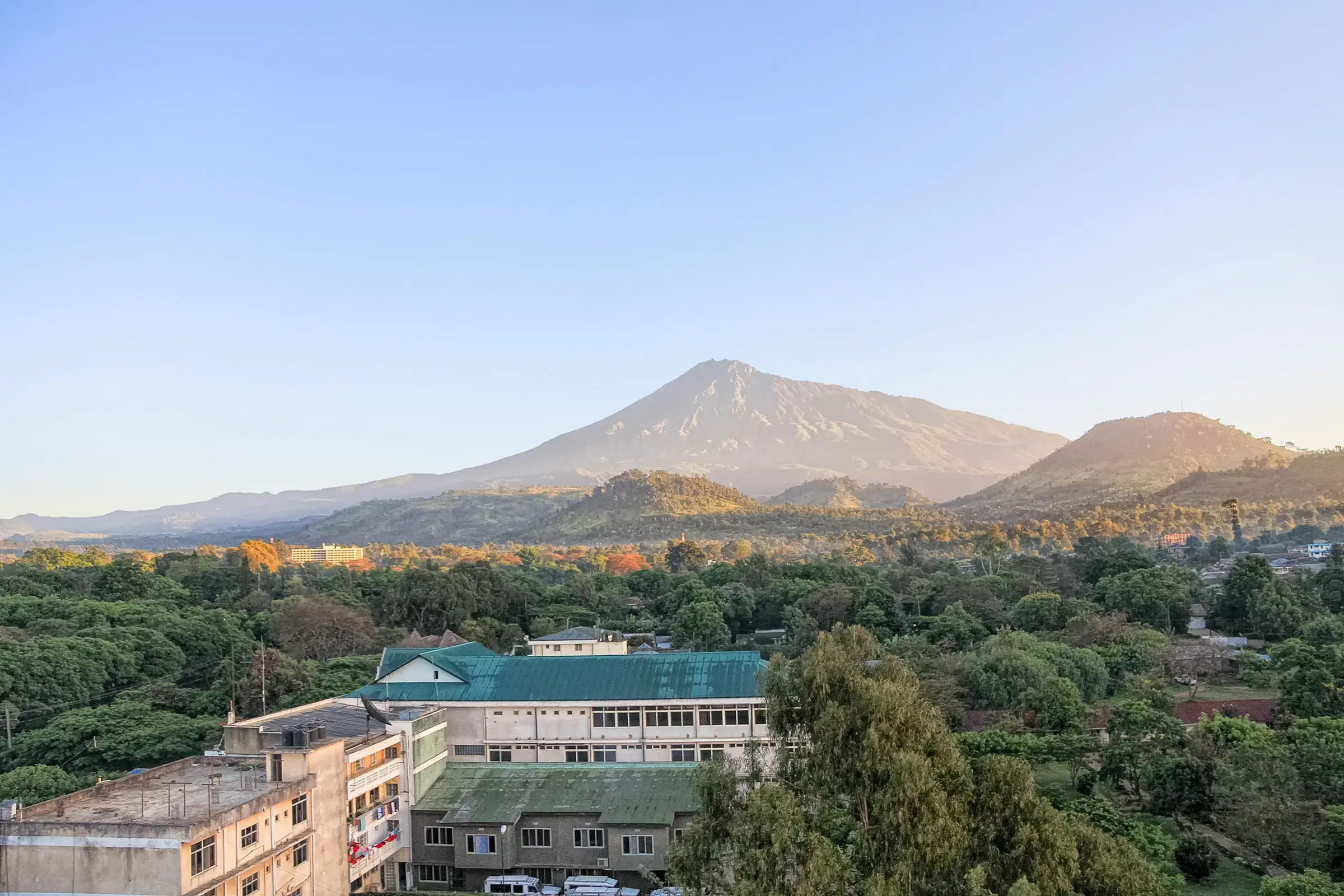
- Getting there: Most safari travellers fly into Kilimanjaro International Airport (JRO) for the northern circuit, or Julius Nyerere International (DAR), Dar es Salaam for the south and Zanzibar, then connect to camps by light aircraft.
- Entry: Most international visitors need a visa, available online via the official e-visa portal or on arrival depending on nationality. (Rules change — we confirm current requirements with you and link to the official portal.)
- Health: Yellow-fever proof may be required if arriving from an endemic country; check current vaccination and antimalarial guidance with a travel clinic.
- Safety: Tanzania's safari regions are well-travelled and well-run; we plan routes, stops and support around your peace of mind.
- Accessibility: Many Tanzania journeys can be designed mobility-conscious — tell us your needs and we'll design around them.
- How long: Most Tanzania journeys run 7–12 days; the northern circuit alone deserves 5–7 nights, more with a Zanzibar finish.
Pair it with
Tanzania pairs naturally with Zanzibar for the classic bush-and-beach finish, with Kenya for the other half of the migration ecosystem and the Maasai Mara next door, or with Rwanda or Uganda for gorilla trekking. We'll design the connections seamlessly.
Travel with confidence
A KATO/TRA-registered operator with on-the-ground expertise, supported journeys, financial protection and 24-hour assistance. (Confirm and insert exact credentials and a Tanzania-specific review snippet.)
Where to begin
The areas most journeys through Tanzania are built around.
All places in Tanzania
Every area we place guests, grouped by the ground it covers.
Parks & reserves
- KaratuTanzania · 6 places to stay
- KataviTanzania · 4 places to stay
- MahaleTanzania · 3 places to stay
- Ngorongoro, Crater HighlandsTanzania · 1 place to stay
- Serengeti, Eastern PlainsTanzania · 1 place to stay
- Serengeti, Kogatende NorthTanzania · 4 places to stay
- Serengeti, Lobo NortheastTanzania · 1 place to stay
- Serengeti, Migration FollowingTanzania · 1 place to stay
- Serengeti, Ndutu SouthTanzania · 5 places to stay
- Serengeti, Western CorridorTanzania · 3 places to stay
- Serengeti, Wogakuria NorthTanzania · 1 place to stay
Conservancies
Mountains & highlands
Cities & gateways
Common questions
- Is Tanzania safe for tourists?
- Tanzania's main safari areas and Zanzibar are well-established and well-run. We design routes and support around your safety, and brief you fully before you travel.
- When is the best time for a Tanzania safari?
- Late June to October for the northern Serengeti river crossings and easiest game viewing; January–February for the calving season and big cats on the southern plains; the green season (November–May) for fewer crowds, lush scenery and birding.
- How many days do you need in Tanzania?
- Seven to twelve days suits most journeys; allow five to seven nights for the northern circuit alone, and add three to four for a Zanzibar finish.
- Is Tanzania good for families, first-timers or accessible travel?
- Yes to all. The Ngorongoro Crater and Tarangire in particular make a gentle, reliable first safari, and we design Tanzania journeys for families and travellers with mobility needs alike.
- Do I need a visa for Tanzania?
- Most international visitors need a visa, obtained via the official e-visa portal before travel or on arrival depending on nationality; we'll point you to the current official process.
Tell us what you want from Tanzania
We'll design the journey around it — places, pace and people matched to how you travel.