Moshi
Moshi is a calm town in north-eastern Tanzania set on the southern lower slopes of Mount Kilimanjaro, in Chagga farming country roughly 45 minutes from Kilimanjaro International Airport (JRO). It is the traditional staging base for Kilimanjaro climbs and the place trekkers return to afterwards — but on its own it offers coffee-farm visits, waterfall walks, Lake Chala and easy foothill hikes, making it the unhurried counterpoint to the mountain above it.
Why visit
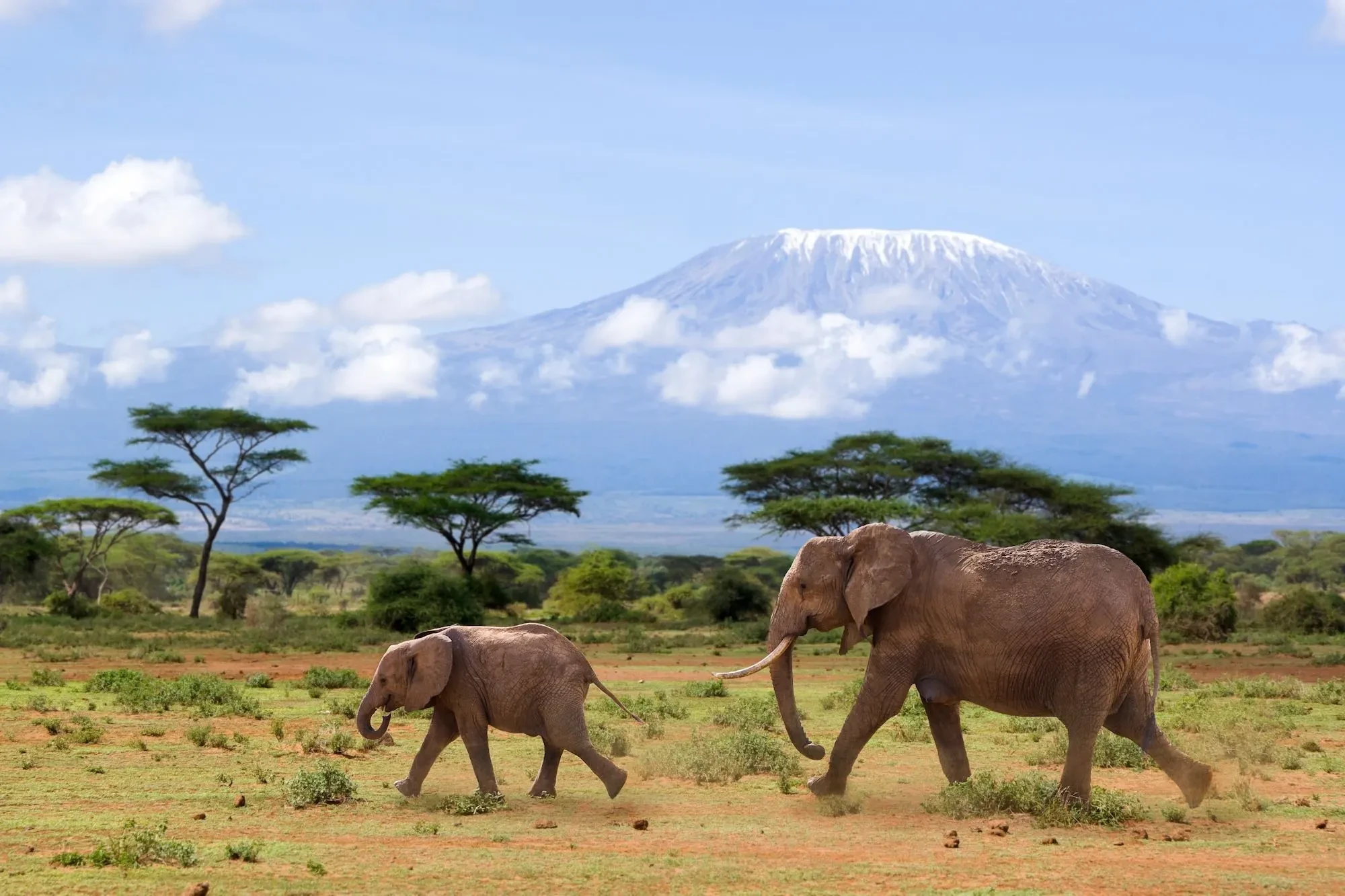
Moshi is the town Kilimanjaro looks down on. On a clear morning the whole snow-capped mass fills the northern sky above the rooftops and the coffee gardens, and the town simply gets on with its day beneath it. This is not a mountain outpost braced for adventure — it is a settled, green, easy-going place, tree-lined and low-rise, that happens to sit at the foot of the highest peak in Africa.
Most travellers meet Moshi as a threshold: the base where a climb is briefed and provisioned, or the soft landing where legs recover afterwards over good coffee and a long view. But it rewards a stay in its own right. This is the heartland of the Chagga, the people who have farmed these fertile southern slopes for centuries, and their villages, home-gardens and irrigation furrows climb the hillsides in a patchwork of banana and coffee.
Give Moshi a day or two and it becomes the calm in the itinerary — the pause between the summit and the plains, or a gentle first chapter before the wilder north.
Foothills, farmland & the mountain
The landscape here is not savannah — it is the lush, cultivated apron of a volcano. Moshi sits in Chagga farmland, where deep volcanic soils and reliable rain feed a dense mosaic of banana groves, coffee shambas and forest gullies rising toward the mountain. Above the fields, the lower slopes of Kilimanjaro shift into montane forest before the tree line gives way to the bare summit cone — Kibo, crowned with its shrinking glaciers, and the jagged secondary peak of Mawenzi to its east.
Water defines the foothills. Streams off the mountain gather into waterfalls that spill through the forest — the best known are Materuni, a tall single drop reached on a walk through Chagga villages, and Kilasiya, a narrower, dramatic fall in a fern-hung gorge. To the east, on the Kenyan border, lies Lake Chala, a deep, startlingly blue crater lake ringed by steep caldera walls — a quiet, otherworldly contrast to the green slopes.
This is walking-and-farming country, not a big-game landscape. Its riches are scenery, soil and culture: coffee ripening on the hill, the mountain changing colour through the day, and villages where the whole rhythm of life is tied to Kilimanjaro's water.
Best time to visit
Moshi shares Kilimanjaro's rhythm. The clearest, most reliable windows are the long dry season, roughly late June to October, and the short dry season of January to February — bright skies, the best mountain views and firm ground for foothill walks. These are also the prime months for climbing, so the town is at its busiest and most alive with trekkers.
The long rains (March to May) bring heavy afternoon downpours, greener slopes and lower pressure — beautiful, but trails and waterfall paths can be slick. The short rains around November are lighter and intermittent. Whatever the month, Kilimanjaro is often clearest at dawn before cloud builds, so early starts reward the view. For fuller seasonal detail across the country, see our → Best time to visit Tanzania guide.
Things to do here
- Coffee-farm and roastery visits — walk a working Chagga coffee shamba, follow the bean from cherry to cup, and taste it roasted on the slope where it grew.
- Materuni & Kilasiya waterfall walks — half-day hikes through villages and forest to two of the foothills' finest falls, often paired with a coffee experience.
- Lower-slope day hikes — gentle guided walks in the montane forest and farmland below the park boundary, with big views back over the plains — a taste of the mountain without the climb (see → Walking safari).
- Lake Chala — a day trip to the crater lake on the Kenyan border for quiet views, birdlife and a walk along the caldera rim.
- Chagga cultural encounters — village visits, traditional home-gardens, local markets and the Chagga underground caves, met respectfully and on their own terms.
- Kilimanjaro climbs — Moshi is the classic staging base; the full mountain story lives on our → Kilimanjaro page.
Know before you go
- Getting there: Fly into Kilimanjaro International Airport (JRO), roughly 45 minutes by road from Moshi and served by regional and some international carriers. Arusha lies about 1.5 hours west, linking Moshi to the northern safari circuit.
- Entry and fees: Tanzania visa requirements apply. Kilimanjaro National Park fees are charged separately for climbs and in-park activities; Lake Chala and community sites may collect local levies — we confirm current requirements and include them in your quote.
- How long: 1 to 2 nights suits Moshi as a staging base or recovery stop; add a day for waterfalls, coffee and Lake Chala if you want the foothills properly. It pairs naturally with a Kilimanjaro climb, or as a gentle bookend to the northern parks via Arusha.
Related Nobu journeys
- Elephants and the Mountain — Kilimanjaro's presence over the plains, with Moshi as the town beneath the peak. → Explore
- Northern Frontier Expedition — the wilder north, reached through the Kilimanjaro gateway. → Explore
- On Foot and in the Saddle — walking country and slow travel, for those drawn to the foothills more than the summit. → Explore
When to go
Month by month — daytime warmth, days of rain and what the season brings.
Where to stay
From Essential to Private Collection — the camps and lodges we know first-hand here. Rates are indicative and confirmed on enquiry.
Essential
Kilemakyaro Mountain Lodge
Essentiallodge · Kilimanjaro foothills
from $70 pp / night· indicative, confirmed on enquiry
Stella Maris Lodge
Essentiallodge · rural
from $70 pp / night· indicative, confirmed on enquiry
Signature
Aishi Machame Hotel
Signaturehotel · Kilimanjaro foothills
from $100 pp / night· indicative, confirmed on enquiry
Weru Weru River Lodge
Signaturelodge · river garden
from $100 pp / night· indicative, confirmed on enquiry
Elevated
Kaliwa Lodge
Elevatedlodge · Kilimanjaro foothills
from $150 pp / night· indicative, confirmed on enquiry
Common questions
- Is Moshi worth visiting if I'm not climbing Kilimanjaro?
- Yes. Beyond the climb, Moshi offers coffee-farm and roastery visits, the Materuni and Kilasiya waterfalls, Lake Chala, gentle foothill hikes and Chagga village culture — enough for a relaxed day or two on its own.
- What's the difference between Moshi and Kilimanjaro?
- Kilimanjaro is the mountain and national park; Moshi is the town at its foot in Chagga farmland. Climbs are staged and briefed from Moshi, and trekkers return to it afterwards — see our [Kilimanjaro](/destinations/tanzania/kilimanjaro) page for the mountain itself.
- How far is Moshi from Kilimanjaro International Airport?
- About 45 minutes by road. Arusha, the northern-circuit hub, is roughly 1.5 hours further west.
- What are the best things to do around Moshi?
- Coffee farms and roasteries, the Materuni and Kilasiya waterfall walks, a day trip to Lake Chala, easy lower-slope hikes with mountain views, and Chagga cultural visits.
- When can you see Kilimanjaro clearly from Moshi?
- The dry seasons — late June to October and January to February — give the clearest skies, and the mountain is usually most visible at dawn before cloud builds over it.
Tell us what you want from Moshi
We'll design the journey around it — places, pace and people matched to how you travel.