Arusha
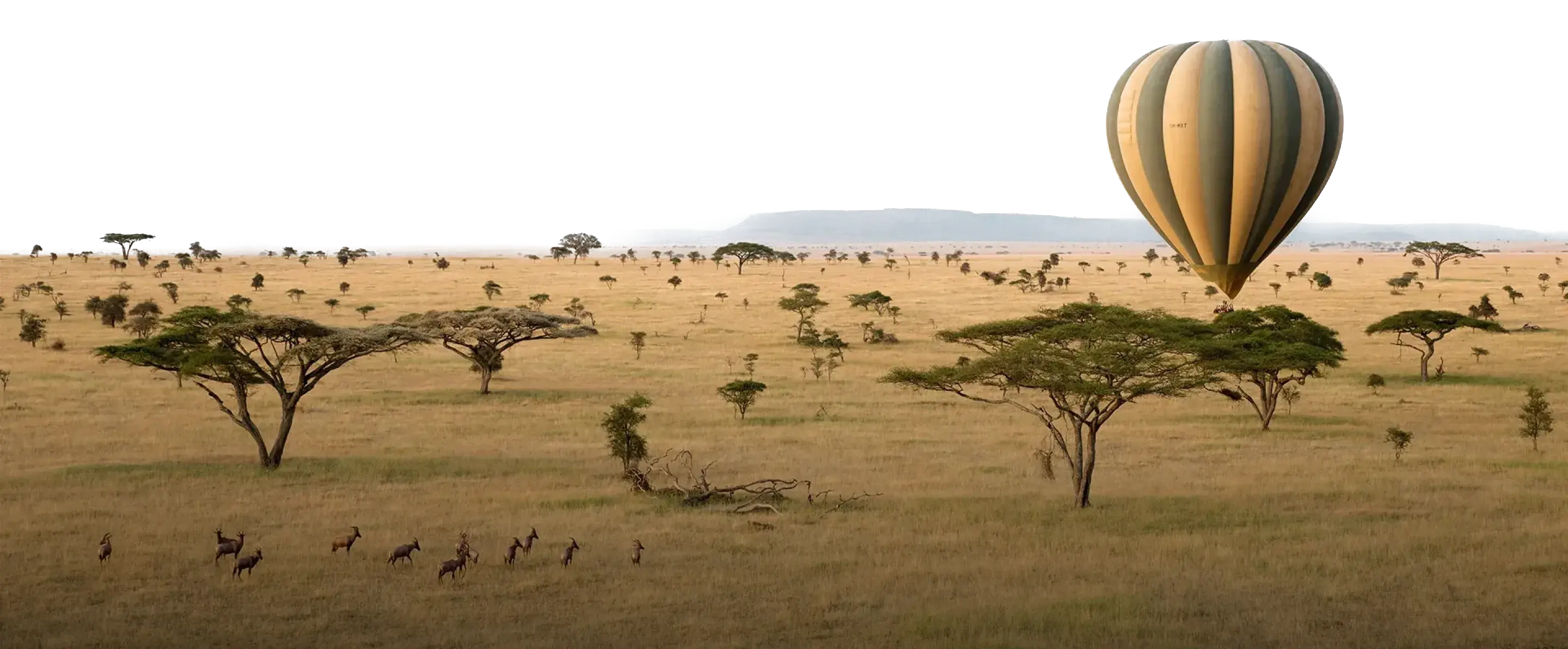
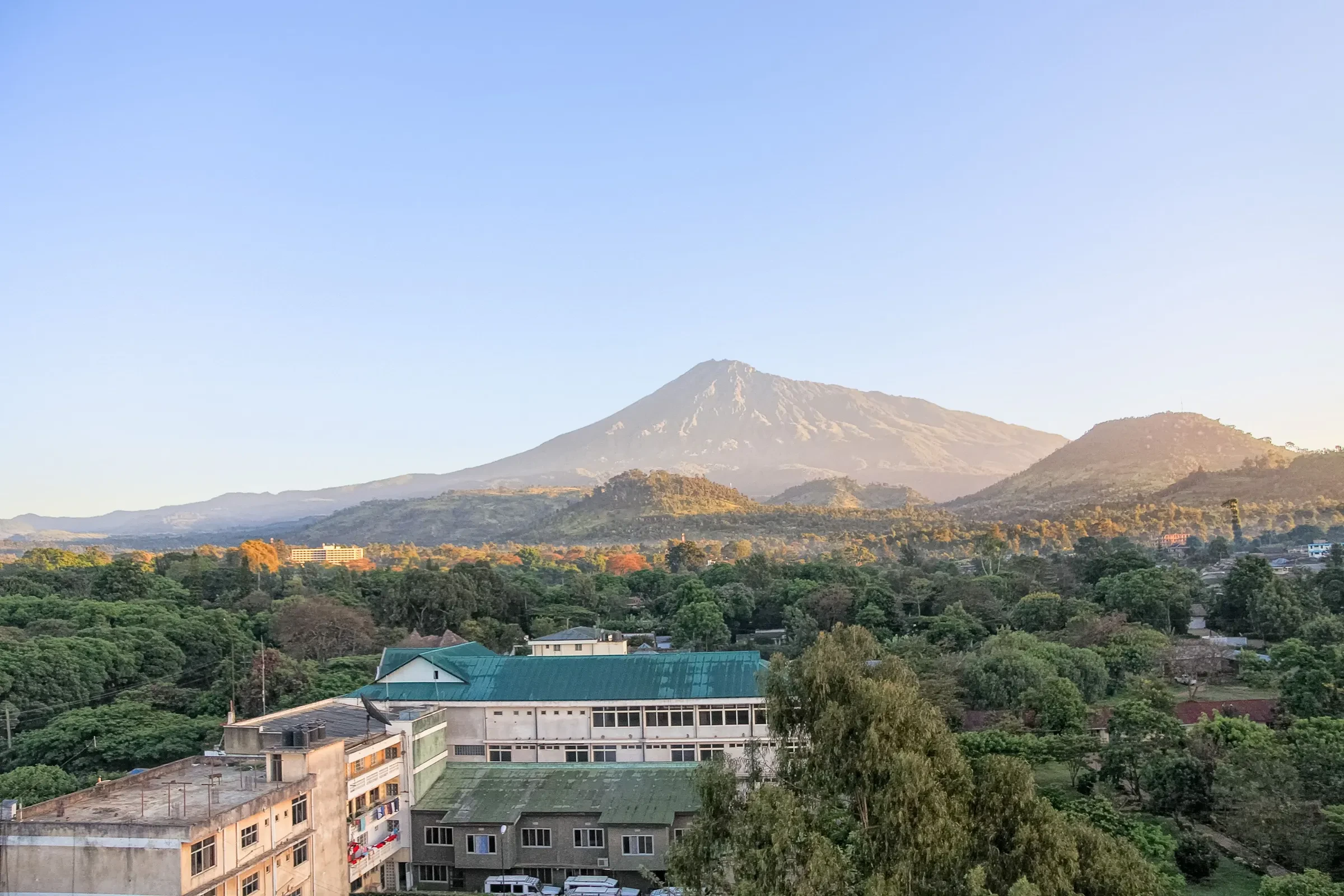
Arusha is a highland city in northern Tanzania, sitting below Mount Meru at the foot of the northern safari circuit. It is the gateway to the Serengeti, Ngorongoro, Tarangire and Lake Manyara — the town where almost every northern-Tanzania safari begins and ends. Rather than a Big-Five destination in its own right, Arusha is the arrival and departure hinge: coffee estates, a small green national park on its doorstep, and an easy first or last night before or after the plains.
Why visit
Almost no one comes to northern Tanzania without passing through Arusha. It is the practical heart of the safari circuit — the place where flights land, guides greet you, and the road to the Serengeti and Ngorongoro sets out. To treat it only as a transit point, though, is to miss the pleasure of arriving well.
Set on the green shoulder of Mount Meru at over 1,400 metres, Arusha is cooler and lusher than the plains it serves. Jacaranda-lined streets, coffee estates climbing the mountain's lower slopes, and a bustling, genuinely African city rhythm give the place a texture all its own. After a long-haul flight, a night here — unhurried, at altitude, with the mountain overhead — is the gentlest possible way to begin. At the end of a journey, it is the softest landing before the flight home.
Arusha rewards the traveller who gives it a moment. It is not the spectacle; it is the frame around the spectacle — and a considered first or last night here sets the tone for everything that follows.
Wildlife & landscapes
Let us be honest about what Arusha is: this is a city and a gateway, not a classic Big-Five safari destination. What it offers instead is greenery, mountain scenery and a small, characterful national park on its very doorstep — a gentle overture rather than the main event.
Mount Meru dominates the horizon — at 4,566 metres, Tanzania's second-highest peak and a serious trek in its own right, often used as an acclimatisation climb for Kilimanjaro. Below it, Arusha National Park packs remarkable variety into a compact area: the Momella lakes, alkaline pools that draw flamingo and waterbirds; the Ngurdoto Crater, a green amphitheatre often called a "little Ngorongoro"; and montane forest alive with black-and-white colobus monkeys, whose leaping troops are the park's signature. Expect giraffe, buffalo, zebra, bushbuck and warthog — but no lion, and elephant only occasionally. It is scenery-first wildlife: forest, crater, lake and mountain rather than open savannah teeming with predators.
The surrounding landscape is highland farmland and coffee country — fertile, cultivated and green — a deliberate contrast to the dust and space of the plains to come.
Best time to visit
Arusha's highland setting keeps it mild year-round, but its rhythm follows Tanzania's two rainy seasons. The long dry season (June to October) is the most popular window — clear mountain views, comfortable days and the peak time for the safari circuit Arusha feeds. The short dry spell (December to February) is warm and bright, good for both the city and Arusha National Park. The long rains (March to May) bring the greenest landscapes and the quietest streets, though Mount Meru can hide in cloud; the short rains around November are lighter and intermittent.
Because most travellers spend only a night or two here on the way to or from the parks, Arusha's own timing matters less than the season of your wider journey. For that bigger picture, see our → Best time to visit Tanzania guide.
Things to do here
- Arusha National Park day trip — the Momella lakes, Ngurdoto Crater and colobus-filled forest, all within an easy drive; one of the few Tanzanian parks that permits walking safaris with a ranger (see → Walking safari).
- Canoeing the Momella lakes — a rare chance to be on the water among giraffe and waterbirds, with Meru reflected on the surface (see → Water and canoe safari).
- Coffee estate visit — tour a working plantation on Meru's slopes, from bean to cup, a signature Arusha half-day.
- Mount Meru trek — a multi-day climb for the well-prepared, and a classic acclimatisation route before Kilimanjaro.
- Cultural and heritage encounters — Maasai and Meru community visits, local markets, and the town's craft and cultural centres.
- Birding — the Momella lakes and montane forest reward a patient morning (see → Birding safari).
Know before you go
- Getting there: Most travellers fly into Kilimanjaro International Airport (JRO), roughly a 45–60 minute drive from Arusha and the main long-haul gateway for the northern circuit. Arusha Airport (ARK), closer to town, handles the light-aircraft hops to the Serengeti and other circuit airstrips.
- Fees: Arusha National Park charges an entry fee (per person, per day); we confirm current rates and include them in your quote.
- How long: 1 to 2 nights is the usual role — one to arrive and reset, or a fuller stay to add Arusha National Park and a coffee estate. It sits naturally at the start or end of a northern-circuit journey.
- Pairing: Arusha is the launch point for the Serengeti, Ngorongoro, Tarangire and Lake Manyara — nearly every northern journey threads through it in both directions.
Related Nobu journeys
- Northern Crater Highlands — the classic northern circuit through Ngorongoro and the highlands, launched from Arusha. → Explore
- The Great Migration Circuit — Serengeti and its herds, with Arusha as the arrival and departure hinge. → Explore
- Southern Safari and Spice — northern parks combined with Zanzibar's coast, for travellers who want the full range. → Explore
When to go
Month by month — daytime warmth, days of rain and what the season brings.
Where to stay
From Essential to Private Collection — the camps and lodges we know first-hand here. Rates are indicative and confirmed on enquiry.
Signature
Mount Meru Hotel
Signaturehotel · urban
from $120 pp / night· indicative, confirmed on enquiry
The African Tulip
Signaturehotel · urban
from $120 pp / night· indicative, confirmed on enquiry
Elevated
Arusha Coffee Lodge
Elevatedlodge · coffee plantation
from $250 pp / night· indicative, confirmed on enquiry
Lake Duluti Serena Hotel
Elevatedlodge · lakeshore (Lake Duluti)
from $180 pp / night· indicative, confirmed on enquiry
Onsea House
Elevatedlodge · hillside garden
from $200 pp / night· indicative, confirmed on enquiry
Rivertrees Country Inn
Elevatedlodge · river garden
from $180 pp / night· indicative, confirmed on enquiry
Private Collection
Gran Melia Arusha
Private Collectionresort · coffee plantation
from $280 pp / night· indicative, confirmed on enquiry
Legendary Lodge
Private Collectionlodge · coffee plantation
from $400 pp / night· indicative, confirmed on enquiry
Common questions
- Is Arusha worth visiting, or just a stopover?
- It is chiefly a gateway — the arrival and departure city for the northern circuit — but it rewards a night or two. Coffee estates, Mount Meru views and Arusha National Park make it a graceful first or last chapter rather than a Big-Five destination.
- How far is Arusha from Kilimanjaro Airport?
- Kilimanjaro International Airport (JRO), the main long-haul gateway, is roughly a 45 to 60 minute drive from Arusha. The smaller Arusha Airport (ARK) sits closer to town and handles light-aircraft flights to the safari airstrips.
- What can you see in Arusha National Park?
- The Momella lakes and their flamingos, the forested Ngurdoto Crater, giraffe, buffalo, zebra and the park's signature black-and-white colobus monkeys — all beneath Mount Meru. There are no lion, so it is scenery and gentle wildlife rather than a predator-driven safari.
- Can you go on a safari from Arusha?
- Arusha is the launch point for the entire northern circuit: the Serengeti, Ngorongoro Crater, Tarangire and Lake Manyara all begin here, by road or light aircraft. Arusha National Park itself offers a light half-day of wildlife and walking on the city's doorstep.
- How many nights should you spend in Arusha?
- One night is enough to arrive and reset; two lets you add Arusha National Park and a coffee estate. It works best as bookends to a northern-Tanzania journey rather than a destination in itself.
Tell us what you want from Arusha
We'll design the journey around it — places, pace and people matched to how you travel.