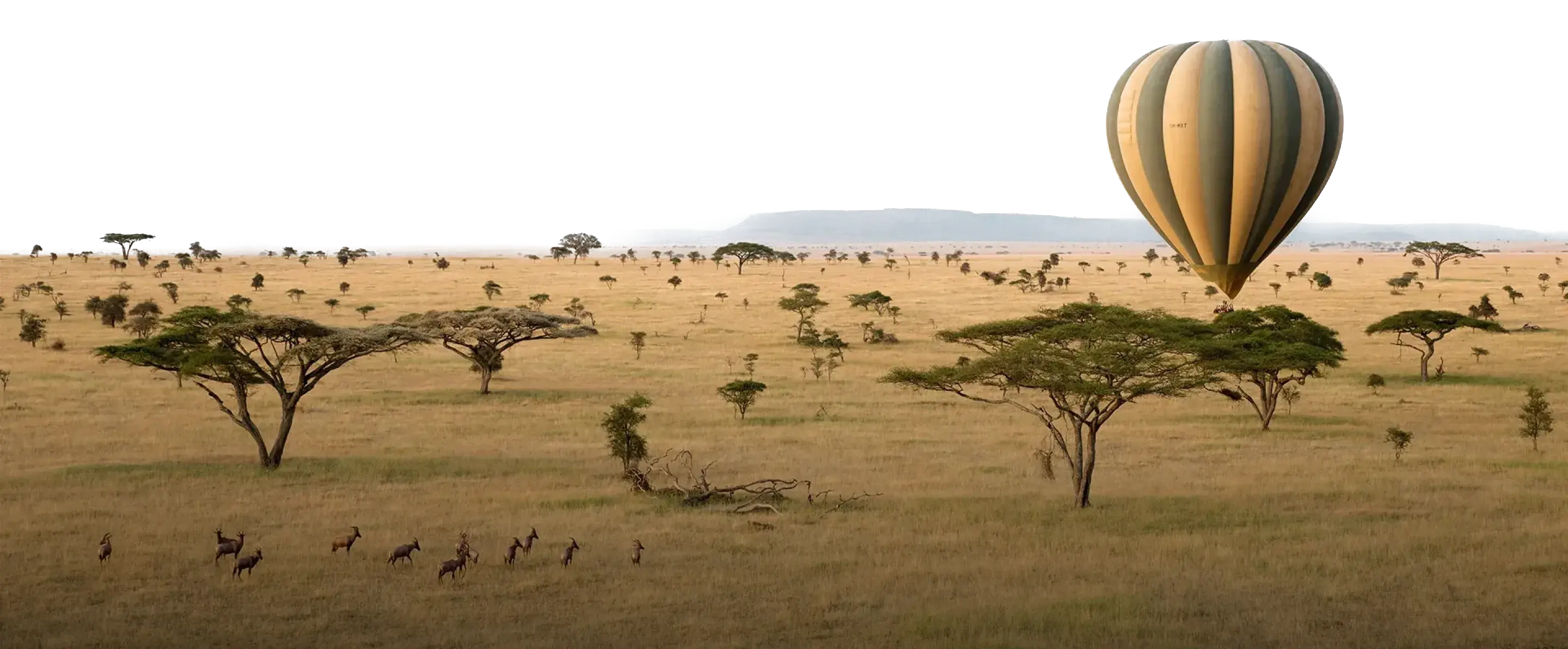
Ngorongoro, Crater Highlands
Ngorongoro, Crater Highlands is a safari area in Tanzania. We currently track 1 place to stay here. Access is usually via Lake Manyara (LKY) / Manyara airstrip. It works best when the route gives it a clear purpose: arrival, wilderness, coast, culture, rest or a better-paced connection between larger stops.
Why visit
Few places on earth deliver wildlife the way the Ngorongoro Crater does. Two to three million years ago a great volcano collapsed in on itself, leaving a caldera 600 metres deep and some 260 square kilometres across — and over the millennia it filled, not with lava, but with life. Standing on the rim at dawn, with the floor far below veiled in mist and the dark shapes of animals already moving across it, is one of the great views in African travel.
Descend, and the Crater becomes a self-contained world: grassland, soda lake, forest and spring, ringed by 600-metre walls, holding a permanent population of just about everything. It is the most reliable place in Tanzania — perhaps in Africa — to see the Big Five in a single day, and one of the last refuges of the black rhino.
For first-time safari-goers, it is a near-guaranteed spectacle. For seasoned travellers, it remains a place that resets the sense of what a wild landscape can hold.
Wildlife & landscapes
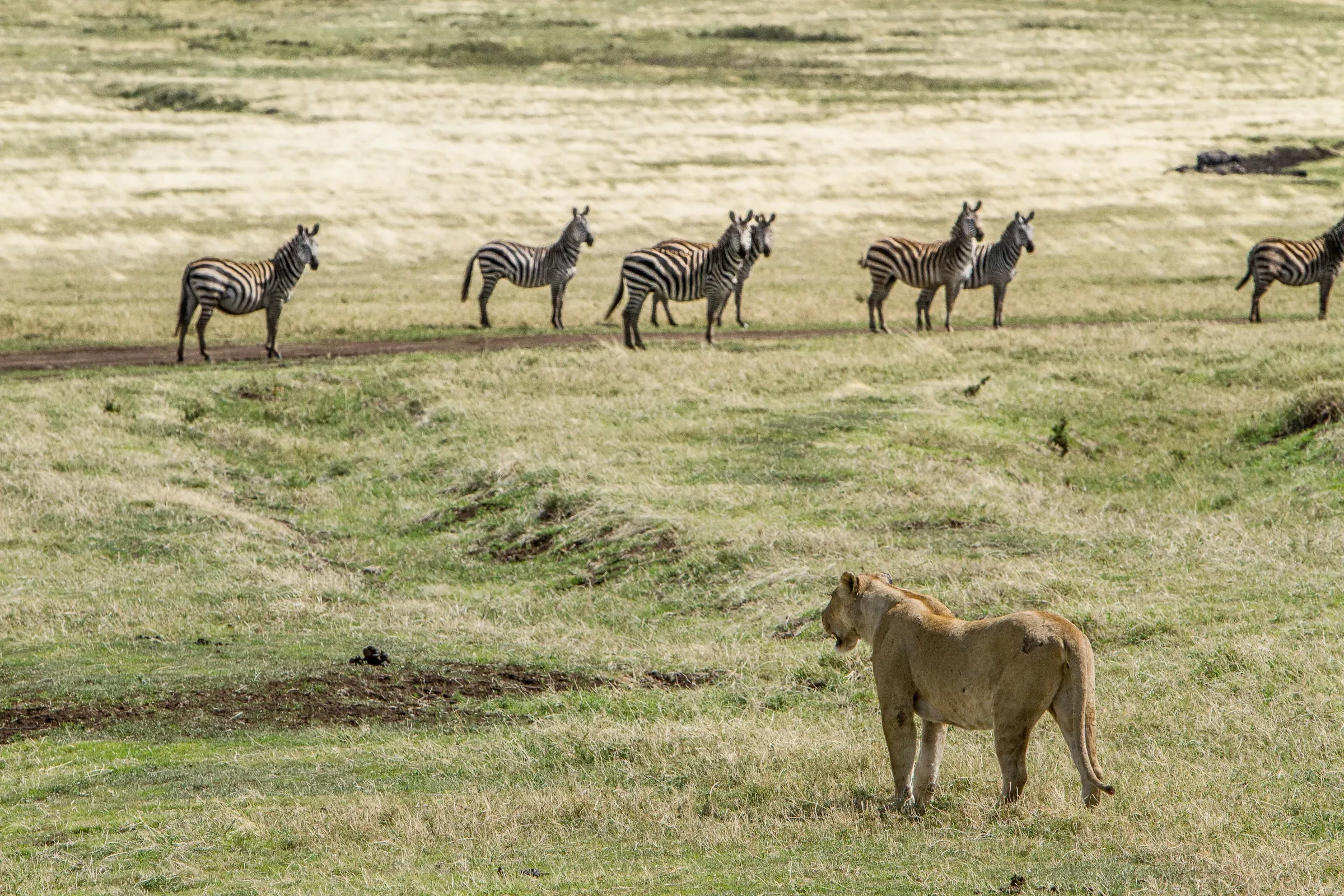
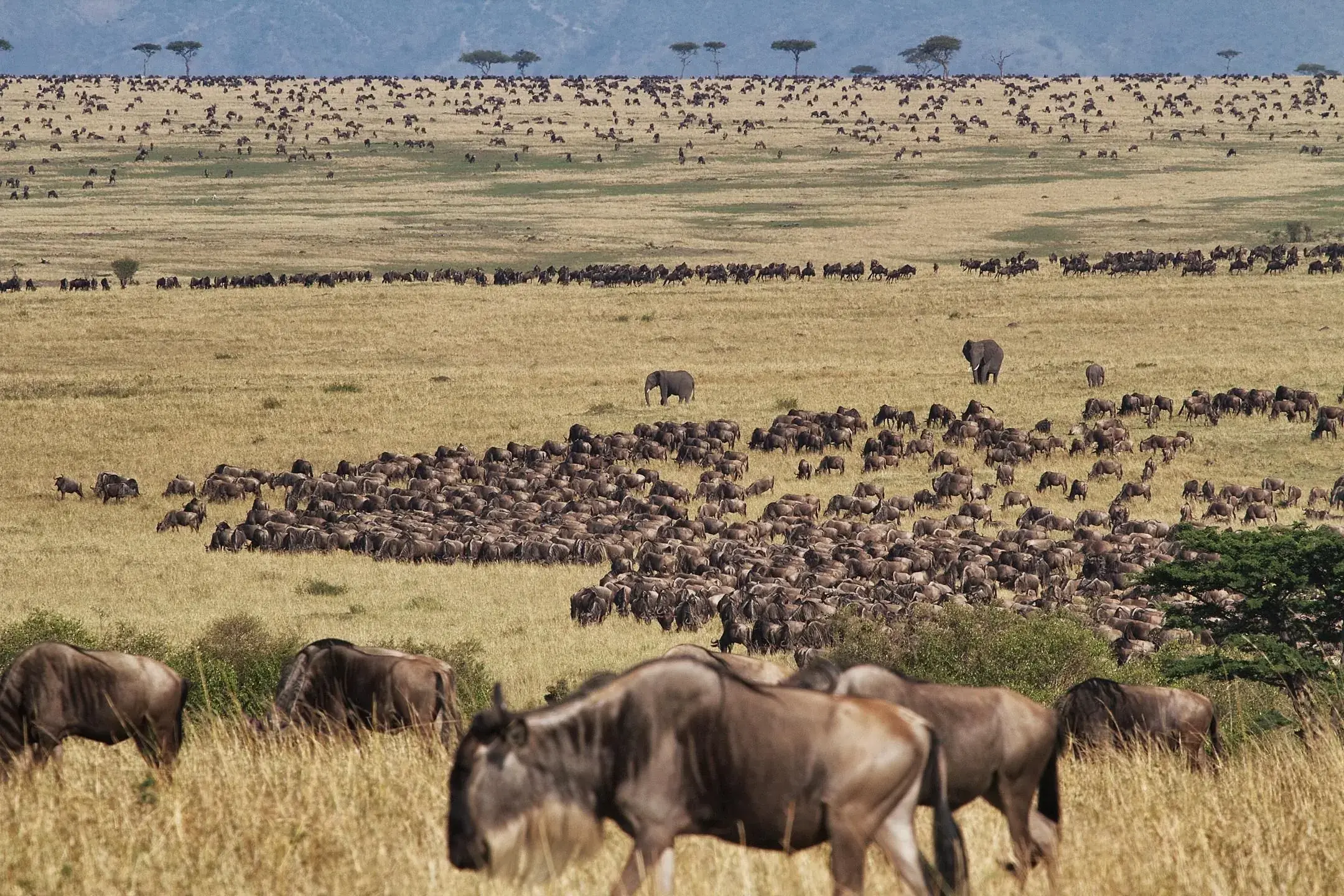
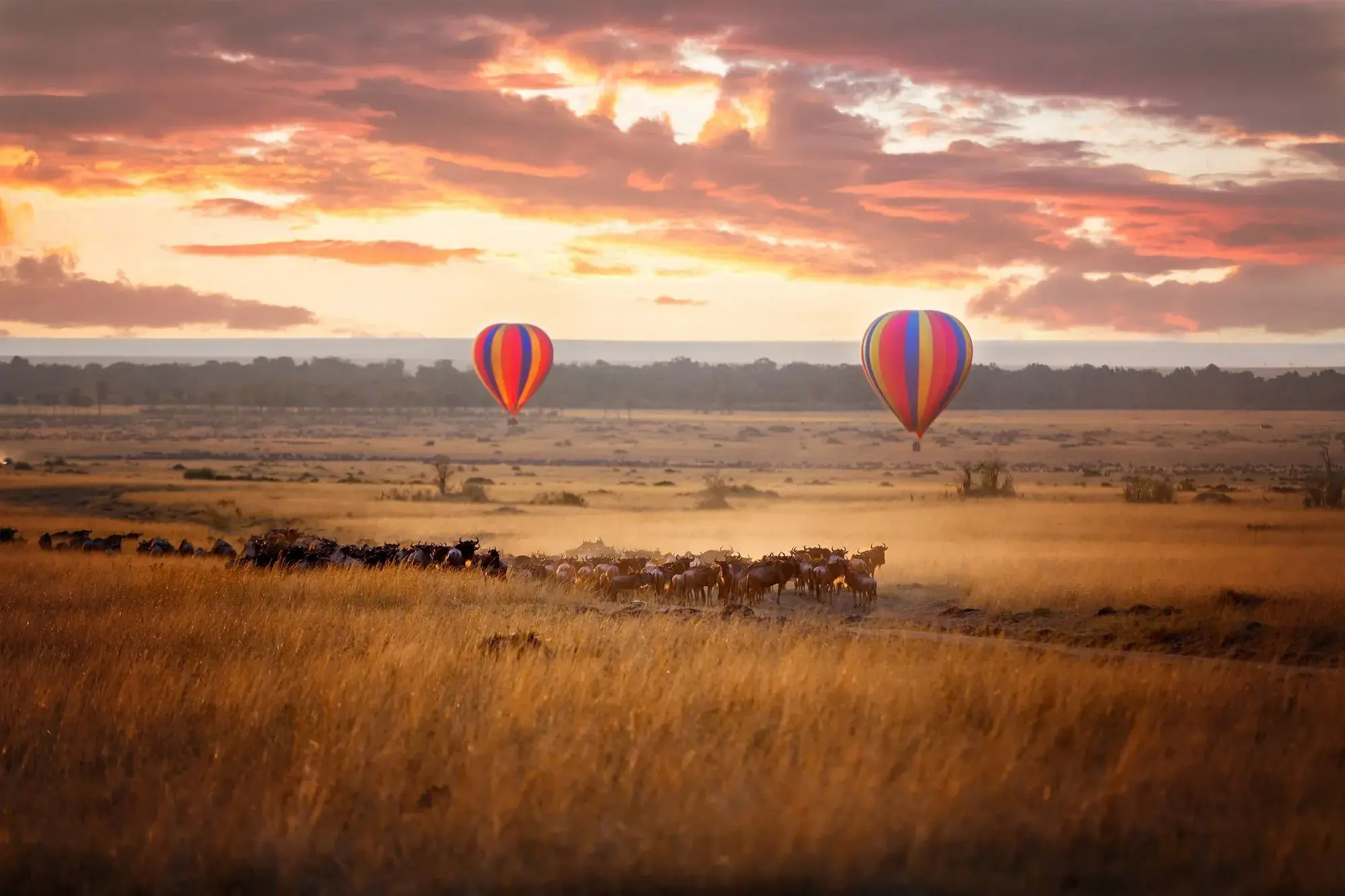
The Crater floor holds an extraordinary year-round density: large prides of lion, elephant (often big-tusked bulls), buffalo, hippo in the pools, and black rhino — present here in one of the best places in Tanzania to see them. Wildebeest, zebra, gazelle and eland graze the grassland; flamingos rim the soda lake of Lake Magadi; and spotted hyena, jackal, cheetah and serval work the open ground. The setting is the drama: a flat caldera floor of grassland, swamp, the Lerai fever-tree forest and a shallow soda lake, all enclosed by sheer forested walls. Because the walls concentrate the wildlife, sightings here are dependable in a way open parks rarely are.
Best time to visit Ngorongoro
The Crater is a year-round destination — its resident wildlife doesn't migrate out, so the Big Five and the great densities are present every month. The dry season (June–October) brings easier access, thinner vegetation and golden light, and is the busiest window. The green season (November–May) brings lush walls, newborns, excellent birding and flamingos on the lake, with fewer vehicles and softer rates. Mornings on the rim are cold year-round — the altitude is over 2,200 metres — so warm layers matter for the early descent. For the wider seasonal picture, see our → Best time to visit Tanzania guide.
Things to do here
- Crater-floor game drives — the signature experience: a descent to the floor for a half- or full-day drive among the Big Five.
- Rim views & picnic stops — sweeping vistas from the crater rim, with breakfast or lunch above the floor.
- Cultural visits — encounters with the Maasai who graze cattle within the wider Conservation Area, on respectful terms.
- Olduvai Gorge — nearby, one of the most important prehistoric sites on earth, an easy add for the human-origins story.
- Highland walks — guided walks in the crater highlands and around quieter calderas like Empakaai (outside the main floor).
Know before you go
- Getting there: roughly a 3–4 hour drive from Arusha, usually combined with Tarangire and the Serengeti; the nearest airstrips serve the wider Conservation Area.
- Fees: Ngorongoro Conservation Area entry and crater-service fees apply (per person, per day, with vehicle charges); we confirm current rates and include them in your quote.
- How long: 1–2 nights on the rim, with a half- or full-day on the floor; it slots between Tarangire and the Serengeti on the northern circuit.
Related Nobu journeys
- Northern Crater Highlands — the Crater at the centre, with Tarangire and the Serengeti. → Explore
- The Great Migration Circuit — the Crater as the anchor between the migration's stages. → Explore
When to go
Month by month — daytime warmth, days of rain and what the season brings.
Where to stay
From Essential to Private Collection — the camps and lodges we know first-hand here. Rates are indicative and confirmed on enquiry.
Elevated
The Highlands (Asilia)
Elevatedtented camp · crater highlands forest
from $800 pp / night· indicative, confirmed on enquiry
Journeys through here
Signature routes that pass through Ngorongoro, Crater Highlands — starting points we reshape around your season and pace.
Common questions
- When is the best time to visit the Ngorongoro Crater?
- Year-round — the resident wildlife never leaves, so the Big Five are present every month. The dry season (June–October) is easiest and busiest; the green season is lush, quieter and good for flamingos and birding.
- Can you see the Big Five in the Ngorongoro Crater?
- Yes — the Crater is one of the most reliable single places in Africa to see lion, elephant, buffalo, leopard (in the forest fringes) and the rare black rhino, often in a single day.
- How many days do you need at Ngorongoro?
- One to two nights on the rim, with a half- or full-day game drive on the crater floor, fits most journeys.
- Why is the wildlife so concentrated in the Crater?
- The 600-metre caldera walls enclose a year-round mix of grassland, water and forest, so a large resident population stays on the floor rather than migrating out — which makes sightings exceptionally dependable.
Tell us what you want from Ngorongoro, Crater Highlands
We'll design the journey around it — places, pace and people matched to how you travel.