Zanzibar
Zanzibar is a tropical archipelago off the coast of Tanzania in the Indian Ocean — known for white-sand beaches and warm turquoise water, the UNESCO-listed Stone Town with its Swahili and spice-trade history, and the Jozani Forest with its endemic red colobus monkeys. It is not a safari-park destination; its classic role is the restful "bush-and-beach" finish to an East African safari. Nobu designs tailored Zanzibar stays — on their own or paired seamlessly with a mainland safari.
Why visit
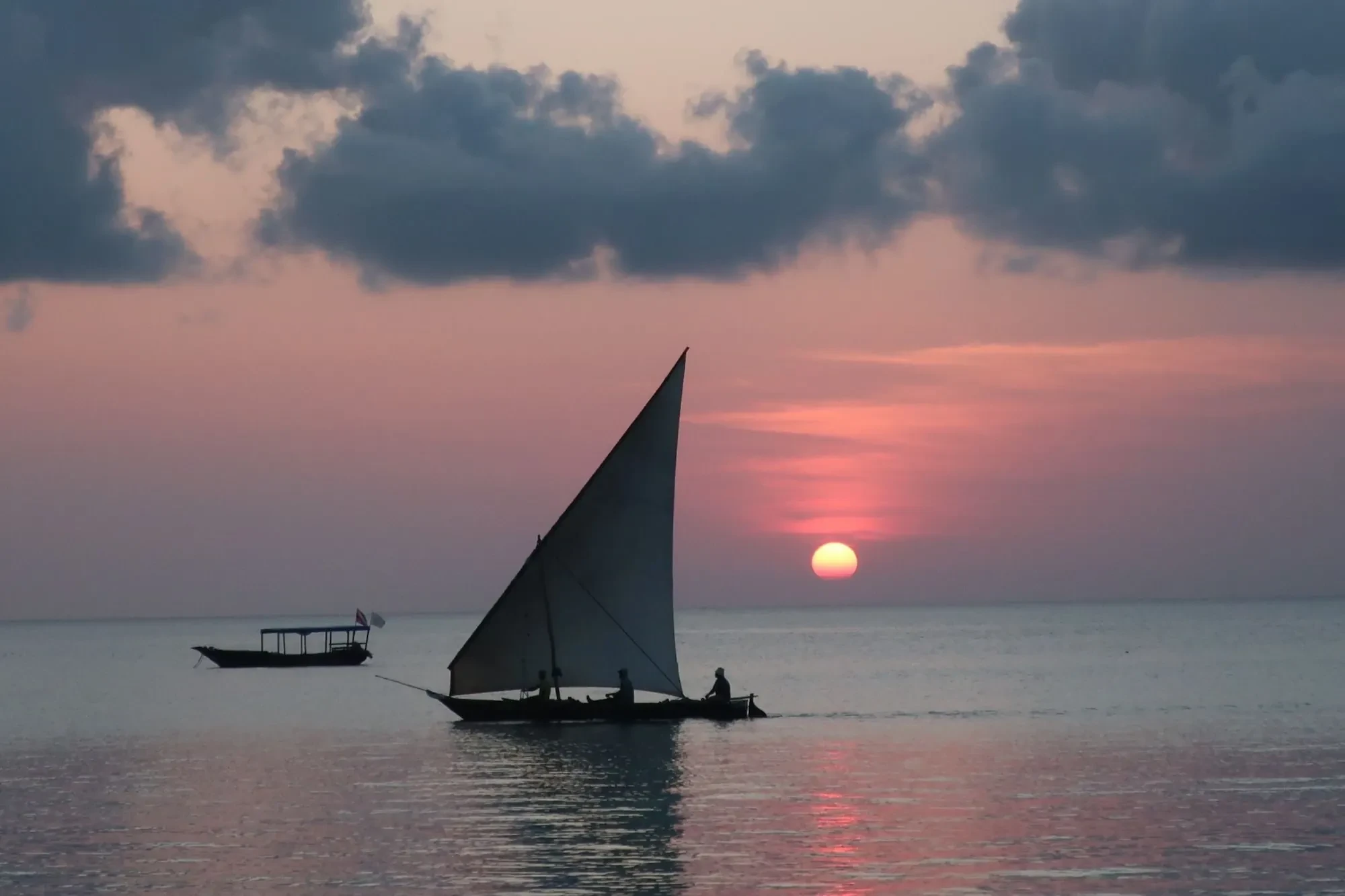
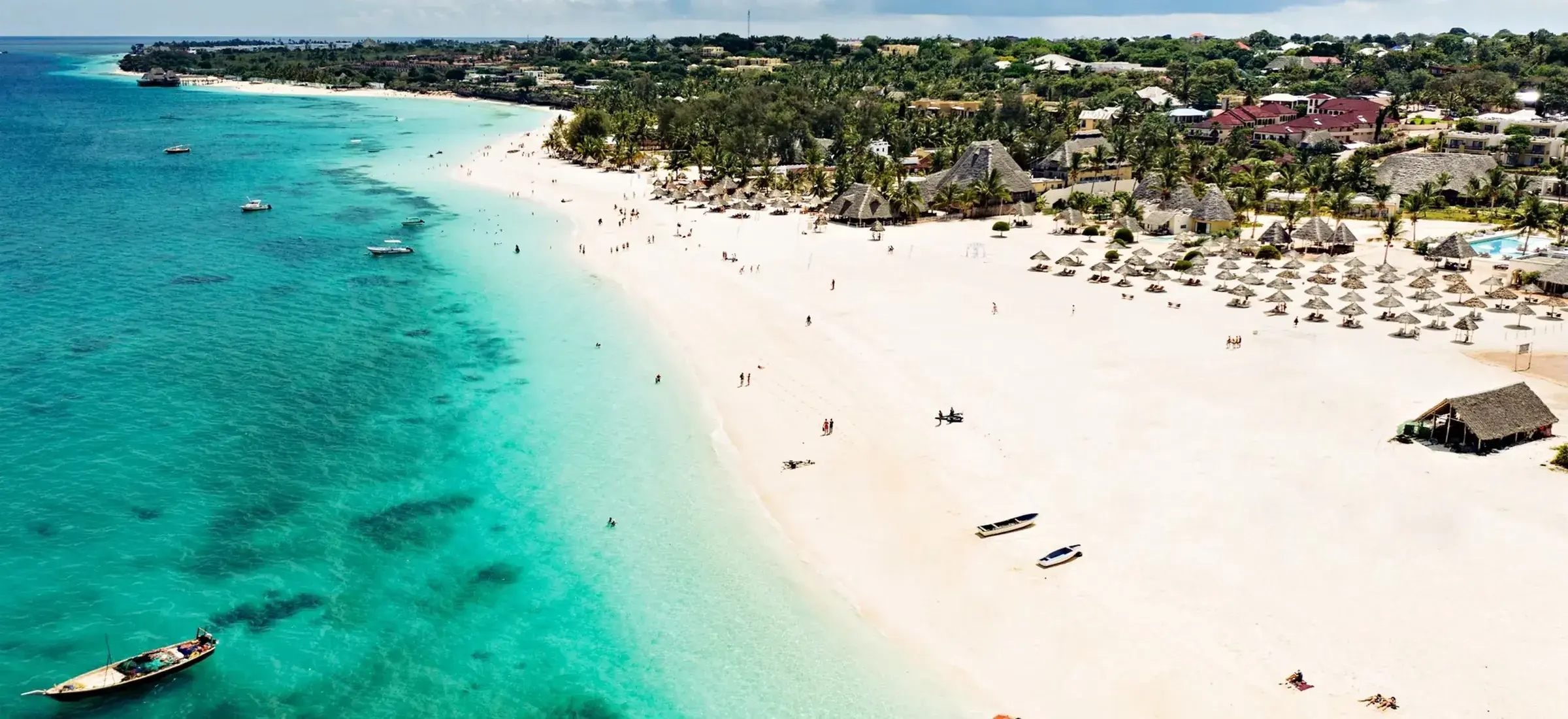
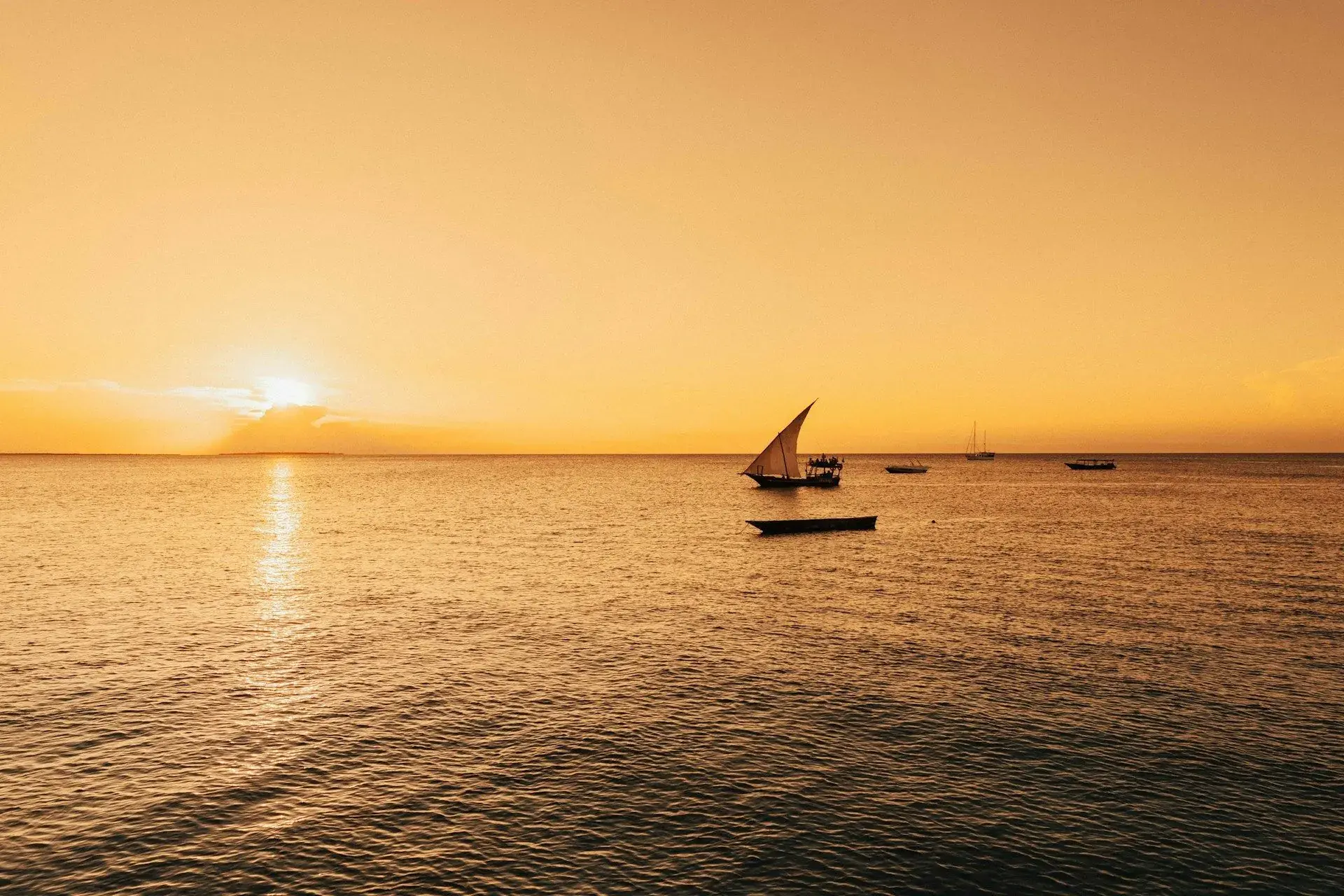
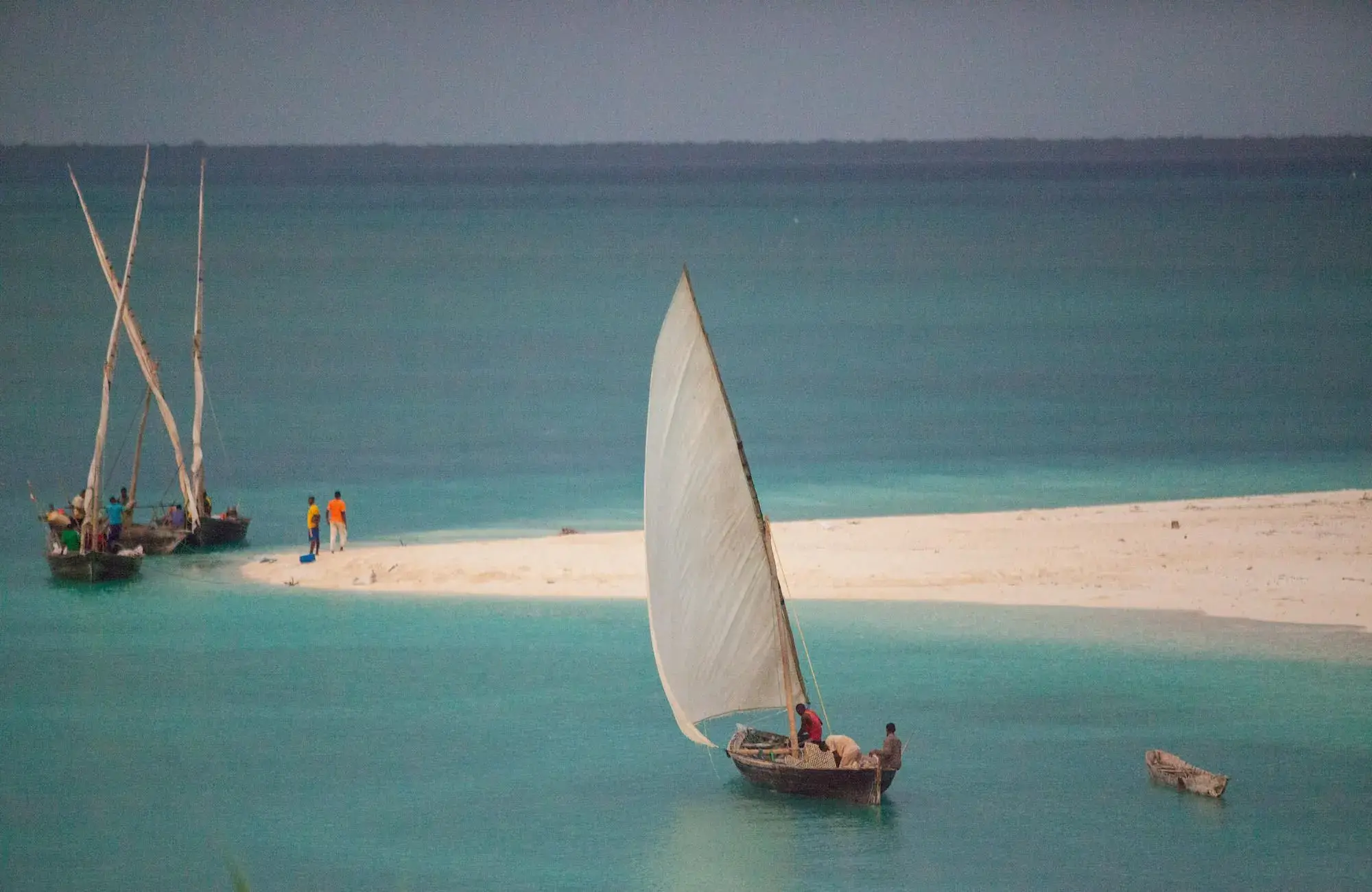
Zanzibar is the Indian Ocean at its most inviting — a tropical archipelago of powder-white beaches, water in every shade of blue, and dhows leaning into the trade winds offshore. After days on the plains, this is where a journey slows down: the pace softens, the horizon opens, and there is nothing more pressing than the tide.
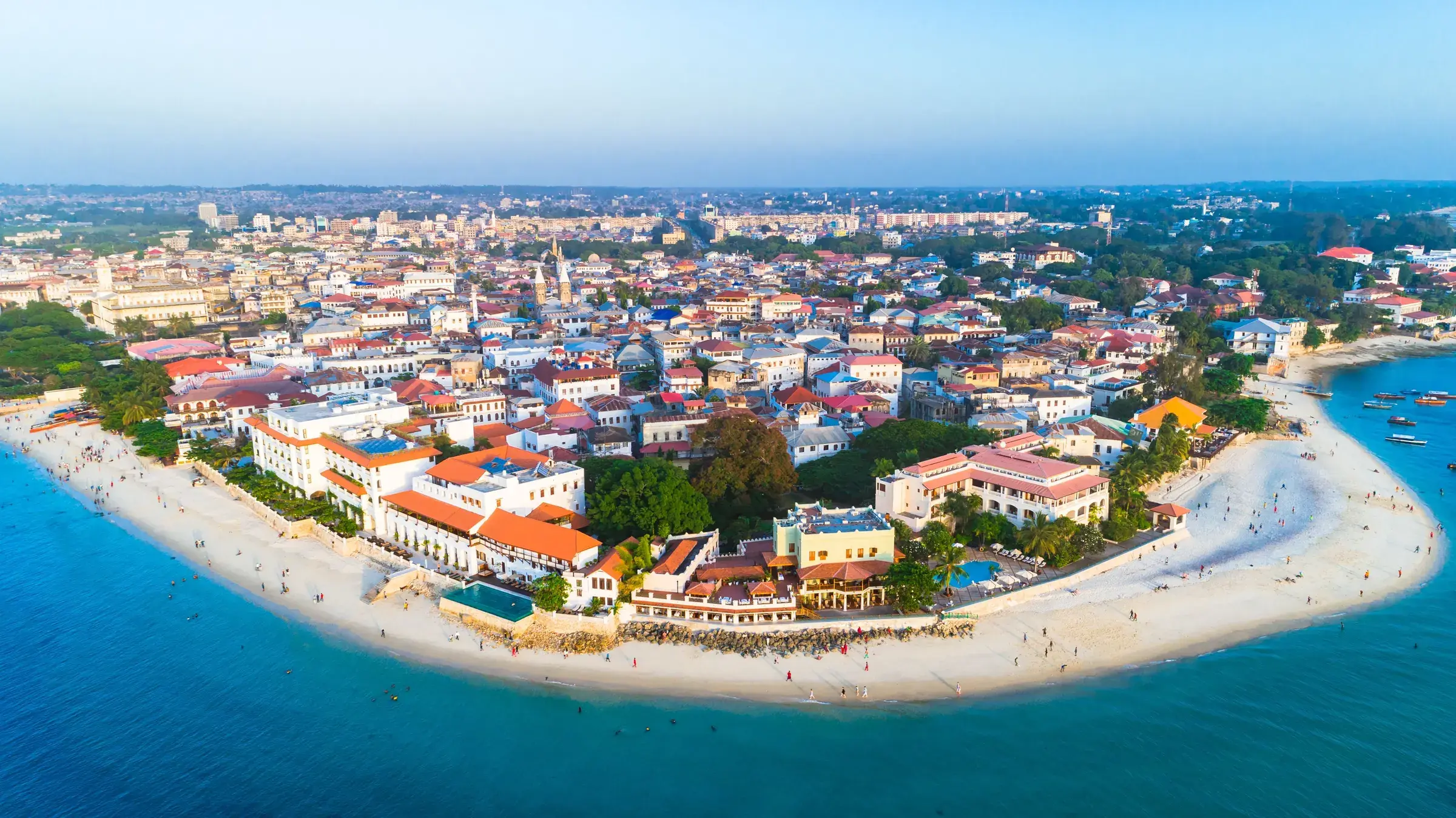
But Zanzibar is more than a beach. At its heart is Stone Town, a UNESCO World Heritage maze of coral-stone houses, carved doors and spice-market lanes where African, Arab, Indian and European histories have met for centuries. Inland, the Jozani Forest shelters the endemic red colobus monkey, and the old spice routes still perfume the island's plantations. It is a place with a deep, layered story, not just a shoreline.
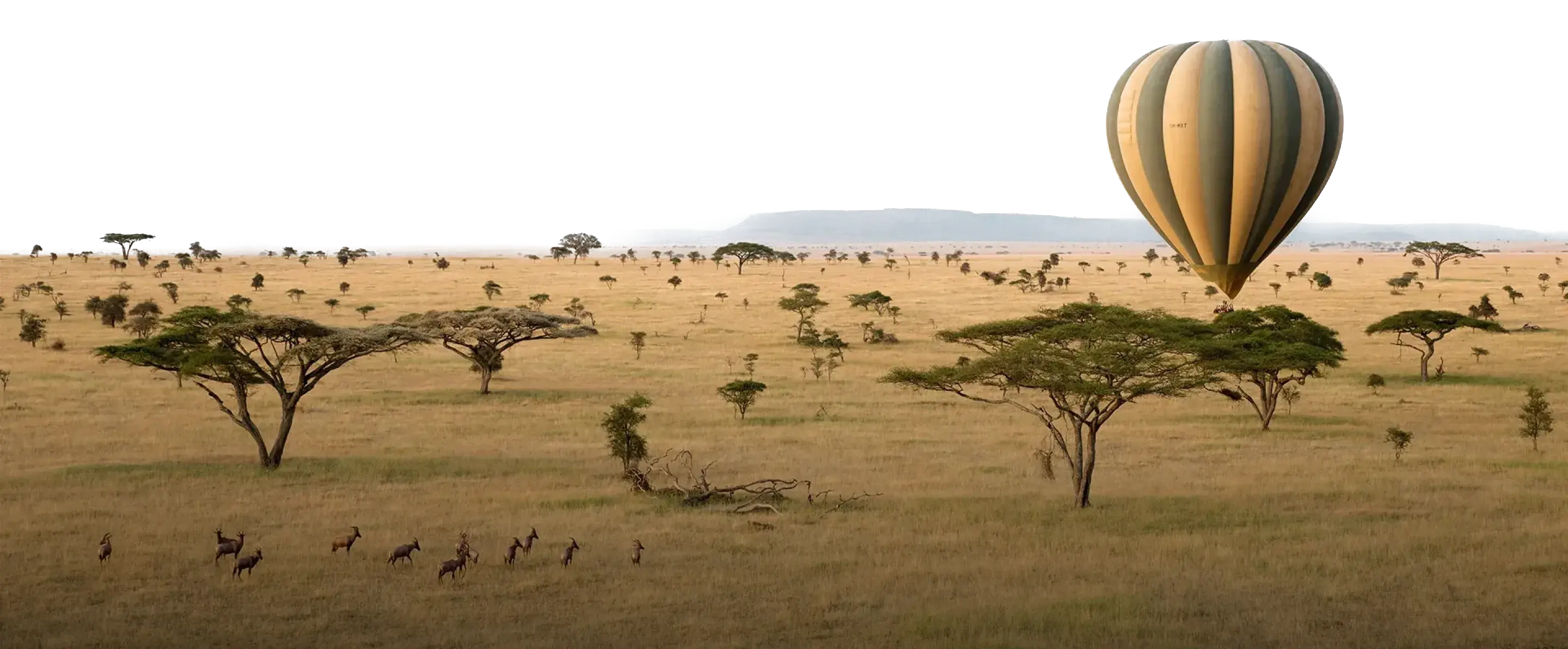
Above all, Zanzibar is the natural close to an East African safari — the bush-and-beach finish that turns a great trip into a complete one. The Serengeti or the Mara, then the ocean.
Signature experiences here
- The bush-and-beach finish — A mainland safari followed by the Indian Ocean, designed as one seamless journey. → Safari & beach holiday
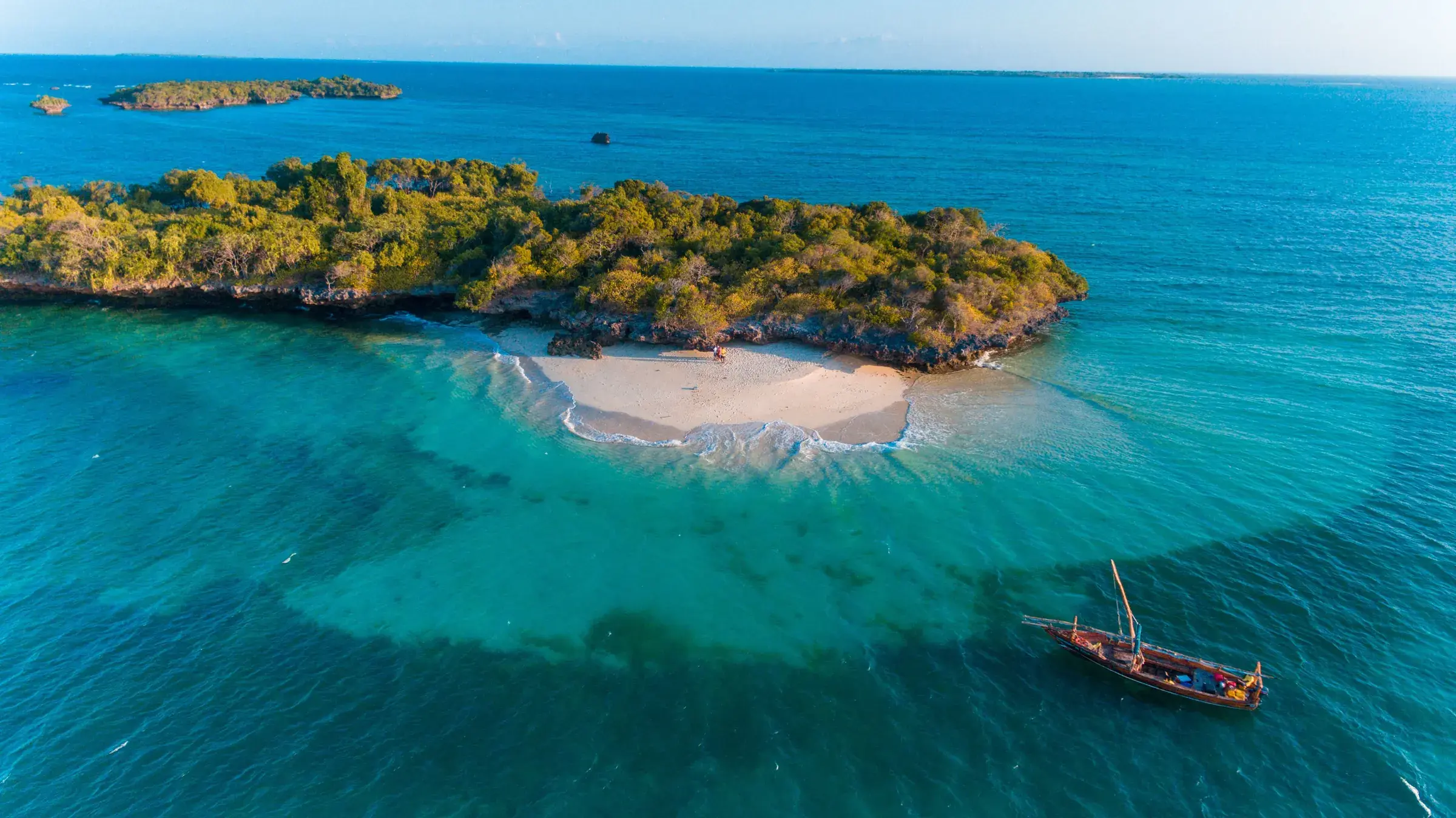
- Beaches & the ocean — White-sand shores, snorkelling and diving on the reefs, dhow sailing and sandbank days. → Explore
- Stone Town & Swahili history — The UNESCO old town, its carved doors, spice markets and waterfront. → Cultural Stories
- Spice & forest — Spice-plantation walks and the Jozani Forest's endemic red colobus monkeys. → Cultural Stories
- Designed for every traveller — Honeymoons, families and comfort-led island stays, paced to suit you. → Accessible Travel
Featured journeys
- Shores of Zanzibar — The island at its most restful — beaches, Stone Town and spice. → Explore
- Serengeti & the Sea — The great plains, then the Indian Ocean — the classic bush-and-beach arc. → Explore
- Stone Town & Sand — Swahili history and white-sand days in one unhurried week. → Explore Link: View all Zanzibar journeys →
Parks & places
- Stone Town — A UNESCO World Heritage old town of coral-stone houses, carved doors and spice-market lanes. → Explore
- The north coast (Nungwi & Kendwa) — Wide white beaches and the island's most reliable swimming at any tide. → Explore
- The east coast (Paje, Jambiani, Matemwe) — Long reef-protected beaches, kitesurfing and quieter shores. → Explore
- Jozani Forest — The island's nature reserve, home to the endemic Zanzibar red colobus monkey. → Explore
- The spice plantations — Walks through the clove, nutmeg and cinnamon that gave the island its name. → Explore
- Mnemba Atoll & the reefs — Snorkelling and diving in clear, coral-rich water off the north-east. → Explore
Best time to visit
Zanzibar is a year-round island shaped by two rainy seasons rather than a safari calendar.
The long dry season (June to October) is the prime window — warm, sunny days, lower humidity and calm seas, and it aligns neatly with the peak mainland safari season, which makes it ideal for a bush-and-beach journey. The short dry spell around January and February is hot, bright and popular over the festive and new-year period.
The rains come in two windows: the long rains roughly March to May (the quietest, greenest, often wettest months) and the short rains around November. The island stays warm throughout. For a safari-and-beach trip, June to October pairs best with the mainland; full month-by-month detail is in our → Best time to visit Zanzibar guide.
Know before you go
- Getting there: Fly into Abeid Amani Karume International Airport (ZNZ), a short hop from the mainland (Dar es Salaam, Arusha or the safari airstrips) or direct on some international routes.
- Entry: Tanzania entry rules apply (most visitors need a visa, available online or on arrival), plus mandatory travel/health insurance for Zanzibar. (Rules change — we confirm current requirements with you and link to the official portals.)
- Health: Check current vaccination and antimalarial guidance with a travel clinic; Zanzibar is a malaria-risk area.
- Culture & dress: Zanzibar is predominantly Muslim; modest dress is appreciated away from the beach and resorts, especially in Stone Town.
- Tides: Some east-coast beaches recede dramatically at low tide — we match your beach and lodge to how you like to swim.
- How long: Most island stays run 3–5 nights; a few more if Zanzibar is your whole trip rather than a safari finish.
Pair it with
Zanzibar is the classic finish to a Tanzania safari — the Serengeti or Ngorongoro, then the Indian Ocean — and pairs just as naturally with a Kenya journey or as a restful close to the highlands of Ethiopia. The bush-and-beach combination is one we design constantly; see → Safari & beach holiday. We'll handle the connections seamlessly.
Travel with confidence
A KATO/TRA-registered operator with on-the-ground expertise, supported journeys, financial protection and 24-hour assistance. (Confirm and insert exact credentials and a Zanzibar-specific review snippet.)
Where to begin
The areas most journeys through Zanzibar are built around.
All places in Zanzibar
Every area we place guests, grouped by the ground it covers.
Coast & beaches
- BwejuuZanzibar · 7 places to stay
- KizimkaziZanzibar · 5 places to stay
- MatemweZanzibar · 8 places to stay
- MichamviZanzibar · 4 places to stay
- Mnemba IslandZanzibar · 1 place to stay
- PembaZanzibar · 5 places to stay
- PongweZanzibar · 4 places to stay
- Pwani MchanganiZanzibar · 4 places to stay
- UroaZanzibar · 5 places to stay
Common questions
- Is Zanzibar a safari destination?
- No — Zanzibar is an Indian Ocean island known for beaches, Stone Town and the Jozani Forest, not for safari parks. Its classic role is the restful bush-and-beach finish to a mainland East African safari.
- When is the best time to visit Zanzibar?
- June to October is the prime dry window and aligns with peak mainland safari season, making it ideal for a combined trip; January–February is hot and bright, while the long rains fall around March to May.
- How many days do you need in Zanzibar?
- Three to five nights suits most travellers as a safari finish; allow more if the island is your whole trip.
- Is Zanzibar good for honeymoons, families or accessible travel?
- Yes to all — it's a favourite for honeymoons and a relaxed family finish, and we design island stays around mobility and comfort needs.
- Do I need a visa for Zanzibar?
- Zanzibar is part of Tanzania, so Tanzanian entry rules apply (most visitors need a visa, online or on arrival), plus mandatory travel/health insurance for Zanzibar; we'll point you to the current official process.
Tell us what you want from Zanzibar
We'll design the journey around it — places, pace and people matched to how you travel.