Ethiopia
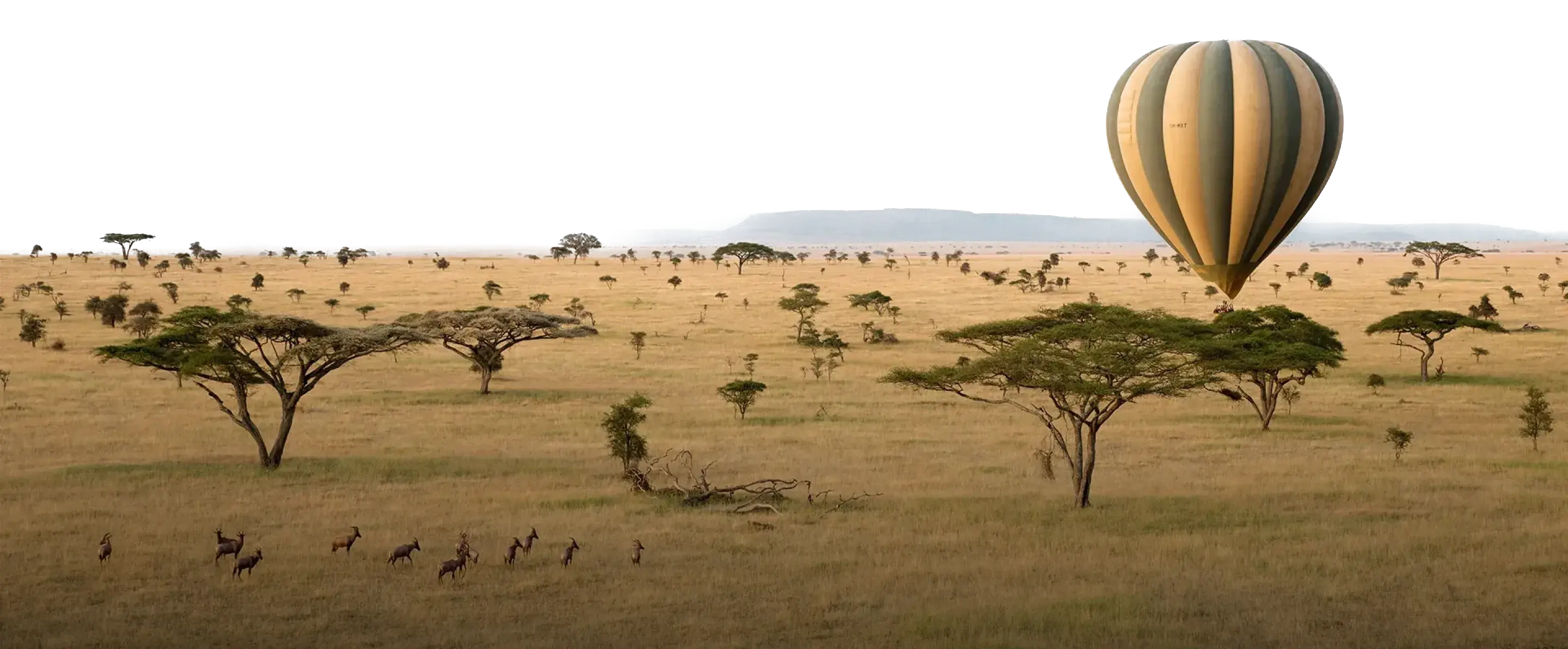
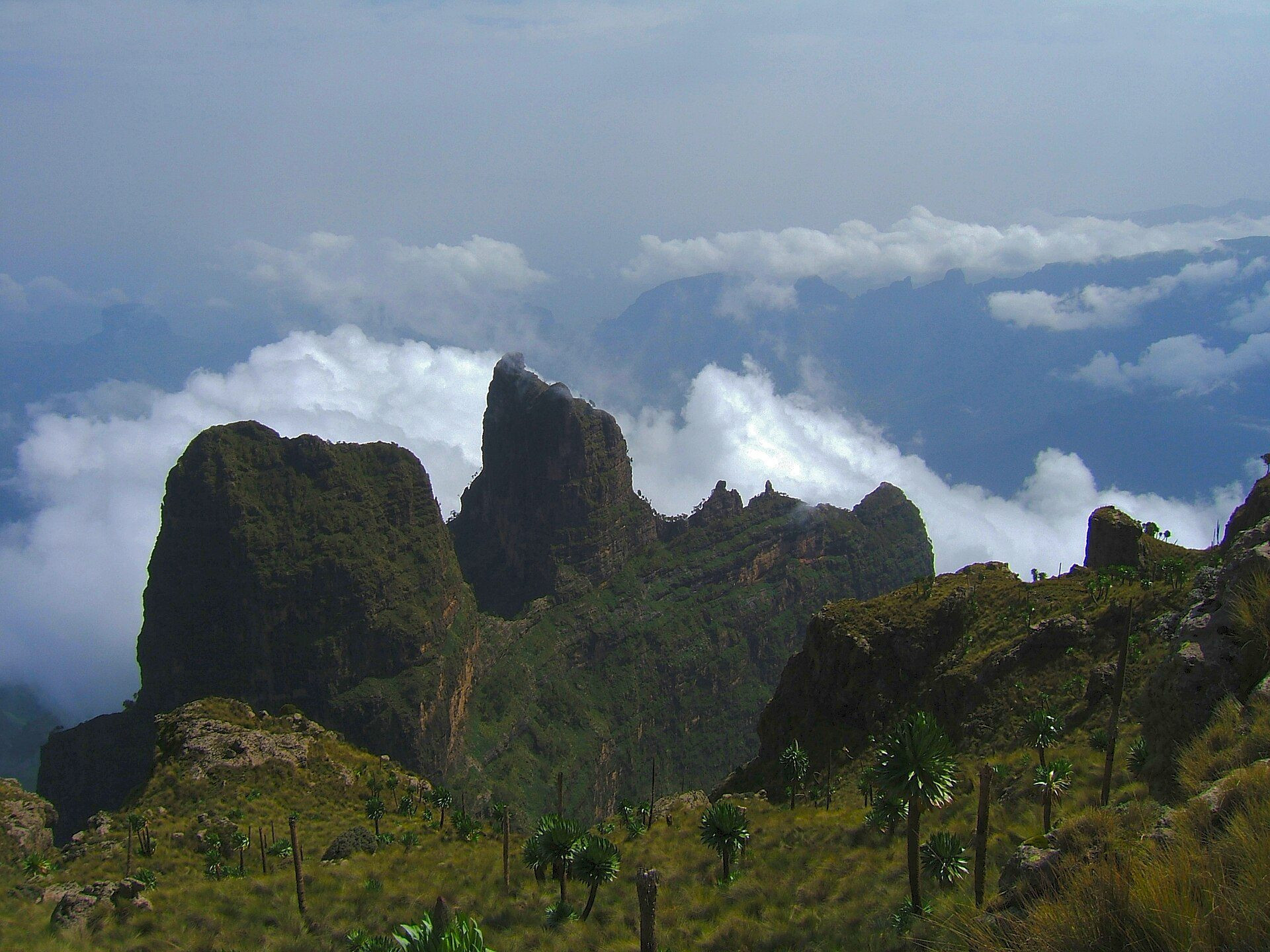
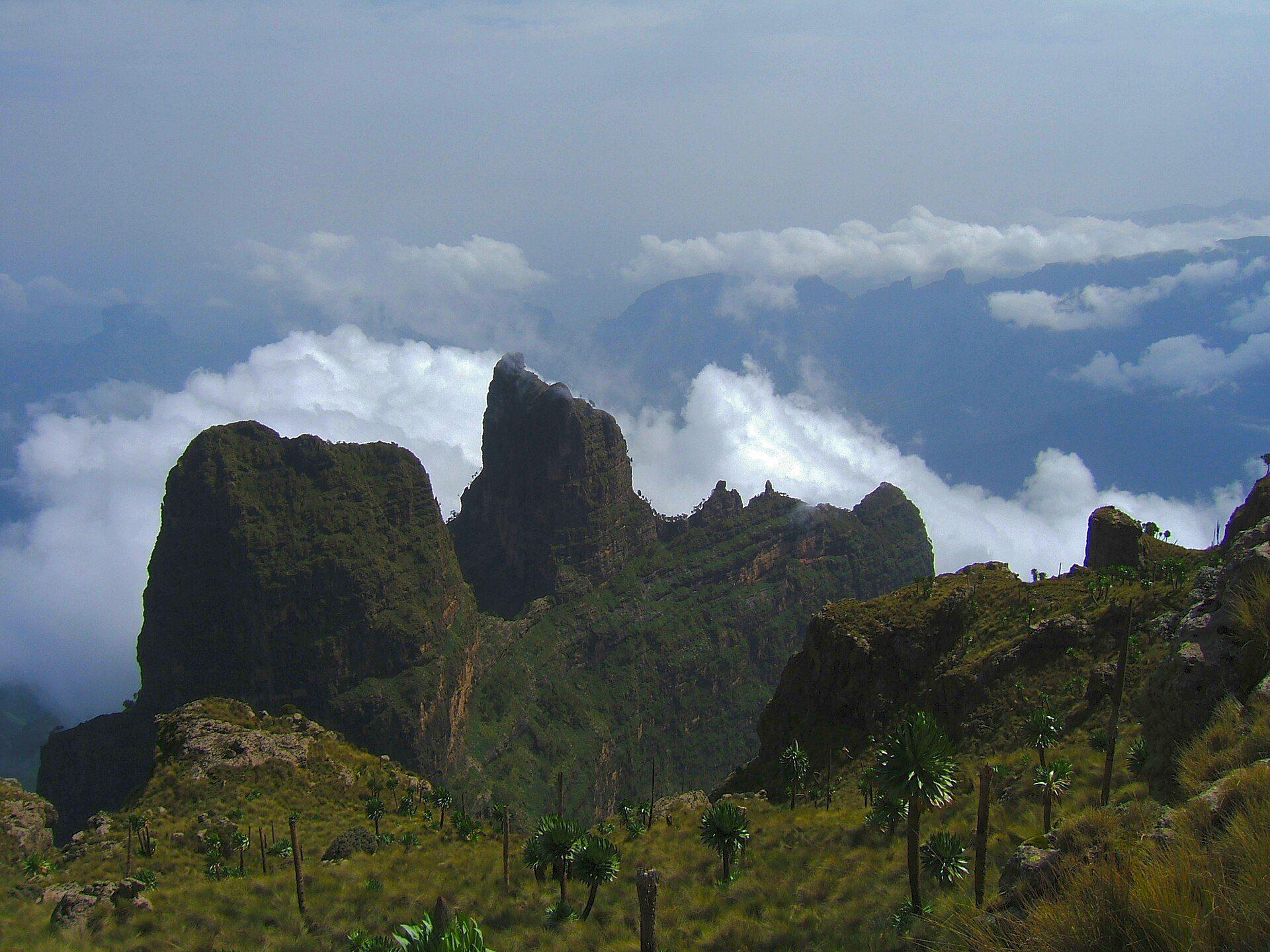
Ethiopia is a different kind of African journey — less about the Big Five, more about dramatic highlands, endemic wildlife and some of the oldest living history on the continent. Its signature draws are the Simien and Bale Mountains (home to gelada, walia ibex and the rare Ethiopian wolf), the historic route of rock-hewn Lalibela, the castles of Gondar and ancient Aksum, and the cultures of the Omo Valley. Nobu designs tailored Ethiopia journeys for curious, active travellers — on their own or paired with a classic East African safari.
Why visit
Set your expectations differently for Ethiopia, and it rewards you like nowhere else on the continent. This is not classic savannah safari country. It is a roof-of-Africa landscape of highland plateaus and plunging escarpments, of creatures that live here and nowhere else, and of a history written in rock and faith over thousands of years.
What sets Ethiopia apart is depth. In the Simien Mountains you can sit among grazing troops of gelada on a cliff edge; in the Bale Mountains you can watch an Ethiopian wolf — the rarest canid on earth — hunt the Afroalpine moorland. Then you can walk into Lalibela's rock-hewn churches, still living places of pilgrimage, or trace the castles of Gondar and the ancient stelae of Aksum. In the south, the Omo Valley holds some of the most distinct living cultures in Africa.
It is a journey for the curious and the active — and it pairs beautifully with a Kenyan or Tanzanian safari for travellers who want both worlds: the plains and the highlands, the Big Five and the endemics.
Signature experiences here
- Highland trekking & endemic wildlife — The Simien and Bale Mountains on foot, in the company of gelada, walia ibex and the Ethiopian wolf. → Expedition Experiences
- The historic route — Rock-hewn Lalibela, the castles of Gondar and the stelae of Aksum, with guides who read the history as a living thing. → Cultural Stories
- Cultural encounters in the Omo Valley — Time with the peoples of the south, on terms of respect, not spectacle. → Cultural Stories
- Bush-and-highland pairings — Ethiopia alongside a classic East African safari, designed as one seamless journey. → Safaris
- Designed for every explorer — Comfort-led and multi-generational Ethiopia journeys, paced to the altitude and the road. → Accessible Travel
Featured journeys
- Highlands & History — The historic route and the Simien escarpment, woven into one northern arc. → Explore
- Roof of Africa Trek — The Simien and Bale Mountains on foot, after the endemics. → Explore
- Plains & Highlands — An East African safari finished in the Ethiopian highlands. → Explore Link: View all Ethiopia journeys → (Ethiopia journeys are being added as the cluster fills in; start with → Plan Your Journey.)
Parks & places
- Simien Mountains — Escarpment trekking among gelada and the endemic walia ibex. → Explore
- Bale Mountains — Afroalpine moorland and the best chance on earth to see the Ethiopian wolf. → Explore
- Lalibela — Eleven rock-hewn churches, still living places of pilgrimage. → Explore
- Gondar — The royal city and its 17th-century castles, the "Camelot of Africa." → Explore
- Aksum — Ancient stelae and the heart of one of Africa's oldest kingdoms. → Explore
- Omo Valley — Some of the most distinct living cultures on the continent. → Explore
Best time to visit
Ethiopia's seasons are shaped by its altitude and its rains, not by a Big-Five migration.
The dry months (roughly October to March) are the prime window — clear highland skies, firm trails and the best conditions for trekking the Simien and Bale Mountains. The period just after the main rains, around late September to November, brings the highlands at their greenest, carpeted in wildflowers, with the Meskel religious festival in late September and Timkat (Ethiopian Epiphany) in January among the most striking cultural occasions to travel for.
The main rains fall roughly June to September, when highland trails turn slick and some roads become difficult — though the landscapes are lush and dramatic between showers. We confirm the right window for your route, since timing the highlands well makes the difference between a trek and a slog.
Know before you go
- Getting there: Most travellers fly into Addis Ababa Bole International Airport (ADD), then connect to the historic route and trekking regions by domestic flight or road.
- Entry: Most international visitors need a visa, available as an e-Visa applied for online before travel. (Rules change — we confirm current requirements with you and link to the official portal.)
- Altitude: Much of Ethiopia sits above 2,000m, and treks climb far higher; we pace itineraries to acclimatise and advise on altitude.
- Health: Check current vaccination and antimalarial guidance with a travel clinic — malaria risk is low in the high highlands but present at lower altitudes and in the south.
- Safety: Conditions vary by region and can change; we plan routes and timing around current, on-the-ground guidance and brief you fully before you travel.
- How long: Most Ethiopia journeys run 7–12 days; allow extra if you're combining the historic route with a mountain trek or pairing with a safari.
Pair it with
Ethiopia pairs naturally with Kenya or Tanzania for travellers who want the plains and the Big Five alongside the highlands and endemics — the classic safari and the road less travelled, designed as one journey. For a restful finish, the highlands flow well into a coast or island stay such as Zanzibar. We'll design the connections seamlessly.
Travel with confidence
A KATO/TRA-registered operator with on-the-ground expertise, supported journeys, financial protection and 24-hour assistance. (Confirm and insert exact credentials and an Ethiopia-specific review snippet.)
Where to begin
The areas most journeys through Ethiopia are built around.
All places in Ethiopia
Every area we place guests, grouped by the ground it covers.
Parks & reserves
Mountains & highlands
Cities & gateways
Common questions
- Is Ethiopia a safari destination?
- Not in the classic Big-Five sense. Ethiopia is a journey of highlands, history and endemic wildlife — gelada, walia ibex and the Ethiopian wolf rather than lions and leopards — though it pairs beautifully with an East African safari for travellers who want both.
- When is the best time to visit Ethiopia?
- The dry months, roughly October to March, are best, especially for trekking the Simien and Bale Mountains; we'll confirm the window for your route and any festivals you'd like to travel for.
- How many days do you need in Ethiopia?
- Most journeys run seven to twelve days; the historic route alone deserves several, and a mountain trek or a safari pairing adds more.
- Is Ethiopia good for first-timers or families?
- Yes, with the right pacing. It suits curious, active travellers; we design itineraries around the altitude, the road and the people travelling, and pair Ethiopia with a savannah safari for first-time Africa-goers who also want the Big Five.
- Do I need a visa for Ethiopia?
- Most international visitors do, available as an e-Visa applied for online before travel; we'll point you to the current official process.
Tell us what you want from Ethiopia
We'll design the journey around it — places, pace and people matched to how you travel.