Nyerere, Selous
Nyerere, Selous is a safari area in Tanzania. We currently track 12 places to stay here. Access is usually via Selous airstrips. It works best when the route gives it a clear purpose: arrival, wilderness, coast, culture, rest or a better-paced connection between larger stops.
Why visit
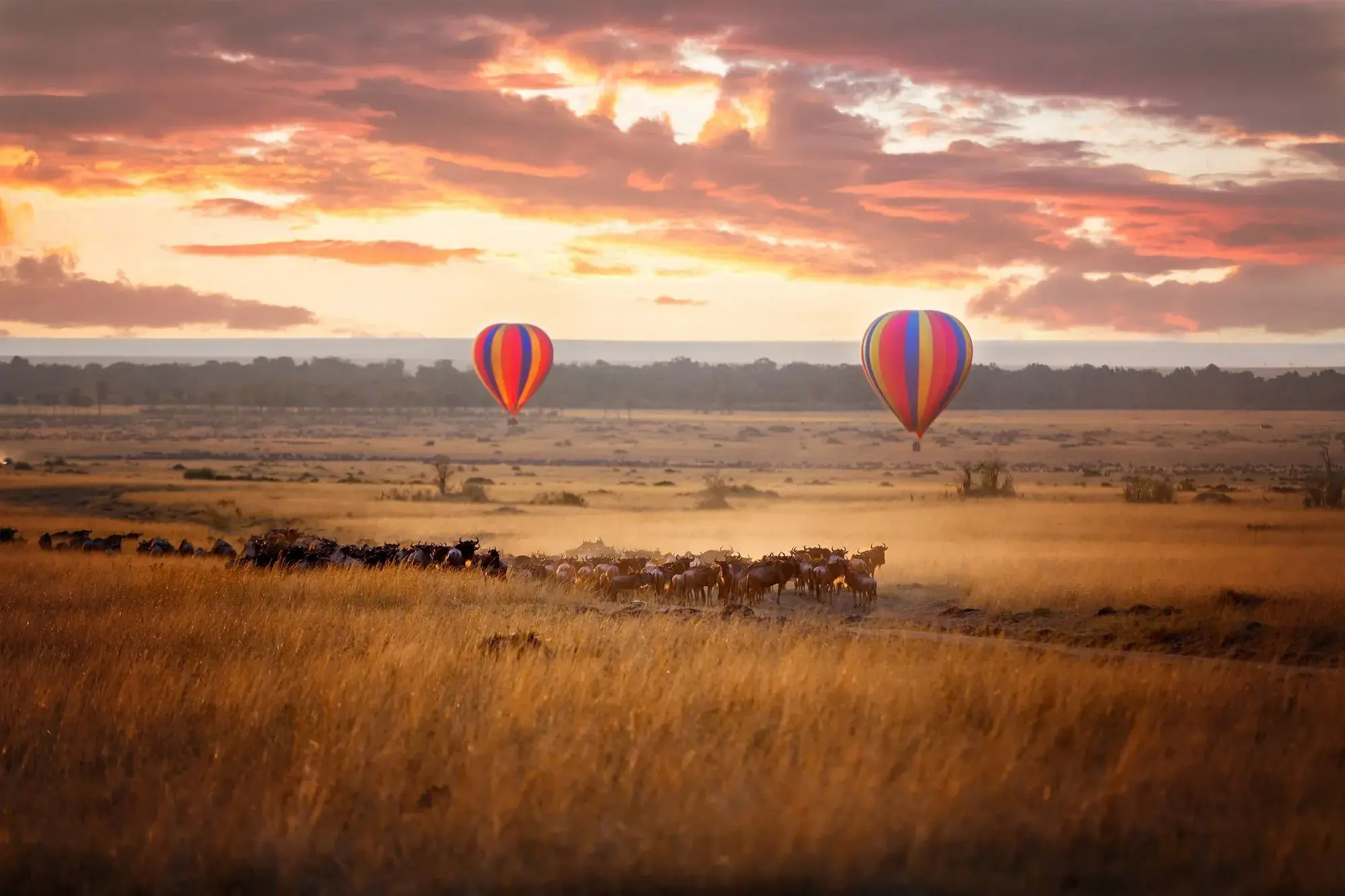
Nyerere is Tanzania at its wildest and least travelled. Carved from the legendary Selous — once the largest game reserve in Africa — it is a wilderness of a scale that humbles, threaded by the Rufiji River as it braids into a maze of channels, lakes and sandbanks. Where the northern circuit is about set-piece spectacle, the south is about immersion: the slow turn of a boat past a pod of hippo, the crunch of a walking guide's footstep on a sandbar, the feeling of being somewhere genuinely far out.
This is one of the few major Tanzanian parks where you can leave the vehicle behind — by boat on the river, or on foot with an armed guide — and that changes the texture of everything. The wildlife is rich and the encounters feel earned rather than arranged.
It is also a stronghold for the African wild dog, one of the continent's most endangered and most thrilling predators to track. For travellers who have done the north, or who simply want fewer vehicles and more wilderness, the south is the answer.
Wildlife & landscapes
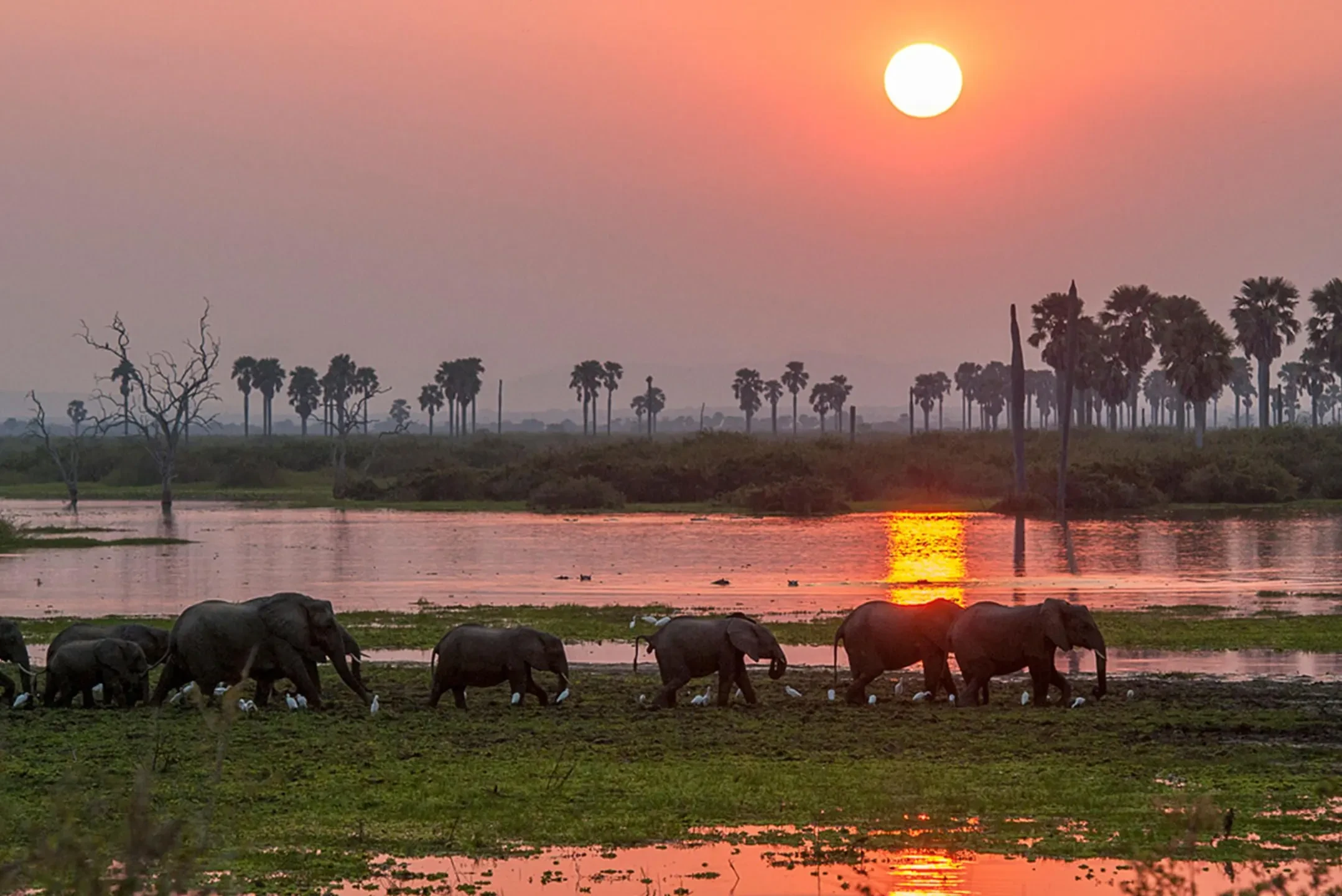
The Rufiji River is the lifeblood — its channels and lakes hold great numbers of hippo and crocodile, and draw elephant, buffalo, giraffe, zebra and waterbuck to drink. Lion are strong here, leopard present, and the park is one of Africa's most important refuges for the endangered African wild dog. Birdlife along the water is exceptional. The landscape is a mosaic of riverine forest, palm-fringed lakes, miombo woodland and open floodplain — wilder and more watery than the northern parks, and far emptier of vehicles. Black rhino survive in tiny numbers but are rarely seen.
Best time to visit Nyerere
The dry season (June–October) is the prime window: wildlife concentrates along the river and lakes, walking conditions are best, and the heat is more manageable — this is the headline time for the south. The green season (November–May) brings lush landscapes, superb birding and newborns, but heavier rains around March–May can make some areas hard to reach, and a number of southern camps close in the wettest months. For the river at its most game-rich and the widest choice of camps, plan for the dry season. For the wider seasonal picture, see our → Best time to visit Tanzania guide.
Things to do here
- Boat safaris — the south's signature: drifting the Rufiji past hippo, crocodile and drinking herds, a perspective the north can't offer.
- Walking safaris — on foot with an armed guide through genuine wilderness (see → Walking safari).
- Game drives — morning and afternoon drives through woodland and floodplain, tracking lion and wild dog.
- Fly-camping — a night out under canvas in the bush, for the deepest immersion.
- Birdwatching — exceptional along the river and lakes, especially in the green season.
Know before you go
- Getting there: most travellers fly in by light aircraft from Dar es Salaam (a short hop), rather than the long road transfer; this makes the south an easy add to a Zanzibar or coastal leg.
- Fees: national park entry fees apply (per person, per day); we confirm current rates and include them in your quote.
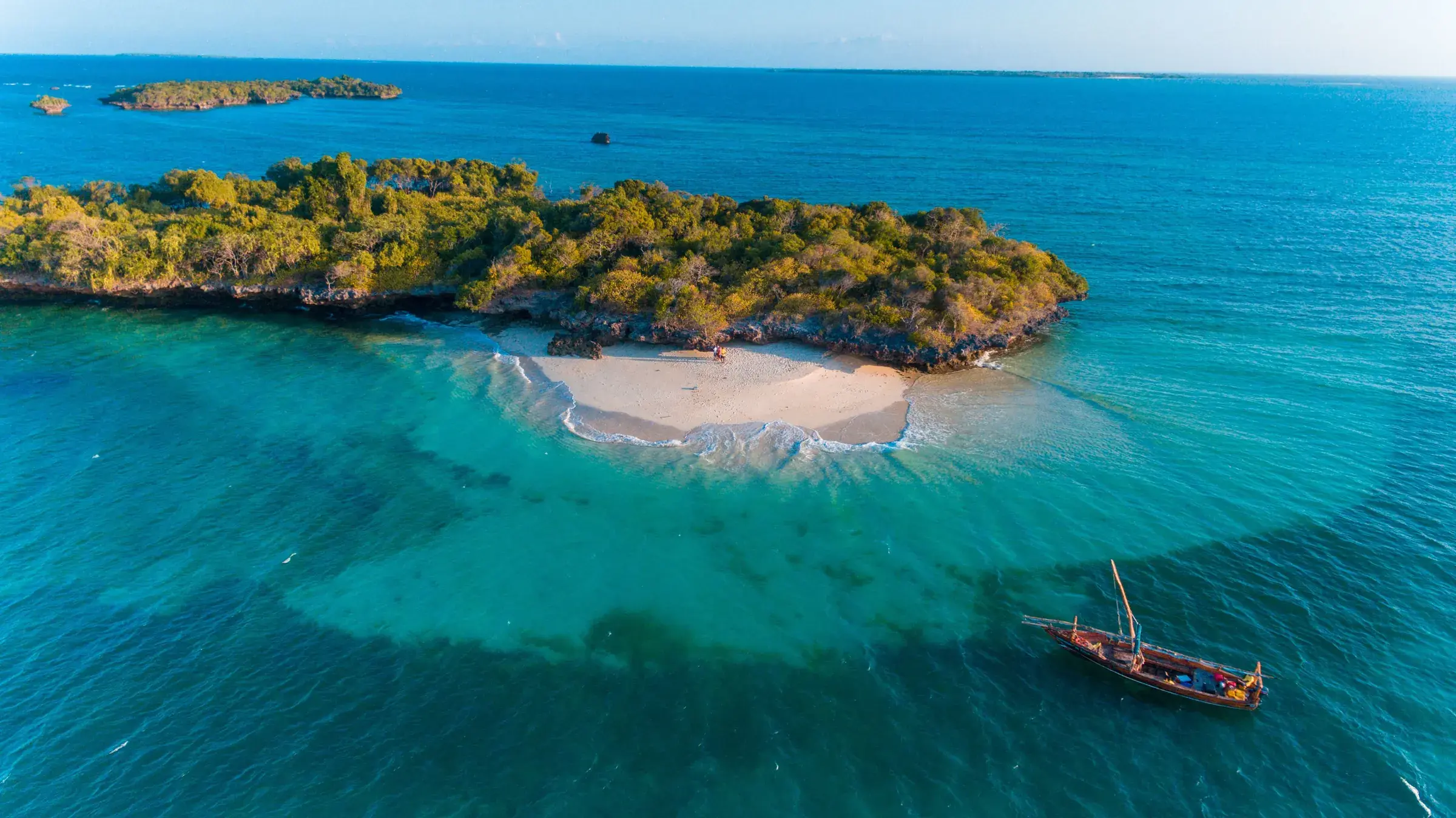
- How long: 3–4 nights does the south justice and justifies the flight in; it pairs beautifully with Zanzibar for bush-and-beach.
Related Nobu journeys
- Wild South Expedition — Nyerere by boat, vehicle and on foot, far from the crowds. → Explore
- Southern Safari & Spice — the wild south paired with Zanzibar for bush-and-beach. → Explore
When to go
Month by month — daytime warmth, days of rain and what the season brings.
Where to stay
From Essential to Private Collection — the camps and lodges we know first-hand here. Rates are indicative and confirmed on enquiry.
Essential
Selous Mbuyu Safari Camp
Essentialtented camp · reserve riverfront
from $200 pp / night· indicative, confirmed on enquiry
Signature
Rufiji River Camp
Signaturetented camp · reserve riverfront
from $250 pp / night· indicative, confirmed on enquiry
Selous Impala Camp
Signaturetented camp · reserve riverfront
from $350 pp / night· indicative, confirmed on enquiry
Selous Serena Camp
Signaturetented camp · reserve riverfront
from $400 pp / night· indicative, confirmed on enquiry
Expedition
Lake Makubi Safari Camp
Expeditiontented camp · reserve lakeshore
from $300 pp / night· indicative, confirmed on enquiry
Lake Manze Tented Camp
Expeditiontented camp · reserve lakeshore
from $300 pp / night· indicative, confirmed on enquiry
Elevated
Roho ya Selous
Elevatedtented camp · reserve lakeshore
from $650 pp / night· indicative, confirmed on enquiry
Selous Riverside Safari Camp
Elevatedtented camp · reserve riverfront
from $300 pp / night· indicative, confirmed on enquiry
Serena Mivumo River Lodge
Elevatedlodge · reserve riverfront
from $400 pp / night· indicative, confirmed on enquiry
Siwandu
Elevatedtented camp · reserve lakeshore
from $600 pp / night· indicative, confirmed on enquiry
Private Collection
Beho Beho
Private Collectionlodge · reserve
from $900 pp / night· indicative, confirmed on enquiry
Sand Rivers Selous
Private Collectionlodge · reserve riverfront
from $900 pp / night· indicative, confirmed on enquiry
Journeys through here
Signature routes that pass through Nyerere, Selous — starting points we reshape around your season and pace.
Common questions
- When is the best time to visit Nyerere (Selous)?
- The dry season, roughly June to October, when wildlife concentrates along the Rufiji and walking and boating are at their best; some camps close in the heaviest rains around March–May.
- What can you do in Nyerere that you can't on the northern circuit?
- Boat safaris on the Rufiji River and extensive walking safaris — the south lets you leave the vehicle in a way the busy northern parks largely don't.
- How many days do you need in Nyerere?
- Three to four nights makes the flight in worthwhile and lets you mix boat, vehicle and walking; it pairs naturally with a Zanzibar finish.
- Can you see wild dogs in Nyerere?
- Nyerere is one of Africa's most important strongholds for the endangered African wild dog, so sightings are a real possibility, especially in the dry season — though, as with all wildlife, never guaranteed.
Tell us what you want from Nyerere, Selous
We'll design the journey around it — places, pace and people matched to how you travel.