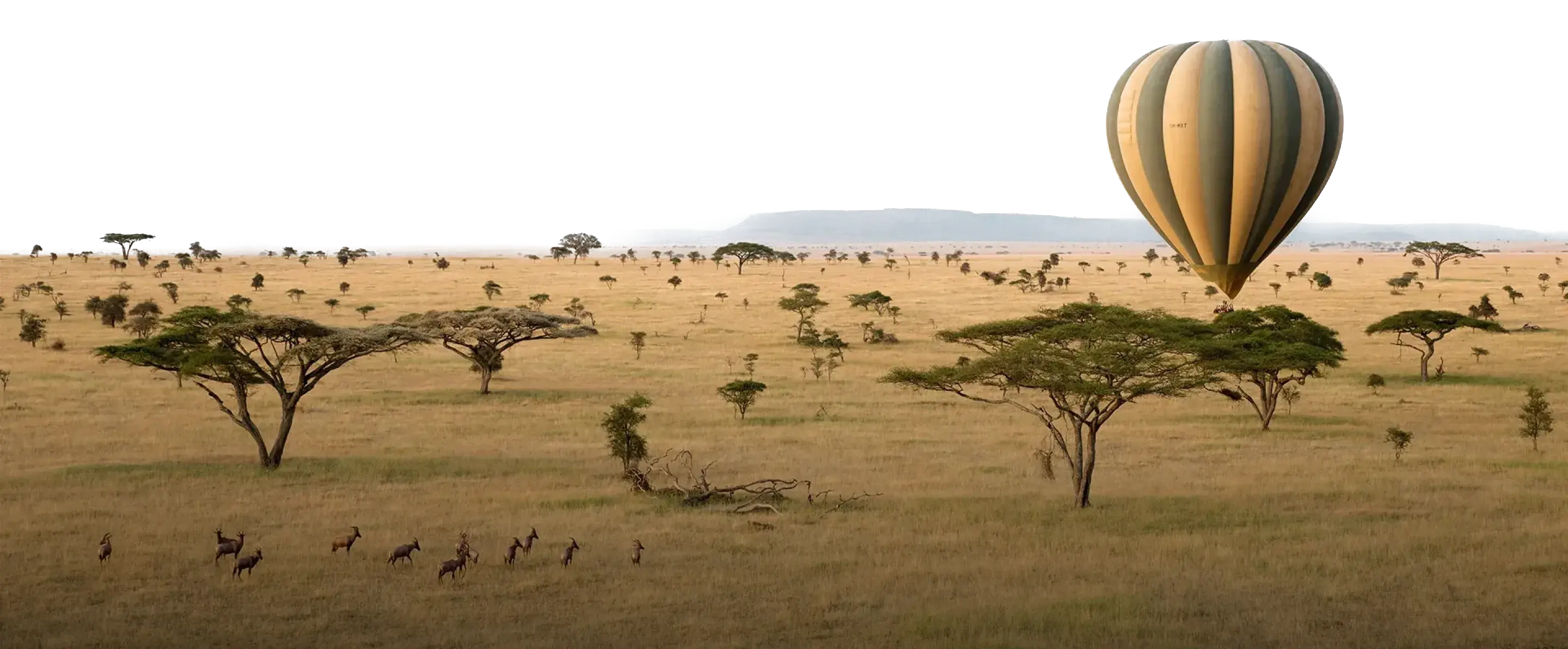
Samburu
Samburu is a national reserve in Kenya's arid north, along the Ewaso Ng'iro River, known for a distinctive cast of dryland species — the "Special Five": Grévy's zebra, reticulated giraffe, gerenuk, Somali ostrich and Beisa oryx — found here but not on the southern safari circuit. With strong elephant, big cats along the river, dramatic semi-desert scenery and the culture of the Samburu people, it suits travellers wanting something wilder and different from the Mara.
Why visit
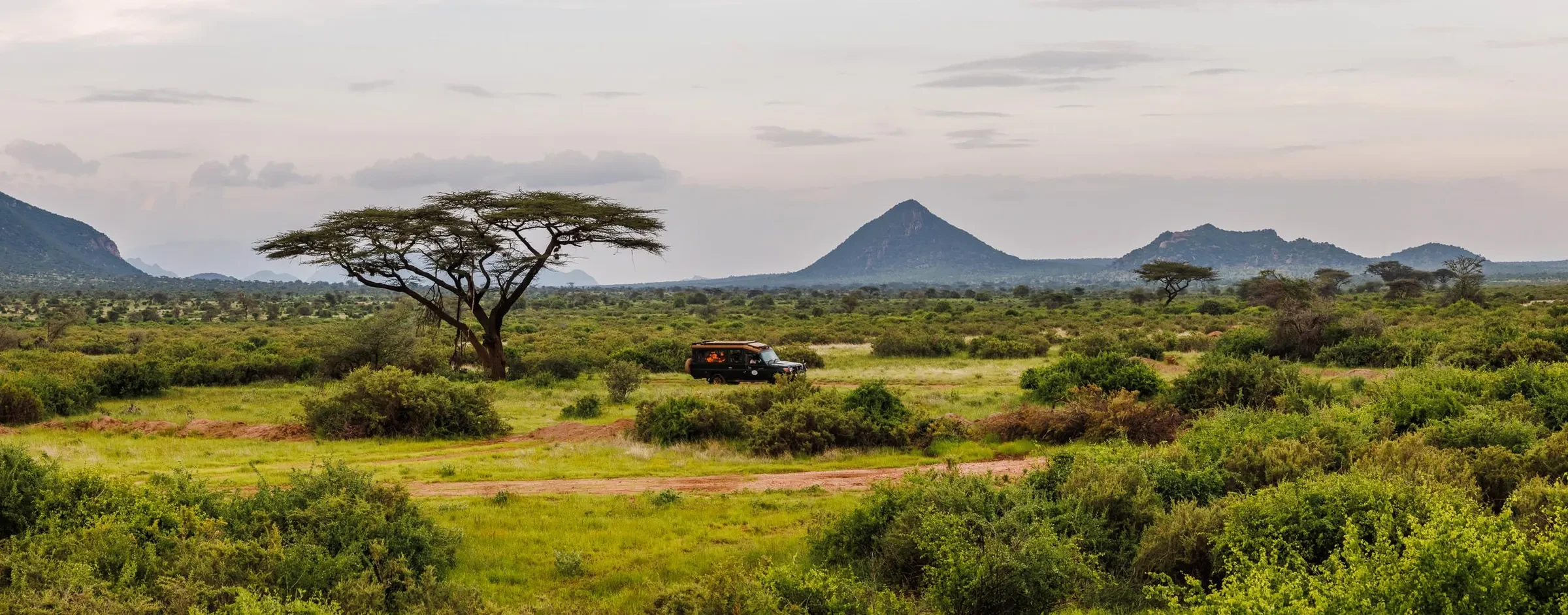
Samburu is Kenya's other Africa — the arid, sun-bleached north, where the green plains give way to red earth, doum palms and rugged hills, and a single river draws all of life to its banks. Cross into Samburu and the very cast of animals changes: this is the only part of the classic Kenya circuit where you meet the "Special Five," a quintet of dryland species adapted to the heat and found nowhere to the south.
The lifeline is the Ewaso Ng'iro River, a ribbon of green winding through the semi-desert. Elephants come down to drink and bathe, leopards haunt the riverine forest, and the contrast of lush water against parched land gives Samburu a beauty all its own. It feels remote and untamed, yet the reserve is intimate and the sightings come close.
And it is the heartland of the Samburu people, cousins of the Maasai, whose culture and stewardship are woven through every visit. To come here is to step off the well-worn path into a wilder, rarer Kenya.
Wildlife & landscapes
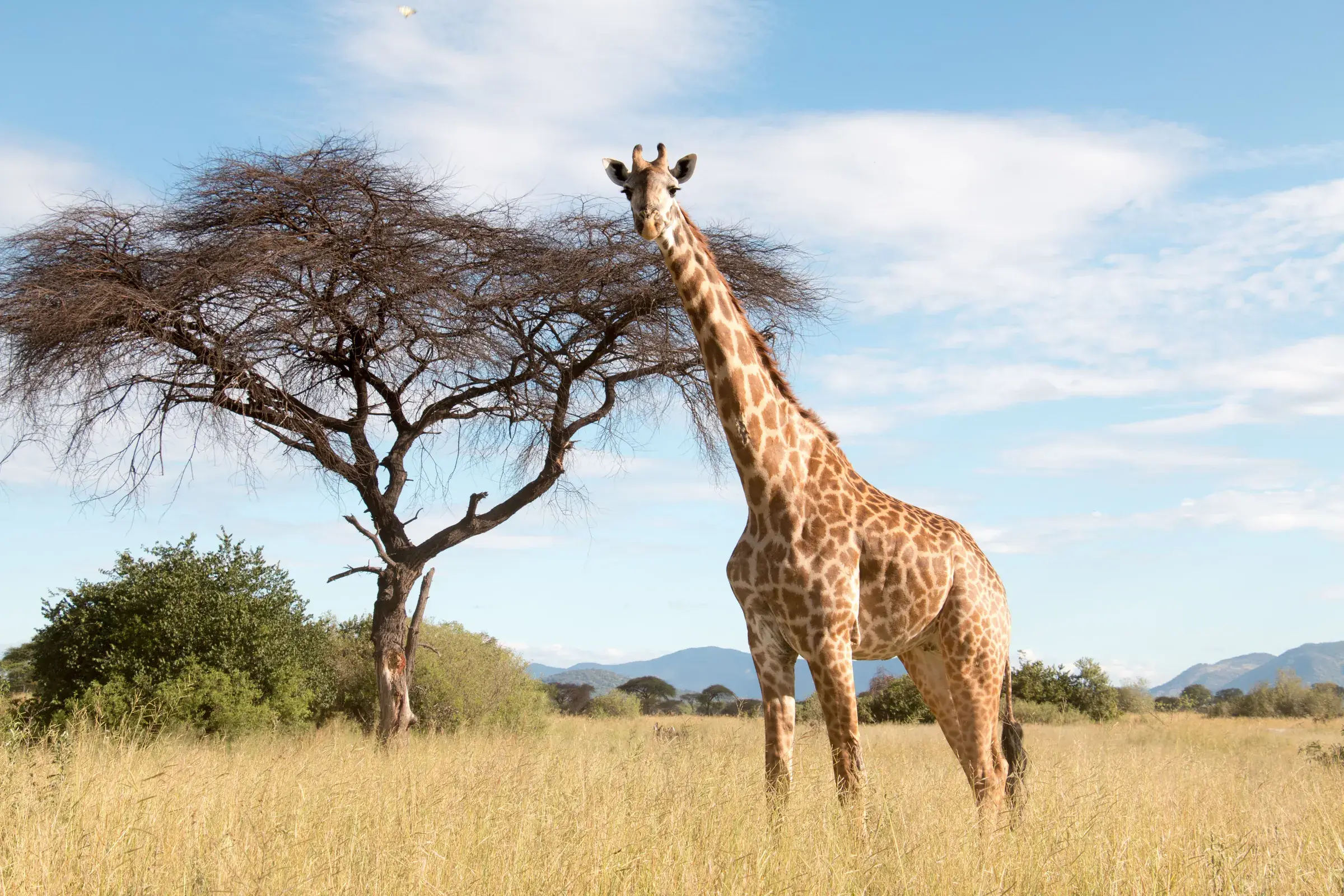
Samburu's signature is the "Special Five" — Grévy's zebra (the large, narrow-striped northern species), reticulated giraffe, gerenuk (the long-necked antelope that browses standing on its hind legs), Somali ostrich (blue-legged) and Beisa oryx — all dryland specialists absent from the southern parks. Around them: strong elephant herds along the river, lion, leopard (excellent along the riverine forest), cheetah, buffalo, crocodile and hippo in the Ewaso Ng'iro, and rich birdlife. The river is the heart of it all — a green corridor of doum palms and acacia threading through arid, rocky semi-desert, with the reserves of Samburu, Buffalo Springs and Shaba sharing the same ecosystem across the water. The landscape is hotter, drier and more sculptural than the south: a frontier feel of distant hills and open sky.
Best time to visit Samburu
The dry seasons — late June to October and December to February — are prime: wildlife concentrates along the Ewaso Ng'iro as the surrounding country dries out, sightings sharpen, and the heat is at its most manageable in the early mornings. The green season, around the short rains of November and longer rains of March–May, softens the semi-desert with new growth, fills the river, brings newborn animals and fine birding, and keeps the reserve quiet — though wildlife disperses more widely when water is everywhere. Samburu runs hot year-round, so dawn and late-afternoon drives are always the sweet spot. We time the journey to whether river-edge sightings or green-season solitude leads.
Things to do here
- Game drives — along the Ewaso Ng'iro and into the dry country for the Special Five, elephant and big cats.
- River-edge wildlife watching — elephants bathing, leopards in the riverine forest, and life gathering at the water.
- Samburu cultural visits — genuine, respectful time with the Samburu people, whose land and traditions define the region (see → Cultural Stories).
- Camel safaris — camel-supported walking through the northern country, a signature of this frontier (see → Camel safari in northern Kenya).
- Walking & night drives — available in the community conservancies bordering the reserve, where they are permitted (see → Walking safari).
Know before you go
- Getting there: ~1–1.5 hour light-aircraft flight from Nairobi (Wilson Airport) to a Samburu airstrip; by road it is roughly a 5–6 hour drive north from Nairobi.
- Fees: national reserve entry fees apply (per person, per day); community conservancy fees apply where relevant and support local programmes. We confirm current rates and include them in your quote.
- How long: 2–3 nights suits Samburu well; it pairs naturally with Laikipia (nearby), the Mara or the coast for a fuller Kenya journey.
Related Nobu journeys
- The Wild North — Samburu's frontier, the Special Five and the Ewaso Ng'iro. → Explore
- Northern Frontier Expedition — take the wheel and drive into the last open country. → Explore
When to go
Month by month — daytime warmth, days of rain and what the season brings.
Where to stay
From Essential to Private Collection — the camps and lodges we know first-hand here. Rates are indicative and confirmed on enquiry.
Essential
Ashnil Samburu Camp
Essentialtented camp · reserve
from $200 pp / night· indicative, confirmed on enquiry
Signature
Elephant Bedroom Camp
Signaturetented camp · reserve
from $250 pp / night· indicative, confirmed on enquiry
Samburu Intrepids Camp
Signaturetented camp · reserve
from $300 pp / night· indicative, confirmed on enquiry
Samburu Sopa Lodge
Signaturelodge · reserve
from $220 pp / night· indicative, confirmed on enquiry
Sarova Shaba Game Lodge
Signaturelodge · reserve (Shaba)
from $250 pp / night· indicative, confirmed on enquiry
Expedition
Sabache Camp
Expeditiontented camp · community (Namunyak)
from $250 pp / night· indicative, confirmed on enquiry
Elevated
Elephant Watch Camp
Elevatedtented camp · reserve riverfront
from $500 pp / night· indicative, confirmed on enquiry
Joy's Camp
Elevatedtented camp · reserve (Shaba)
from $450 pp / night· indicative, confirmed on enquiry
Saruni Rhino
Elevatedbanda · private conservancy (Sera)
from $500 pp / night· indicative, confirmed on enquiry
Saruni Samburu
Elevatedlodge · private conservancy
from $600 pp / night· indicative, confirmed on enquiry
Soroi Larsens Camp
Elevatedtented camp · reserve
from $350 pp / night· indicative, confirmed on enquiry
Private Collection
Sasaab
Private Collectionlodge · private conservancy
from $900 pp / night· indicative, confirmed on enquiry
Journeys through here
Signature routes that pass through Samburu — starting points we reshape around your season and pace.
Experiences here
Common questions
- What are the "Special Five" of Samburu?
- Grévy's zebra, reticulated giraffe, gerenuk, Somali ostrich and Beisa oryx — five dryland species found in Kenya's arid north but not on the southern safari circuit.
- How is Samburu different from the Maasai Mara?
- Samburu is hotter, drier semi-desert in the north, with its own Special Five and river-drawn elephant, where the Mara is open grassland and big-cat plains in the south; the wildlife cast and landscape both change.
- What wildlife can you see in Samburu?
- The Special Five, strong elephant herds along the Ewaso Ng'iro, lion, leopard, cheetah, crocodile and hippo, plus rich birdlife.
- How many days do you need in Samburu?
- Two to three nights covers the reserve and the river well; many travellers pair it with neighbouring Laikipia for a fuller northern leg.
Tell us what you want from Samburu
We'll design the journey around it — places, pace and people matched to how you travel.