
Safari guide
Best time to go on safari
The best time to go on safari is generally the dry season — roughly June to October in East Africa — when wildlife gathers at water and viewing is easiest. But the right month follows your goal: the migration, big cats, gorillas, value or solitude each have their own best window.
Written by Joseph Gathuru · Travel designer at Nobu Safaris
Intro
There's no single perfect month for a safari — only the best month for your safari. The dry season is the safe default for first-timers, but once you know what you most want to see, the calendar narrows fast.
Think of the safari year as a set of trade-offs rather than a simple high and low season. Dry months make wildlife easier to read: animals gather near water, grass is shorter, roads are firmer and guiding becomes more predictable. Green months ask for a little more flexibility, but they repay it with colour, young animals, birdlife, fewer vehicles and a softer feel in camp. Neither is universally better. The right answer is the one that protects the thing you most want the journey to deliver.
The detail — by what you want
- Easiest game viewing / first safari → the dry season (East Africa ~June–October), when thin water and short grass make wildlife easier to find. This is the best default if you want broad confidence: strong sightings, comfortable roads and the classic golden safari look.
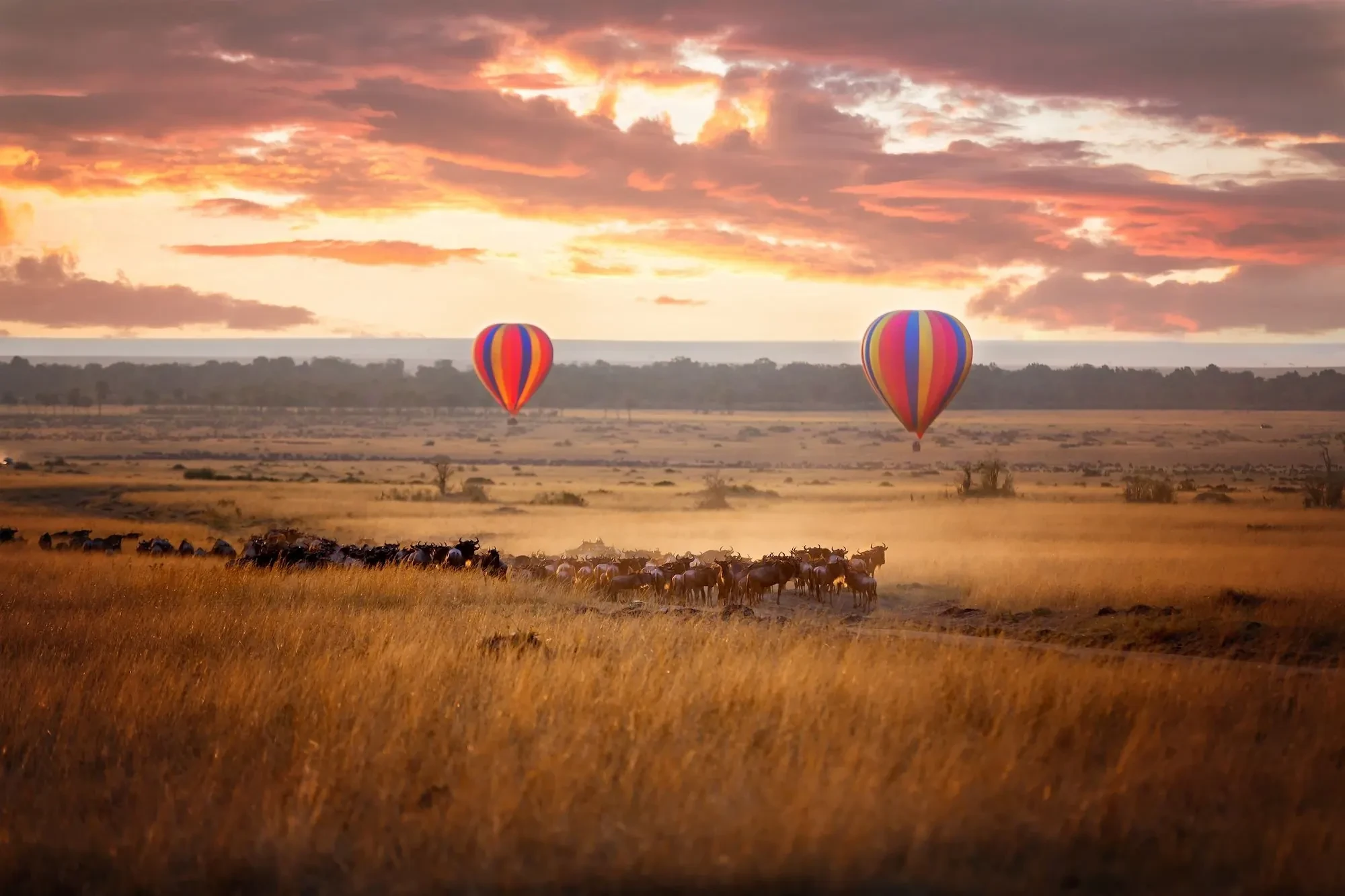
- The great migration → river crossings in Kenya's Maasai Mara ~July–October; calving in Tanzania's southern Serengeti ~January–February. These are different experiences. Crossings are dramatic, unpredictable and busy. Calving is lower, wider, more predator-led and often more intimate.
- Value, solitude, birding and newborns → the green season (~November–May in East Africa): fewer vehicles, lush scenery and gentler rates. It is not second best; it simply suits a traveller who values mood, space and light as much as headline sightings.
- Gorilla trekking → the drier months (June–September, December–February) for firmer forest trails. Trekking runs all year, but the dry windows make the day easier underfoot.
- A beach finish → match the coast's dry season (Zanzibar / the Swahili coast at their best ~December–March and June–October). A beautiful safari can be let down by a poorly timed island ending, so the coast deserves its own calendar check.
If your dates are fixed, work backwards from them instead. June to October points naturally toward Kenya, Tanzania and the migration circuit. January to February can favour Tanzania's calving, Amboseli's clearer mountain views and the short dry window for primates. November, March and May can be excellent for travellers who want atmosphere and space, provided the itinerary avoids the most rain-sensitive routes.
Key facts
Default best: dry season (East Africa ~Jun–Oct). Migration crossings: ~Jul–Oct (Mara). Calving: ~Jan–Feb (Serengeti). Green season: ~Nov–May (value, fewer crowds). Gorillas: Jun–Sep & Dec–Feb. Beach: align safari dates with the coast. Rule: pick the month by the goal.
Why Nobu for this
We start from what you want to witness, then choose the country, region and month to match — across Kenya, Tanzania, Uganda, Rwanda, Ethiopia and Zanzibar. That prevents the common mistake of choosing a famous country first and discovering later that the season favoured a different landscape, park or route.
For first-timers, we often design a dry-season journey with a compact route and a clear wildlife rhythm. For returning travellers, we may lean into a green-season circuit, a calving safari, a primate extension or a bush-and-beach route where the coast is timed as carefully as the plains. → Plan your journey.
Suitability — "right for you if…"
First safari and unsure → travel the dry season and you can't go far wrong. Set on a specific sight — migration, gorillas, a clear Kilimanjaro — → tell us, and we'll time the trip precisely. Flexible on dates and drawn to quieter places → the green season can be the more interesting choice. Travelling with children or multiple generations → we will privilege reliable roads, comfortable pacing and regions with strong resident wildlife over a route that chases too many seasonal events.
Related Nobu journeys
- Into the Wild Mara — the dry-season classic, with migration timing when the season allows. → Explore
- The Great Migration Circuit — a journey shaped around the moving herds. → Explore
- Shores of Zanzibar — the coast added when the island calendar supports it. → Explore
Common questions
- What month is best for a first safari?
- In East Africa, the dry months of June to October give the easiest, most reliable game viewing.
- What is the best-value time to go on safari?
- The green / low season (broadly November–May in East Africa) brings fewer crowds and gentler rates.
- Is there a time to avoid?
- The heaviest long rains (around April–May in East Africa) can mean muddier roads — still rewarding, but the least reliable window.
- Should I choose a country before choosing dates?
- Not always. If your goal is migration crossings, calving, gorillas or a beach finish, choose the season and region together.
- Can a green-season safari still have excellent wildlife?
- Yes. Resident wildlife remains, guides work with fresh tracks and water, and the softer light can be superb for photography.
More guides
 Best time to see the great migrationWhen to see the wildebeest migration: calving, the Grumeti, and the Mara River crossings, month by month across Tanzania and Kenya. Your Africa, beautifully told.
- Best time to visit AfricaWhen to go on an African safari: broadly the dry season (June–October in East Africa, May–October in the south), with green seasons for value, birding and newborns. Your Africa, beautifully told.
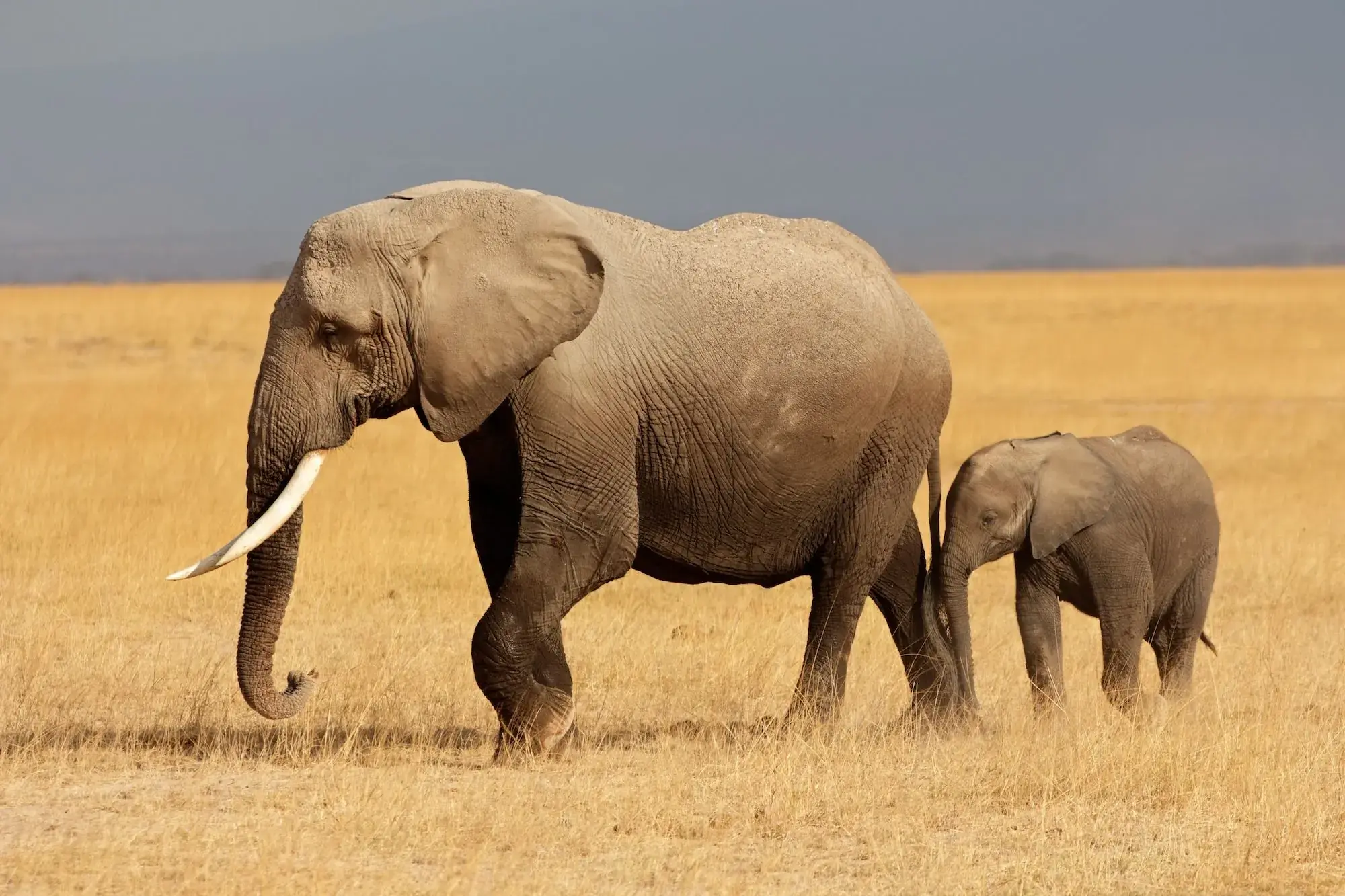 Best time to visit AmboseliWhen to visit Amboseli: the dry seasons (June–October and January–February) for clear Kilimanjaro views and big elephant herds, and the green months for lush, quiet plains. Your Africa, beautifully told.