Mahale
Mahale Mountains National Park lies on the eastern shore of Lake Tanganyika in remote western Tanzania, reached only by light aircraft and boat. It is one of the world's great wild-chimpanzee destinations — forested mountains falling straight to a clear, warm lake — where you trek on foot to habituated chimp communities in the morning and swim, kayak or snorkel the lake in the afternoon.
Why visit
There is nowhere else quite like Mahale. Mountains cloaked in dense forest rise straight from the shore of Lake Tanganyika — the second-deepest, second-oldest lake on earth — and the effect is unforgettable: green peaks above, turquoise water below, and no road for hundreds of miles in any direction. You arrive by light aircraft and finish the journey by boat, stepping off onto a beach with the wilderness at your back.
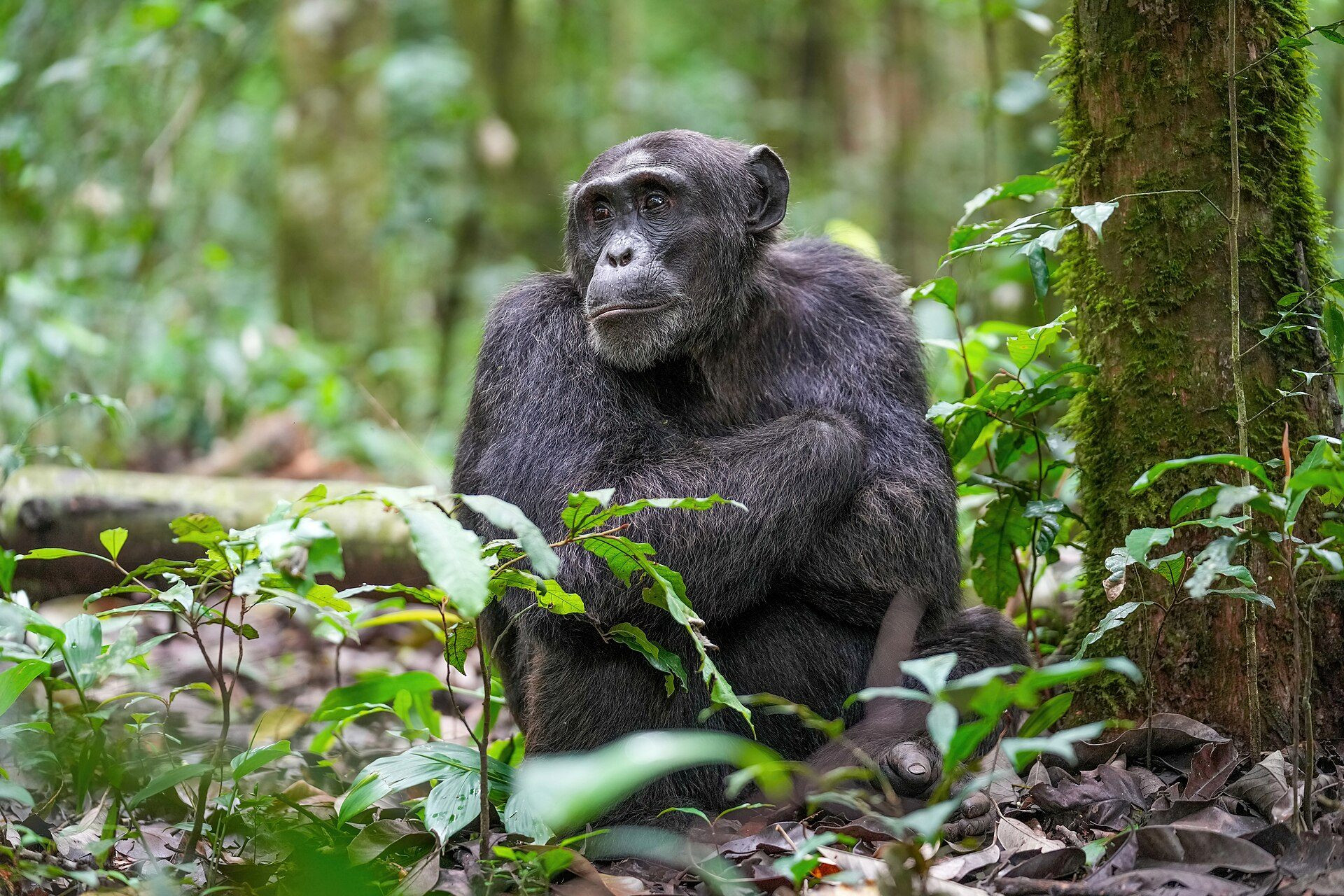
What draws travellers here is the chimpanzees. Mahale holds one of Africa's largest known populations of wild chimpanzees, and one community has been studied and gently habituated across decades of research. To trek up into the forest, follow your guide through the understorey, and then sit quietly among wild chimpanzees going about their day is one of the most moving encounters in all of safari.
And then there is the lake itself. After a morning in the forest, the afternoon belongs to the water — clear enough to snorkel, warm enough to swim, and framed by mountains that turn gold at dusk. Few places pair primal wildlife and pure stillness the way Mahale does.
Wildlife & landscapes
The headline is the chimpanzees. Mahale protects one of the largest wild-chimpanzee populations in Africa, and the long-studied Mimikire (M-group) community is habituated enough to be tracked on foot. Trekking is genuinely wild — the chimps move where they will through steep, forested terrain, so sightings are earned rather than guaranteed, and the effort is part of what makes them unforgettable. Beyond the chimps, the forest holds red colobus, red-tailed and blue monkeys, yellow baboons, and a rich birdlife along the forest edge and shore.
The landscape is Mahale's other wonder. The Mahale Mountains rise to over 2,400 metres, their slopes carrying montane and gallery forest down to the water. And the water is Lake Tanganyika — one of the oldest and deepest lakes on the planet, famous for its extraordinary endemic cichlid fish, jewel-bright and found nowhere else on earth. Snorkelling the rocky shallows reveals a freshwater reef of colour that surprises everyone who tries it. There are no game-drive plains here and no Big Five story — Mahale is forest, mountain and lake, and it is all the more singular for it.
Best time to visit
Mahale's rhythm follows the western Tanzania seasons. The dry season, roughly May to October, is the prime window: forest trails are firmer, chimp trekking is more reliable, and the lake is at its calmest and clearest for swimming and snorkelling. Within that, the chimps often range at lower altitudes in the drier months, which can shorten the trek.
The wet season (November to April) brings lush, dramatic forest and fewer visitors, though heavier rain can make the steep trails harder going and the odd trek longer. Many camps in this remote park operate seasonally and close during the heaviest rains, so timing is worth planning early. For how Mahale fits a wider itinerary, see our → Best time to visit Tanzania guide.
Things to do here
- Chimpanzee trekking — the reason to come: guided treks on foot into the mountains to spend time with a habituated wild chimp community (see → Chimpanzee trekking).
- Forest walks — beyond the chimps, walking the forest and shoreline for monkeys, birds and the sheer atmosphere of the place.
- Swimming in Lake Tanganyika — warm, clear, freshwater swimming straight off the beach after a morning's trek.
- Snorkelling the endemic cichlids — the rocky shallows hold Tanganyika's jewel-coloured endemic fish, a freshwater reef unlike anything on the coast.
- Kayaking and boating — paddling the shoreline, sundowner cruises, and the boat transfers that are themselves part of the Mahale experience (see → Water and canoe safari).
Know before you go
- Getting there: access is by light aircraft to the Mahale airstrip, followed by a boat or dhow transfer along the lakeshore to camp — there are no roads into the park. Flights typically route via Arusha or other western Tanzania hubs; we build the air legs into your journey.
- Fees: national park and chimpanzee-tracking fees apply (per person, per day); we confirm current rates and include them in your quote.
- How long: 3 to 4 nights allows for several treks and time on the lake, with weather and chimp movement built in. Mahale pairs naturally with Katavi for a remote western-Tanzania expedition — chimps and forest, then raw, uncrowded game country.
- Fitness note: chimp trekking is on foot over steep, forested, sometimes slippery terrain, and can be strenuous; a reasonable level of fitness helps, and your designer will advise honestly.
Related Nobu journeys
When to go
Month by month — daytime warmth, days of rain and what the season brings.
Where to stay
From Essential to Private Collection — the camps and lodges we know first-hand here. Rates are indicative and confirmed on enquiry.
Signature
Nkungwe Tented Camp
Signaturetented camp · lakeshore (Lake Tanganyika)
from $450 pp / night· indicative, confirmed on enquiry
Elevated
Mbali Mbali Mahale (Kungwe Beach Lodge)
Elevatedtented camp · lakeshore (Lake Tanganyika)
from $500 pp / night· indicative, confirmed on enquiry
Private Collection
Greystoke Mahale
Private Collectiontented camp · lakeshore (Lake Tanganyika)
from $1,300 pp / night· indicative, confirmed on enquiry
Experiences in Mahale
Ways to meet Mahale more closely — each one woven into a journey designed around you.
Common questions
- Where is Mahale and how do you get there?
- Mahale Mountains National Park is on the eastern shore of Lake Tanganyika in far-western Tanzania. There are no roads in — you arrive by light aircraft to the Mahale airstrip, then transfer along the lake by boat or dhow to your camp.
- Can you see wild chimpanzees in Mahale?
- Yes. Mahale holds one of Africa's largest wild-chimpanzee populations, and a long-studied community is habituated enough to track on foot. Sightings are earned through a forest trek rather than guaranteed, which is part of what makes them so memorable.
- How difficult is chimpanzee trekking in Mahale?
- It is genuinely wild trekking — on foot up steep, forested slopes that can be slippery, for anything from under an hour to several hours depending on where the chimps have ranged. A reasonable level of fitness makes it far more enjoyable.
- Can you swim in Lake Tanganyika at Mahale?
- Yes. The lake is warm, clear freshwater — you can swim straight off the beach, and snorkel the rocky shallows for Tanganyika's brilliant endemic cichlid fish, found nowhere else on earth.
- What should you pair with Mahale?
- Mahale pairs beautifully with **Katavi**, its remote neighbour, for a western-Tanzania expedition of forest chimps followed by wild, uncrowded game country.
Tell us what you want from Mahale
We'll design the journey around it — places, pace and people matched to how you travel.