Karatu
Karatu is a highland farm town in northern Tanzania, set between Lake Manyara and the Ngorongoro Crater at around 1,500 metres in coffee and wheat country. It is not a game area itself but a well-placed base for the Ngorongoro Conservation Area — staying here avoids the Crater-rim premium and shortens the morning drive to the descent gate, while adding Iraqw culture, coffee-farm visits and forest waterfall walks.
Why visit
Most travellers pass through Karatu on the way to somewhere more famous — and that is exactly the point of staying. This is the last town before the Ngorongoro gate, a cool, cultivated highland at around 1,500 metres where the dust of the plains gives way to red earth, coffee rows and fields of wheat and maize climbing the hills. The air is different up here. So is the pace.
The case for Karatu is quietly practical. Lodges perched on the Crater rim carry a premium for that address; Karatu sits a short drive below, and a base here means you wake close to the descent gate and are on the Crater floor early, when the light is long and the wildlife is at its most active — without paying rim rates for the privilege. It is the designer's choice for travellers who want the Crater at its best and the region opened up around it.
And Karatu is more than a staging post. Between game days it offers a genuine sense of place — Iraqw farming villages, coffee estates you can walk, waterfalls in the forest, and an easy reach toward the soda flats and hunter-gatherer country of Lake Eyasi.
Wildlife & landscapes
Be clear on this: Karatu itself is a base, not a game-viewing area. You do not come here for big cats on the doorstep — you come for the position and the highland country around it, and for how quickly it puts the region's wildlife within reach.
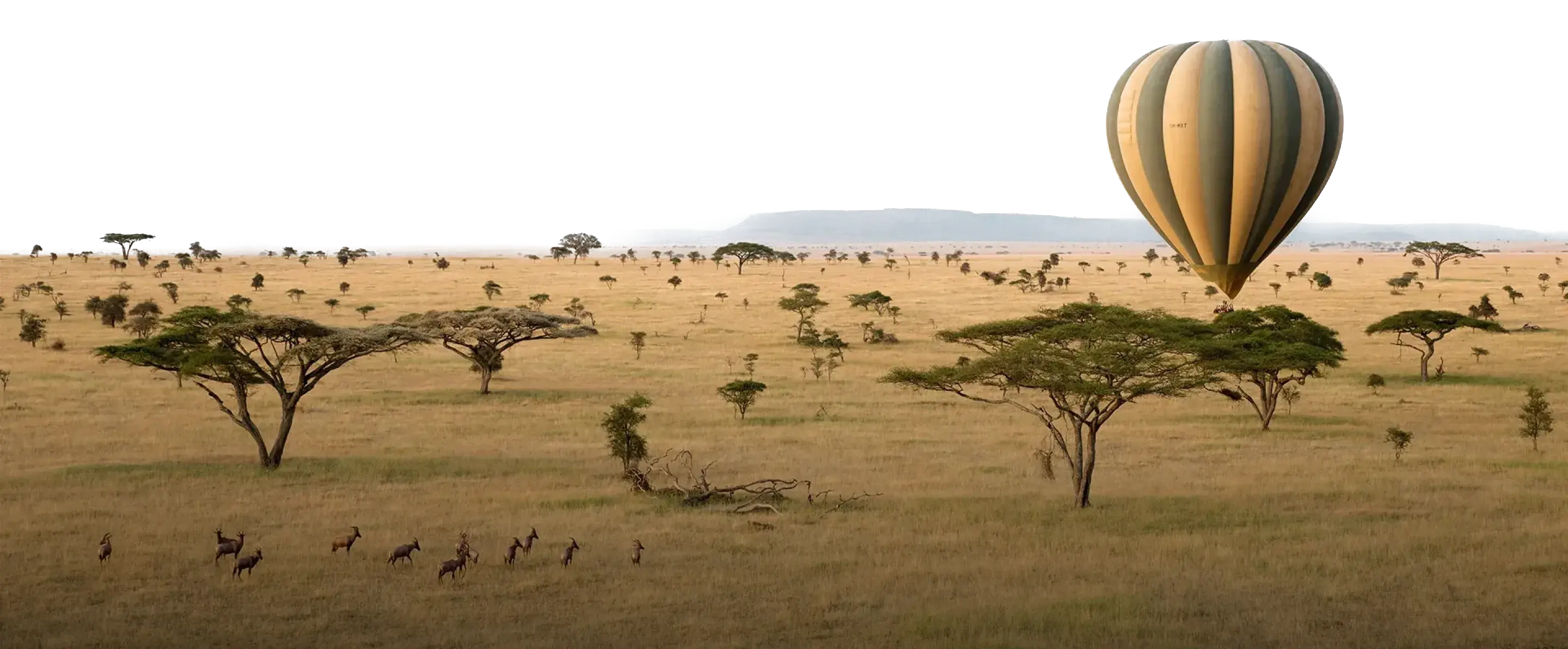
The landscape is volcanic highland farmland — the fertile southern shoulder of the Ngorongoro highlands, thick with coffee, wheat, maize and pyrethrum, threaded with pockets of montane forest. Above the town rise the forested slopes and the rim of the Ngorongoro Crater; below and to the north-east lie the Lake Manyara escarpment and the Rift wall. It is green, cool and cultivated in a way the savannah parks are not.
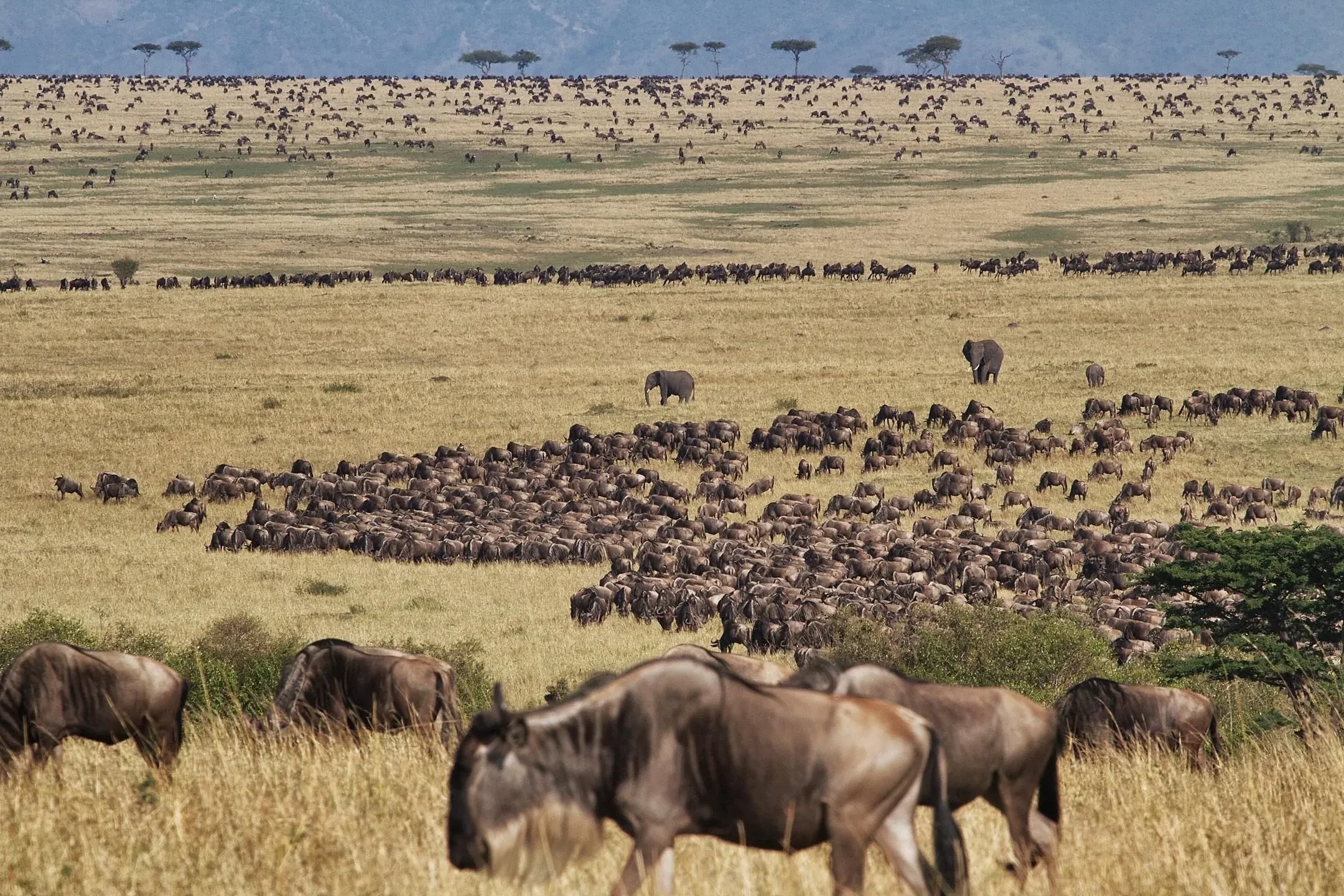
The wildlife is all around, just not underfoot. The Ngorongoro Crater floor — a short drive up — holds one of the densest concentrations of large mammals in Africa: lion, elephant, buffalo, and one of the best chances anywhere of seeing black rhino, alongside flamingo on the soda lake. Lake Manyara, close by, is known for its tree-climbing lions, large elephant, and vast flocks of flamingo. Karatu's own forest edges hold buffalo, bushbuck, colobus and abundant birdlife for those who walk them. This is a place that borrows its wildlife from remarkable neighbours.
Best time to visit
Karatu shares the northern Tanzania rhythm. The dry season, roughly June to October, is the classic window — clear highland air, firm roads to the Crater gate, and concentrated wildlife on the Crater floor and around Lake Manyara. January and February, in the short dry spell between the rains, are also excellent and a touch quieter.
The green season brings its own reward: the short rains around November and the long rains from March to May turn the highland farmland lush and vivid, the coffee and wheat at their greenest, with fewer vehicles and gentler rates — though roads can be heavier going. Because Karatu sits high, it stays cool and comfortable year-round; pack a layer for early Crater departures. For the wider picture, see our → Best time to visit Tanzania guide.
Things to do here
- Ngorongoro Crater game drives — the reason most travellers base here; an early descent from Karatu puts you on the Crater floor for the best of the light and the game.
- Coffee-farm visits — walk the estates around town, follow the bean from cherry to cup, and taste it at the source; a defining Karatu experience.
- Iraqw cultural visits — genuine, respectful time with the highland farming community whose villages surround the town.
- Forest and waterfall walks — guided day walks in the montane forest to Karatu's waterfalls, a rare chance to stretch your legs on foot in this region (see → Walking safari).
- Lake Eyasi excursion — a day out to the soda flats to meet the Hadzabe hunter-gatherers and Datoga pastoralists, one of East Africa's most distinctive cultural encounters.
- Birding — the highland forest and nearby lakes make for rich, varied birding across a short radius (see → Birding safari).
Know before you go
- Getting there: Most journeys arrive by road as part of the northern circuit — Karatu sits between Lake Manyara and the Ngorongoro gate, roughly a 3–4 hour drive from Arusha. The nearest airstrip is Lake Manyara (LKY), a short transfer away, with light-aircraft links across the northern parks.
- Fees: Ngorongoro Conservation Area and any park fees apply per person for game days; these are confirmed in your quote, not paid at Karatu itself.
- How long: 1–2 nights is typical as a Crater base; add a night to fold in coffee, culture, a forest walk or a Lake Eyasi day.
- Pairing: Karatu sits naturally in a northern-circuit journey — combine with Ngorongoro, Lake Manyara, Tarangire and the Serengeti for the full arc.
Related Nobu journeys
- Northern Crater Highlands — the classic northern arc through the highlands and down onto the Crater floor, with Karatu as the natural highland base. → Explore
- The Great Migration Circuit — the full northern-Tanzania route linking the Crater country to the Serengeti's moving herds. → Explore
- Red Earth and Open Country — a wider northern journey pairing the highland doorstep with the open savannah parks. → Explore
When to go
Month by month — daytime warmth, days of rain and what the season brings.
Where to stay
From Essential to Private Collection — the camps and lodges we know first-hand here. Rates are indicative and confirmed on enquiry.
Essential
Ngorongoro Farm House
Essentiallodge · farm
from $180 pp / night· indicative, confirmed on enquiry
Signature
Acacia Farm Lodge
Signaturelodge · farm
from $200 pp / night· indicative, confirmed on enquiry
Kitela Lodge
Signaturelodge · farm/coffee estate
from $250 pp / night· indicative, confirmed on enquiry
Elevated
Gibbs Farm
Elevatedlodge · farm/coffee estate
from $400 pp / night· indicative, confirmed on enquiry
Plantation Lodge
Elevatedlodge · farm/garden
from $300 pp / night· indicative, confirmed on enquiry
The Manor at Ngorongoro
Elevatedlodge · farm/coffee estate
from $450 pp / night· indicative, confirmed on enquiry
Common questions
- Should I stay in Karatu or on the Ngorongoro Crater rim?
- Karatu sits a short drive below the rim, so a base here avoids the rim-lodge premium and still puts you at the descent gate early. Rim lodges buy you the view and a few minutes' head start; Karatu buys you comfort, a fuller sense of place and gentler rates — your travel designer will weigh the trade-off for your journey.
- How far is Karatu from the Ngorongoro Crater gate?
- It is a short drive up from the town to the descent gate, close enough to reach the Crater floor for the early morning game; the exact timing is confirmed with your itinerary.
- Is there wildlife to see in Karatu itself?
- Karatu is a highland farm town, not a game area. The wildlife lives next door — the Ngorongoro Crater and Lake Manyara are both a short drive away — while Karatu's own draws are coffee farms, Iraqw culture, forest walks and waterfalls.
- What is there to do in Karatu besides game drives?
- Coffee-estate walks, Iraqw cultural visits, guided forest and waterfall walks, birding, and a day excursion to Lake Eyasi to meet the Hadzabe and Datoga communities.
- How many nights do you need in Karatu?
- One to two nights suits it as a Crater base; add a night if you want to fold in coffee, culture, a forest walk or Lake Eyasi.
Tell us what you want from Karatu
We'll design the journey around it — places, pace and people matched to how you travel.