
Stories from the wild
Family safari Tanzania
Tanzania works beautifully for a family safari when the route is kept clear: Serengeti for scale, Ngorongoro for dense wildlife, Tarangire for elephants and baobabs, and Zanzibar for rest at the end. The key is pacing; Tanzania can involve longer distances than Kenya, so families need careful routing and well-chosen camps.
Written by Joseph Gathuru · Travel designer at Nobu Safaris
Intro
Tanzania gives families the safari of big shapes: the endless Serengeti, the Ngorongoro Crater held like a world inside a rim, Tarangire's baobabs and elephants, and the Indian Ocean waiting at Zanzibar. It is cinematic in the broadest sense, a journey that can feel like a child's map of Africa made real.
But Tanzania asks for thoughtful design. The distances are wider, the choices bigger, and the temptation is to include too much. A family safari here works best when it chooses depth over constant movement and lets children feel the scale without being worn down by it.
The detail
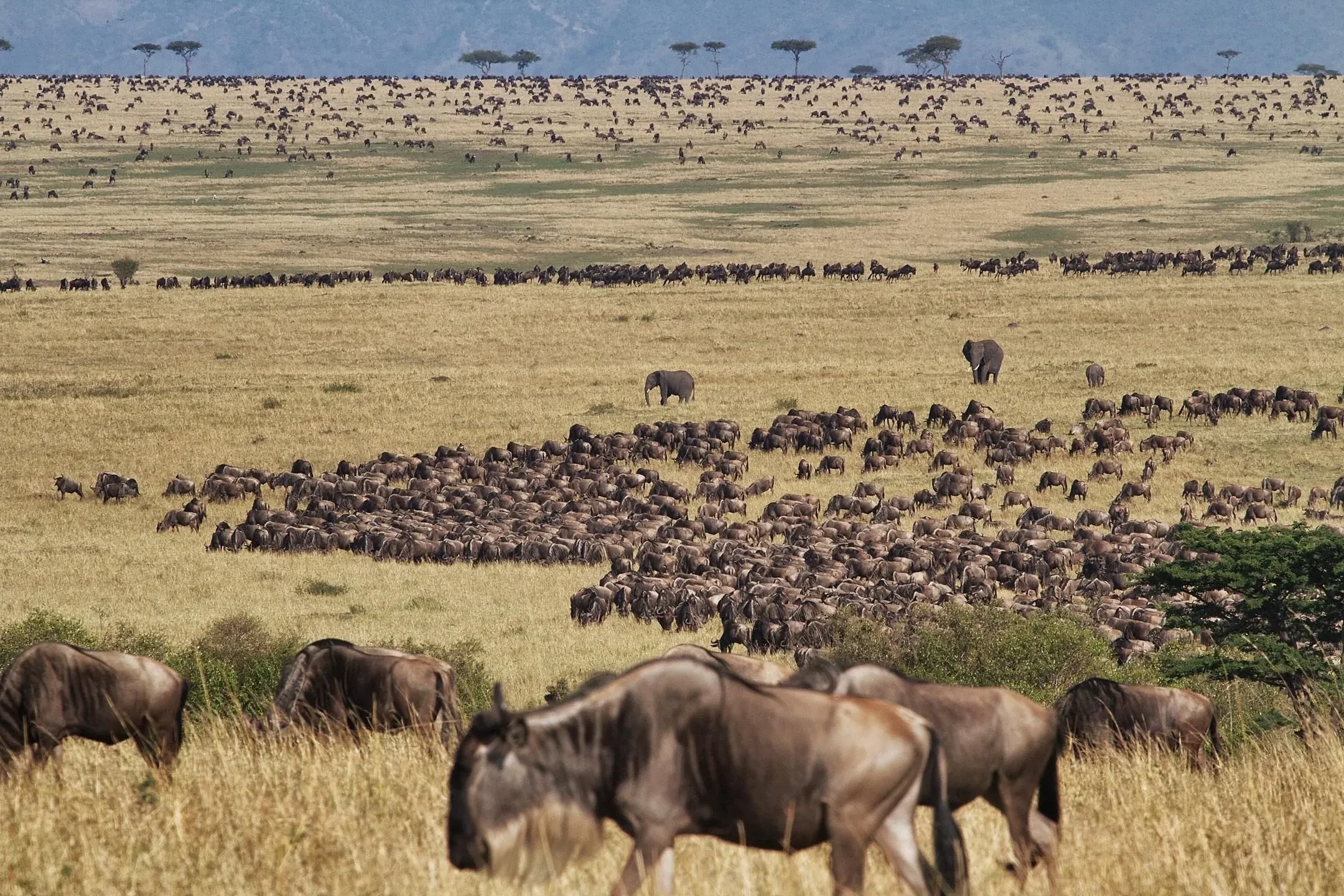
The classic family foundation is the northern circuit. Tarangire brings elephants, baobabs and a quieter rhythm, especially rewarding for families who want strong wildlife without immediately plunging into the most famous areas. Ngorongoro Crater is dramatic and contained, with dense wildlife in a compact landscape that can work well for children because sightings can come quickly. The Serengeti is the great sweep: plains, predators, migration movement in season and the feeling of space that defines Tanzania.
The challenge is not whether Tanzania has enough for families; it has more than enough. The challenge is keeping the route humane. Depending on season, a fly-in Serengeti stay can reduce long road days. A night near the highlands can break the journey. A camp that understands families can turn downtime into part of the pleasure rather than an apology between game drives.
Zanzibar is often the perfect close. After early starts and dusty plains, the coast gives children water, warmth and an easier rhythm. For parents, it gives the journey balance: the feeling that the family has not only seen Tanzania, but also rested inside it. Stone Town, spice farms, reefs and beach days can add texture without making the trip feel heavy.
Family style changes the design. Younger children may need fewer camps, shorter drives and more predictable comfort. Teenagers may love the grandeur of the Serengeti, the crater's wildlife density and the cultural texture of the coast. Multi-generational families may need more space, gentler transfers and accommodation that works for different energy levels at once.
Key facts
Best Tanzania family areas: Tarangire, Ngorongoro Crater, Serengeti and Zanzibar. Design priorities: simple routing, fewer camp changes, family-aware camps, sensible transfer choices and a coast finish if time allows. Good length: roughly eight to twelve nights with Zanzibar; shorter if safari-only and tightly routed. Best for: families who want scale, iconic landscapes and a bush-and-beach shape. Pairs with: Safari & beach holiday, First-time safari, Best time to visit Tanzania.
Why Nobu for this
Nobu designs Tanzania family journeys by reducing friction. We choose the route around children's ages, the family's tolerance for transfers, the season and whether Zanzibar is part of the dream. Sometimes that means flying between key points. Sometimes it means accepting fewer areas and giving each one enough time.
We also help families understand the difference between "famous" and "right." The Serengeti is extraordinary, but not every family needs the longest possible stay there. Ngorongoro can be thrilling, but it benefits from good expectation-setting. Zanzibar can be restful, but only if the safari has not exhausted everyone before they arrive.
Suitability — "right for you if…"
A family safari in Tanzania is right for you if your family wants big landscapes, classic wildlife and the possibility of ending on the beach. It suits first-time families with older children, multi-generational groups who want a landmark journey and travellers who like the idea of the Serengeti as the emotional centre.
It may be less ideal for families who want the simplest possible logistics or very short drives every day; Kenya may suit that brief better. Tanzania rewards families who can give it enough time and are happy to let the route breathe.
Related Nobu journeys
- Northern Crater Highlands — a family-friendly Tanzania shape with Ngorongoro, Tarangire and Lake Manyara texture. → Explore
- The Great Migration Circuit — Serengeti-led and powerful for families who want the full sense of scale. → Explore
- Southern Safari & Spice — a safari-and-Zanzibar route for families who want wilderness and coast in one journey. → Explore
Common questions
- Is Tanzania good for a family safari?
- Yes, especially for families who want iconic landscapes, strong wildlife and a possible Zanzibar finish. The route needs careful pacing.
- Is Tanzania or Kenya better for families?
- Kenya is often simpler logistically; Tanzania offers greater scale and a natural Serengeti-Zanzibar pairing. The better choice depends on ages, time and travel style.
- Can children visit the Serengeti?
- Yes. The Serengeti can be wonderful for children, but camp choice, transfer style and season matter.
- Should a Tanzania family safari include Zanzibar?
- Often yes. Zanzibar gives the family time to rest after early safari mornings and turns the trip into a balanced bush-and-beach journey.
- How many nights do families need in Tanzania?
- Eight to twelve nights works well if you include Zanzibar. A shorter safari-only route can work if it stays focused.
More stories
 First-time safariPlanning your first safari? Learn where to go, how long to travel, what the days feel like and how Nobu designs a first journey with calm confidence.
- Green season safariA green season safari in East Africa — lush landscapes, newborn wildlife, dramatic skies, superb birding and fewer travellers. Your Africa, beautifully told.
- Group & small-group safariA group safari designed for friends, families and small groups — private vehicles, clear pacing, shared stays and routes that work for everyone. Your Africa, beautifully told.