Katavi
Katavi National Park is a remote wilderness in far-western Tanzania, reached only by light aircraft, and one of the least-visited big parks in Africa. In the dry season the Katuma River shrinks to a trickle, concentrating enormous buffalo herds, densely packed hippo pods and crocodiles into a handful of pools — a raw, uncrowded spectacle that pairs classically with the chimpanzees of nearby Mahale.
Why visit
Katavi is the Tanzania few travellers ever reach. It sits far to the west, beyond the reach of the northern circuit and the tarmac, in a corner of the country most maps treat as an afterthought. There are no crowds here because there is almost no one — a handful of guests at a time, a scatter of camps, and hundreds of square kilometres of miombo woodland and floodplain to yourself.
What that remoteness buys you is intensity. When the dry season tightens its grip, the Katuma River retreats to a thread and the animals come to it in numbers that feel almost unreal — buffalo herds a thousand strong grinding across the plains, hippos jammed shoulder to shoulder in the last muddy pools, crocodiles waiting in the shallows. It is Africa without the polish or the queue of vehicles: elemental, uncrowded, and honest.
For travellers who have done the famous parks and want something further out — wilder, quieter, harder to reach — Katavi is the answer. Its natural companion is Mahale, a short hop away, where you trek chimpanzees on a forested lakeshore. Game and great apes, both far from the beaten track.
Wildlife & landscapes
Katavi's signature is the dry-season concentration. As the Katuma River shrinks, it draws the park's game into a dense, dramatic tableau: some of the largest buffalo herds in Africa, often many hundreds to a thousand or more moving as one; extraordinary hippo congregations, dozens crammed into pools too small for them as the water falls; and crocodiles, some famously retreating into riverbank caves through the driest months. Lion and spotted hyena work the edges of these gatherings, and big prides here are known to take on buffalo.
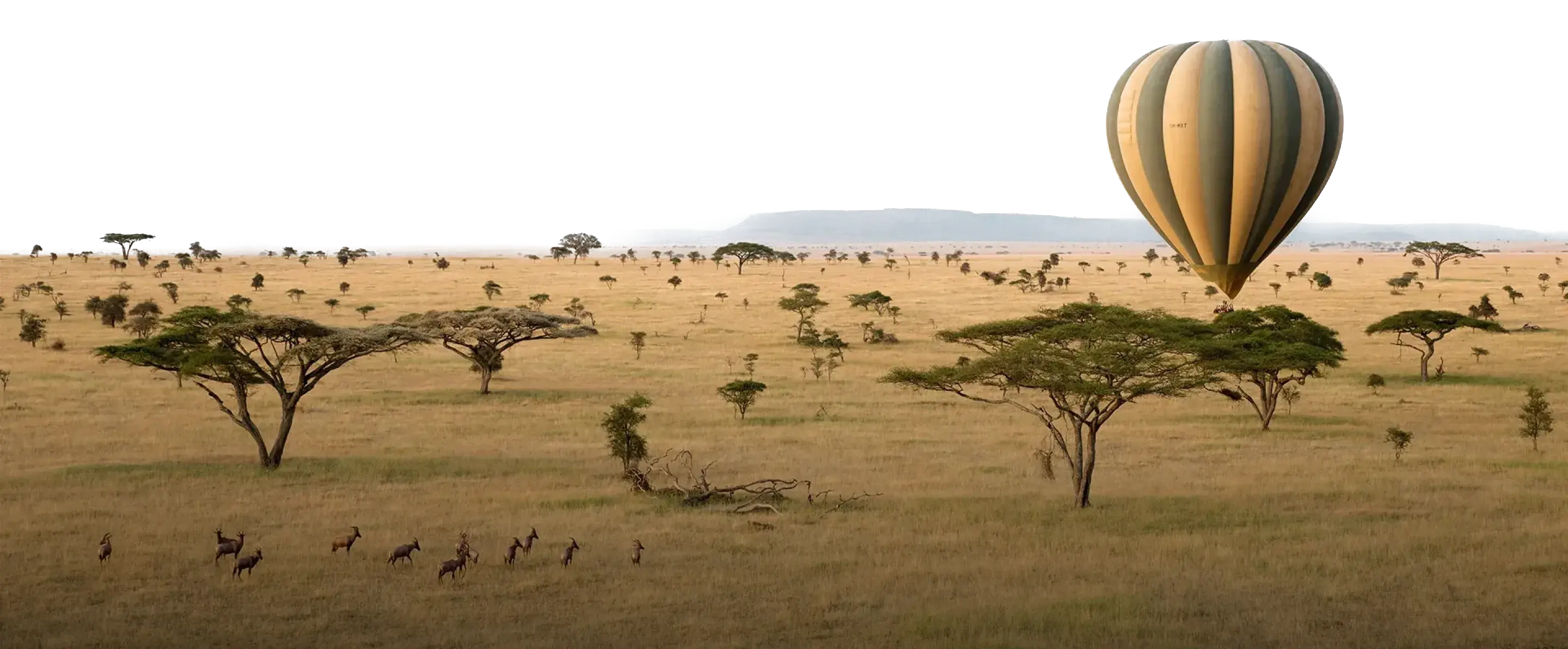
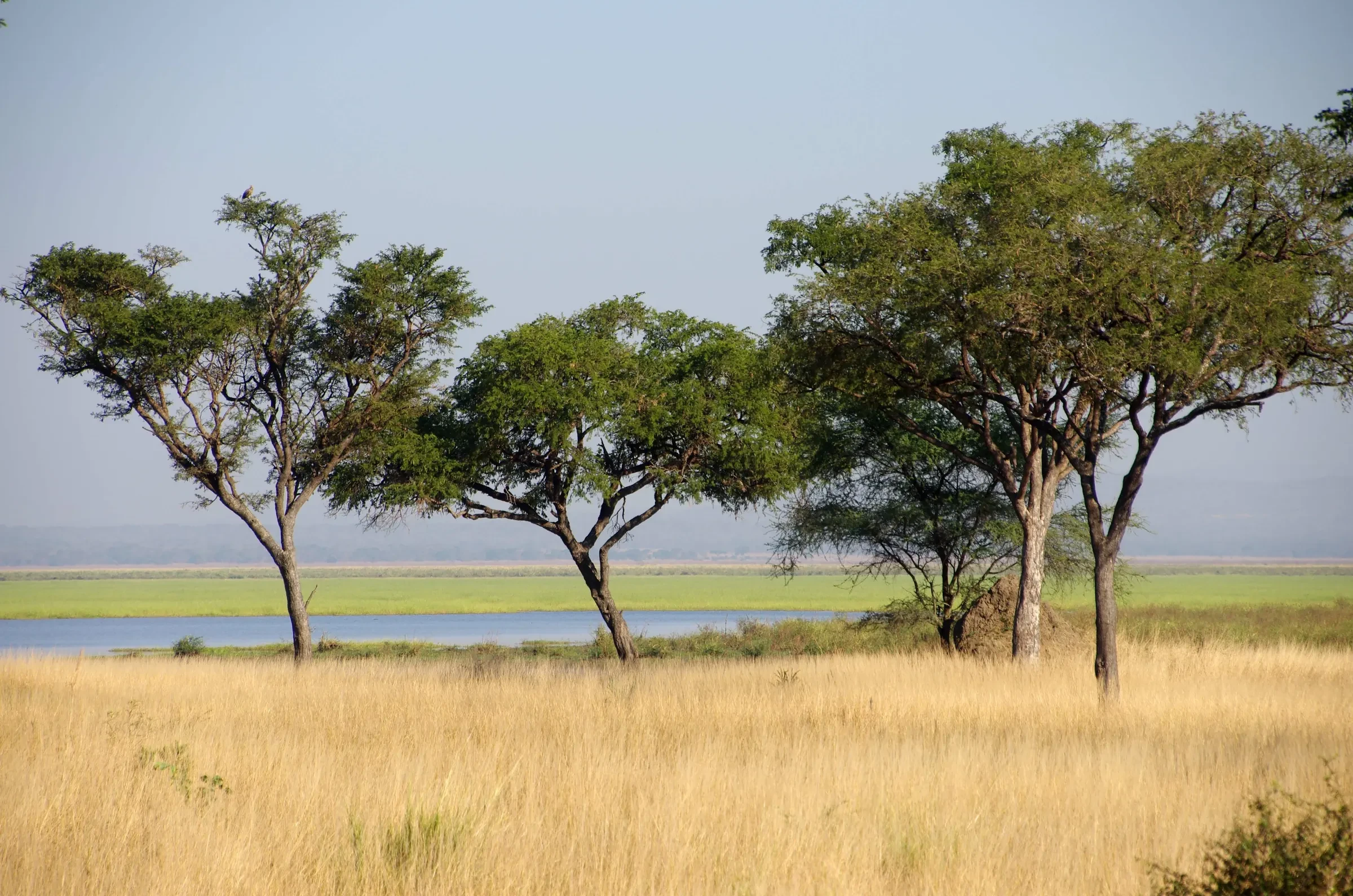
Beyond the river, the park holds strong numbers of elephant, giraffe, zebra, and antelope including topi, roan and sable in the miombo woodland. The landscape shifts between open, seasonally flooded plains — the Katisunga and Chada floodplains chief among them — and belts of miombo and acacia. It is a working, seasonal ecosystem rather than a manicured one, and the dry-season drama is precisely what makes it exceptional.
Best time to visit
Katavi is a dry-season park above all. The spectacle builds as the land dries: the late dry season, roughly August to October, is the peak, when the Katuma is at its lowest and the buffalo, hippo and crocodile concentrations reach their most extreme. The broader dry window from June to October offers excellent game viewing throughout, with clearer roads and easier access.
The green season (November to April) transforms the park — plains flood, game disperses, birdlife swells and roads become difficult; many camps close for the wettest months. It is lush and beautiful, but it is not when Katavi delivers its headline show. For a first visit chasing the river drama, aim for the late dry season; our travel designers will time your journey to it. For wider Tanzania timing, see our → Best time to visit Tanzania guide.
Things to do here
- Game drives — the core of a Katavi visit, tracing the Katuma and the floodplains where the dry-season concentrations gather.
- Walking safaris — on foot with an armed guide, a natural fit for a wilderness this empty; ideal for reading the smaller signs the vehicle passes (see → Walking safari).
- Photographic safari — the buffalo herds, hippo pools and crocodile pods make Katavi a standout for serious photographers seeking scenes few others capture (see → Photographic safari).
- Fly-camping and full-day excursions — the space and solitude suit longer time in the field, deep in the park, away from any other vehicle.
- Pairing with Mahale chimpanzee trekking — the classic western Tanzania combination; game in Katavi, great apes at Mahale (see → Chimpanzee trekking).
Know before you go
- Getting there: Katavi is fly-in only, reached by light aircraft to the Katavi (Ikuu) airstrip. Scheduled and charter flights run from Arusha, Dar es Salaam and, most usefully, from Mahale — making the Katavi–Mahale pairing straightforward to sequence.
- Fees: national park fees apply (per person, per day); we confirm current rates and include them in your quote.
- How long: 3 to 4 nights does Katavi justice, long enough to reach the best of the floodplains and the river; combine with Mahale for chimpanzees, or with Ruaha and Nyerere for a fuller wild-south and western Tanzania journey.
- Character note: this is genuine wilderness — remote, seasonal and reliant on light aircraft. It rewards travellers who want distance from the crowds and are comfortable being far from anywhere.
Related Nobu journeys
- Wild South Expedition — the remote southern and western parks at their fullest, Katavi among them. → Explore
- The Wild North — for pairing Katavi's western wilderness with a wider Tanzania arc. → Explore
- Southern Safari and Spice — the wild parks combined with the Indian Ocean coast, for travellers who want the full range. → Explore
When to go
Month by month — daytime warmth, days of rain and what the season brings.
Where to stay
From Essential to Private Collection — the camps and lodges we know first-hand here. Rates are indicative and confirmed on enquiry.
Signature
Katuma Bush Lodge
Signaturelodge · reserve
from $400 pp / night· indicative, confirmed on enquiry
Elevated
Mbali Mbali Katavi (Katavi Wildlife Camp)
Elevatedtented camp · reserve
from $450 pp / night· indicative, confirmed on enquiry
Palahala Luxury Camp
Elevatedtented camp · reserve
from $650 pp / night· indicative, confirmed on enquiry
Private Collection
Chada Katavi
Private Collectiontented camp · reserve
from $1,000 pp / night· indicative, confirmed on enquiry
Common questions
- When is the best time to visit Katavi?
- The late dry season, roughly August to October, is the peak, when the Katuma River is at its lowest and the buffalo, hippo and crocodile concentrations are at their most dramatic. The wider dry window of June to October is excellent throughout.
- What wildlife is Katavi known for?
- Its signature is the dry-season concentration on the shrinking Katuma River: some of the largest buffalo herds in Africa, huge hippo congregations packed into shrinking pools, and crocodiles — with strong lion, elephant, giraffe and woodland antelope like roan and sable.
- Why is Katavi so uncrowded?
- It lies deep in far-western Tanzania, far from the northern circuit, and is reachable only by light aircraft. That remoteness makes it one of the least-visited big parks in Africa — you often have sightings entirely to yourself.
- How do you get to Katavi?
- It is fly-in only, by light aircraft to the Katavi (Ikuu) airstrip, with flights that connect conveniently to Mahale for the classic game-and-chimpanzees pairing.
- Should I combine Katavi with Mahale?
- Yes — it is the classic western Tanzania journey. Katavi delivers the big-game spectacle; Mahale, a short flight away, offers chimpanzee trekking on the shore of Lake Tanganyika.
Tell us what you want from Katavi
We'll design the journey around it — places, pace and people matched to how you travel.