Pwani Mchangani
Pwani Mchangani is a working fishing and seaweed-farming village on the north-east coast of Zanzibar (Unguja island), Tanzania, sitting quietly between the beach resorts of Kiwengwa and the luxury of Matemwe. It suits travellers who want a calm, authentic and unpolished stretch of the Indian Ocean — where the day is shaped by the tide, the dhows and the rhythm of village life rather than by resort scenes.
Why visit
Zanzibar's north-east coast is where the island keeps its most complete beaches — long, pale and fringed with palms. Pwani Mchangani is the stretch that never turned fully to resort. Between the beach hotels of Kiwengwa to the south and the barefoot luxury of Matemwe to the north, it stayed a working village: fishing at its heart, seaweed farming along its shallows, and a shoreline that belongs to the people who live on it as much as to any visitor.
That is the point of coming here. You are not watching a resort perform the coast for you — you are watching the coast get on with its own life. Women wade the tidal flats at low water to tend and harvest seaweed. Fishermen push their dhows out on the morning breeze and read the reef by eye. Children walk the sand between village and school. It is unhurried, unpolished, and quietly beautiful.
For travellers who find the busier beaches too staged, Pwani Mchangani offers the version of Zanzibar that feels lived-in rather than laid on. The sunsets, the sand and the warm water are all here — but so is a texture of real coastal life that the polished enclaves have smoothed away.
The reef, the flats & marine life
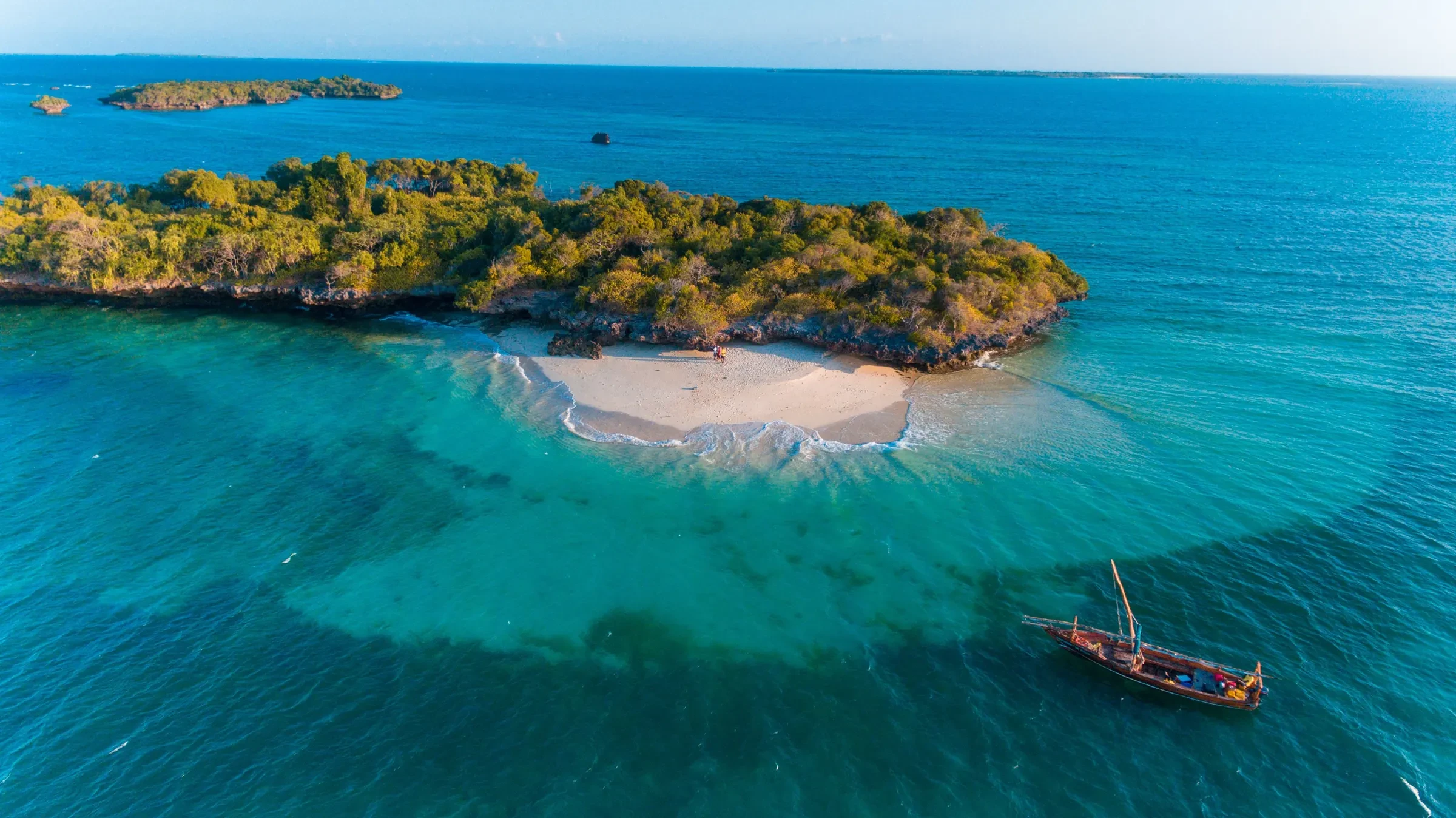
The draw at Pwani Mchangani is the ocean and the shore between the tides. This is the north-east coast, protected by a long fringing reef that sits offshore and breaks the open swell, leaving a broad, shallow lagoon between beach and reef. At low tide the sea pulls back to expose wide flats of pale sand and the village's seaweed farms — neat rows of staked lines where red and green seaweed is grown and harvested, one of the coast's defining sights and a real part of the local economy.
The reef itself carries the marine life. Expect reef fish in number — parrotfish, wrasse, snapper and triggerfish among the coral heads — with snorkelling and diving best on boat trips out to the reef edge and, further north, toward the rich waters around Mnemba Atoll off Matemwe. Dolphins are seen along this coast, and green and hawksbill turtles move through the wider reef systems.
Above the waterline it is a classic Swahili-coast landscape: palm-backed white sand, dhows drawn up on the beach, and a horizon of turquoise shallows giving way to the darker line of the reef. The tide governs everything here — swimming, walking and boat trips all shift with it — and learning to read it is part of the place.
Best time to visit
Zanzibar runs on the monsoon, not the savannah seasons. The dry season from June to October brings calm seas, steady sun and the clearest underwater visibility for the reef. December to February is warm and largely dry — a comfortable window on the north-east coast. The long rains (March to May) bring heavy downpours and rougher water that can limit boat trips and diving; the short rains around November are lighter and more scattered.
Because Pwani Mchangani is a tidal beach, the daily tide chart matters as much as the season — swimming and reef trips are timed to high water, while low tide opens the flats for walking and watching the seaweed harvest. For full seasonal detail, including pairing a Zanzibar stay with a mainland safari, see our → Best time to visit Zanzibar guide.
Things to do here
- Village and beach walks — the long north-east sands and the low-tide flats are made for unhurried walking, with the seaweed farms and dhow beaching giving the shore its rhythm.
- Reef snorkelling and diving — boat trips reach the fringing reef and, further north, the marine life around Mnemba Atoll (see → Water and canoe safari).
- Dhow sailing at sunset — a traditional wooden dhow on the calm lagoon is one of the coast's defining images (see → Dhow and the Swahili Coast).
- Seaweed-farming encounters — meeting the women who farm the tidal flats is one of the most genuine cultural moments on the coast, done respectfully with local guides.
- Fishing-village life — watching the morning launch and the evening return of the fishing dhows, the unforced texture that sets Pwani Mchangani apart.
- Stone Town day excursion — Zanzibar's UNESCO-listed old quarter is roughly an hour and a half south; a half-day pairs the quiet coast with the island's layered Swahili, Arab and Portuguese history.
Know before you go
- Getting there: Fly into Zanzibar International Airport (ZNZ), which receives direct flights from Nairobi, Dar es Salaam and other East African hubs. Pwani Mchangani sits on the north-east coast — transfers run approximately 1 to 1.25 hours by road from the airport.
- Entry and fees: Tanzania visa requirements apply; a local beach-conservation levy may be collected — we confirm current requirements and include them in your quote.
- How long: 3 to 4 nights suits Pwani Mchangani as a calm beach stay; 5 to 7 nights works if Zanzibar is the main focus. It pairs naturally with a Tanzania or Kenya safari for a bush-and-beach journey.
- Character note: This is a genuine tidal, working-village beach — sociable in a local way, not a manicured resort strip. Swimming and boat trips follow the tide. Travellers who want all-day swimmability or resort amenities should discuss the alternatives with their travel designer.
Related Nobu journeys
- Shores of Zanzibar — the island's coast at its fullest: reef, dhow, sunsets and the layered Swahili story. → Explore
- Bush to Beach — a classic East Africa pairing: safari on the plains, then the Indian Ocean. → Explore
- Southern Safari and Spice — the southern Tanzania parks combined with Zanzibar's coast, for travellers who want the full range. → Explore
When to go
Month by month — daytime warmth, days of rain and what the season brings.
Where to stay
From Essential to Private Collection — the camps and lodges we know first-hand here. Rates are indicative and confirmed on enquiry.
Signature
Neptune Pwani Beach Resort & Spa
Signatureresort · beachfront
from $150 pp / night· indicative, confirmed on enquiry
Ocean Paradise Resort & Spa
Signatureresort · beachfront
from $130 pp / night· indicative, confirmed on enquiry
Waridi Beach Resort & Spa
Signatureresort · beachfront
from $130 pp / night· indicative, confirmed on enquiry
Private Collection
Kappa Senses Zanzibar
Private Collectionresort · beachfront
from $350 pp / night· indicative, confirmed on enquiry
Journeys through here
Signature routes that pass through Pwani Mchangani — starting points we reshape around your season and pace.
Common questions
- What is Pwani Mchangani known for?
- It's a working fishing and seaweed-farming village on Zanzibar's north-east coast, prized for a calm, unpolished, local feel — dhows, tidal seaweed flats and everyday village life rather than resort scenes.
- How is Pwani Mchangani different from Kiwengwa and Matemwe?
- It sits between them: quieter and less developed than Kiwengwa's classic beach-resort strip to the south, and more low-key and village-centred than Matemwe's Mnemba-facing luxury to the north. It's the authentic middle ground.
- Can you swim all day at Pwani Mchangani?
- Not always — this is a tidal beach on the north-east coast, so swimming and reef trips follow the tide. At low water the sea retreats to expose the sand and seaweed flats; high tide is the time for the lagoon. If all-day swimmability matters most, ask your travel designer about the north tip.
- Is Pwani Mchangani good for snorkelling and diving?
- Yes, by boat. A fringing reef sits offshore, and trips run to the reef edge and north toward the rich marine life around Mnemba Atoll off Matemwe.
- How far is Pwani Mchangani from Zanzibar airport?
- Roughly one to one and a quarter hours by road from Zanzibar International Airport (ZNZ) up to the north-east coast.
- Can I pair Pwani Mchangani with a safari?
- Easily. Zanzibar works as a calm three-to-five day finale to a Tanzania or Kenya safari — see our [Bush to Beach](/journeys/bush-to-beach) journey.
Tell us what you want from Pwani Mchangani
We'll design the journey around it — places, pace and people matched to how you travel.