Jambiani
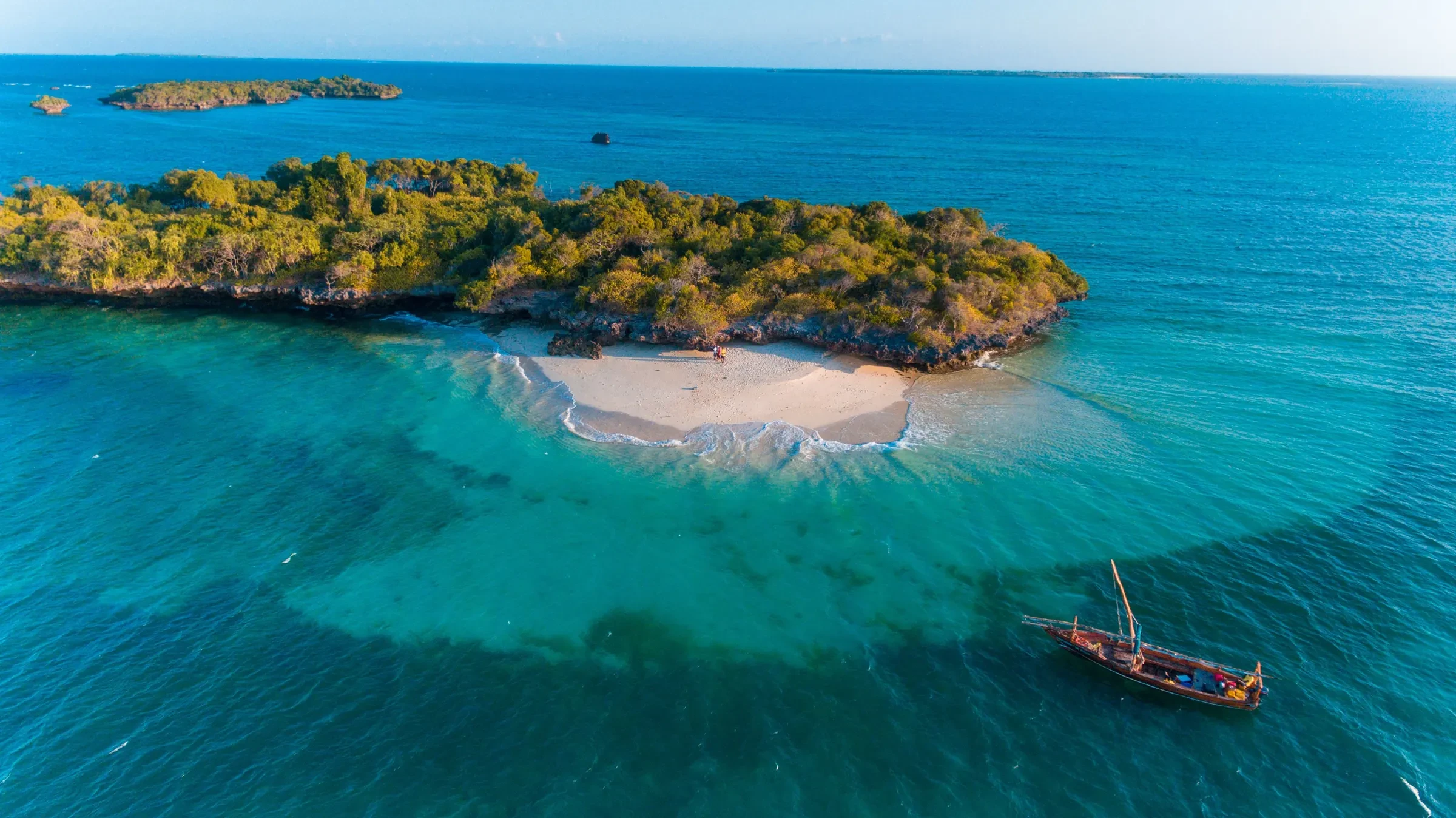
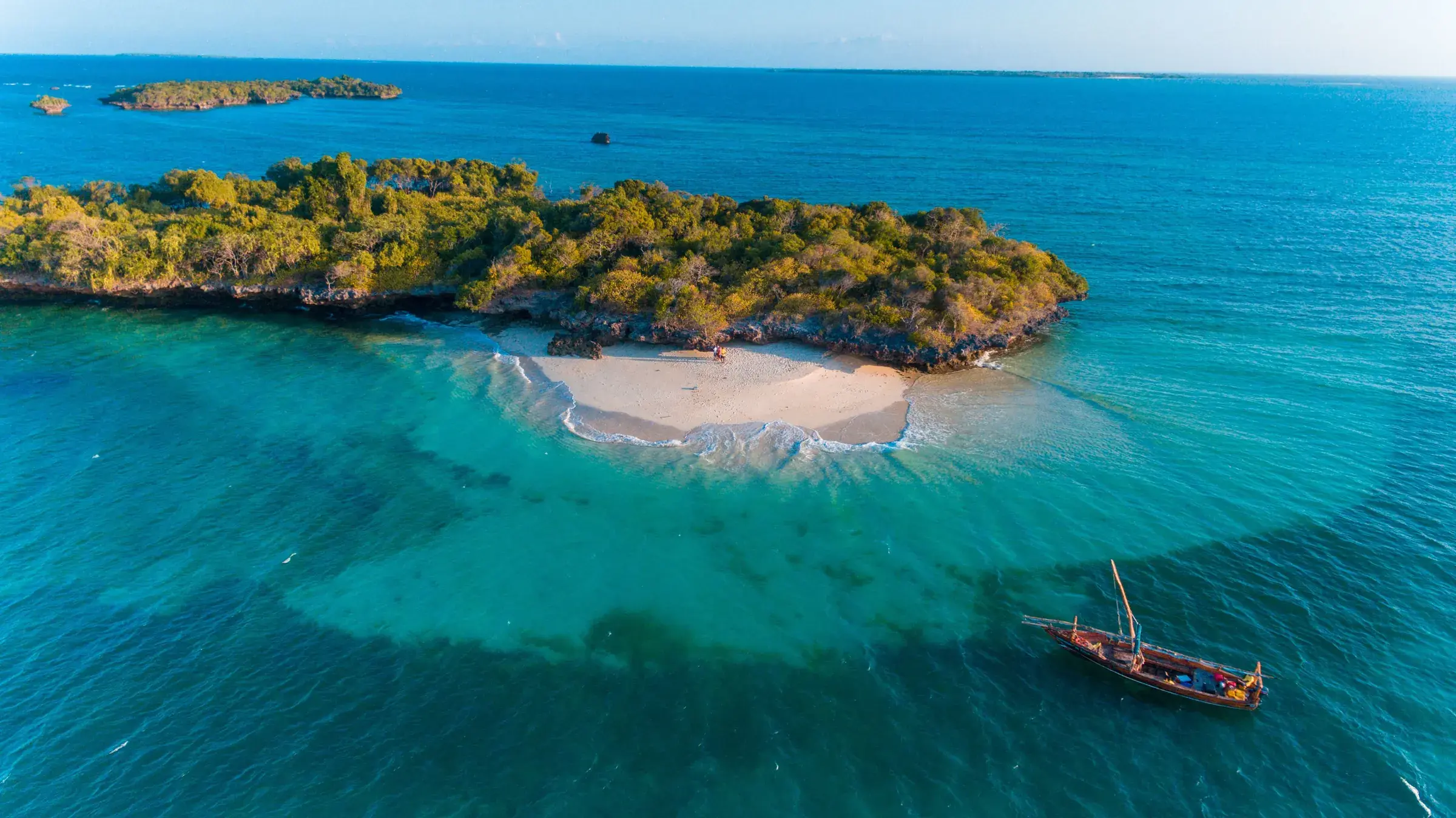
Jambiani is a long, low-key fishing and seaweed-farming village on the south-east coast of Zanzibar (Unguja island), Tanzania, known for the most authentic Swahili village life on the coast. A wide, shallow lagoon and a dramatic tidal range let you walk the exposed flats at low tide among seaweed plots and fishing boats, while women's seaweed cooperatives and small family-run guesthouses give it a quiet, lived-in character quite unlike the kitesurf energy of neighbouring Paje.
Why visit
Jambiani is what a lot of travellers imagine Zanzibar to be before the resorts got there — a slender village threaded along a turquoise lagoon, where daily life still turns on the fishing boats and the seaweed harvest rather than the arrivals board. Houses of coral rag and thatch sit close to the water; children play on the sand between them; the day is measured by the tide, not the clock.
That is the quiet difference between Jambiani and its livelier neighbour up the coast. Paje has the kitesurf schools and the after-dark energy; Jambiani keeps its hush. Here the pleasure is in the ordinary — a morning walk on the flats as the sea pulls back, a conversation with a seaweed farmer, the long white beach nearly to yourself.
And it is real in a way that is hard to manufacture. The seaweed cooperatives are run by village women; the guesthouses are family-owned; the reef out beyond the lagoon still feeds the community that lives beside it. To stay in Jambiani is to be a guest of a place that works for its living — and to feel it.
Wildlife & landscapes
The story at Jambiani is the shore itself and the shallow world it uncovers. This is a classic east-coast tidal lagoon, protected by a distant fringing reef, and the tidal range here is dramatic — at low tide the sea retreats hundreds of metres, laying bare a vast pale flat you can walk across. Where other visitors treat that retreat as a drawback, Jambiani turns it into an encounter: the exposed flats are a living map of starfish, sea urchins, small reef fish trapped in tidal pools, and the neat rows of the seaweed plots the village tends.
The seaweed farming is itself part of the landscape — rows of staked lines running out across the lagoon, harvested by hand at low water, mostly by the women of the cooperatives. It is one of the coast's defining sights and a genuine window into how the village and the sea depend on each other.
Beyond the reef break, the water opens up. Snorkelling and diving trips reach richer coral and reef fish, and the wider south-east coast is known for dolphins — most reliably encountered on trips down to Kizimkazi at the island's southern tip. Green and hawksbill turtles move through the reef systems offshore. This is a marine landscape of light, shallows and tide rather than big-animal drama — subtle, and better for it.
Best time to visit
Zanzibar runs on the monsoon, not the savannah season. The dry season from June to October is the clearest window — calm seas, dependable sun and the best underwater visibility for the reef. December to February is warm and mostly dry, an easy time to be on the east coast. The long rains (March to May) bring the heaviest downpours and rougher water that can limit boat trips; the short rains around November are lighter and more intermittent.
On this coast the tide shapes the day more than the weather. Swimming from the beach is best around high tide; low tide is the moment to walk the flats and see the seaweed farms and reef life up close. For full timing detail — including when to pair Zanzibar with a mainland safari — see our → Best time to visit Zanzibar guide.
Things to do here
- Walk the tidal flats — at low water the lagoon empties for hundreds of metres; walking out among the seaweed plots and tidal pools is Jambiani's signature, and best done with a village guide.
- Meet a seaweed cooperative — the women's farming groups welcome respectful visits; understanding how seaweed is grown, harvested and processed is one of the coast's most genuine cultural encounters.
- Village and culture walks — Jambiani is made for wandering; a guided walk through the coral-rag lanes reveals daily Swahili life, the fishing rhythm and the local economy.
- Reef snorkelling and diving — boats run out beyond the lagoon to the reef break for clearer coral and reef fish.
- Dhow and ocean trips — sail the lagoon by traditional dhow at high tide (see → Dhow and the Swahili Coast); kayaking and paddleboarding suit the calm shallows (see → Water and canoe safari).
- Dolphin trips to Kizimkazi — a short run south to the island's best-known dolphin waters.
- Stone Town day excursion — Zanzibar's UNESCO-listed old quarter is roughly an hour and a half away, an easy day out for the island's layered Swahili, Arab and Portuguese history.
Know before you go
- Getting there: Fly into Zanzibar International Airport (ZNZ), well connected to Nairobi, Dar es Salaam and other East African hubs. Jambiani sits on the south-east coast — road transfers run roughly 45 minutes to 1 hour from the airport.
- Entry and fees: Tanzania visa requirements apply, and a local beach-conservation or village levy may be collected on arrival — we confirm current requirements and include them in your planning; any such fees are confirmed in your quote.
- How long: 3 to 4 nights suits Jambiani as a quiet, self-contained beach chapter; longer if you want to slow right down. It pairs naturally with a Tanzania or Kenya safari for a bush-and-beach journey.
- Character note: Jambiani is chosen for peace and authenticity, not nightlife. Travellers wanting more energy or watersports scene should ask about neighbouring Paje; those seeking dolphins and the far south should consider Kizimkazi.
Related Nobu journeys
- Shores of Zanzibar — the spice island at its fullest: reef, dhow, village life and the coast's layered story. → Explore
- Bush to Beach — the classic East Africa pairing: days on the plains, then the Indian Ocean. → Explore
- Southern Safari and Spice — the southern Tanzania parks combined with Zanzibar's coast, for the full range. → Explore
When to go
Month by month — daytime warmth, days of rain and what the season brings.
Where to stay
From Essential to Private Collection — the camps and lodges we know first-hand here. Rates are indicative and confirmed on enquiry.
Essential
Blue Oyster Hotel
Essentialhotel · beachfront
from $40 pp / night· indicative, confirmed on enquiry
Signature
Casa Del Mar Hotel Jambiani
Signaturehotel · beachfront
from $70 pp / night· indicative, confirmed on enquiry
Coral Rock Zanzibar
Signaturehotel · beachfront
from $70 pp / night· indicative, confirmed on enquiry
Mamamapambo Boutique Hotel
Signaturehotel · beachfront
from $70 pp / night· indicative, confirmed on enquiry
The Loop Beach Resort
Signatureresort · beachfront
from $80 pp / night· indicative, confirmed on enquiry
Zen Boutique Resort
Signaturehotel · beachfront
from $80 pp / night· indicative, confirmed on enquiry
Elevated
Kupaga Villas Boutique Hotel
Elevatedvilla · beachfront
from $150 pp / night· indicative, confirmed on enquiry
Mwezi Boutique Resort
Elevatedhotel · beachfront
from $100 pp / night· indicative, confirmed on enquiry
Sharazad Boutique Hotel
Elevatedhotel · beachfront
from $120 pp / night· indicative, confirmed on enquiry
Journeys through here
Signature routes that pass through Jambiani — starting points we reshape around your season and pace.
Experiences here
Common questions
- What makes Jambiani different from Paje?
- Jambiani is the quieter, more traditional neighbour: a working fishing and seaweed-farming village with family-run guesthouses and a lived-in feel, where Paje is known for its kitesurf schools and livelier after-dark scene. Both share the same beautiful east-coast lagoon.
- Can you swim at Jambiani, or does the tide go out?
- The east coast has a large tidal range, so swimming from the beach is best around high tide; at low tide the sea retreats hundreds of metres and the moment turns to walking the flats and seeing the seaweed farms and reef life.
- What is seaweed farming in Jambiani?
- Seaweed is grown on staked lines across the shallow lagoon and harvested by hand at low tide, largely by the village's women's cooperatives. Respectful visits are welcomed and are one of the coast's most genuine cultural encounters.
- How far is Jambiani from Zanzibar airport?
- Roughly 45 minutes to an hour by road, from Zanzibar International Airport (ZNZ) across to the south-east coast.
- Can I see dolphins near Jambiani?
- Yes — the island's best-known dolphin waters are a short run south at Kizimkazi, an easy half-day trip from Jambiani.
- Can I pair Jambiani with a safari?
- Easily. Zanzibar makes a natural three-to-four-night finale to a Tanzania or Kenya safari, with ZNZ well connected to Nairobi and Dar es Salaam. See our [Bush to Beach](/journeys/bush-to-beach) journey.
Tell us what you want from Jambiani
We'll design the journey around it — places, pace and people matched to how you travel.