Kiwengwa
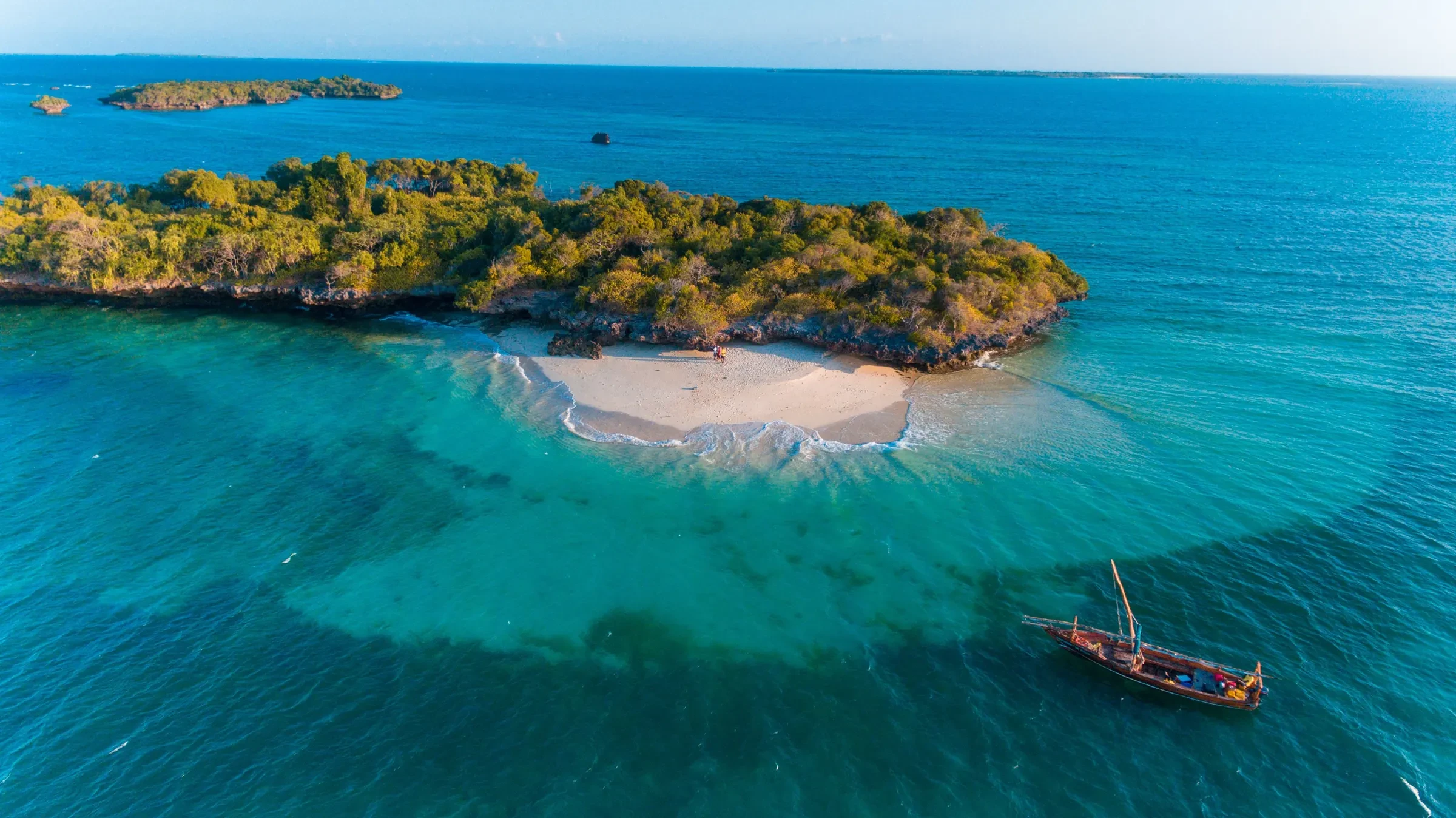
Kiwengwa is a long, wide, brilliant-white beach on the northeast coast of Zanzibar (Unguja island), Tanzania — the most classic stretch of that shoreline. A shallow, reef-protected lagoon lies offshore, the Kiwengwa-Pongwe forest reserve and its limestone caves sit inland, and accommodation ranges from boutique retreats to larger beachfront properties, making it one of the island's most versatile coastal bases.
Why visit
If you picture the postcard Zanzibar beach — soft, blinding-white sand stretching further than the eye follows, a lagoon the colour of sea glass, palms leaning toward the water — you are picturing Kiwengwa. This is the classic northeast coast, the stretch that put this side of the island on the map, and it earns the reputation. The beach is genuinely long and genuinely wide, which means it never feels crowded even when the shore is well used.
What sets Kiwengwa apart from its neighbours is range. Matemwe, further north, is the launch point for Mnemba; Pongwe is a tiny, tucked-away cove. Kiwengwa is the open, generous, sociable middle ground — a shoreline broad enough to hold everything from a quiet boutique retreat to a larger beachfront stay, without any of them feeling on top of one another.
And there is more here than the sand. Step back from the beach and the land turns into coral rag forest — the Kiwengwa-Pongwe reserve, with its shaded trails and limestone caves. It gives the place a second dimension most beach stretches simply don't have.
Wildlife & landscapes
The signature landscape at Kiwengwa is the reef-protected lagoon. A coral reef runs offshore along much of the northeast coast, breaking the open Indian Ocean swell and leaving a broad, shallow, calm lagoon between reef and beach. At low tide the water pulls back across the flats — this is a tidal beach, and the sea does retreat — but the shallows warm quickly and the reef edge draws snorkellers and small boats out to where the reef fish gather: parrotfish, snapper, wrasse and the occasional passing ray. Dolphins are seen along this coast, and the wider reef systems support green and hawksbill turtles moving through.
Inland lies the second landscape: the Kiwengwa-Pongwe forest reserve, a band of coral rag forest and thicket on the raised limestone behind the beach. Its limestone caves — some with freshwater pools once used by villagers, some carrying local ritual and folklore — can be visited with a guide, and the forest shelters birds, bush duiker and troops of monkeys, including colobus movements in the wider region.
Together the lagoon and the forest give Kiwengwa a rare completeness — a marine landscape of colour and shallow light, and a green, shaded interior only a short walk behind it.
Best time to visit
Zanzibar runs on the monsoon, not the savannah calendar. The dry season, June to October, is the clearest and most reliable window — calm seas, steady sun and the best reef visibility for snorkelling out to the lagoon edge. December to February is warm and largely dry, one of the most comfortable spells on the coast. The long rains, March to May, bring heavy downpours and rougher water that can limit boat trips, while the short rains around November are lighter and more intermittent, and some travellers time a visit then for a gentler pace.
Because Kiwengwa is a tidal beach, it pays to understand the daily rhythm — the lagoon is at its most swimmable around high tide, and glorious for walking when the flats open at low. For the full seasonal picture, including how to pair a Zanzibar stay with a mainland safari, see our → Best time to visit Zanzibar guide.
Things to do here
- Reef snorkelling and diving — the offshore reef and lagoon are the main draw; boats run out to the reef edge and dive sites along the northeast coast, with day trips reaching the richer waters toward Mnemba.
- Kiwengwa-Pongwe forest and caves — a guided walk in the coastal forest reserve to the limestone caves is Kiwengwa's most distinctive inland encounter, with local guides sharing the folklore of the pools.
- Dhow sailing and sunset cruises — traditional wooden dhows sail the lagoon; a dusk cruise is one of the coast's defining images (see → Dhow and the Swahili Coast).
- Watersports on the lagoon — the sheltered water suits kayaking, stand-up paddleboarding and, in season, kitesurfing; charters for deep-sea fishing run from the coast (see → Water and canoe safari).
- Village and spice-farm visits — the working fishing village and nearby spice farms offer a grounded sense of island life beyond the beachfront.
- Stone Town day excursion — Zanzibar's UNESCO-listed old quarter is roughly an hour and a quarter away; a half-day pairs beach time with the island's layered Swahili, Arab and Portuguese history.
Know before you go
- Getting there: Fly into Zanzibar International Airport (ZNZ), which receives direct flights from Nairobi, Dar es Salaam and other East African hubs. Kiwengwa sits on the central northeast coast — transfers run approximately 1 to 1.5 hours by road from the airport.
- Entry and fees: Tanzania visa requirements apply; a beach-conservation levy may be collected locally, and forest-reserve or cave entry carries a small guided fee — we confirm current requirements and include them in your quote.
- How long: 3 to 4 nights suits Kiwengwa as a self-contained beach stay; 5 to 7 nights is comfortable if Zanzibar is the main focus. It pairs naturally with a Tanzania or Kenya safari for a bush-and-beach journey.
- Tidal note: this is a tidal beach — the lagoon is fullest around high tide and opens to wide flats at low. It's part of the northeast coast's rhythm rather than a drawback; your designer will explain what to expect for your dates.
Related Nobu journeys
- Shores of Zanzibar — the island at its fullest: reef, dhow, forest and the spice island's layered story. → Explore
- Bush to Beach — a classic East Africa pairing: safari on the plains, then the Indian Ocean. → Explore
- Southern Safari and Spice — the southern Tanzania parks combined with Zanzibar's coast, for travellers who want the full range. → Explore
When to go
Month by month — daytime warmth, days of rain and what the season brings.
Where to stay
From Essential to Private Collection — the camps and lodges we know first-hand here. Rates are indicative and confirmed on enquiry.
Signature
Bluebay Beach Resort & Spa
Signatureresort · beachfront
from $150 pp / night· indicative, confirmed on enquiry
Diamonds Mapenzi Beach
Signatureresort · beachfront
from $150 pp / night· indicative, confirmed on enquiry
Kiwengwa Beach Resort
Signatureresort · beachfront
from $120 pp / night· indicative, confirmed on enquiry
Sultan Sands Island Resort & Spa
Signatureresort · beachfront
from $130 pp / night· indicative, confirmed on enquiry
Elevated
Melia Zanzibar
Elevatedresort · beachfront
from $300 pp / night· indicative, confirmed on enquiry
Next Paradise Boutique Resort
Elevatedboutique · beachfront
from $180 pp / night· indicative, confirmed on enquiry
Shooting Star Lodge
Elevatedboutique · beachfront
from $200 pp / night· indicative, confirmed on enquiry
Tulia Zanzibar Unique Beach Resort
Elevatedresort · beachfront
from $350 pp / night· indicative, confirmed on enquiry
Journeys through here
Signature routes that pass through Kiwengwa — starting points we reshape around your season and pace.
Common questions
- Where is Kiwengwa and what is the beach like?
- Kiwengwa is on the central northeast coast of Zanzibar (Unguja island), Tanzania — a long, wide, brilliant-white beach, the most classic stretch of that shoreline, with a shallow reef-protected lagoon offshore.
- How is Kiwengwa different from Matemwe or Pongwe?
- Matemwe, to the north, is the usual launch for Mnemba Atoll; Pongwe is a small, tucked-away cove. Kiwengwa is the long, open, sociable middle of the northeast coast, with the widest range of stays and its own inland forest reserve.
- Can you swim at Kiwengwa, and does the tide go out?
- Yes, it's a tidal beach: the lagoon is fullest and best for swimming around high tide, and the flats open for long walks at low tide. The offshore reef keeps the water calm.
- What is there to do at Kiwengwa besides the beach?
- Reef snorkelling and diving on the lagoon, dhow sailing, and inland the Kiwengwa-Pongwe forest reserve with its limestone caves — a rare second landscape just behind the sand.
- How far is Kiwengwa from Zanzibar airport?
- The transfer runs approximately one to one and a half hours by road from Zanzibar International Airport (ZNZ) up to the central northeast coast.
- Can I pair Kiwengwa with a safari?
- Easily. Zanzibar works as a natural three-to-five day finale to a Tanzania or Kenya safari, with ZNZ well connected to Nairobi and Dar es Salaam. See our [Bush to Beach](/journeys/bush-to-beach) journey for a shaped version.
Tell us what you want from Kiwengwa
We'll design the journey around it — places, pace and people matched to how you travel.