Paje
Paje is a beach village on the south-east coast of Zanzibar (Unguja island), Tanzania, best known as the island's kitesurfing capital — steady trade winds and a wide, shallow turquoise lagoon protected by an offshore reef make it one of the Indian Ocean's premier flat-water riding spots. Alongside the sport it has grown a young, sociable beach-town scene of cafés, yoga studios and beach bars, making it the most energetic and active of Zanzibar's east-coast villages.
Why visit
Most of Zanzibar's east coast moves at the pace of the tide. Paje moves at the pace of the wind. From roughly June to September and December to February the trade winds arrive with the kind of reliability that draws kitesurfers from across the world — steady, side-onshore, and paired with a lagoon so wide and shallow you can stand in it half a kilometre out. It has made Paje the island's undisputed kitesurfing capital, and the sport shapes the whole feel of the place.
That energy spills onto the sand. Where the quieter villages nearby keep to hushed resort calm, Paje has grown into a genuine beach town — a young, sociable, international scene of open-air cafés, yoga shalas, smoothie bars and beach bars that fill as the wind drops in the late afternoon. It is the most active and outward-facing stretch on this coast, and travellers who want a little more life around their ocean tend to find it here.
And then there is the lagoon itself. At low tide the sea withdraws far across a shimmering flat of turquoise shallows and pale sand; at high tide it fills back in a broad, glassy sheet. It is a rhythm worth understanding before you arrive — and one that, once you do, becomes part of the pleasure of the place.
The lagoon, reef & marine life
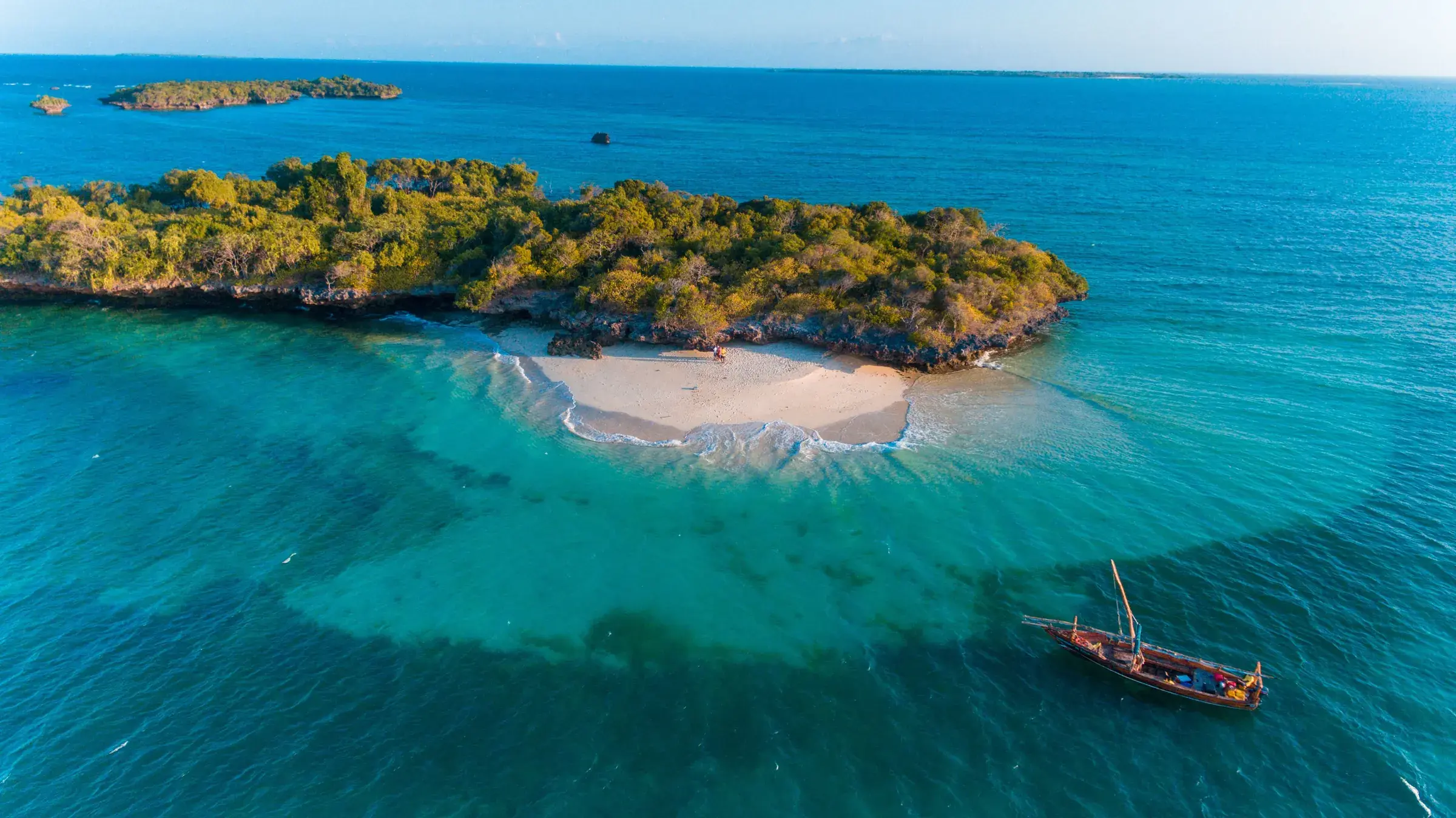
The heart of Paje is its lagoon — a broad, shallow expanse of clear turquoise water held in by an offshore fringing reef that runs the length of the south-east coast. The reef breaks the ocean swell, which is exactly what makes the lagoon such superb flat-water riding terrain: warm, waist-deep water over pale sand, protected from the open Indian Ocean beyond.
Be honest with the tide. Paje has a strong tidal range — at low tide the sea retreats a long way, leaving a vast walkable flat of shallows and seagrass; at high tide it returns to fill the lagoon. This is the signature of the whole south-east coast, and it shapes when you swim, ride and snorkel through the day rather than limiting the beauty of it.
Beyond the reef the marine life opens up. The seagrass beds in the shallows are feeding grounds — green turtles graze here, and the reef edge holds reef fish in number, with parrotfish, wrasse and the occasional passing ray. Snorkelling and diving trips run out to the reef and, further afield, toward the richer waters and the sandbank at Kwale to the south. Dolphins are frequently sighted along this coast, and the seagrass flats are one of the more reliable places on the island to glimpse a turtle in the wild.
Best time to visit
Zanzibar's rhythms are coastal — driven by the monsoon rather than the savannah. For kitesurfing, the two wind seasons are the draw: the reliable Kusi trade winds from roughly June to September, and the lighter, warmer Kaskazi winds from December to February. The dry season, June to October, brings calm skies and the best all-round conditions. December to February is warm and largely dry — comfortable, and prime for the second wind window.
The long rains (March to May) bring heavy downpours, lighter winds and rougher seas that quieten the kite scene; the short rains around November are more intermittent, a lower-pressure shoulder some travellers choose deliberately. For the full picture — including when to pair a Zanzibar stay with a mainland safari — see our → Best time to visit Zanzibar guide.
Things to do here
- Kitesurfing — the reason most people come; schools along the beach cater to first lessons through advanced riding, and the flat lagoon makes it one of the friendliest places anywhere to learn.
- Yoga and beach-town life — shalas, cafés and beach bars give Paje a sociable, unhurried daytime and evening rhythm the quieter villages don't have.
- Snorkelling and diving — boat trips out to the reef and southward toward the Kwale sandbank; a chance to see turtles, reef fish and, in season, dolphins (see → Water and canoe safari).
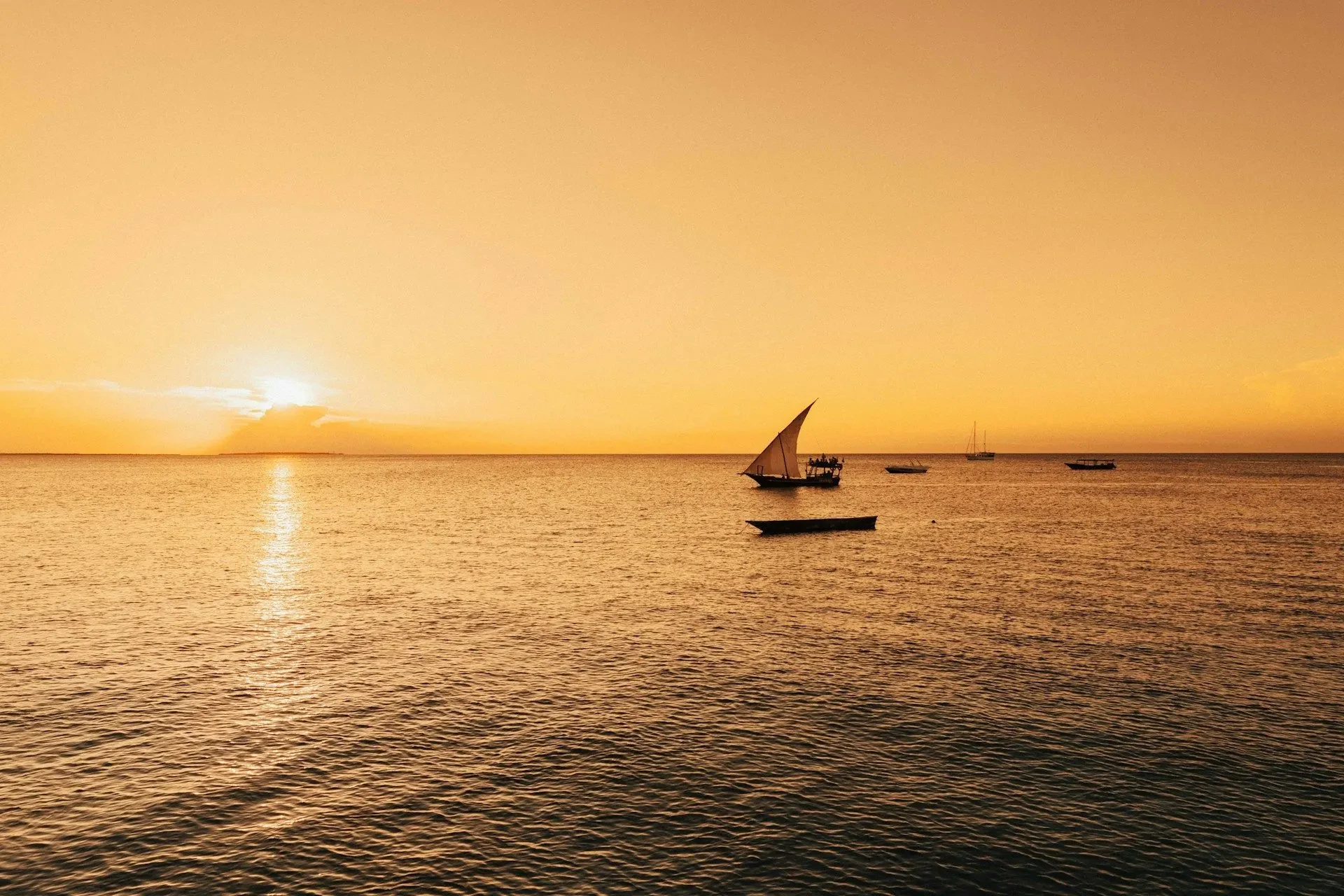
- Dhow and sunset sailing — traditional wooden dhows still work this coast; a sail on the lagoon at the turn of the tide is a quieter counterpoint to the kites (see → Dhow and the Swahili Coast).
- Jozani Forest excursion — the island's largest tract of indigenous forest and home to the endemic Zanzibar red colobus monkey sits a short drive inland — an easy half-day.
- Stone Town day excursion — Zanzibar's UNESCO-listed old quarter is roughly an hour north-west, pairing beach days with the island's layered Swahili, Arab and Portuguese history.
Know before you go
- Getting there: Fly into Zanzibar International Airport (ZNZ), which receives direct flights from Nairobi, Dar es Salaam and several other East African hubs. Paje sits on the south-east coast — transfers run approximately 45 minutes to 1 hour by road from the airport.
- Entry and fees: Tanzania visa requirements apply; a local beach- or conservation-related levy may be collected — we confirm current requirements and include them in your quote.
- How long: 3 to 4 nights suits Paje well; longer if you're here to kitesurf and want time for the wind to cooperate. It pairs naturally with a Tanzania or Kenya safari for a bush-and-beach journey.
- Tide and character note: Paje has a strong tidal range and a lively, sociable scene — wonderful if you want energy and wind, worth knowing if you're after complete stillness. Discuss the quieter Jambiani or Bwejuu alternative with your travel designer before deciding.
Related Nobu journeys
- Shores of Zanzibar — the spice island at its fullest: reef, lagoon, dhow and Stone Town's layered story. → Explore
- Bush to Beach — a classic East Africa pairing: safari on the plains, then the Indian Ocean. → Explore
- Southern Safari and Spice — the southern Tanzania parks combined with Zanzibar's coast, for travellers who want the full range. → Explore
When to go
Month by month — daytime warmth, days of rain and what the season brings.
Where to stay
From Essential to Private Collection — the camps and lodges we know first-hand here. Rates are indicative and confirmed on enquiry.
Essential
New Teddy's Place
Essentiallodge · beachfront
from $40 pp / night· indicative, confirmed on enquiry
Signature
Dhow Inn Boutique Hotel
Signaturehotel · beachfront
from $90 pp / night· indicative, confirmed on enquiry
Ndame Paje Beach Lodge
Signaturelodge · beachfront
from $70 pp / night· indicative, confirmed on enquiry
Paje by Night Hotel
Signaturehotel · beachfront
from $70 pp / night· indicative, confirmed on enquiry
Reef & Beach Resort
Signatureresort · beachfront
from $90 pp / night· indicative, confirmed on enquiry
VRclub Paje Palms Beach Resort
Signatureresort · beachfront
from $90 pp / night· indicative, confirmed on enquiry
Elevated
Cristal Resort Zanzibar
Elevatedresort · beachfront
from $120 pp / night· indicative, confirmed on enquiry
Mr Kahawa
Elevatedhotel · beachfront
from $100 pp / night· indicative, confirmed on enquiry
Private Collection
Zanzibar White Sand Luxury Villas & Spa
Private Collectionvilla · beachfront
from $600 pp / night· indicative, confirmed on enquiry
Journeys through here
Signature routes that pass through Paje — starting points we reshape around your season and pace.
Experiences here
Common questions
- Is Paje good for kitesurfing?
- Yes — Paje is Zanzibar's kitesurfing capital. Steady trade winds (roughly June–September and December–February) and a wide, shallow, reef-protected lagoon make it one of the Indian Ocean's premier flat-water riding spots, and one of the easiest places anywhere to learn.
- When is the best time to visit Paje?
- For wind, target the two kite seasons: June–September and December–February. For calm all-round beach weather, the dry season June–October is ideal. Full seasonal detail is in our [Best time to visit Zanzibar](/guides/best-time-to-visit-zanzibar) guide.
- Does the tide go out a long way at Paje?
- Yes. Paje sits on Zanzibar's south-east coast, which has a strong tidal range — at low tide the sea retreats across a wide flat of shallows and seagrass, returning to fill the lagoon at high tide. It shapes when you swim and ride through the day, and it's part of the character of this coast.
- How is Paje different from Jambiani or Bwejuu?
- All three share the same lagoon and reef, but Paje is the liveliest — a young, sociable beach town built around kitesurfing, with cafés, yoga and beach bars. Jambiani and Bwejuu next door are noticeably quieter and more village-paced.
- How far is Paje from Zanzibar airport?
- The transfer runs approximately 45 minutes to one hour by road from Zanzibar International Airport (ZNZ) across to the south-east coast.
- Can I pair Paje with a safari?
- Easily. Zanzibar works as a natural three-to-five day finale to a Tanzania or Kenya safari, with Zanzibar International Airport well connected to Nairobi and Dar es Salaam. See our [Bush to Beach](/journeys/bush-to-beach) journey for a shaped version of this.
Tell us what you want from Paje
We'll design the journey around it — places, pace and people matched to how you travel.