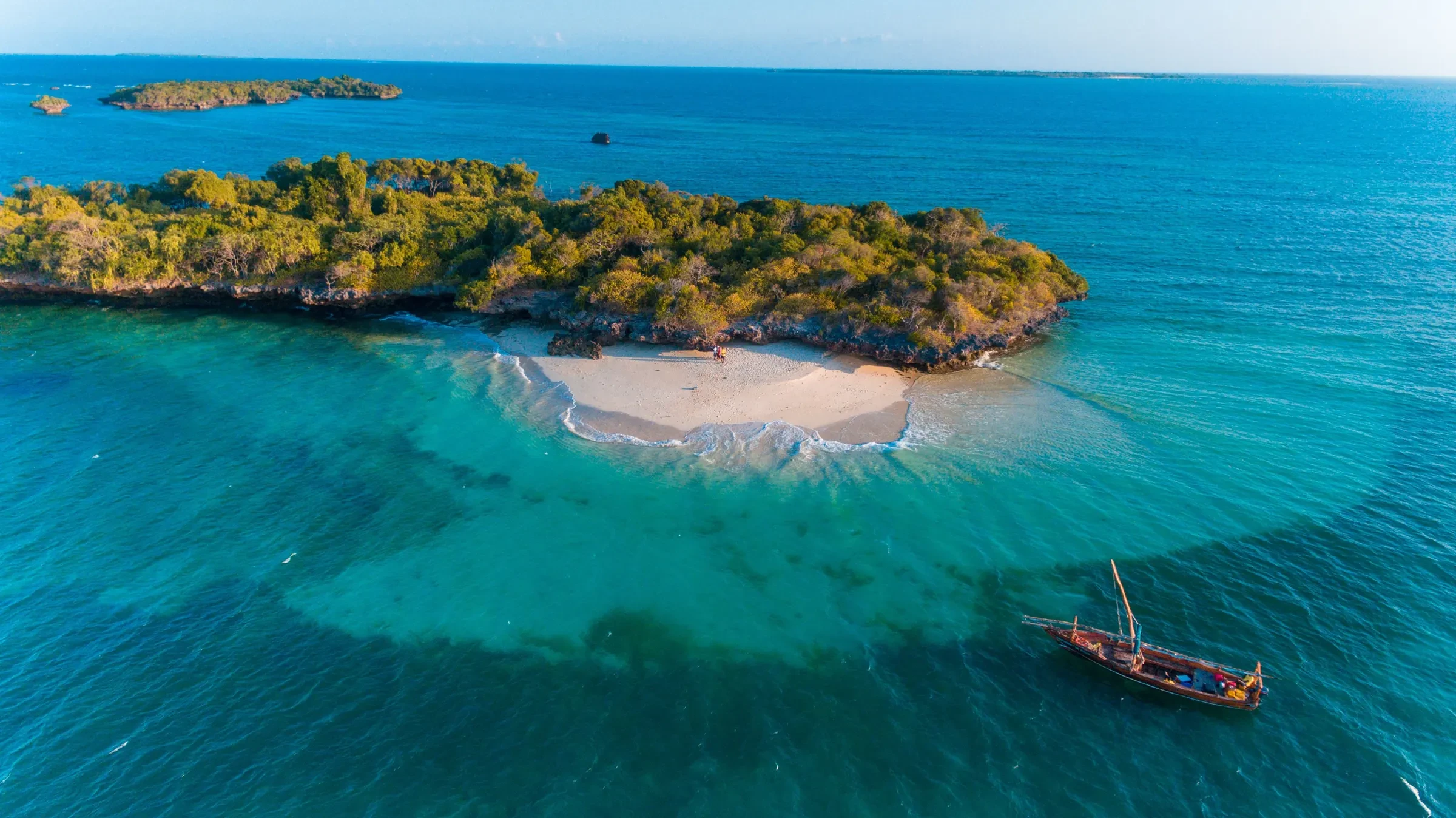
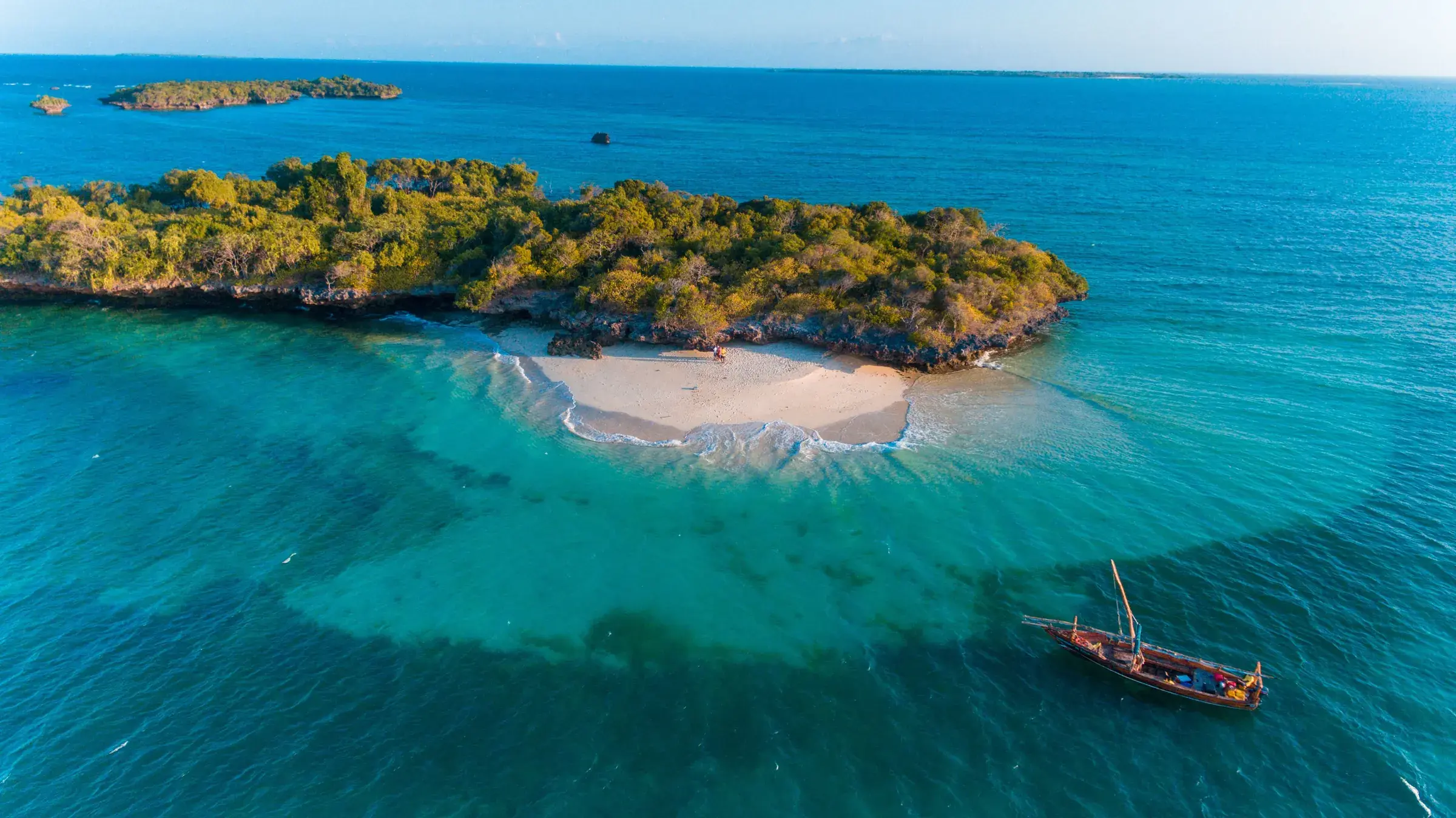
Kizimkazi
Kizimkazi is a fishing village at the far southern tip of Zanzibar (Unguja island), Tanzania, best known for two things: resident bottlenose dolphins offshore — with seasonal humpback whales passing further out — and the Kizimkazi Dimbani mosque, the oldest surviving mosque in East Africa, dated to the 12th century. Quiet, cultural and marine, it suits travellers who want the island's coast and heritage without the resort crowds.
Why visit
Zanzibar has beaches that draw the crowds, and then it has its edges — the quiet places where the island keeps its older self. Kizimkazi sits at the very south, far from the busy north, where two fishing hamlets, Dimbani and Mkunguni, look out over a coast that has been worked and prayed on for the better part of a thousand years. It is a place with two famous names, and they could not be more different.
The first is the dolphins. Pods of resident bottlenose and spinner dolphins move through the waters off the southern coast, and Kizimkazi is the launching point to see them — one of the few places in East Africa where the encounter is a near-daily possibility rather than a lucky sighting. The second is the Kizimkazi Dimbani mosque, a modest coral-rag building carrying a Kufic inscription dated to 1107, making it the oldest surviving mosque in East Africa. Faith arrived on this shore long before the resorts.
Between the two, Kizimkazi offers a version of Zanzibar that is slower and more textured — reef, culture and a working village — for travellers content to trade the crowds for something quieter.
Dolphins, reefs & the southern coast
The draw at Kizimkazi is marine, and it begins with the dolphins. Resident pods of bottlenose and spinner dolphins move through the channel off the southern coast, and small boats head out at first light — the calmest, most respectful window — to find them. Done well, this is a gentle encounter: keeping distance, letting the animals set the terms, never chasing or crowding. Nobu works only with operators who follow responsible dolphin-watching practice, because a pod harried by too many boats is a pod that leaves. Further offshore, humpback whales pass on their seasonal migration, most often sighted between roughly August and October.
Beyond the dolphins, the southern reefs reward the water. The coral reefs off Kizimkazi carry good numbers of reef fish — parrotfish, wrasse, snapper — and the snorkelling and diving here are quieter than the island's busier sites, protected in the right seasons and rarely crowded. The coastline itself is one of low cliffs, tidal flats and mangrove edges rather than a single wide beach, giving the south a character distinct from the resort strands north and east.
Best time to visit
Zanzibar's rhythms are coastal — set by the monsoon, not the savannah. The dry season from June to October is the clearest window: calm seas, reliable sun and the best conditions for dolphin trips and reef diving. It also overlaps the humpback whale window (roughly August to October), when the migration passes offshore. December to February is warm and largely dry, comfortable for the coast. The long rains (March to May) bring heavy downpours and rougher seas that can limit boat trips; the short rains around November are lighter and more intermittent.
Because dolphin excursions depend on calm morning water, the drier months are the more reliable time to plan the encounter. For the full detail — including when to pair a Zanzibar stay with a mainland safari — see our → Best time to visit Zanzibar guide.
Things to do here
- Dolphin excursions — early-morning boat trips to find the resident bottlenose and spinner pods, run responsibly: distance kept, no chasing, the animals left to approach on their own terms.
- Reef snorkelling and diving — the quieter southern reefs carry good reef-fish life and calmer crowds than the north; a dhow trip suits the gentle conditions (see → Dhow and the Swahili Coast).
- Kizimkazi Dimbani mosque — a visit to the oldest surviving mosque in East Africa, its 12th-century Kufic inscription still legible; a modest, moving piece of Swahili-coast heritage (dress respectfully).
- Village and fishing life — the twin hamlets of Dimbani and Mkunguni remain working fishing communities; watching the boats return, or walking the shore at low tide, is part of the place.
- Ocean activities — kayaking and boat charters suit the calmer south-coast waters (see → Water and canoe safari).
- Stone Town day excursion — Zanzibar's UNESCO-listed old quarter lies to the north; a half-day pairs the south's quiet with the island's layered Swahili, Arab and Portuguese history.
Know before you go
- Getting there: Fly into Zanzibar International Airport (ZNZ), which receives direct flights from Nairobi, Dar es Salaam and several other East African hubs. Kizimkazi sits at the far south of Unguja island — transfers run approximately 1 to 1.5 hours by road from the airport.
- Entry and fees: Tanzania visa requirements apply; a local conservation or mosque-visit contribution may be collected on site — we confirm current requirements and include them in your planning. Fees are confirmed in your quote.
- How long: 2 to 3 nights suits Kizimkazi as a quiet marine-and-culture stay; longer if the southern coast is your main focus. It pairs naturally with a Tanzania or Kenya safari for a bush-and-beach journey.
- Respect note: Kizimkazi is a living Muslim village and its mosque an active place of worship — modest dress and quiet respect are expected. On the water, choose responsible dolphin operators; the encounter should never disturb the pods.
Related Nobu journeys
- Shores of Zanzibar — the island's coast at its fullest: reef, dhow, dolphins and the spice island's layered story. → Explore
- Bush to Beach — a classic East Africa pairing: safari on the plains, then the Indian Ocean. → Explore
- Southern Safari and Spice — southern Tanzania's parks combined with Zanzibar's coast, for travellers who want the full range. → Explore
When to go
Month by month — daytime warmth, days of rain and what the season brings.
Where to stay
From Essential to Private Collection — the camps and lodges we know first-hand here. Rates are indicative and confirmed on enquiry.
Essential
Promised Land Lodge
Essentiallodge · beachfront
from $50 pp / night· indicative, confirmed on enquiry
Signature
Karamba Resort
Signatureresort · beachfront
from $80 pp / night· indicative, confirmed on enquiry
Elevated
Fruit & Spice Wellness Resort
Elevatedresort · beachfront
from $150 pp / night· indicative, confirmed on enquiry
The Residence Zanzibar
Elevatedresort · beachfront
from $350 pp / night· indicative, confirmed on enquiry
Unguja Lodge
Elevatedlodge · beachfront
from $150 pp / night· indicative, confirmed on enquiry
Journeys through here
Signature routes that pass through Kizimkazi — starting points we reshape around your season and pace.
Experiences here
Common questions
- Can you see dolphins at Kizimkazi?
- Yes. Kizimkazi is Zanzibar's main dolphin-watching launch point, with resident bottlenose and spinner pods offshore and a near-daily chance of sighting them on a calm morning. We work only with operators who keep a respectful distance and never chase the pods.
- What is the Kizimkazi Dimbani mosque?
- It is the oldest surviving mosque in East Africa, a coral-rag building on Kizimkazi's shore carrying a Kufic inscription dated to 1107 — a rare and moving piece of Swahili-coast heritage, and still an active place of worship.
- When is the best time to visit Kizimkazi?
- The dry season from June to October gives the calmest seas and the most reliable dolphin trips, and overlaps the humpback whale window from roughly August to October. December to February is warm and largely dry. See our [Best time to visit Zanzibar](/guides/best-time-to-visit-zanzibar) guide.
- How far is Kizimkazi from Zanzibar airport?
- The transfer runs approximately one to one and a half hours by road, from Zanzibar International Airport (ZNZ) south to the tip of the island.
- Is Kizimkazi good for a quiet beach stay?
- Very. As the island's southernmost village it is marine-focused and peaceful, with a small collection of stays and a working-village feel — well suited to travellers who want the coast and its culture away from the crowds.
- Can I pair Kizimkazi with a safari?
- Easily. Zanzibar works as a natural finale to a Tanzania or Kenya safari, with ZNZ well connected to Nairobi and Dar es Salaam. See our [Bush to Beach](/journeys/bush-to-beach) journey for a shaped version.
Tell us what you want from Kizimkazi
We'll design the journey around it — places, pace and people matched to how you travel.