Akagera National Park
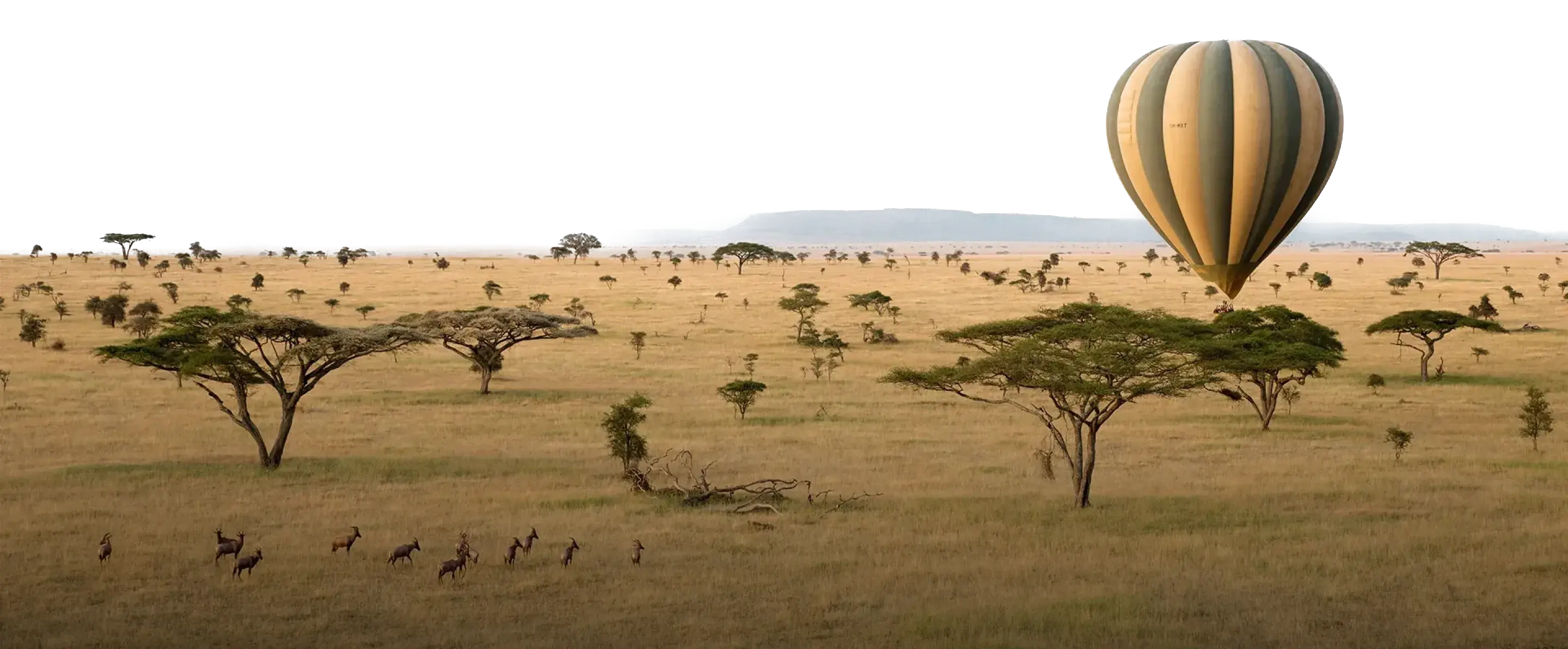
Akagera National Park is Rwanda's only savannah safari park, on the eastern border with Tanzania, and one of Africa's great conservation comebacks — a lake-and-grassland wilderness rewilded to hold the full Big Five (lion and rhino both reintroduced). It offers classic game drives and boat safaris among papyrus-lined lakes, a few hours' drive from Kigali, and pairs naturally with gorilla trekking for a savannah-and-forest Rwanda journey.
Why visit
After the green hills and forests of the rest of Rwanda, Akagera comes as a revelation — the land suddenly opens into broad savannah, papyrus swamp and a chain of glinting lakes along the Tanzanian border. This is the classic, vehicle-based African safari, set in a Rwanda most travellers don't expect to find.
What makes Akagera remarkable is its story. Two decades ago the park was emptied of its big animals; today, after one of the continent's most successful rewilding efforts, it once again holds the full Big Five — lion and rhino both returned to plains they had vanished from. To drive these grasslands now is to witness a wilderness deliberately, patiently brought back to life.
And it sits within easy reach. A few hours east of Kigali, Akagera lets a Rwanda journey balance the intensity of a gorilla trek with the slower rhythm of a savannah drive — big skies, water birds, and the long golden light over the lakes at dusk.
Wildlife & landscapes
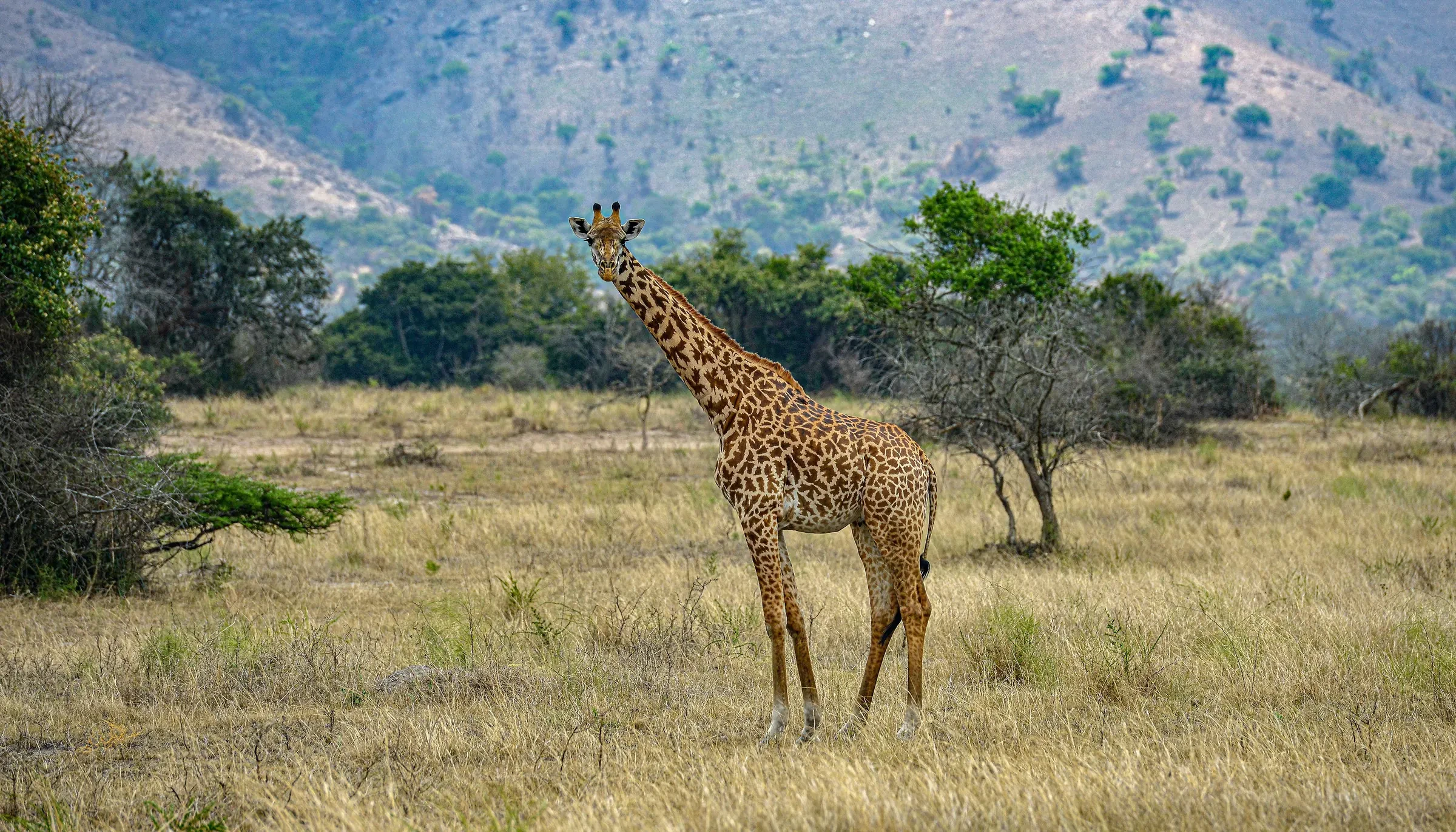
Akagera holds the Big Five — lion and black rhino restored through reintroduction, alongside resident elephant, buffalo and leopard. The lake-fringed savannah supports big herds of plains game: zebra, impala, topi, the elegant roan and sable antelope, and towering Masai giraffe. The wetlands are a birder's prize — papyrus, fish eagles, and the chance, for the patient, of the prehistoric shoebill stalking the reed beds.
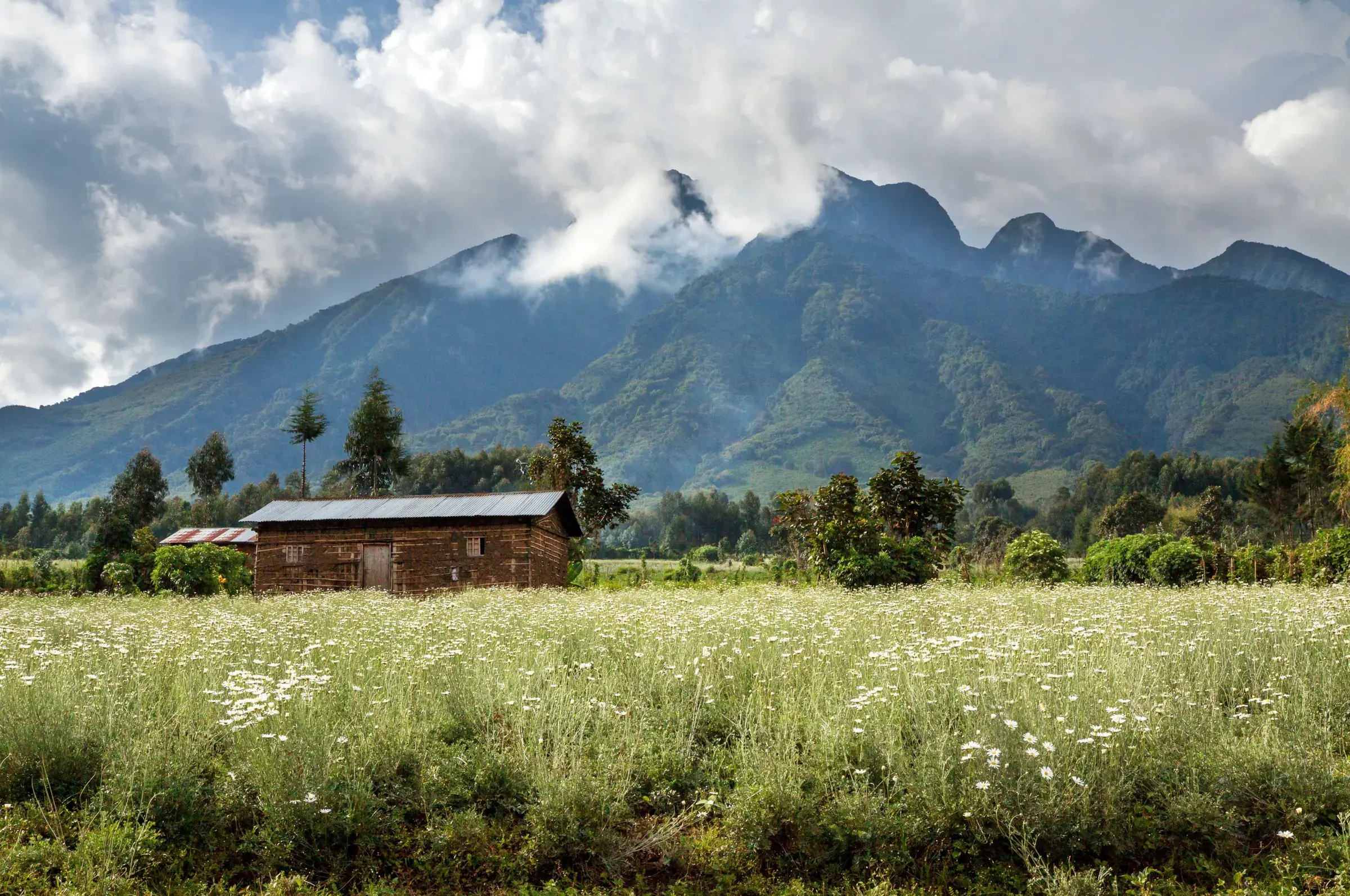
The landscape is the park's signature: a mosaic of rolling acacia savannah, forested ridges and a string of lakes — Lake Ihema the largest — where hippo wallow and crocodile bask. It is the lowest and warmest corner of Rwanda, a different country entirely from the misted volcanoes in the north-west.
Best time to visit Akagera National Park
Akagera rewards travellers year-round, but the dry seasons (June–September and December–February) are easiest for game viewing: the bush thins, animals gather at the lakes and tracks stay firm. The wetter months (March–May and October–November) bring lush green country, dramatic skies, newborn game and exceptional birding, at the cost of taller grass and the occasional muddy track. Big game is resident every month; the boat safaris run year-round. See our → Best time to visit Rwanda guide for month-by-month detail.
Things to do here
- Game drives — Morning and late-afternoon drives across the savannah for the Big Five and plains game, in the open south and the wilder, hillier north.
- Boat safaris — Cruises on Lake Ihema for hippo, crocodile, water birds and elephants come to drink — an Akagera signature (see → Safaris).
- Night drives — Guided after-dark drives for nocturnal hunters, where conditions allow.
- Birding — Wetland and savannah birding, with the shoebill the great prize.
- Behind-the-scenes conservation — Time with the teams behind the rewilding, where available.
Know before you go
- Getting there: Roughly a two-and-a-half to three-hour drive east from Kigali International Airport (KGL) to the southern entrance gate; no scheduled flights are needed.
- Fees: Park entry and activity fees apply (per day/per person), set by the park authority; we confirm current rates and include them in your quote.
- How long: 2–3 nights lets you cover the lakes and the northern plains without rushing; easily paired with Volcanoes or Nyungwe for a fuller Rwanda journey.
- Pairing: A natural savannah counterpoint to a gorilla trek — many journeys combine Akagera with Volcanoes National Park.
Related Nobu journeys
- Thousand Hills Circuit — Gorillas, the Big Five and rainforest chimps in one compact loop. → Explore
- Forest & Savannah Passage — Nyungwe's rainforest paired with Akagera's lake-strewn plains. → Explore
When to go
Month by month — daytime warmth, days of rain and what the season brings.
Where to stay
From Essential to Private Collection — the camps and lodges we know first-hand here. Rates are indicative and confirmed on enquiry.
Signature
Akagera Game Lodge
Signaturelodge · reserve
from $150 pp / night· indicative, confirmed on enquiry
Expedition
Karenge Bush Camp
Expeditiontented camp · reserve
from $250 pp / night· indicative, confirmed on enquiry
Elevated
Ruzizi Tented Lodge
Elevatedtented camp · lakeshore
from $250 pp / night· indicative, confirmed on enquiry
Private Collection
Magashi Camp
Private Collectiontented camp · reserve
from $1,200 pp / night· indicative, confirmed on enquiry
Journeys through here
Signature routes that pass through Akagera National Park — starting points we reshape around your season and pace.
Experiences here
Common questions
- Can you see the Big Five in Akagera National Park?
- Yes. Following the reintroduction of lion and rhino, Akagera now holds all of the Big Five — lion, leopard, elephant, buffalo and rhino — though rhino and leopard, as everywhere, take patience and luck.
- When is the best time to visit Akagera?
- The dry seasons, June to September and December to February, give the easiest game viewing; the wetter months bring lush scenery and superb birding, with game resident year-round.
- How many days do you need in Akagera?
- Two to three nights lets you explore both the lakes of the south and the wilder northern plains, and fit in a boat safari without rushing.
- Can you do a boat safari in Akagera?
- Yes. Boat cruises on Lake Ihema are a highlight, bringing you close to hippo, crocodile, elephants at the shore and a wealth of water birds.
- How far is Akagera from Kigali?
- The southern gate is roughly a two-and-a-half to three-hour drive east of Kigali, reached entirely by road.
Tell us what you want from Akagera National Park
We'll design the journey around it — places, pace and people matched to how you travel.