Kigali
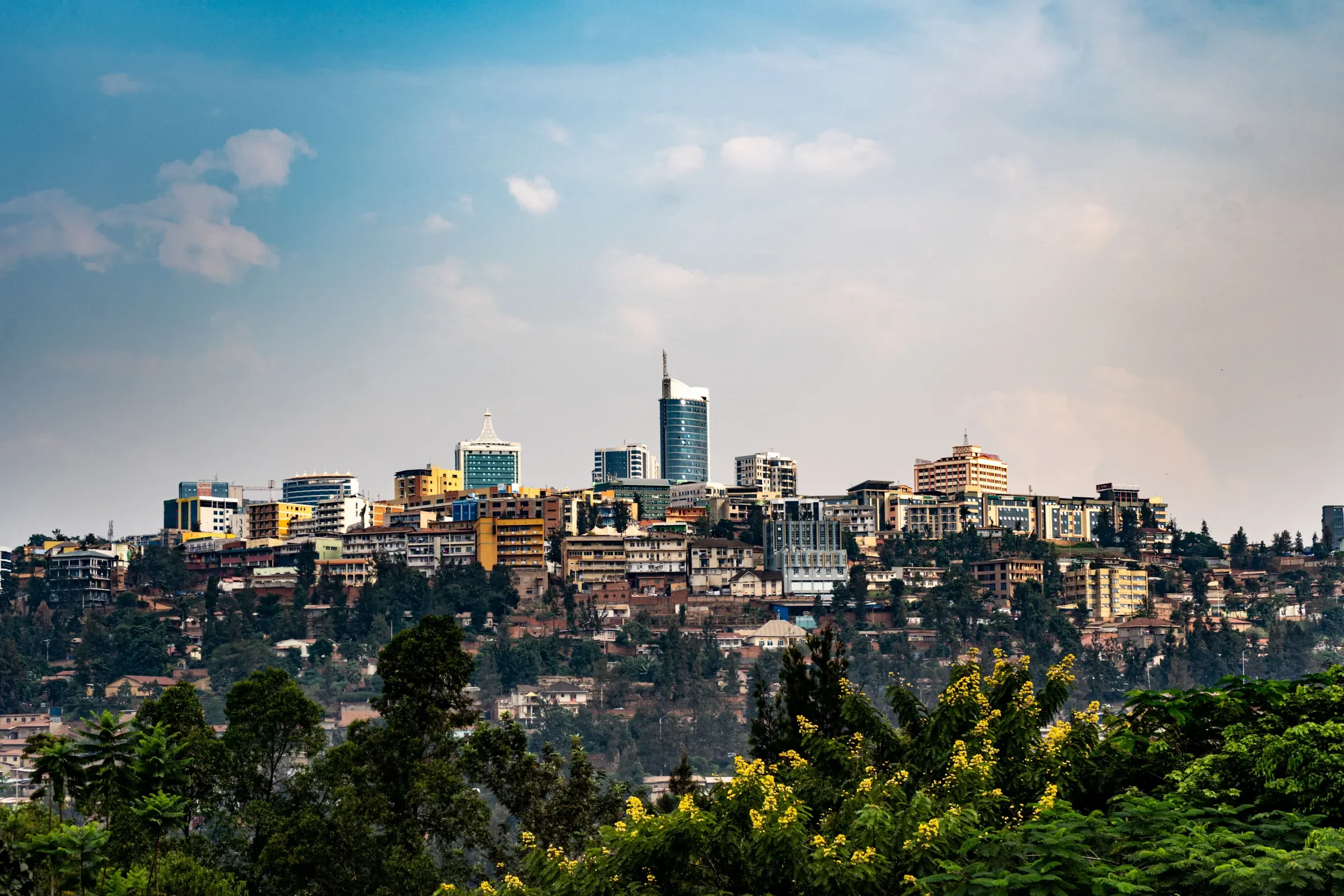
Kigali is the capital of Rwanda, set across a series of green hills in the centre of the country and known as one of Africa's cleanest, calmest and safest capital cities. It is the arrival and departure point for almost every Rwanda journey — reached via Kigali International Airport (KGL) — and the reflective gateway to gorilla trekking in Volcanoes National Park. This is a city, not a wildlife destination: its draws are the Kigali Genocide Memorial, a growing café, coffee and contemporary-art scene, lively markets, and logistics smooth enough to make the whole country feel effortless.
Why visit
Most safari capitals are a place you pass through. Kigali asks you to stay a night — and rewards it. Spread across a run of green ridges and valleys in the geographic heart of Rwanda, it is a city that surprises almost everyone who arrives: clean, ordered, unhurried, and remarkably safe to walk. The pace is gentle, the streets are planted, and the hills mean the view keeps shifting as you move.
It is also a city that carries its history openly. Kigali is home to the Kigali Genocide Memorial, where more than 250,000 victims of the 1994 genocide against the Tutsi are laid to rest — a place of extraordinary gravity that is central to understanding modern Rwanda. Many travellers describe their time there as the most moving hours of their journey. It asks to be approached slowly, and with respect.
Beyond that reflective heart, Kigali has become genuinely good company. A serious coffee culture has grown up around the country's high-altitude beans, alongside contemporary galleries, craft cooperatives, easy restaurants and busy markets. For most visitors, Kigali is the calm, considered bookend to the wilder days ahead — the place you land, adjust, and set out from toward the gorillas.
Wildlife & landscapes
Let's be honest about what Kigali is: a city, not a game destination. You do not come here for the Big Five — you come for a capital that reads its own landscape unusually well, and for the country it opens onto.
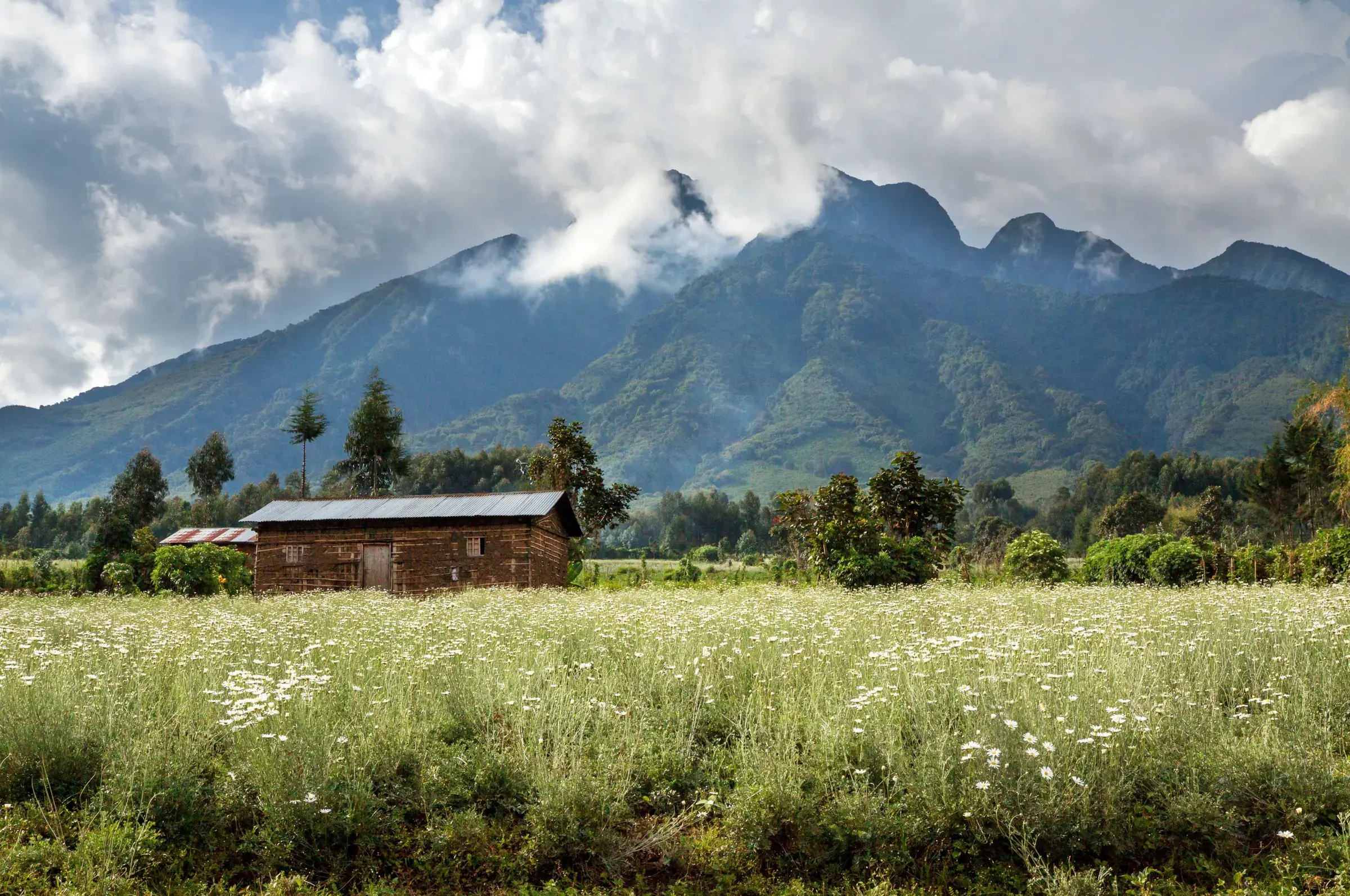
The landscape is the story. Kigali is built across a thousand hills — the phrase Rwanda has made its own — so the cityscape rises and falls in green terraces, red-earth roads and ridgelines rather than a flat grid. From the higher points, the view runs out over cultivated valleys where banana groves, tea and coffee plantations climb the slopes; the surrounding countryside is intensely farmed and intensely green, a patchwork that gives Rwanda its "land of a thousand hills" identity.
For wildlife, the horizon lies beyond the city. Kigali is the launch point for mountain gorillas in Volcanoes National Park to the north-west, chimpanzees and canopy primates in Nyungwe to the south-west, and the savannah game — lion, elephant, giraffe — of Akagera to the east. The nature you see in Kigali is gentler: birdlife in the city's wetlands and gardens, and the ever-present green of a capital that has kept its hills alive.
Best time to visit
Kigali sits close to the equator at altitude, so its climate is mild and spring-like year-round — warm days, cool evenings, rarely extreme. Timing here is really about the wider Rwanda journey the city gates onto.
The long dry season (June to September) and the short dry season (December to February) are the most reliable windows: firmer trails for gorilla and chimpanzee trekking, clearer views across the hills, and easier road travel. The long rains (March to May) and short rains (October to November) bring lush landscapes and fewer visitors, though forest trails turn muddy and demanding. Kigali itself is comfortable in any season — the rains rarely disrupt a city stay. For the full picture of when to travel and trek, see our → Best time to visit Rwanda and → Best time for gorilla trekking guides.
Things to do here
- Kigali Genocide Memorial — the resting place of more than 250,000 victims and the essential first step in understanding modern Rwanda; a considered, respectful visit of two to three hours, ideally early in your stay.
- Coffee and café culture — Rwanda's high-altitude beans have built a real café scene; a tasting or roastery visit is one of the city's quiet pleasures.
- Markets and craft cooperatives — Kimironko market for colour and daily life, plus women's weaving and craft cooperatives producing the country's distinctive baskets.
- Contemporary art and galleries — a growing scene of Rwandan artists and creative spaces that reward an unhurried afternoon.
- City and hills orientation — a guided drive across the ridges, taking in viewpoints, neighbourhoods and the rhythm of a capital that works.
- Gateway logistics — Kigali is where journeys are assembled: onward flights and road transfers to Volcanoes, Nyungwe, Akagera and Lake Kivu are arranged with unusual smoothness (see → Gorilla trekking).
Know before you go
- Getting there: Fly into Kigali International Airport (KGL), Rwanda's main gateway, well connected across Africa, Europe and the Middle East. The airport sits close to the city centre — transfers are typically 15 to 30 minutes by road. Onward travel to the parks is by light aircraft or scenic road transfer.
- Entry and fees: Rwanda visa requirements apply and are straightforward for most travellers; any local levies are confirmed in your quote. Gorilla and chimpanzee permits are arranged separately as part of your journey.
- How long: 1 to 2 nights suits Kigali as the arrival-and-departure bookend of a Rwanda journey; add a night if you want unhurried time at the memorial, the markets and the coffee scene.
- Character note: Kigali is calm, clean and among the safest capitals in Africa, with a widely observed monthly community clean-up (Umuganda) that can briefly limit movement on the last Saturday morning — your travel designer will plan around it.
Related Nobu journeys
When to go
Month by month — daytime warmth, days of rain and what the season brings.
Where to stay
From Essential to Private Collection — the camps and lodges we know first-hand here. Rates are indicative and confirmed on enquiry.
Essential
Hotel Chez Lando
Essentialhotel · urban
from $70 pp / night· indicative, confirmed on enquiry
Signature
Heaven Boutique Hotel
Signaturehotel · urban
from $120 pp / night· indicative, confirmed on enquiry
Hôtel des Mille Collines
Signaturehotel · urban
from $150 pp / night· indicative, confirmed on enquiry
Park Inn by Radisson Kigali
Signaturehotel · urban
from $100 pp / night· indicative, confirmed on enquiry
Elevated
Kigali Marriott Hotel
Elevatedhotel · urban
from $200 pp / night· indicative, confirmed on enquiry
Kigali Serena Hotel
Elevatedhotel · urban
from $200 pp / night· indicative, confirmed on enquiry
Radisson Blu Hotel & Convention Centre Kigali
Elevatedhotel · urban
from $150 pp / night· indicative, confirmed on enquiry
The Retreat by Heaven
Elevatedhotel · urban
from $250 pp / night· indicative, confirmed on enquiry
Journeys through here
Signature routes that pass through Kigali — starting points we reshape around your season and pace.
Common questions
- Is Kigali worth visiting, or just a place to fly through?
- It rewards a stay. Beyond being the smooth gateway to the gorillas, Kigali offers the deeply moving Genocide Memorial, a genuine coffee and art scene, lively markets, and the calm of one of Africa's cleanest, safest capitals — most travellers are glad they gave it a night or two rather than rushing through.
- How far is Kigali from Volcanoes National Park for gorilla trekking?
- The road transfer north-west to Volcanoes National Park is roughly two to three hours through terraced hill country; many Rwanda journeys use Kigali as the arrival point and set out for the gorillas the following morning.
- Should I visit the Kigali Genocide Memorial?
- Yes — it is central to understanding modern Rwanda and is approached by most visitors as an essential, if profoundly sombre, part of the journey. Allow two to three hours, ideally early in your stay, and expect it to stay with you.
- How many days do you need in Kigali?
- One to two nights is usually right: a night to arrive and adjust, and a night before departure, with time for the memorial, the markets and the coffee scene. Longer only if you want a slower, more reflective city stay.
- Is Kigali safe and easy to get around?
- Kigali is widely regarded as one of the safest and cleanest capital cities in Africa, calm and walkable in its central areas; transfers and logistics are notably smooth, which is much of what makes a Rwanda journey feel effortless.
Tell us what you want from Kigali
We'll design the journey around it — places, pace and people matched to how you travel.