
Stories from the wild
Green season safari
A green season safari takes place during East Africa's wetter, quieter months, when landscapes turn lush, skies become dramatic, young animals appear in many areas and traveller numbers are lower. It is best for flexible travellers who value atmosphere, photography and strong value over guaranteed dry days.
Written by Joseph Gathuru · Travel designer at Nobu Safaris
Intro
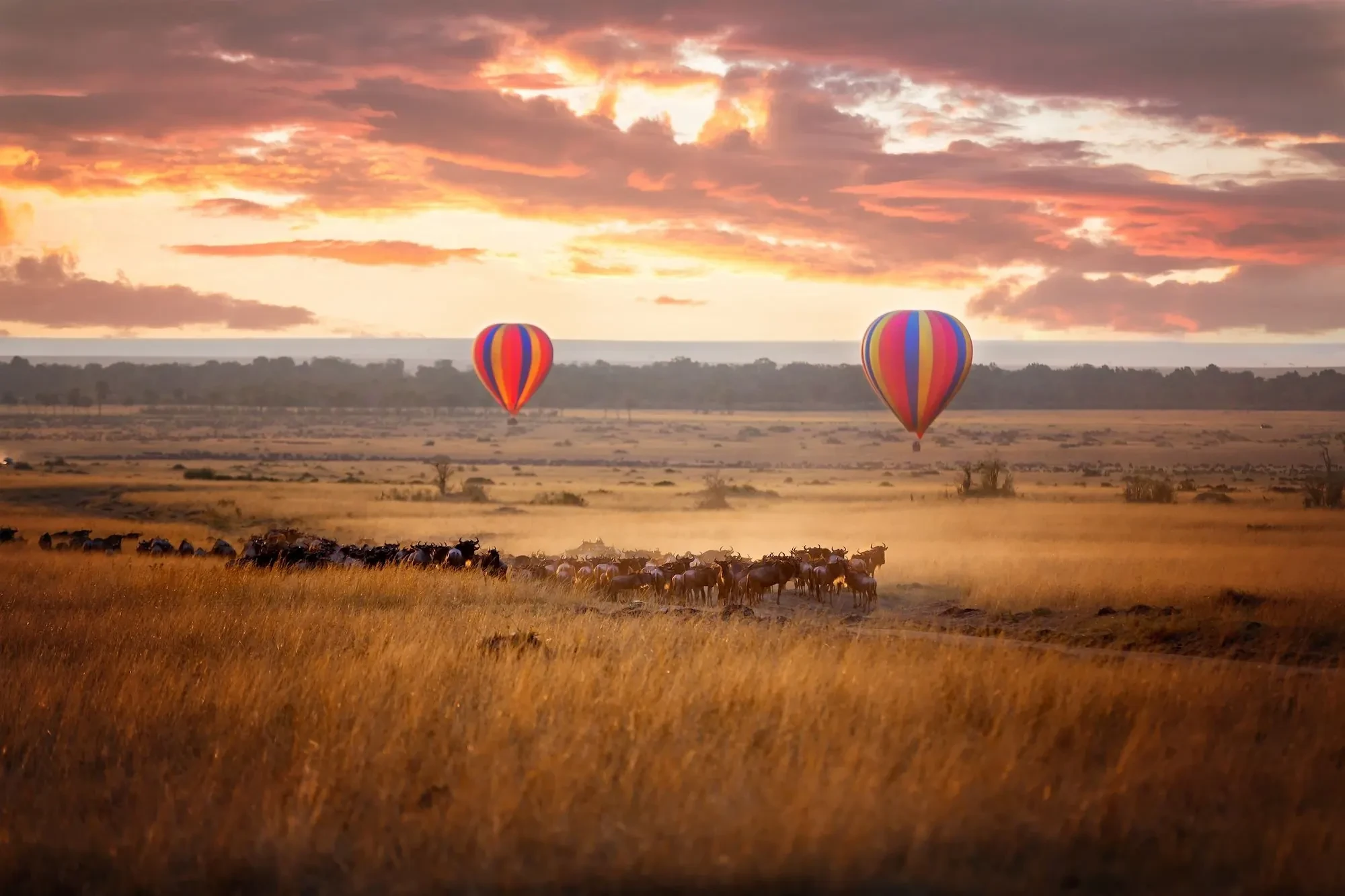
The green season asks you to stop thinking of safari only as dust and dry grass. It is a softer, more alive version of the same wild: clouds building over the plains, red earth dark after rain, newborn animals finding their legs, birds in breeding colour and evenings that smell of wet grass.
It is not the obvious choice for everyone. Some travellers want the driest tracks, the easiest sightings and the certainty of peak-season conditions. But for those who like mood, space and the feeling of seeing a landscape breathe, the green season can be quietly extraordinary.
The detail
Across East Africa, "green season" usually refers to the months when rain returns and the bush renews. Exact timing changes by country and region, but in broad terms it often sits between November and May, with shorter rains around November and longer rains around April and May in many safari areas. The pattern is not a single wall of rain. Many days still have bright windows, with showers building later and clearing the air.
The main reward is atmosphere. Grass freshens, rivers lift, migratory birds arrive, and the landscape becomes more photographic. Big skies matter on safari: a lion under a storm front, elephants against new green, giraffe in golden grass after rain. For photographers, this can be more interesting than the flatter certainty of peak dry months.
Wildlife viewing changes rather than disappears. Resident animals remain; they simply spread out more when water is widely available. That can mean sightings require better guiding and more patience. In return, many areas feel less crowded, camps are calmer and the whole journey can feel more private. For travellers who dislike heavy vehicle density, this is a serious advantage.
The trade-offs are real. Some roads can be muddy. In certain remote areas, access may be more limited. A beach finish needs careful timing, because coastal weather does not always follow the same rhythm as the inland safari areas. We design green-season trips with those realities in mind: choosing camps with strong access, avoiding routes that rely on fragile tracks and building in enough time for the season to work beautifully.
Green season also pairs naturally with a more considered spend. Because demand is lower outside peak wildlife events, stays can offer stronger value and availability can be better. The point is not simply cost; it is the chance to travel with more space, more mood and a different kind of beauty.
Key facts
Broad timing: often November to May across many East African safari areas, with regional variation. Best for: atmosphere, fewer travellers, photography, birding, young animals and stronger value. Trade-offs: occasional rain, softer tracks, less predictable movement and route-specific access. Good places: Kenya's conservancies, the Mara outside peak migration dates, Tanzania's northern circuit outside the busiest windows, and many mixed safari-coast routes when timed carefully. Pairs with: Affordable safari Kenya, Photography safari, Best time to go on safari.
Why Nobu for this
Green season rewards design. It is not enough to say "travel when it is quieter"; the route has to respect the weather, the roads, the camps and the kind of wildlife experience you want. Nobu chooses areas that still work well, guides who know how to read changing conditions, and pacing that gives the season room to surprise you.
We also set expectations clearly. If you want the highest chance of dry days and concentrated game at water, we may steer you toward dry-season travel. If you want drama, lushness, space and a more atmospheric journey, green season can be the more memorable choice.
Suitability — "right for you if…"
A green season safari is right for you if you are flexible, visually led and comfortable with some weather in exchange for quieter camps, richer colour and a softer rhythm. It suits photographers, return travellers, couples who want atmosphere, families avoiding the busiest dates and anyone who would rather feel a place than chase only the classic postcard.
It may be less right if you need every day to feel dry and predictable, or if your dream depends on a specific seasonal event such as Mara River crossings. In that case, we will design around that event rather than forcing a green-season answer.
Related Nobu journeys
- Into the Wild Mara — beautiful outside peak migration weeks, especially for travellers who want cats, space and atmosphere. → Explore
- Mara & the Lakes — a strong green-season shape, with Rift Valley scenery and birding adding texture. → Explore
- Southern Safari & Spice — for travellers who want a quieter southern Tanzania safari paired carefully with the coast. → Explore
Common questions
- What is the green season on safari?
- The wetter, renewing period when landscapes turn lush, traveller numbers fall and wildlife viewing becomes more atmospheric, though less dry and predictable.
- Is green season still good for wildlife?
- Yes, resident wildlife remains, but animals may spread out more because water is widely available. Good guiding and route choice matter.
- When is green season in East Africa?
- Broadly November to May in many safari areas, with short rains around November and longer rains around April-May. Exact timing varies by region.
- Is green season good for photography?
- Very. Dramatic skies, fresh colour, birds and softer light can make it one of the most beautiful times to photograph East Africa.
- Should first-time safari travellers choose green season?
- They can, if they are flexible and understand the trade-offs. If they want the most classic dry-season conditions, we may recommend a different window.
More stories
 Group & small-group safariA group safari designed for friends, families and small groups — private vehicles, clear pacing, shared stays and routes that work for everyone. Your Africa, beautifully told.
- Honeymoon safariA honeymoon safari or special-occasion journey across East Africa — private camps, beautiful pacing, wild mornings and an Indian Ocean close. Your Africa, beautifully told.
- Luxury safariA luxury safari across East Africa — private conservancies, exceptional camps, seamless flying and guiding that makes the wild feel personal. Your Africa, beautifully told.