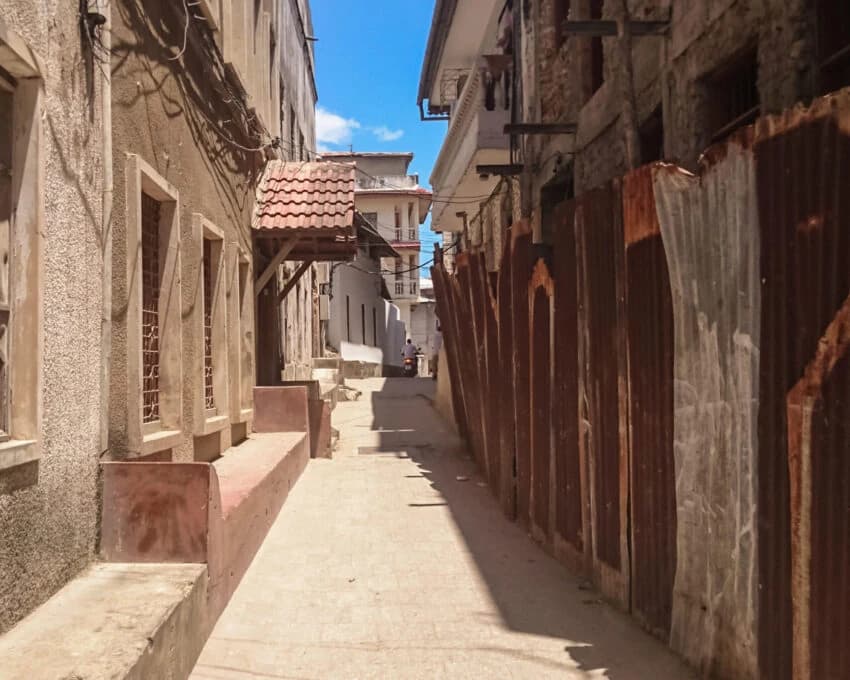
Doors tell stories
A guide reads carved symbols while the lane continues around you.
Culture / Zanzibar
From carved doors to spice gardens and tidal farms, follow the island through its people.
The journey
Stone Town wakes through sound: a call across rooftops, cups meeting saucers, shutters opening above lanes. You begin on foot, where doors, courtyards and food stalls reveal centuries of movement across the Indian Ocean.
The route turns inland to spice country before reaching the south-east coast. Here the tide exposes working shallows, and conversations about seaweed, cooking and craft belong to the people who practise them, with permission arranged first.
This Zanzibar cultural tour suits curious travellers who would rather spend time with context than collect attractions. It balances guided history with unscripted afternoons and treats community visits as hosted exchanges. If your priority is reef time or uninterrupted beach days, choose a coast-led journey instead.
Six nights leave room to listen, taste and ask, while every hosted visit is shaped on your terms.
Moments along the way
A guide reads carved symbols while the lane continues around you.
Fish, fruit and spice change hands as kitchens plan the day.
Leaves and bark become clove, cinnamon and pepper through touch and scent.
A hosted kitchen session turns market ingredients into a shared meal.
On exposed flats, seaweed lines show how coastal work follows water.
Return to the lanes when doorways glow and food stalls gather steam.
Where you’ll stay
Your six nights use two bases: Stone Town and the south-east coast. The cards illustrate lodging choices across those bases, from an Essential courtyard stay to Elevated or Signature rooms; the spice-country visit adds no overnight move.
STONE TOWN
Where you might stay
STONE TOWN
Where you might stay

SOUTH-EAST COAST
Where you might stay
Your planner confirms each stay for your dates.
Add to your journey
Select an idea to carry into your brief. Nothing is added to a booking or priced automatically.
A route with room to breathe
Zanzibar airport → Stone Town → Kizimbani → Paje → airport. The inland visit is a day chapter rather than another hotel move; hosts and timings are confirmed first.
A sense of the days
Settle behind the seafront, then take an orientation walk as working lanes replace the airport road.
Trace architecture and trade with a guide, visiting the former slave-market site with measured, respectful language.
Visit the market with your host, prepare a meal and discuss the ingredients rather than simply tasting them.
Drive inland for plants, cultivation and history, then continue onward to a south-east coast base.
Meet a confirmed host or guide to understand seaweed work, then keep the remaining coast time unstructured.
Return to the airport, or extend on the coast once the cultural route has reached its natural close.
Typically three nights in Stone Town and three on the south-east coast: six nights in all, with Kizimbani visited between them.
Clear from the beginning
Every journey is quoted in full, with no surprises.
Good to know
Stone Town entered UNESCO’s World Heritage List in 2000, but this route does not treat culture as a museum label. It links the old town’s architecture and Indian Ocean trade to inland spice cultivation and the south-east’s tidal work. Red seaweed is grown on lines in shallow water and harvested by hand; access follows the tide and any visit needs a willing host. The detailed histories live in the linked stories, while this page shows how to travel through them.
Because the route connects three different settings: the old town, the spice-growing interior and the working south-east shore. Each adds context to the next, while the final coast nights prevent the journey becoming a sequence of guided visits.
A guided Jozani walk is optional, with no animal sighting promised. Choose it if you want a forest interlude between cultural visits; your guide confirms the current visitor rules and access before the day.
June to October is generally straightforward for walking and inland visits, while January and February are also often drier. March to May brings the long rains and some closures. Festival and Ramadan dates move, so confirm them for your year.
Six nights gives three in Stone Town and three on the south-east coast, with a spice-country visit between them. Four nights would feel compressed; add beach nights after the route if you want fewer planned encounters each day.
No. Hosted visits depend on permission and availability, and your proposal names what is arranged. Ask before photographing people or their work. If a host is unavailable, agree an alternative confirmed experience or unstructured time with your planner.
Choose Zanzibar Ten Nights for a broad, tide-led island circuit, or Active Zanzibar for movement and water time. This journey fits travellers who value guided context, shared meals and patient conversation more than a full programme of beach activities.
Government advice, checked October 2026: the US rates Tanzania, Zanzibar included, Level 3, Reconsider travel, issued 31 October 2025. The UK advises against all but essential travel only within 20 km of Tanzania’s border with Mozambique’s Cabo Delgado province; its Zanzibar guidance also notes armed crime and local dress expectations. Read both before travel.
Read the history before you travel: Stone Town history · Zanzibar spice trade history · Zanzibar seaweed farming
Last checked: October 2026.
When to go
Use this as planning guidance; hosted visits, tides, religious dates and festivals matter as much as the broad weather pattern.
Jul / Main dry season
June to October generally brings drier conditions for walking, inland visits and coast time. July’s Mwaka Kogwa timing is set locally, so treat it as a possibility until confirmed.
Broad seasonal guidance — not a forecast, availability calendar or migration promise. Picking a month sets it in your plan.Related journeys
A journey made around you
Tell us what you want to understand, and we’ll shape Zanzibar Culture around confirmed hosts.