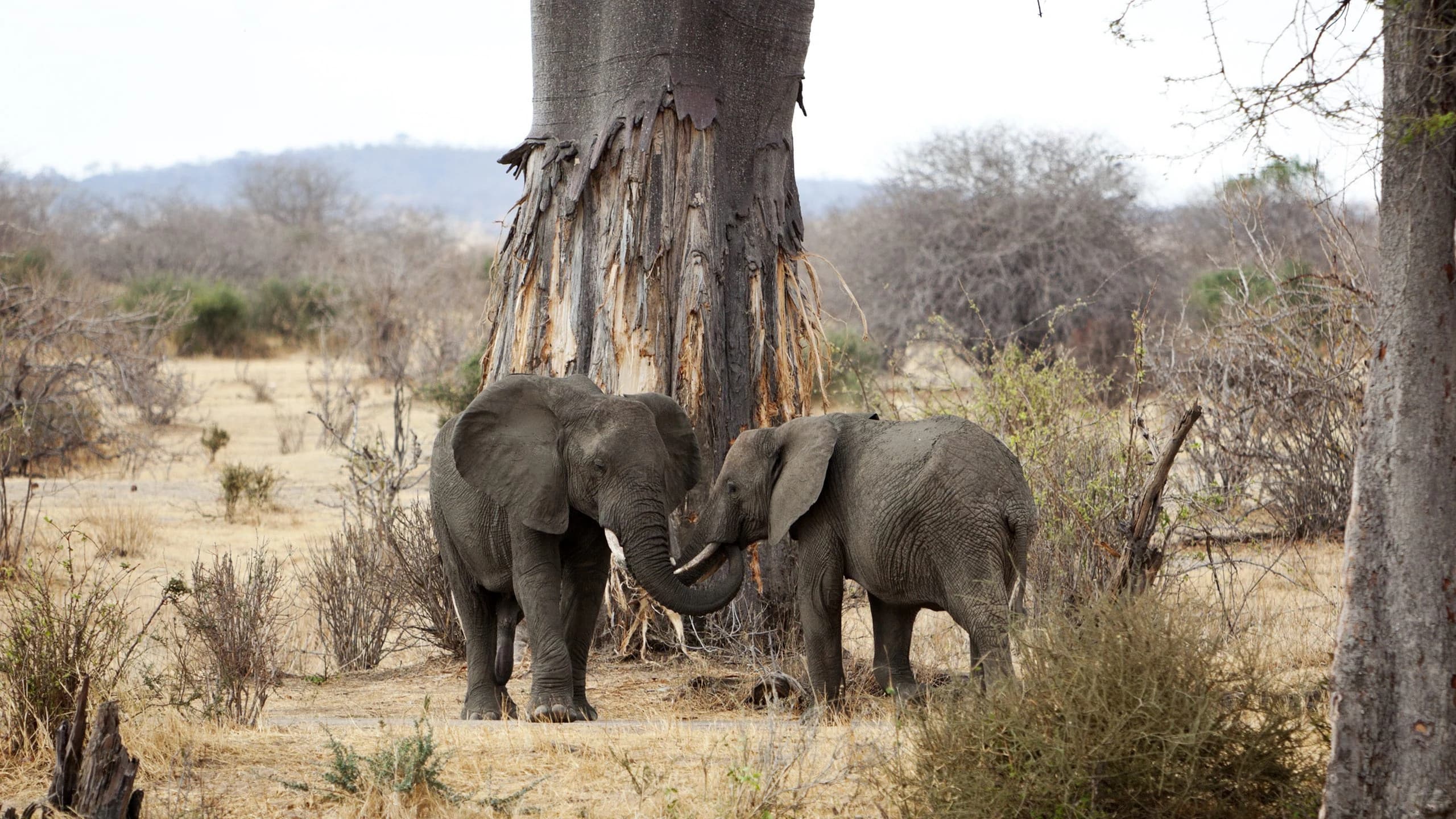
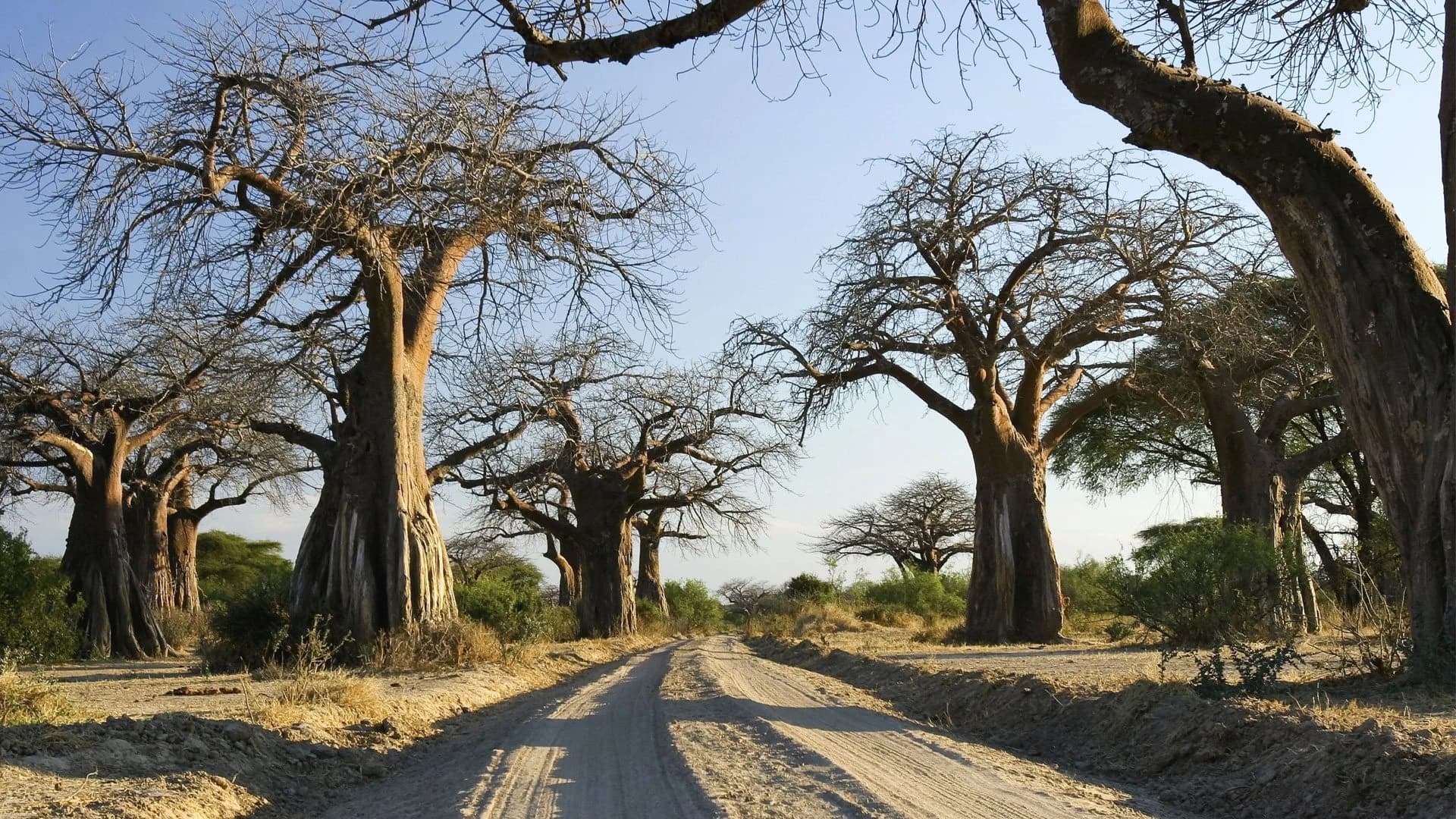
Baobabs after dawn
Cool light reaches the trunks before the interior heat gathers.
Safari & sea / Tanzania
From dry river country to a tidal island, two distant landscapes joined by air.
The journey
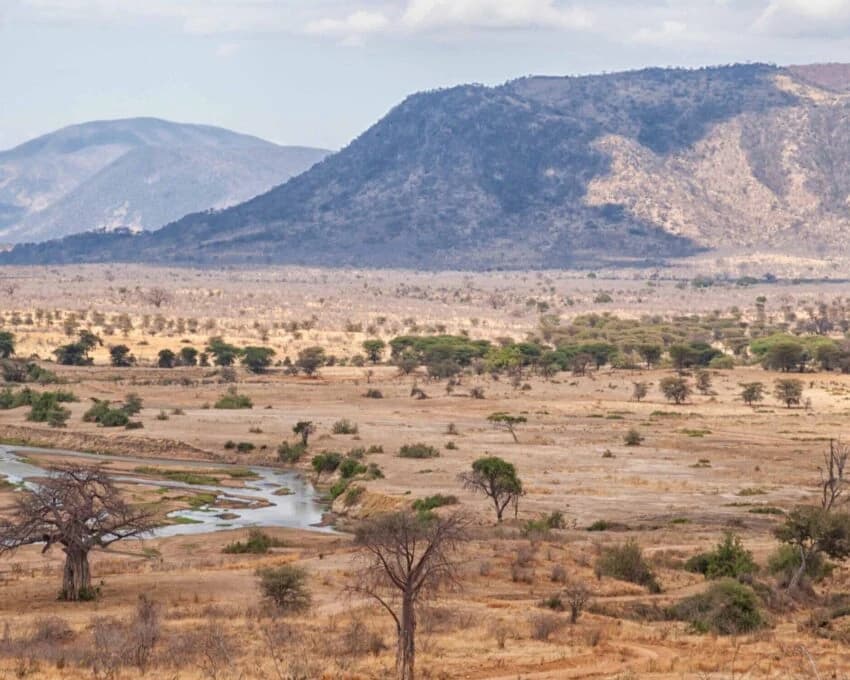
Ruaha begins with scale and silence: baobabs on broken ground, sand rivers, and the Great Ruaha narrowing into pools through the dry months. Four nights let you read this interior from a vehicle and, when arranged, on foot.
Then a light aircraft turns east, often with stops, and the island takes over. Stone lanes or a coast base replace dust with salt air, while the tide sets the pace.
Ruaha & Zanzibar suits return safari travellers who value a remote southern park and are comfortable with small aircraft, uncertain routing and limited wet-season access. It is a poor fit for anyone needing daily scheduled certainty or a short first safari; choose Tanzania Classic for a broader road circuit.
Four nights in each landscape create contrast without haste, with the exact island base shaped on your terms.
Moments along the way
Cool light reaches the trunks before the interior heat gathers.
Wildlife often concentrates near remaining water, though every drive differs.
 03
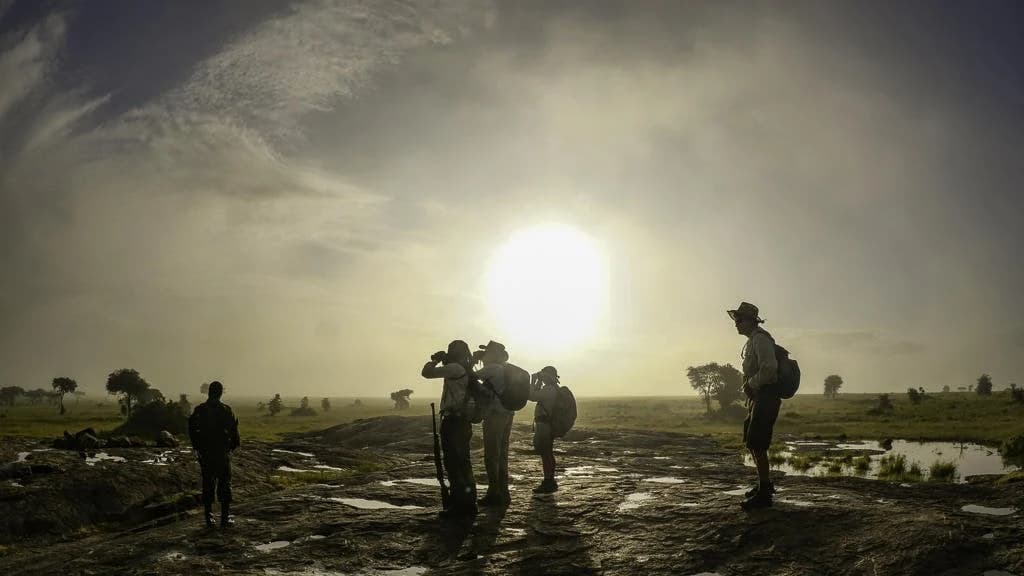
03A permitted walk shifts attention from distance to tracks and plants.
Small-aircraft stops reveal how far the southern park sits from the coast.
An optional town night brings carved doors and shaded lanes before the coast.
Swims, reef outings and empty hours fall around the local tide table.
Where you’ll stay
Choose an Essential or Signature Ruaha stay for the selected airstrip. Zanzibar usually means four coast nights in an Elevated or Private Collection stay; the Stone Town card illustrates an optional one-town, three-coast split, with properties confirmed in your proposal.
RUAHA
STONE TOWN
Where you might stay

ZANZIBAR COAST
Where you might stay
Your planner confirms each stay for your dates.
Add to your journey
Select an idea to carry into your brief. Nothing is added to a booking or priced automatically.
A route with room to breathe
Dar es Salaam → Ruaha → Zanzibar airport → island coast. Light-aircraft routing may include Nyerere or Dar; schedules, seat minimums and the operating airstrip are reconfirmed.
A sense of the days
Meet the bush flight in Dar es Salaam, adding an overnight stop if the international timing requires it.
Arrive by light aircraft and take an introductory drive through baobab woodland towards your chosen section of Ruaha.
Use three full days for drives and an optional permitted walk, following ranger instructions and keeping your distance from wildlife.
Fly east with possible intermediate stops, then transfer by road to the Zanzibar base chosen for your priorities.
Keep three coast days open for swimming, a reef outing, Stone Town or simply time without another departure.
Typically four nights in Ruaha and four on Zanzibar: eight nights in all, plus a Dar night if flight connections require one.
Clear from the beginning
Every journey is quoted in full, with no surprises.
Good to know
Ruaha lies deep in Tanzania’s southern interior around the Great Ruaha River, with Msembe and Jongomero serving different sections of the park. Scheduled light-aircraft links reach Zanzibar through a network that may stop in Nyerere or Dar es Salaam rather than flying a straight line. The contrast is the reason for the journey: broad dry woodland before an Indian Ocean coast. The Wild South links Ruaha with Nyerere instead; Tanzania Classic covers the northern circuit by road.
The route joins two strong but unlike chapters without adding another safari park: dry southern interior, then an island coast. Four nights in each place gives the flight effort purpose and leaves enough time for weather or a slower first day.
Ruaha supports elephant, lion, greater kudu, wild dog, cheetah and leopard, but a species list is never a sighting promise. Dry-season drives often focus on the Great Ruaha River and remaining pools; what appears depends on conditions that day.
Plan mainly from June to October, when Ruaha access is established and Zanzibar is generally drier. Auric and Coastal publish carrier-specific pauses around the long rains. Other services, rain and individual camp dates need separate checks.
Four nights in Ruaha and four on Zanzibar is the balanced starting point. Take six in Ruaha if walking or a second park section matters. Add a night in Dar when the international and light-aircraft schedules do not connect.
Do not assume a non-stop hop. Auric’s 2027–28 timetable allows about four hours thirty-five minutes from Ruaha to Zanzibar, with a two-seat minimum. Routing and times vary; your proposal confirms the airline, airstrip and baggage allowance.
Choose Tanzania Classic for a first safari with several northern parks, or The Wild South for two southern ecosystems and no island. Ruaha & Zanzibar fits travellers who accept small-aircraft variability in return for a quieter, more remote safari chapter.
Government advice, checked October 2026: the US rates Tanzania Level 3, Reconsider travel, issued 31 October 2025. The UK advises against all but essential travel only within 20 km of Tanzania’s border with Mozambique’s Cabo Delgado province and notes that remote parks can be difficult to reach in an emergency. The UK Air Safety List names Tanzania-certified airlines, which are banned from commercial services to, from and within the UK. Read both before travel.
Plan the practical links: Best time to visit Tanzania · Zanzibar tides explained · Zanzibar before you go
Last checked: October 2026.
When to go
Use the seasons to shape the route; published airline pauses and each camp’s opening dates need checking for your travel year.
Aug / Main dry season
June to October is the established Ruaha window. Wildlife often gathers near remaining river pools, but water levels, sightings and road conditions vary, and no particular encounter is promised.
Broad seasonal guidance — not a forecast, availability calendar or migration promise. Picking a month sets it in your plan.Related journeys
A journey made around you
Tell us your travel month, and we’ll shape Ruaha & Zanzibar around the operating flights.