Tsavo East
Tsavo East is a safari area in Southern Kenya in Kenya. We currently track 6 places to stay here. Access is usually via Tsavo airstrips. It works best when the route gives it a clear purpose: arrival, wilderness, coast, culture, rest or a better-paced connection between larger stops.
Why visit
Tsavo is Kenya at its largest and most untamed — a single wilderness so vast it is split into two parks, stretching from the dry plains east of the railway to the volcanic hills and springs of the west. This is not the manicured safari of the postcard; it is raw, big-country Africa, where the herds move across distances that swallow other parks whole, and where you can drive for hours and meet no one.
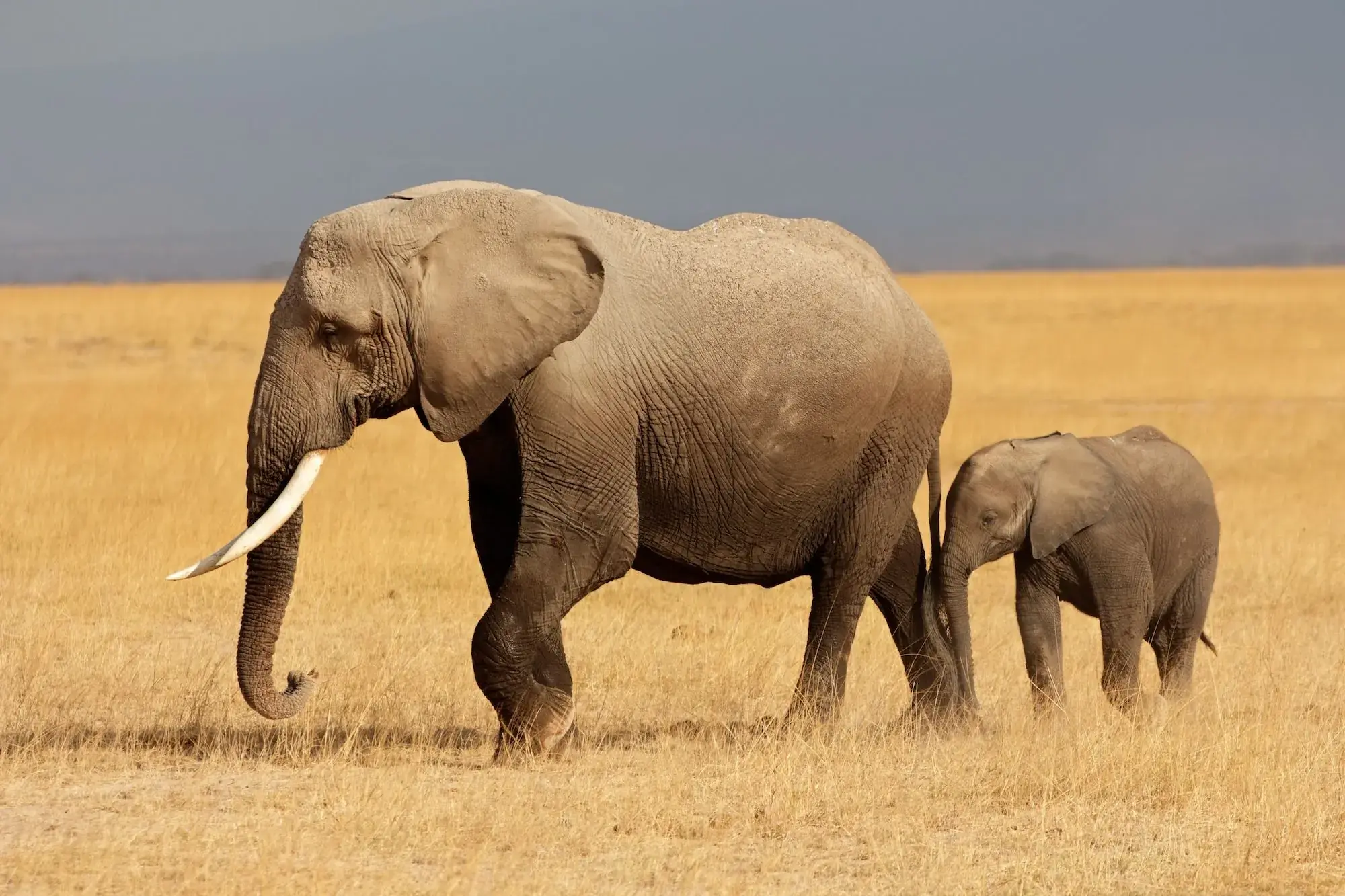
Its signature is the red elephant — Tsavo's great herds bathe and dust themselves in the area's iron-rich red earth until they glow ochre in the low sun, a sight found nowhere else. The two halves each have their own character: Tsavo East is open, arid and elephant country on a grand scale; Tsavo West is greener and more dramatic, with lava fields, the crystal springs of Mzima and the Shetani flows.
And because Tsavo sits on the line between Nairobi and the ocean, it is the natural first act of a bush-and-beach journey — the wild, then the waves.
Wildlife & landscapes
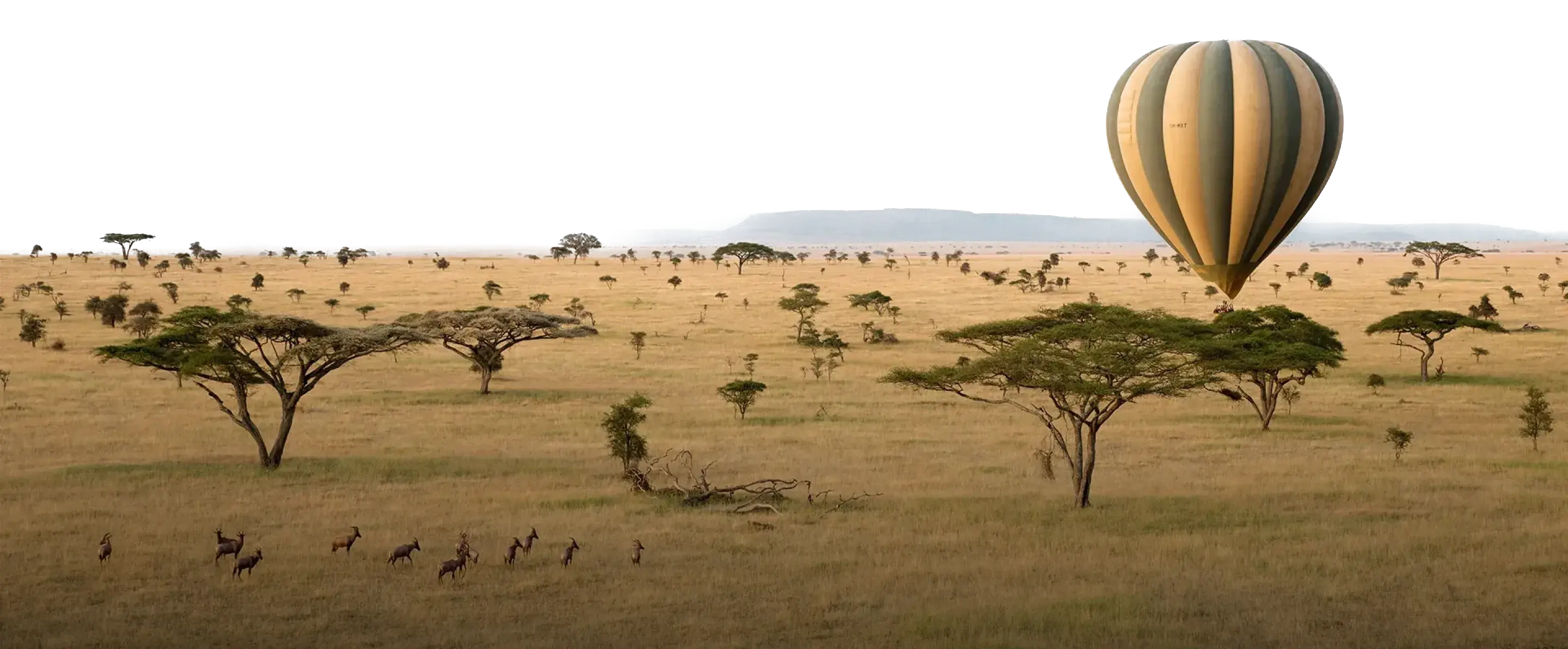
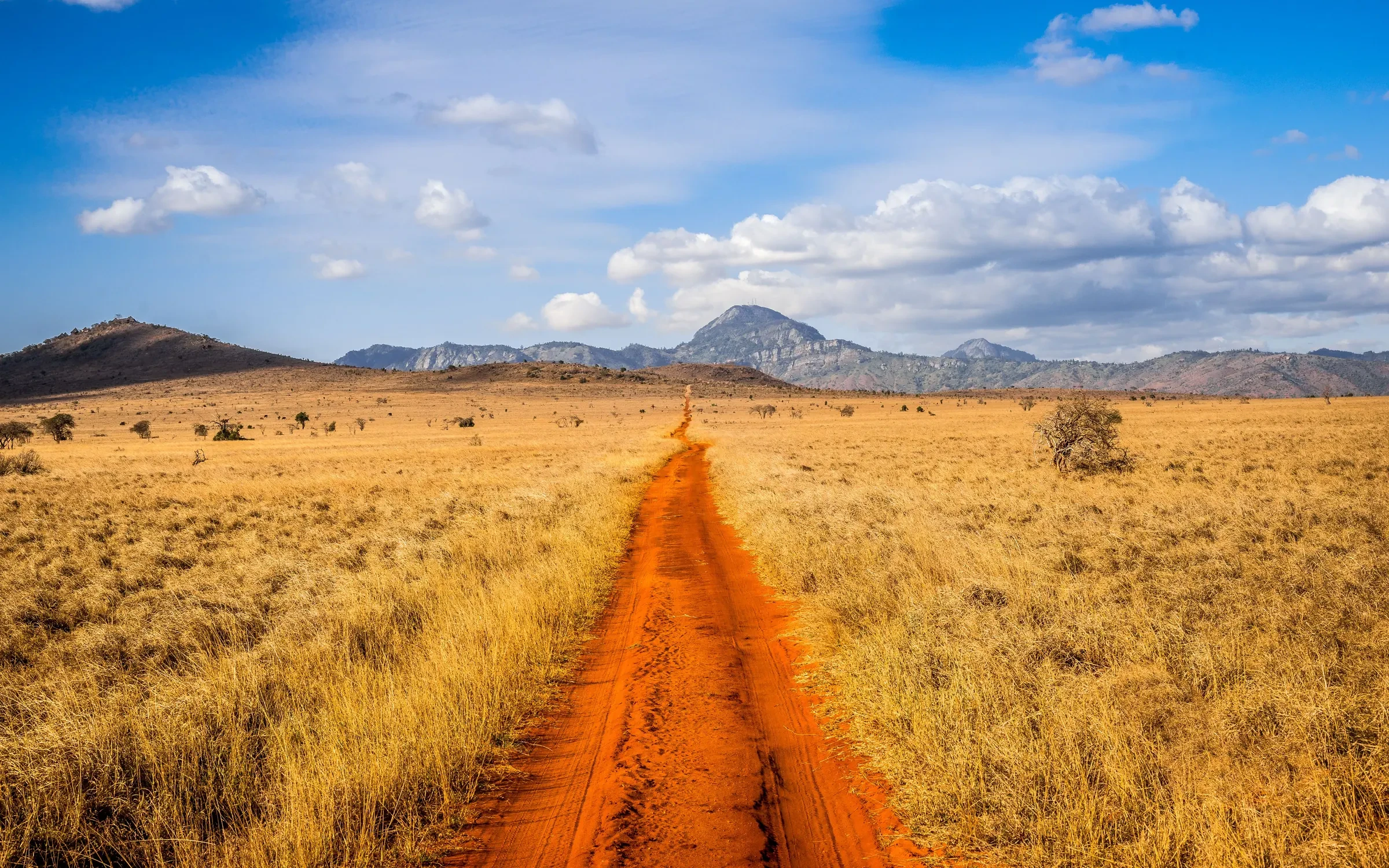
Tsavo is big-elephant country — large herds, often the famous dust-red "red elephants", the defining image of the parks. Around them the full cast: lion (including the region's storied manes), leopard, cheetah, buffalo, giraffe, plains game, and good numbers of eland, oryx, lesser kudu and gerenuk in the drier east. Black rhino survive in protected areas (notably the Ngulia sanctuary in Tsavo West). The landscapes differ sharply between the halves: Tsavo East is vast, flat and ochre-red, with the Galana River and its palm-fringed banks and the long Yatta Plateau, one of the world's longest lava flows; Tsavo West is hillier, greener and more volcanic, home to the spring-fed pools of Mzima Springs, where hippo and crocodile gather, and the black lava of the Shetani flows. Birdlife is rich, especially around the water.
Best time to visit Tsavo
The dry seasons — late June to October and January to February — are best: water sources shrink, wildlife concentrates around the rivers and springs, the bush thins for easier viewing, and the tracks stay firm across this enormous park. June–October is the long dry season; January–February is dry and bright. The green season (November–May), around the short rains of November and longer rains of April–May, transforms Tsavo's red earth with new grass, brings dramatic skies, newborn animals and exceptional birding — and far fewer vehicles across the vast spaces — though the thicker bush can make wildlife harder to spot. For first-time visitors chasing easy sightings, plan the dry season; for solitude, photography and birding, the green season is a quiet reward.
Things to do here
- Game drives — long, open drives across both parks, with the scale of the land as much the experience as the wildlife.
- Mzima Springs (Tsavo West) — walk to the spring-fed pools and underwater viewing chamber to watch hippo and fish.
- Red-elephant photography — the ochre herds at waterholes and rivers are Tsavo's signature frame.
- Rhino sanctuary (Ngulia, Tsavo West) — a protected stronghold for black rhino.
- Bush-and-beach pairing — Tsavo's position between Nairobi and the coast makes it the classic safari leg before Diani and the Indian Ocean (see → Cultural Stories for coast-and-culture add-ons).
Know before you go
- Getting there: light-aircraft airstrips serve both parks; by road, Tsavo East is roughly 4–5 hours from Nairobi and either park connects easily toward Mombasa and the coast — Tsavo straddles the route between them.
- Fees: national park entry fees apply (per person, per day); Tsavo East and Tsavo West are charged separately. We confirm current rates and include them in your quote.
- How long: 2–3 nights in one half, or split across both; Tsavo pairs naturally with Amboseli (nearby) or the coast for a fuller Kenya journey.
Related Nobu journeys
- Red Earth & Open Country — Tsavo's vast wilderness and its red elephants, at your own pace. → Explore
- Bush to Beach — Tsavo's plains then the Indian Ocean, the classic Kenya finish. → Explore
When to go
Month by month — daytime warmth, days of rain and what the season brings.
Where to stay
From Essential to Private Collection — the camps and lodges we know first-hand here. Rates are indicative and confirmed on enquiry.
Essential
Ashnil Aruba Lodge
Essentiallodge · reserve (Aruba Dam)
from $180 pp / night· indicative, confirmed on enquiry
Signature
Man Eaters Camp
Signaturetented camp · reserve-adjacent
from $180 pp / night· indicative, confirmed on enquiry
Satao Camp
Signaturetented camp · reserve (waterhole)
from $300 pp / night· indicative, confirmed on enquiry
Voi Safari Lodge
Signaturelodge · reserve (Lion Hill)
from $200 pp / night· indicative, confirmed on enquiry
Voi Wildlife Lodge
Signaturelodge · reserve edge
from $200 pp / night· indicative, confirmed on enquiry
Expedition
Galdessa Camp
Expeditiontented camp · reserve riverfront (Galana)
from $600 pp / night· indicative, confirmed on enquiry
Journeys through here
Signature routes that pass through Tsavo East — starting points we reshape around your season and pace.
Common questions
- Why are Tsavo's elephants red?
- They bathe and dust themselves in the region's iron-rich red soil, which coats their skin ochre — the "red elephants" are a Tsavo signature, not a different species.
- What's the difference between Tsavo East and Tsavo West?
- Tsavo East is vast, flat, arid and open — elephant country on a grand scale; Tsavo West is hillier, greener and volcanic, with Mzima Springs, lava flows and a rhino sanctuary.
- How many days do you need in Tsavo?
- Two to three nights does one half justice; allow longer to combine East and West, given the distances involved.
- Is Tsavo good for a bush-and-beach trip?
- Ideally — Tsavo sits between Nairobi and the coast, making it the natural safari leg before continuing to Diani and the Indian Ocean.
Tell us what you want from Tsavo East
We'll design the journey around it — places, pace and people matched to how you travel.