Lewa Wildlife Conservancy
Lewa Wildlife Conservancy is a private conservancy on the Central Highlands plateau of northern Kenya, part of a UNESCO World Heritage Site (with neighbouring Borana) and one of Africa's great rhino success stories — a stronghold for both black and white rhino and for the endangered Grevy's zebra. A pioneering community-conservation model, it offers big cats, walking, horseback and night drives, all beneath the horizon line of Mount Kenya.
Why visit
Lewa is where modern African conservation learned to work. What began as a single ranch's rhino sanctuary grew into a model the whole continent now studies — wildlife and community bound into one economy, one purpose. Today the conservancy shares a UNESCO World Heritage listing with neighbouring Borana, the two having dropped their shared fence to form a single, larger range for the animals that matter most.
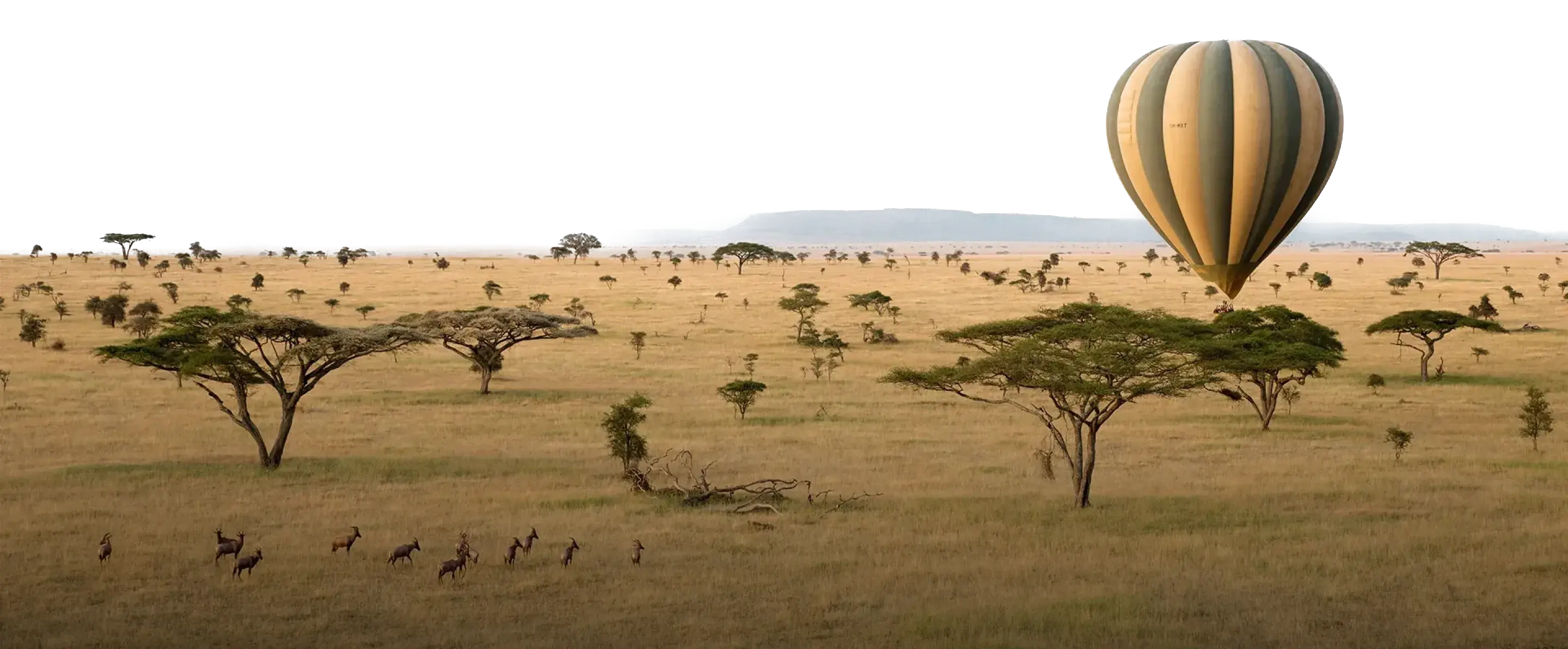
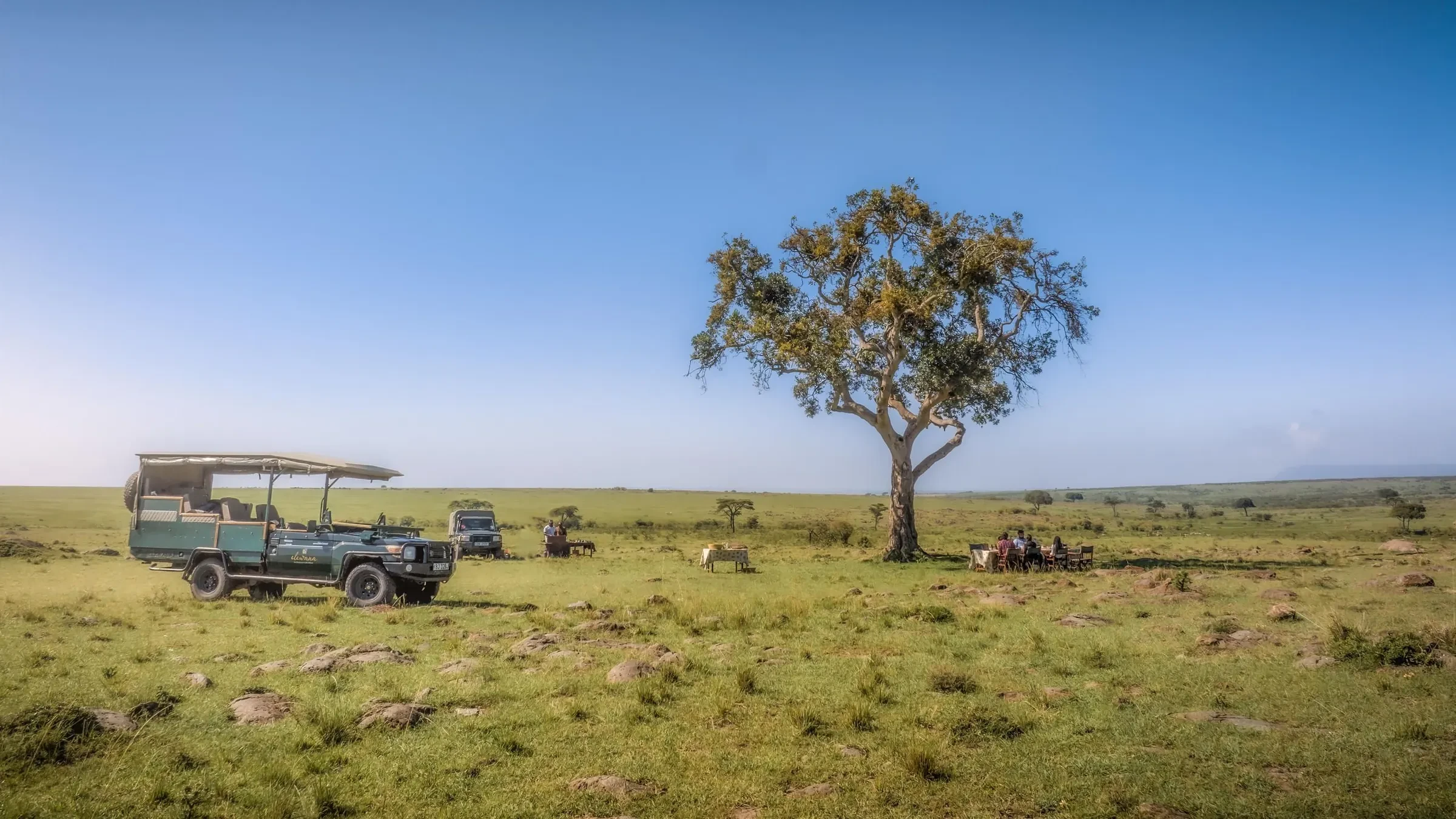
This is high, open Central Highlands country — grassland and acacia running to the foot of Mount Kenya, whose snows sit on the southern horizon on a clear morning. The air is cooler here than on the plains, the light cleaner, the crowds absent. Lewa is a private conservancy, which means the rules of the national parks fall away: you can walk, ride, drive after dark, and follow a sighting off the track.
And it is a place of rare animals. The rhino — black and white both — are the headline, but Lewa is also the great stronghold of the Grevy's zebra, and it holds species you will struggle to find anywhere else in one range. It rewards the traveller who has done the classic circuits and wants something quieter, wilder and more meaningful.
Wildlife & landscapes
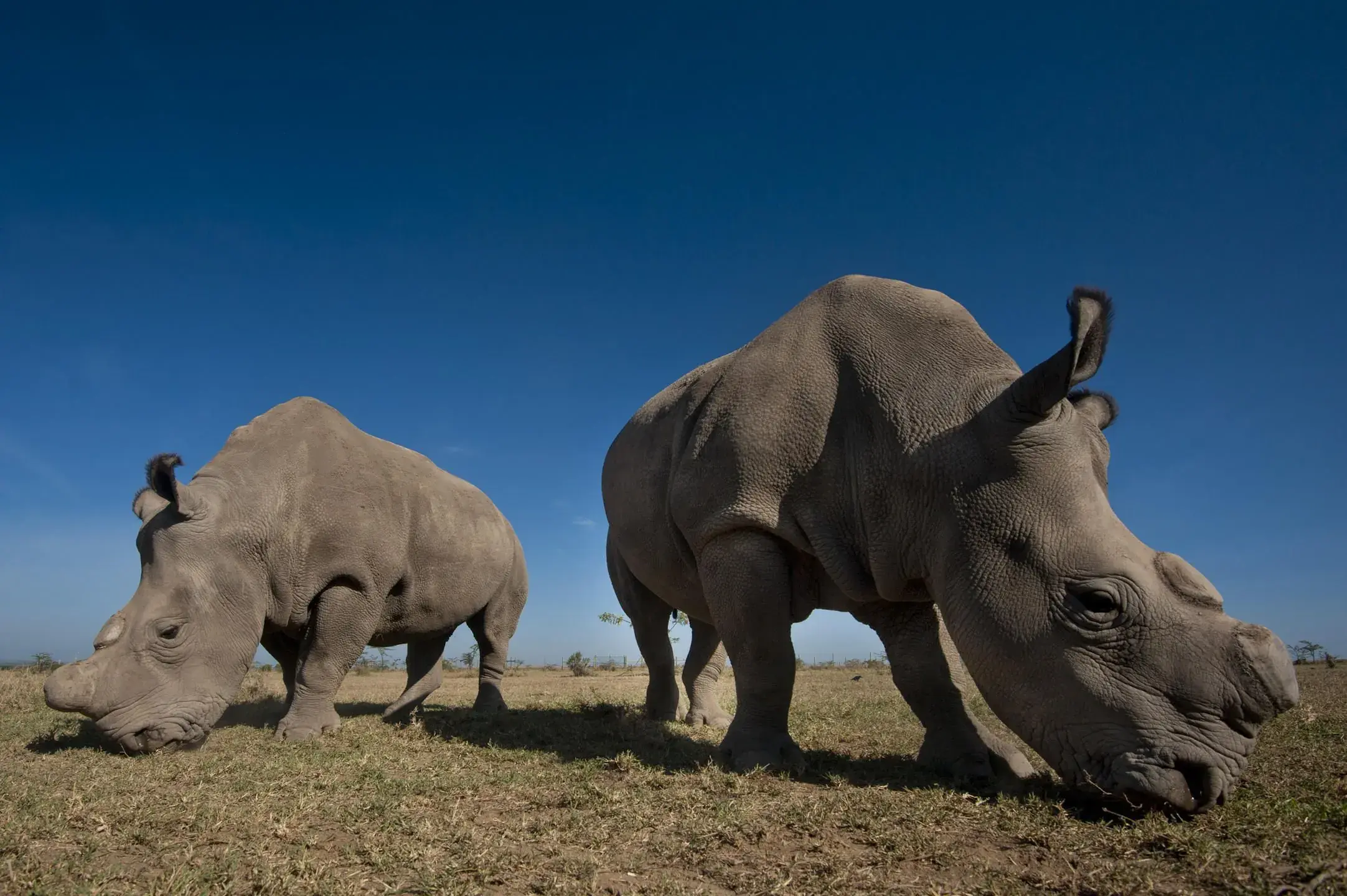
Lewa's signature is rhino. It protects a significant population of both black rhino (browsers of the thickets) and white rhino (grazers of the open grassland) — one of the reasons it carries such conservation weight, and one of the best places in Kenya to see both species on a single visit.
Beyond rhino, Lewa is the flagship range for the endangered Grevy's zebra — the larger, narrow-striped, big-eared zebra of the north, of which the conservancy holds a meaningful share of the world's remaining population. It also shelters the elusive, wetland-loving sitatunga antelope in its swamps, a species few safaris ever encounter.
The big cats are all here — lion, leopard and cheetah hunting the open plateau — alongside elephant moving between Lewa and the Mount Kenya forests along protected corridors, plus buffalo, reticulated giraffe, Grevy's and common zebra, and strong plains game. The landscape is highland savannah: rolling grassland, acacia, riverine swamp and hill, with Mount Kenya anchoring the view to the south. It is a different Africa from the Mara — higher, cooler, and quieter.
Best time to visit
Lewa rewards every season, but the dry months (June to October and January to February) offer the easiest game viewing, when the grass is low and animals gather at water — this is also the clearest window for Mount Kenya on the horizon. The green season (November to December and March to May) brings lush country, newborn animals and fewer visitors, with the highland setting staying comfortable year-round thanks to the altitude.
One fixed point in the calendar: the Lewa Safari Marathon, run across the conservancy each year to raise funds for wildlife and community — a rare event that turns a working conservancy into a global stage. For month-by-month planning across the country, see our → Best time to visit Kenya guide.
Things to do here
- Game drives — morning and late-afternoon drives for rhino, Grevy's zebra and big cats across the open plateau, with off-road sightings the national parks don't allow.
- Rhino tracking — Lewa is one of the finest places in Africa to encounter both black and white rhino on foot or by vehicle (see → Rhino tracking).
- Walking safaris — on foot with an armed guide across the highland grassland, reading the land at close range (see → Walking safari).
- Horseback safaris — riding among plains game is a Lewa signature, letting you move quietly through herds that barely lift their heads (see → Horseback safari).
- Night drives — permitted in the conservancy, opening the nocturnal world of aardvark, genet, bushbaby and hunting cats.
- Community and conservation visits — Lewa's pioneering community model is central to what it is; thoughtful visits to schools, clinics and anti-poaching operations show conservation as a living economy.
Know before you go
- Getting there: Fly by light aircraft from Nairobi (Wilson Airport) to the Lewa airstrip — roughly a one-hour hop — or reach Lewa by road through the Central Highlands. The airstrip sits within the conservancy for a direct arrival.
- Fees: conservancy fees apply (per night, per person) and directly fund wildlife protection and community programmes; we confirm current rates and include them in your quote.
- How long: 2 to 3 nights does Lewa justice; it pairs naturally with the wider Laikipia plateau, Ol Pejeta or Meru for a fuller northern-Kenya journey, or with the Mara for range.
- Altitude and climate: the highland setting means cool mornings and evenings year-round — pack a warm layer for early drives even in the dry season.
Related Nobu journeys
- Conservancy and Rhino — Lewa at its fullest: rhino on the plateau, the great community-conservation story, and the quiet of a private range. → Explore
- Northern Frontier Expedition — Lewa woven into the wilder country of Kenya's north, for travellers who want distance and depth. → Explore
- On Foot and in the Saddle — walking and horseback across the conservancies, where Lewa's riding country comes into its own. → Explore
When to go
Month by month — daytime warmth, days of rain and what the season brings.
Where to stay
From Essential to Private Collection — the camps and lodges we know first-hand here. Rates are indicative and confirmed on enquiry.
Elevated
Lewa House
Elevatedlodge · private conservancy
from $600 pp / night· indicative, confirmed on enquiry
Lewa Safari Camp
Elevatedtented camp · private conservancy
from $550 pp / night· indicative, confirmed on enquiry
Private Collection
Lewa Wilderness
Private Collectionlodge · private conservancy
from $900 pp / night· indicative, confirmed on enquiry
Sirikoi Lodge
Private Collectiontented camp · private conservancy
from $1,000 pp / night· indicative, confirmed on enquiry
Journeys through here
Signature routes that pass through Lewa Wildlife Conservancy — starting points we reshape around your season and pace.
Experiences here
Common questions
- What makes Lewa Wildlife Conservancy special?
- Lewa is a UNESCO World Heritage Site (with Borana) and one of Africa's great rhino success stories — a stronghold for both black and white rhino, the flagship range for the endangered Grevy's zebra, and a pioneering community-conservation model, all beneath Mount Kenya.
- Can you see rhino at Lewa?
- Yes — Lewa is one of the best places in Kenya to see both black and white rhino, often on a single visit, and rhino tracking here is a defining experience.
- What's the difference between a conservancy like Lewa and a national park?
- As a private conservancy, Lewa caps guest numbers and permits walking, horseback and night drives, plus off-road sightings — freedoms the national parks don't allow, and far fewer vehicles.
- How many days do you need at Lewa?
- Two to three nights lets you cover rhino, big cats and the Grevy's zebra without rushing, with room for a walk or a ride; longer if you're pairing it with the wider Laikipia country.
- Can you see Mount Kenya from Lewa?
- On a clear day, yes — Mount Kenya anchors the southern horizon, most reliably in the dry months when the air is cleanest.
Tell us what you want from Lewa Wildlife Conservancy
We'll design the journey around it — places, pace and people matched to how you travel.