A morning flight north
Dated 2026 timing lists an 08:00 Wilson departure; confirm the date, time and stops.
Safari / Kenya
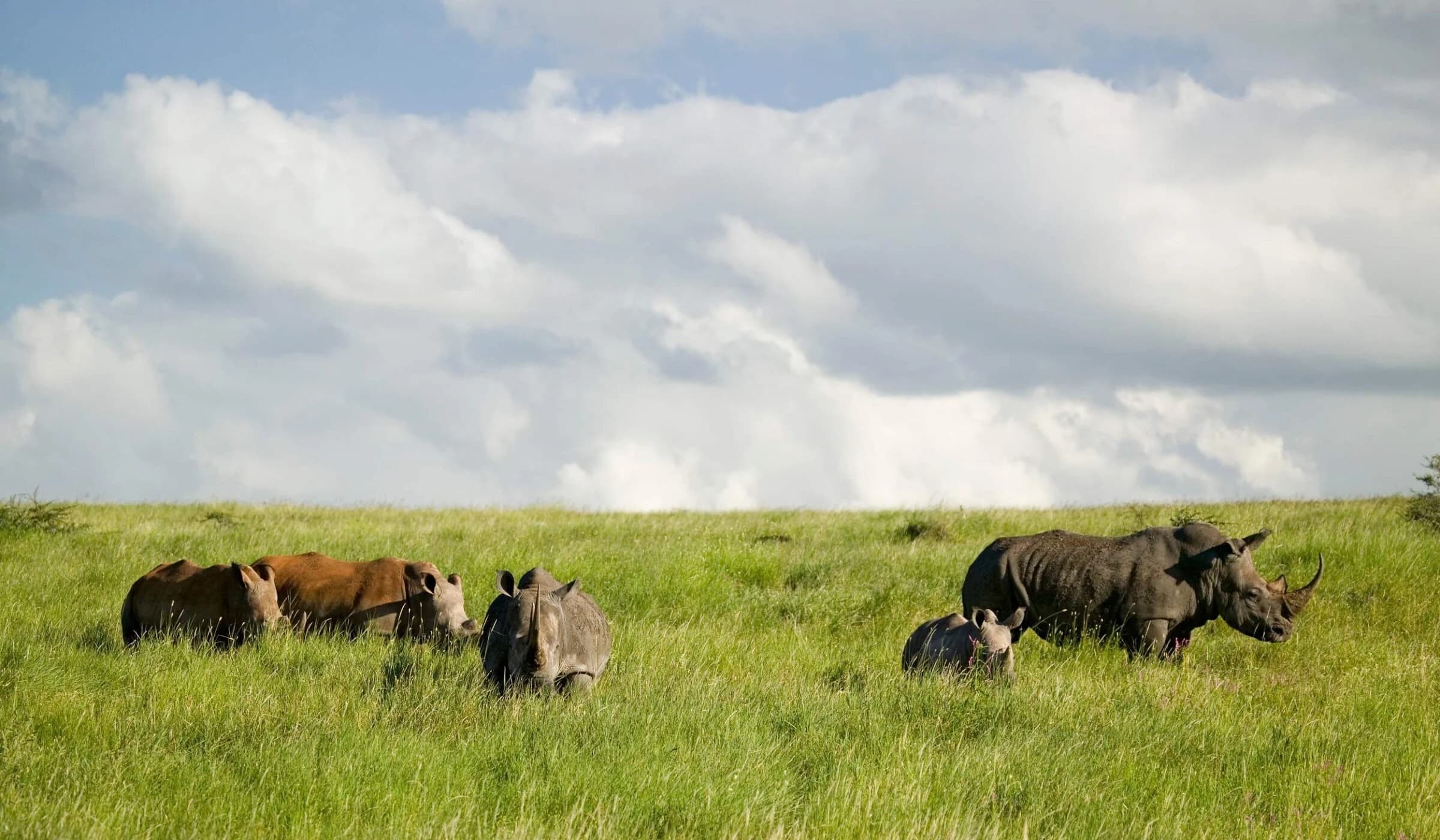
Rhino conservancies in Laikipia, then Samburu’s dry-country reserve: a second safari, by light aircraft and road.
The journey
A slow arc north, from the Laikipia plateau to a river in dry country.
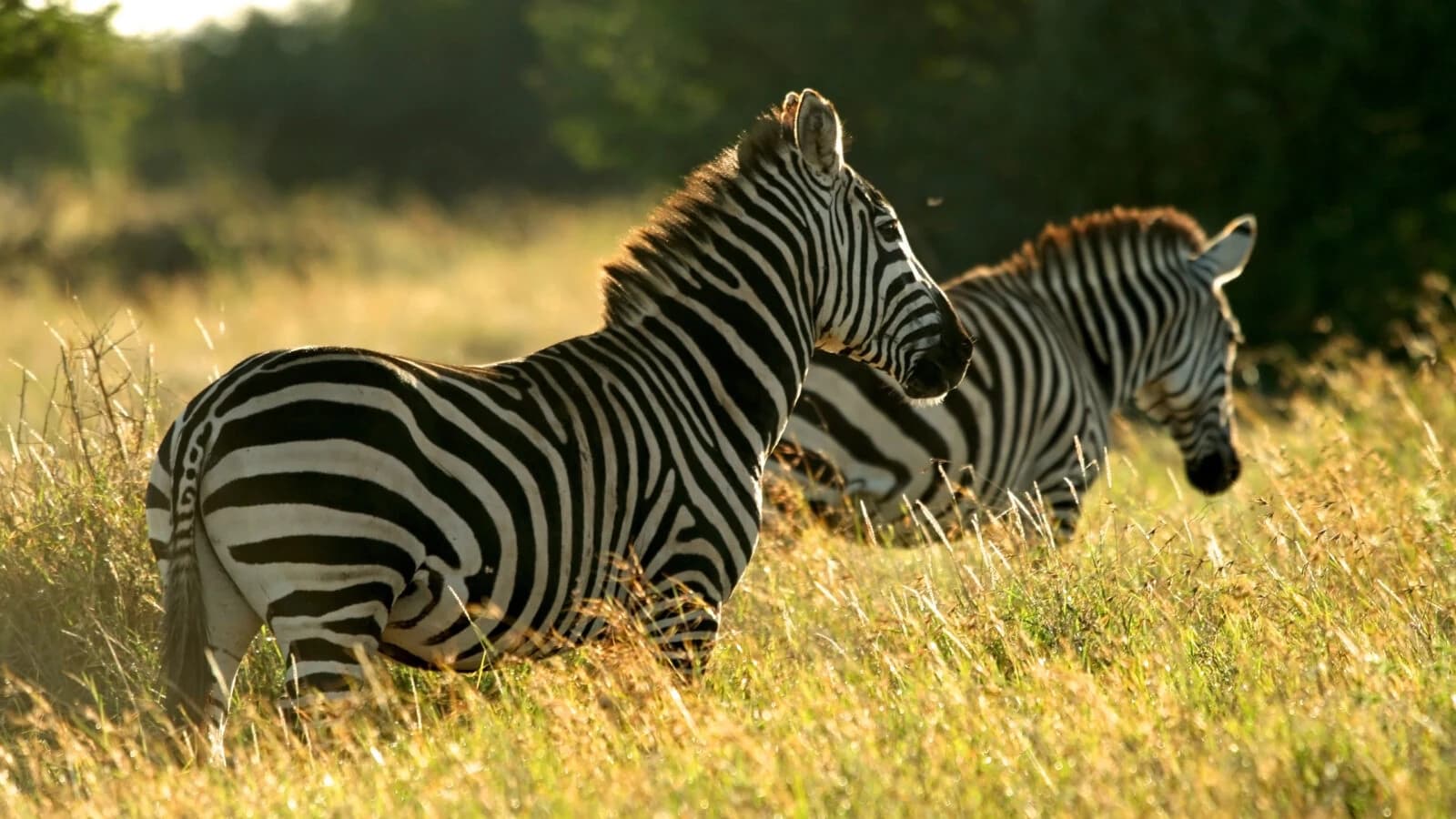
This Laikipia and Samburu safari flies from Nairobi’s Wilson Airport to Ol Pejeta, then drives on to Lewa: two conservancies where rhino are the focus. A road day by Isiolo then brings you to Samburu’s reserve on the Ewaso Ng’iro, in country that Grevy’s zebra, reticulated giraffe and gerenuk call home.
It suits a second safari, or anyone who wants fewer vehicles at a sighting: Lewa and neighbouring Borana share nine camps and lodges. The trade-offs are long moves between camps and flights that depend on passenger numbers. No sighting is promised.
Rhino conservancies, then dry river country: one slow arc across northern Kenya, paced and arranged on your terms.
Moments along the way
Dated 2026 timing lists an 08:00 Wilson departure; confirm the date, time and stops.
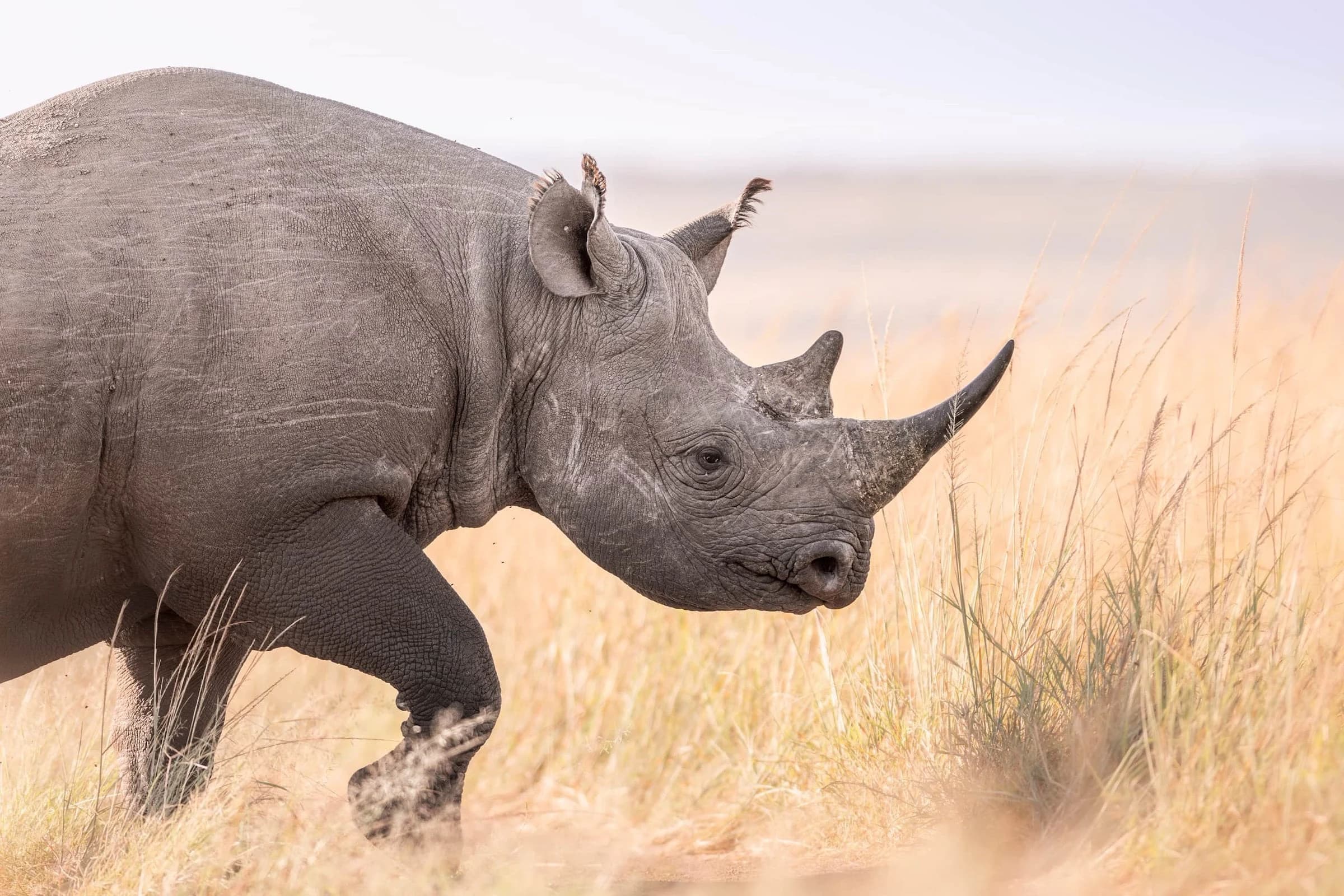 02
02Ol Pejeta allows at most six vehicles at a rhino sighting, ten minutes each.
Both female, at Ol Pejeta; by April 2026 no embryo transfer had produced a lasting pregnancy.
Both joined the Mount Kenya World Heritage Site in 2013; Lewa holds black and white rhino.
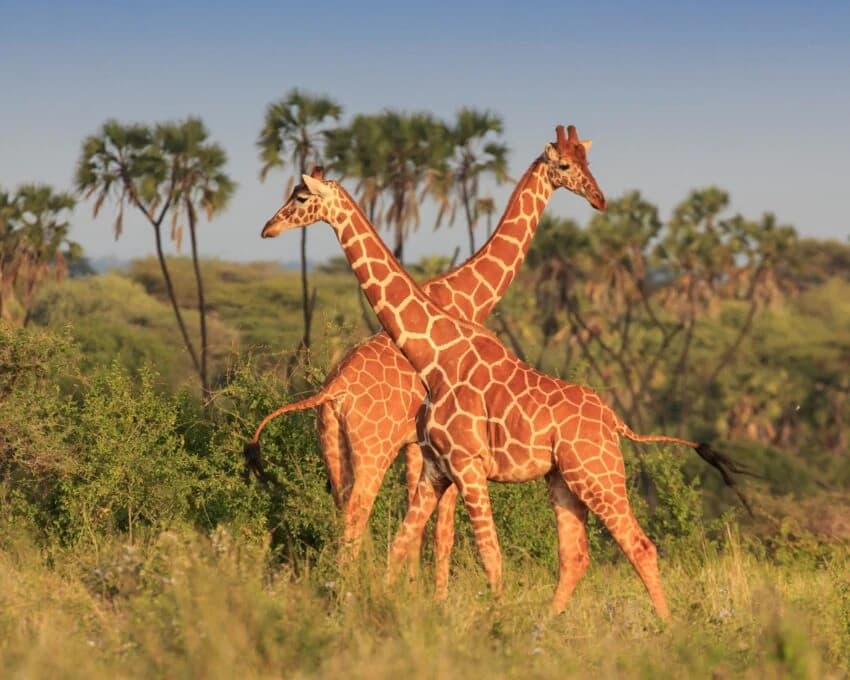 05
05Grevy’s zebra, reticulated giraffe, Beisa oryx, gerenuk, Somali ostrich: a trade label, not an official list.
In dry months, wildlife is drawn to the Ewaso Ng’iro, so drives follow its banks.
Where you’ll stay
Pick a comfort level, Essential to Private Collection, for each stay; they need not match. You sleep at conservancy camps in Laikipia, beside the river in Samburu, and in Nairobi before an early flight.
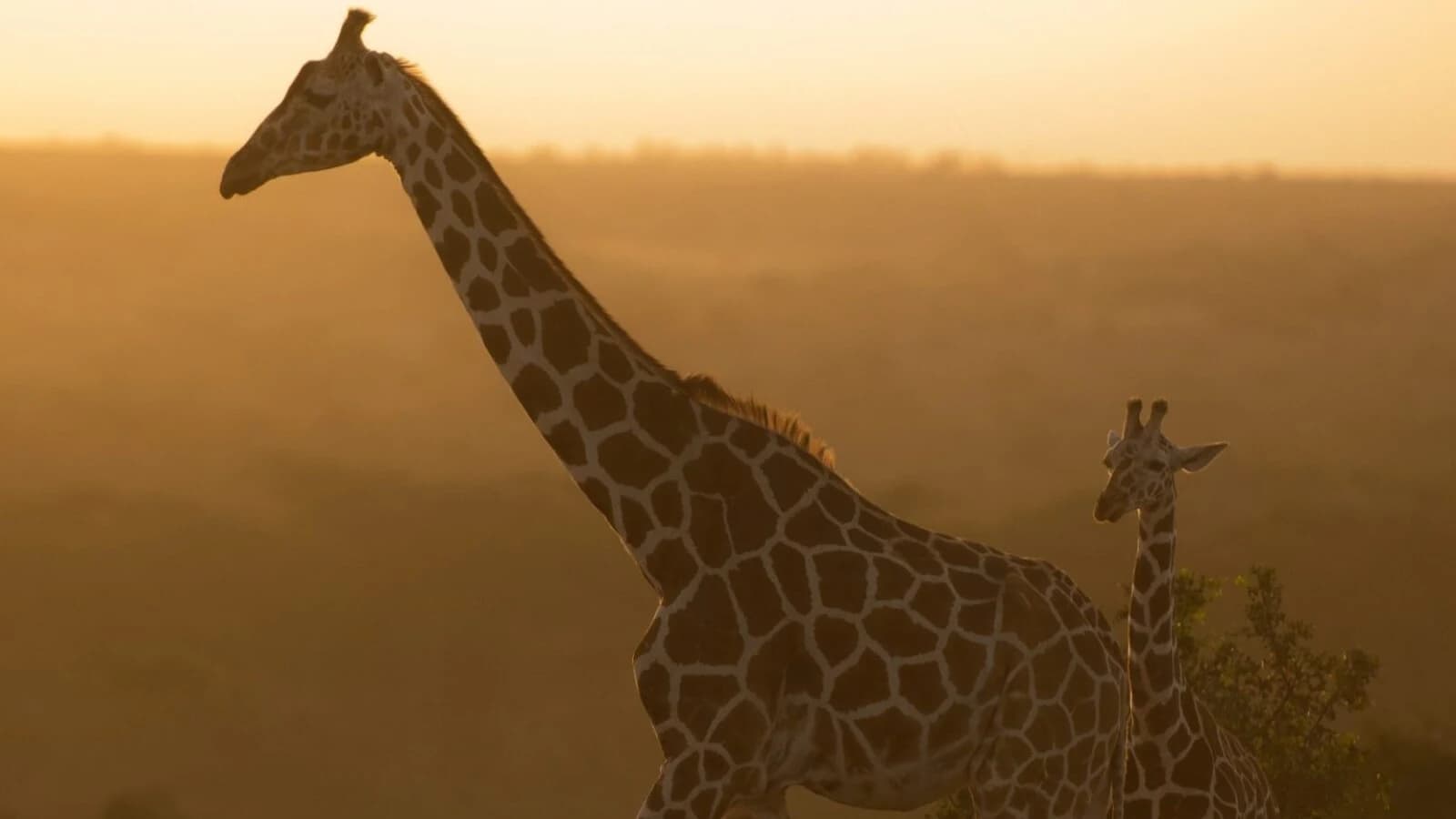
OL PEJETA
Where you might stay
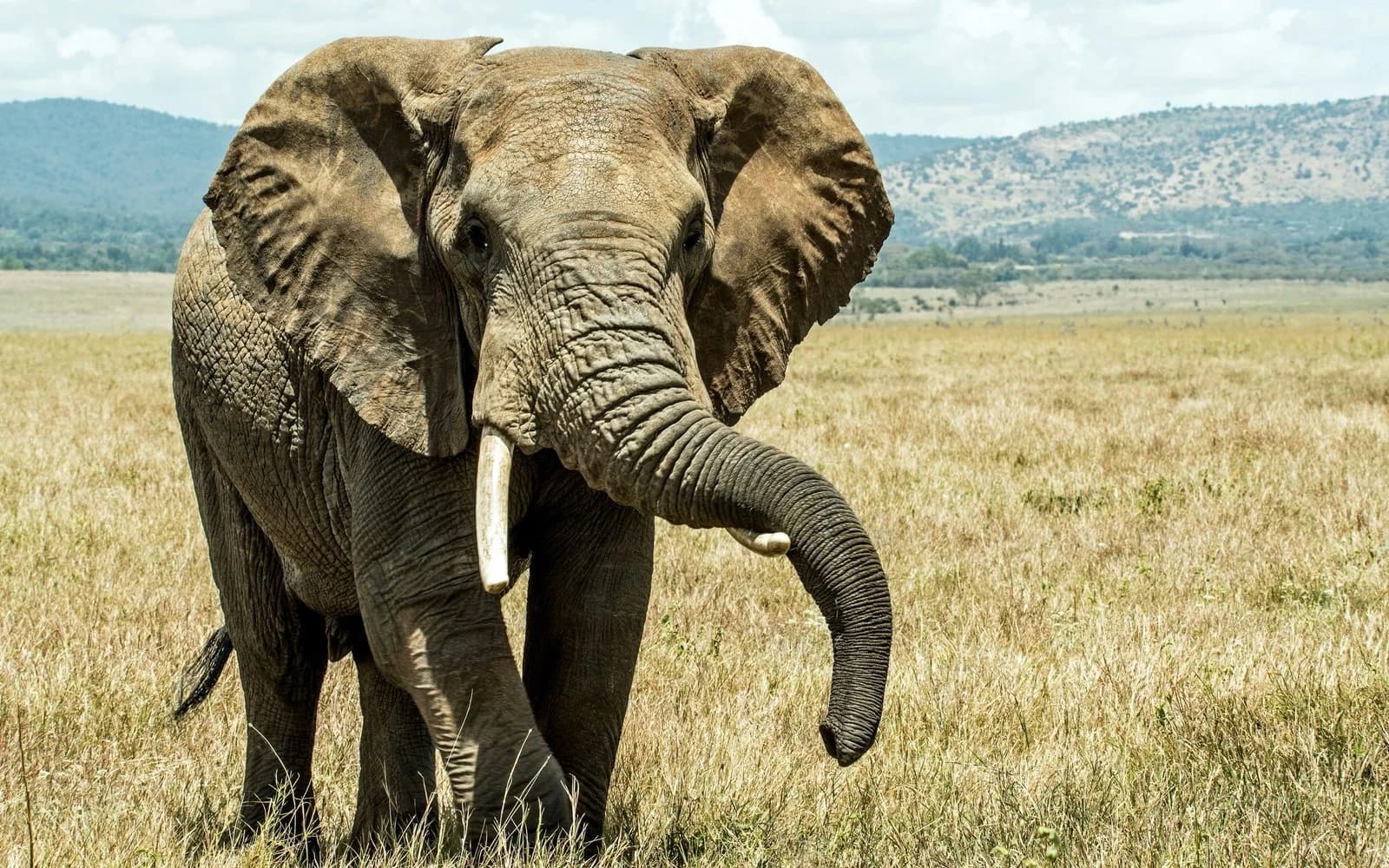
LEWA
Where you might stay
SAMBURU
Where you might stay
Your planner confirms each stay for your dates.
Add to your journey
Select an idea to carry into your brief. Nothing is added to a booking or priced automatically.
A route with room to breathe
Nairobi → Ol Pejeta → Lewa → Samburu → Nairobi, with Meru optional. Light aircraft in and out, roads between camps; your proposal confirms times and airstrips.
A sense of the days
Fly north on a morning departure from Wilson. The aircraft may land at other strips before yours, so landing times drift with the routing. Bring 15 kg of soft luggage at most, with your camera bag counted in it. A vehicle collects you at the strip and drives you to your camp in Ol Pejeta, with a game drive that day if time allows.
Drives start early and cross open grass where guides look for rhino and other wildlife, with breakfast and a long break in camp as the heat builds. Another drive follows in the cooler part of the afternoon. Camps can add a paid rhino visit or, at Ol Pejeta, a night drive; some need a minimum group, so ask before you arrive.
After breakfast the road continues to Lewa, the second conservancy, and the day usually ends with a drive there. Stay one night and you leave again the next morning; stay two and the day between is a full one on Lewa’s ground. Each camp sets its own rules on guided walks, night drives and age limits, so check them when you choose.
Today is the big move north, by way of Isiolo into drier, hotter country. Leave early and keep your seatbelt on throughout. Wear layers you can shed: the plateau morning is cool, the north hot by midday. The sooner you set off, the more afternoon remains for a first look around the reserve; a later start means a quiet evening in camp.
The middle hours are hot, so drives bracket the day: out early, the heat in camp, out again as it eases. Bring a hat, light long sleeves and a water bottle. Most camps sit beside the river, home to crocodiles and hippos, so follow your camp’s rules on walking outside, especially after dark. The reserve is county-run: ask your camp when drives start and end.
A last drive fits before the airstrip if your flight leaves later in the day; an early flight means going straight there after breakfast. Flights collect passengers at several strips, so the arrival at Wilson can slip by a good while. Leave your afternoon free of tight plans, and ask us how much margin your flight home needs.
Typically two nights each at Ol Pejeta and Lewa, three in Samburu: seven. One Lewa night makes six; Meru adds two, for nine.
Clear from the beginning
Every journey is quoted in full, with no surprises.
Good to know
The route curls round the north of Mount Kenya: first the conservancies of Ol Pejeta and Lewa, then the drier country beyond Isiolo. Samburu National Reserve lies on the Ewaso Ng’iro and is run by Samburu County rather than KWS, so the KWS fee sheet does not cover it. Meru National Park lies further east. Scheduled flights serve the conservancies and Samburu from Wilson, but between camps you drive, and the road to Samburu runs through Isiolo.
A different Kenya from the Mara: conservancies known for rhino, then dry country where Grevy’s zebra and other northern species live. The trade-off is long moves between camps and no wildebeest migration.
Neither is promised. Laikipia’s conservancies hold black and white rhino, and Grevy’s zebra live mainly in Samburu, Laikipia, Isiolo and Marsabit; about 3,000 remain worldwide. Ask your guide to keep a wide margin, and never touch or feed a rhino.
June to September and January to February are the drier spells. Safarilink’s dated 2026 timetable adds an afternoon flight through most of both, but current pages and later years can differ. Confirm the booked date and stops.
Six to nine: three or four in Laikipia, three in Samburu and, optionally, two in Meru. Seven is typical. Below six, the long moves take too large a share of each stay; a Nairobi night comes extra.
Fly if time is short: Safarilink’s dated 2026 timetable lists an 08:00 Wilson departure serving northern strips in about an hour to ninety minutes with stops. The exact strip, stop order and current time need confirmation; the quoted road times are also planning estimates.
For walking or riding as the point, choose On Foot & in the Saddle. For the Mara joined to Laikipia by air, choose Mara & Laikipia by Air. For a remote self-drive, choose Northern Frontier Expedition.
Government advice, checked October 2026: the US rates Kenya Level 2 (issued 28 July 2026). Neither the US nor the UK warning list names Laikipia, Samburu, Isiolo or Meru, but the UK notes security operations continuing in parts of all four. Kenya’s March 2026 notices also named parts of them, including Mukogodo and Il Ngwesi near Lewa, and Baragoi, Wamba and Waso in Samburu; on 7 October the Interior Ministry said the areas declared in Laikipia, Meru and Isiolo remain under active operations. Samburu Reserve lies in Waso ward, where an operation to recover stolen livestock ran in late September 2026. This is not a safety verdict.
Malaria risk covers most of Kenya below 2,500 m, including Laikipia and Samburu. This is general information, not medical advice — consult a travel clinic.
Before you decide: Best time to visit Kenya · Tracking rhino on foot · Kenya safety and travel advice
Last checked: October 2026.
When to go
Guidance, not a forecast. Flight examples use dated 2026 timetables; pages differ. Confirm dates, stops and rules alongside camp conditions.
Aug / Main dry season
Kenya’s other drier spell. Safarilink’s dated 2026 timetable restores the 13:30 flight north from 16 June. Confirm your date and stop order; rain can still fall.
Broad seasonal guidance — not a forecast, availability calendar or migration promise. Picking a month sets it in your plan.Related journeys
A journey made around you
Tell us your month and whether Meru or the Mara should follow Samburu, and we’ll shape Laikipia & Samburu around you.