Lamu
Lamu is an island on Kenya's far north coast and home to Lamu Old Town, a UNESCO World Heritage Site and one of the oldest continually inhabited Swahili settlements. Car-free, navigated by dhow and donkey, it pairs deep cultural heritage with the long empty sands of Shela beach — suiting travellers who want history and atmosphere alongside the sea. The warmest, driest months are roughly December to March.
Why visit
Lamu is unlike anywhere else on the Kenyan coast. There are no cars on the island — you move by dhow and on foot, and the lanes of the old town are too narrow for anything wider than a donkey. The town itself is a living UNESCO World Heritage Site, a maze of coral-stone houses, carved doors, shaded courtyards and a waterfront where wooden dhows have unloaded for centuries. To arrive is to step into a slower, older rhythm.
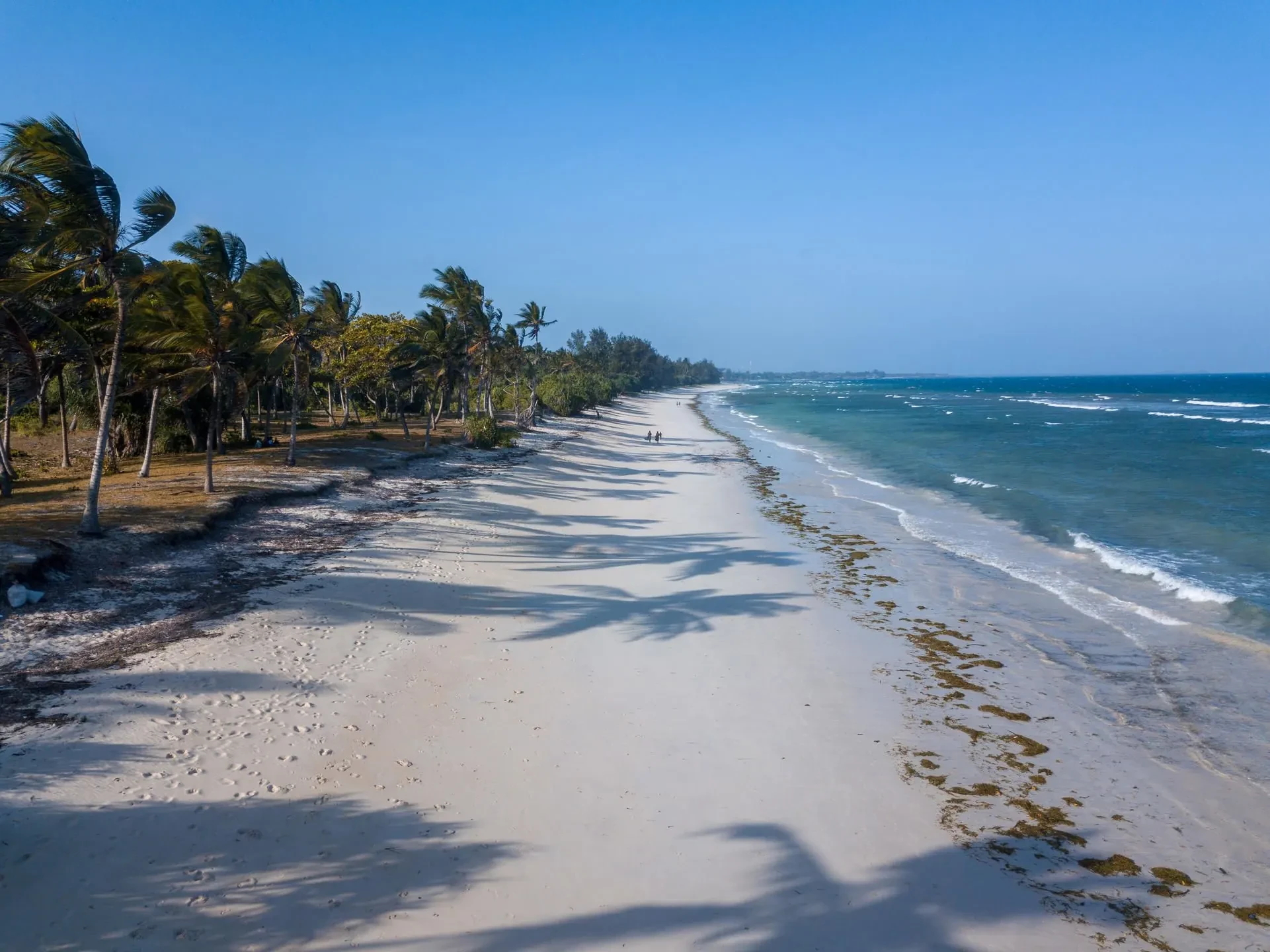
And yet Lamu is also a beach destination of rare beauty. The village of Shela, a short dhow ride from the old town, opens onto kilometres of empty dune-backed sand, with some of the coast's most romantic houses-to-stay tucked behind it. It is the coast at its most soulful — culture and ocean woven together, with nothing of the resort about it.
What to do here
Lamu Old Town is the experience: wandering the lanes, the waterfront, the museums and the great carved doorways of a Swahili town that has lived continuously for centuries. Dhow sailing is the island's pulse — day sails through the archipelago, sunset cruises, fishing trips, and the simple business of getting from place to place by sail. Shela beach stretches long, empty and dune-backed for swimming and walking. The wider Lamu archipelago — Manda, Kiwayu and beyond — rewards exploration by boat, and the island's Swahili culture, food and craft give every day a depth few beaches offer. Visits are richest when timed away from, or thoughtfully around, the island's cultural calendar.
Best time to visit
Lamu is warm year-round; the prime stretch is December to March, hot, dry and calm, ideal for dhow sailing and the beach. The long rains (April to June) are wetter and quieter. July to October is cooler, dry and breezier under the monsoon. The island's cultural festivals fall at various points in the year and can be a highlight in themselves — we advise on timing. See → Best time to visit Kenya for the wider calendar.
Getting there
Lamu is reached by air to Manda Airport (LAU) on the neighbouring island, with connections from Nairobi and Mombasa; from the airstrip a short dhow or boat transfer crosses to Lamu and Shela. There is no road approach for visitors in practice — the flight-and-boat arrival is part of the island's character. We arrange the connection end to end.
How it fits into a journey
Lamu is best when the coast should feel like a second chapter, not just a rest stop. After days in the bush, it gives the journey another kind of depth: Swahili architecture, dhow harbours, carved doors, call to prayer, long beach walks and houses that feel lived in rather than staged. It suits travellers who enjoy atmosphere and independence, and who are happy with a slower island rhythm.
We would usually give Lamu at least three nights, and longer if the stay is in a private house at Shela. It is less convenient than Diani or Watamu, but that slight extra effort is part of the reward. The flight to Manda, the boat crossing and the car-free arrival all help mark the shift from safari to island life.
Related Nobu journeys
- Safari & Beach Holiday — a Kenyan safari finished on the Swahili island. → Explore
- Bush to Beach — the Mara or Amboseli paired with Lamu's old town and Shela sands. → Explore
When to go
Month by month — daytime warmth, days of rain and what the season brings.
Where to stay
From Essential to Private Collection — the camps and lodges we know first-hand here. Rates are indicative and confirmed on enquiry.
Signature
Banana House & Wellness Centre
Signaturehotel · urban
from $80 pp / night· indicative, confirmed on enquiry
Lamu House
Signaturehotel · urban
from $120 pp / night· indicative, confirmed on enquiry
Subira House
Signaturehotel · urban
from $80 pp / night· indicative, confirmed on enquiry
Elevated
Manda Bay
Elevatedlodge · beachfront
from $350 pp / night· indicative, confirmed on enquiry
Peponi Hotel
Elevatedhotel · beachfront
from $200 pp / night· indicative, confirmed on enquiry
The Majlis Resort
Elevatedresort · beachfront
from $250 pp / night· indicative, confirmed on enquiry
Private Collection
The Red Pepper House
Private Collectionlodge · beachfront
from $400 pp / night· indicative, confirmed on enquiry
Experiences in Lamu
Ways to meet Lamu more closely — each one woven into a journey designed around you.
Common questions
- What is Lamu famous for?
- Lamu Old Town, a UNESCO World Heritage Site and one of the oldest living Swahili settlements — a car-free maze of coral-stone houses, dhows and donkeys — together with the long sands of Shela beach.
- Are there cars on Lamu?
- No. The island is navigated on foot, by donkey and by dhow; its lanes are too narrow for cars, which is central to its atmosphere.
- How do you get to Lamu?
- By flying to Manda Airport (LAU) from Nairobi or Mombasa, then a short dhow or boat crossing to Lamu or Shela.
- Is Lamu good for a beach holiday or for culture?
- Both, and that is the point: Shela offers long empty beaches while the old town offers living Swahili heritage, so a stay weaves the two together.
Tell us what you want from Lamu
We'll design the journey around it — places, pace and people matched to how you travel.