Aberdare National Park
Aberdare National Park protects a cool, misty highland range in central Kenya — montane forest, open moorland and waterfalls, with elephant, buffalo, leopard, black rhino and the elusive bongo. It's famous for its "tree hotels" (Treetops and The Ark), where you watch wildlife gather at floodlit waterholes through the night.
Why visit
Aberdare is a different Kenya: cool highland air, waterfalls tumbling through bamboo and forest, and moorland rolling above the treeline. Its signature is the tree hotel — lodges built over waterholes where, after dark, you stay up watching elephant, buffalo and the occasional rhino drift in under floodlights. It's atmospheric, historic (a young Princess Elizabeth became Queen at Treetops), and a refreshing contrast to the savannah.
It works best as a deliberate change of temperature and mood within a central Kenya route. After the open plains, Aberdare feels enclosed and secretive: tracks disappear into bamboo, cloud catches on the ridges, and the wildlife often announces itself by sound before sight. The point is not a high-volume game drive. It is the sense of being in an older, wetter forest system where patience matters and the night waterhole becomes the theatre.
We use Aberdare when a journey needs texture: a cool first night after Nairobi, a forested counterpoint to Ol Pejeta's rhino country, or a nostalgic stop for travellers drawn to Kenya's older safari history. It is especially good for people who enjoy atmosphere, birdlife, mountain scenery and the unusual ritual of watching wildlife after dark from the warmth of a lodge.
Wildlife & landscapes
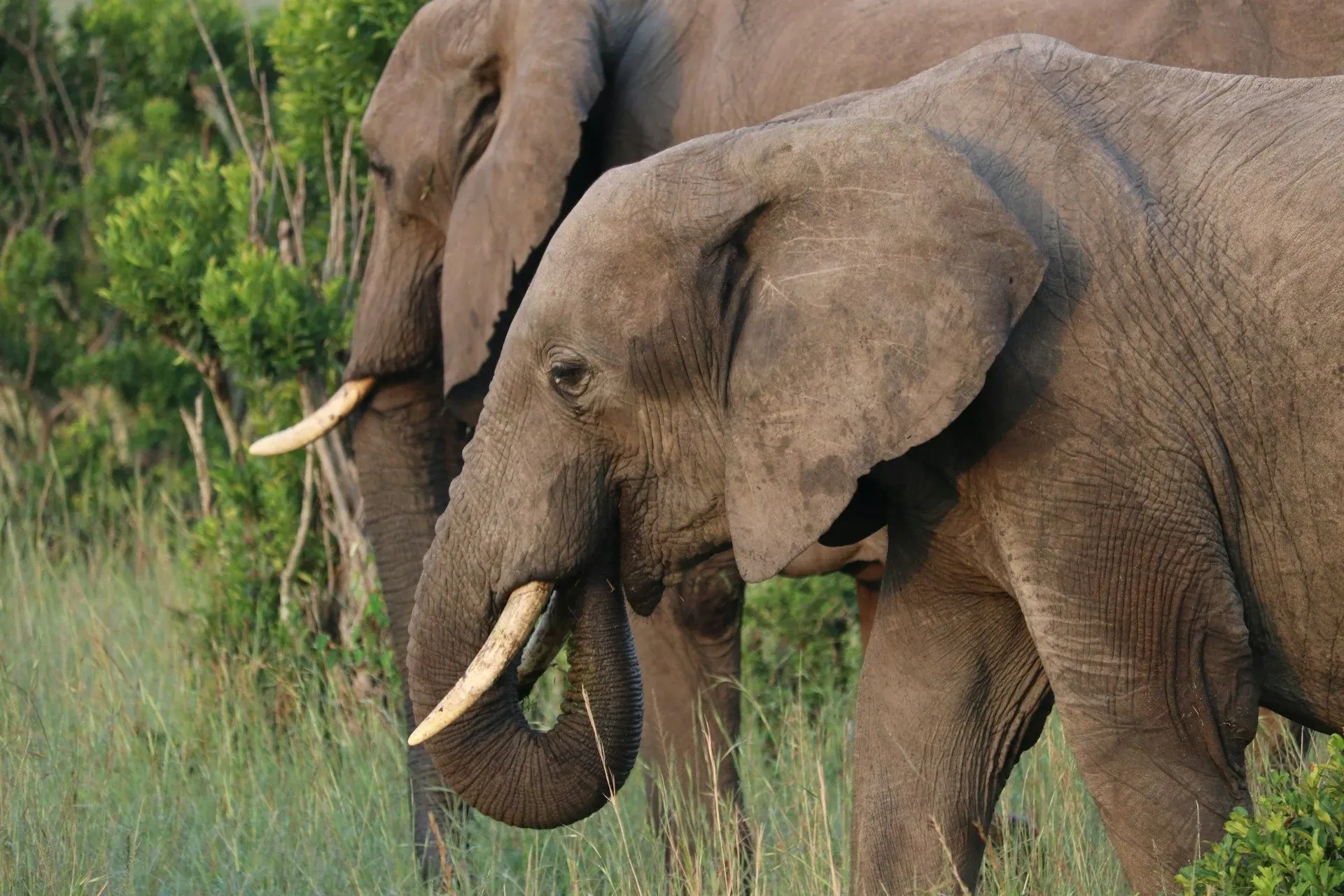
Montane forest, bamboo and moorland cut by waterfalls. Wildlife includes elephant, buffalo, leopard, black rhino, the rare and shy bongo antelope, the melanistic (black) leopard and serval, and rich birdlife. The cool, wet climate makes it green year-round.
Best time to visit
Visitable year-round; the drier months ease forest tracks and night viewing, though Aberdare is wetter and cooler than the lowland parks — pack for rain. See → Best time to visit Kenya.
Things to do here
- Tree-hotel waterhole watching — floodlit wildlife through the night (Treetops, The Ark).
- Game & forest drives — for elephant, buffalo and, if lucky, bongo or black leopard.
- Waterfall walks — the park's many falls (with a guide).
- Trout fishing & highland scenery — in the moorland streams.
Know before you go
- Getting there: ~3–4 hours by road from Nairobi; often combined with Mount Kenya / Ol Pejeta.
- Fees: park fees apply. Verify current rates.
- How long: 1–2 nights; bring warm, waterproof layers — it's cool and wet.
How it fits into a journey
Aberdare is rarely the only reason to travel to Kenya, but it can make the route feel far more layered. From Nairobi it sits naturally on the way into the central highlands, so it can soften the first day before Mount Kenya, Laikipia or Ol Pejeta. The altitude also helps after a long flight: cool air, a slower pace and an evening spent watching the waterhole rather than rushing straight into a major safari circuit.
It is strongest for travellers who like quiet, atmosphere and wildlife seen differently. We would not use it as a substitute for the Mara, Samburu or Amboseli; we use it to add forest, rain, night sounds and highland history to a journey that might otherwise be all open savannah. One night can work if the waterhole is the point. Two nights allow more time for waterfalls, moorland scenery and the feeling of Kenya changing under your feet.
For photography, the reward is mood rather than predictability: mist in the trees, wet roads, animals appearing out of shadow and the strange intimacy of watching a waterhole after dinner.
Related Nobu journeys
- (Central-highlands journeys to be added; start with Plan Your Journey.)
When to go
Month by month — daytime warmth, days of rain and what the season brings.
Where to stay
From Essential to Private Collection — the camps and lodges we know first-hand here. Rates are indicative and confirmed on enquiry.
Signature
Aberdare Country Club
Signaturehotel · private conservancy
from $120 pp / night· indicative, confirmed on enquiry
The Ark
Signaturelodge · forest
from $250 pp / night· indicative, confirmed on enquiry
Treetops Lodge
Signaturelodge · forest
from $250 pp / night· indicative, confirmed on enquiry
Elevated
Sangare Tented Camp
Elevatedtented camp · lakeshore
from $200 pp / night· indicative, confirmed on enquiry
Common questions
- What is Aberdare National Park known for?
- Highland forest and moorland, waterfalls, and its "tree hotels" (Treetops, The Ark) for night-time waterhole viewing.
- What wildlife lives in the Aberdares?
- Elephant, buffalo, leopard, black rhino and the rare bongo, plus the occasional black (melanistic) leopard and rich birdlife.
- What is a tree hotel?
- A lodge built above a waterhole where wildlife is watched, often through the night under floodlights — Aberdare's signature experience.
Tell us what you want from Aberdare National Park
We'll design the journey around it — places, pace and people matched to how you travel.