Addis Ababa
Addis Ababa is the capital of Ethiopia, a highland city set at roughly 2,400 metres in the country's central plateau and the diplomatic hub of Africa as home of the African Union. It is the arrival and departure point of nearly every Ethiopia journey — and a genuine destination in its own right, holding the National Museum (where the 3.2-million-year-old hominid "Lucy" is displayed), Holy Trinity Cathedral, the sprawling Merkato market, the forested Entoto hills, and a living culture of coffee ceremonies and late-night jazz.
Why visit
Most travellers arrive in Addis Ababa on the way to somewhere else — the rock churches of Lalibela, the castles of Gondar, the trekking of the Simiens. That is the practical truth of the city: it is the hinge on which an Ethiopia journey turns, the point where the international flight lands and the country begins. But to treat it only as a threshold is to miss one of Africa's most singular cities.
Addis sits high — around 2,400 metres — which gives it a cool, bright, altitude-thin air quite unlike the lowland capitals elsewhere on the continent. It is young by Ethiopian standards, founded in the 1880s, yet it carries an outsized weight: as the seat of the African Union and a hub of continental diplomacy, it is often called the political capital of Africa. The result is a city that feels both provincial and worldly at once — a place of church processions and embassies, of donkey carts and glass towers.
And it rewards the traveller who gives it a day or two. The coffee that the world drinks was first cultivated in these highlands, and here the coffee ceremony is still a daily ritual rather than a performance. In the evenings, a distinctive Ethiopian jazz — soulful, pentatonic, unmistakable — drifts out of small clubs. Addis is not a stopover. It is the overture.
Wildlife & landscapes
The draw here is not wildlife — it is a highland cityscape and the human story it guards, ringed by hills that give the city its horizon.
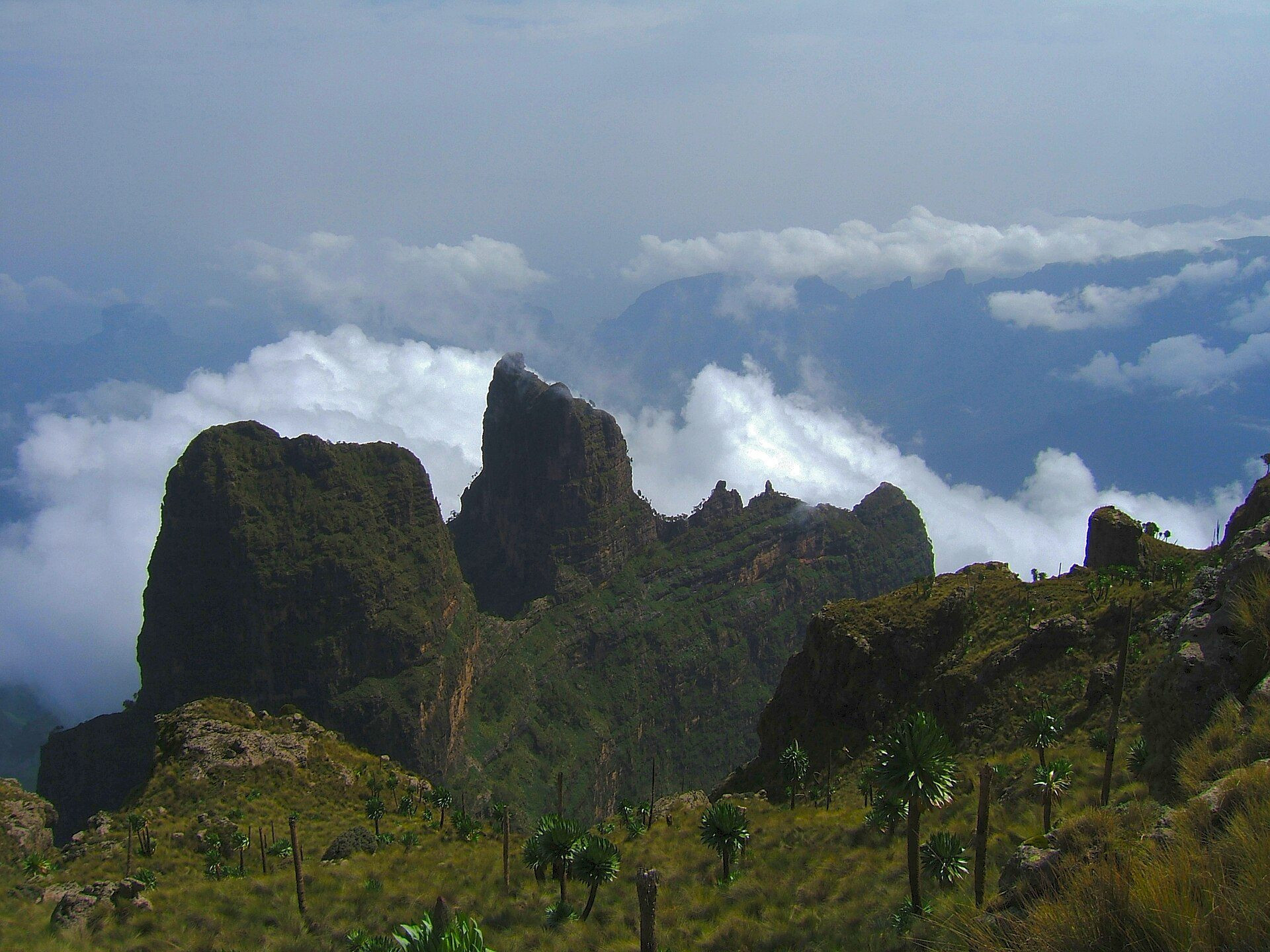
Addis lies in a bowl of the central Ethiopian plateau, with the Entoto hills rising to the north above 3,000 metres — eucalyptus-forested slopes that were the city's original 19th-century site and remain its finest viewpoint, looking back down over the whole sprawl. It is the closest the city comes to landscape, and a favourite for a morning walk in cool, pine-scented air.
The city's true treasures are its museums and heritage. The National Museum of Ethiopia holds "Lucy" (Dinknesh in Amharic), the partial skeleton of a 3.2-million-year-old hominid whose discovery reshaped our understanding of human origins — one of the most significant fossils ever found. Nearby, Holy Trinity Cathedral is the grand seat of Ethiopian Orthodox Christianity and the resting place of Emperor Haile Selassie. The Ethnological Museum, set in the former imperial palace on the university campus, tells the story of the country's many peoples. And the Merkato — reputedly one of the largest open-air markets in Africa — is a sensory sprawl of spice, textile, grain and craft where the everyday life of the highlands plays out in full. This is a landscape of culture and altitude, not of game.
Best time to visit
Addis has a mild, high-altitude climate year-round — cool days and cold nights are the norm at this elevation, so pack layers whatever the month. The rhythm is set by the rains, not the seasons of a savannah.
The dry season, roughly October to May, is the most comfortable and reliable window, and it aligns with the prime months for the wider Ethiopia historic route — clear skies for Lalibela, Gondar and the Simiens. September and early October are especially lovely, when the rains have just ended and the highlands turn green and wildflower-strewn (the Meskel celebrations fall in late September). The main rains, June to September, bring heavy afternoon downpours that can disrupt travel elsewhere in the country, though Addis itself remains functional. Because most travellers use the city as a gateway, the best time to visit Addis usually tracks the best time for the rest of your Ethiopia route.
Things to do here
- The National Museum & Lucy — stand before Dinknesh, the 3.2-million-year-old hominid, and the rich archaeological and imperial collections that surround her; the essential Addis half-day.
- Holy Trinity Cathedral — the grandest church in the city, seat of Ethiopian Orthodoxy and mausoleum of Haile Selassie.
- The Merkato — one of Africa's largest markets; a guided walk through the spice, coffee and textile sections is a sensory immersion in highland life.
- The Entoto hills — a morning drive or walk up to the eucalyptus-forested ridge above the city for panoramic views and the historic churches at the original city site.
- A coffee ceremony — the roasting, grinding and slow pouring of Ethiopian coffee, performed as it has been for generations; the country's defining act of hospitality.
- Live Ethiopian jazz — an evening in one of the city's intimate clubs, where the distinctive pentatonic sound of Addis comes into its own.
Know before you go
- Getting there: Fly into Addis Ababa Bole International Airport (ADD), the principal hub of Ethiopian Airlines and one of the best-connected gateways in Africa, with direct flights across the continent, the Middle East, Europe, Asia and North America. Onward domestic flights to Lalibela, Gondar, Bahir Dar and Axum depart from here. City-centre hotels are typically 20 to 40 minutes by road from the airport.
- Altitude: at ~2,400 metres, Addis sits high enough that some travellers feel the thinner air on arrival — a gentle first day and plenty of water help. It also means cool evenings year-round.
- Entry and fees: Ethiopia visa and any site entry fees apply; these are confirmed in your quote and planning.
- How long: 1 to 2 nights suits Addis well as a gateway — one on arrival to see Lucy, the cathedral and a coffee ceremony, and often a final night before flying home. It sits naturally at the start or end of a historic-route journey through Lalibela, Gondar and Bahir Dar.
Related Nobu journeys
When to go
Month by month — daytime warmth, days of rain and what the season brings.
Where to stay
From Essential to Private Collection — the camps and lodges we know first-hand here. Rates are indicative and confirmed on enquiry.
Essential
Mr. Martin's Cozy Place
Essentialhotel · urban
from $40 pp / night· indicative, confirmed on enquiry
Signature
Capital Hotel and Spa
Signaturehotel · urban
from $90 pp / night· indicative, confirmed on enquiry
Golden Tulip Addis Ababa
Signaturehotel · urban
from $90 pp / night· indicative, confirmed on enquiry
Elevated
Ethiopian Skylight Hotel
Elevatedhotel · urban
from $150 pp / night· indicative, confirmed on enquiry
Hilton Addis Ababa
Elevatedhotel · urban
from $120 pp / night· indicative, confirmed on enquiry
Hyatt Regency Addis Ababa
Elevatedhotel · urban
from $180 pp / night· indicative, confirmed on enquiry
Marriott Executive Apartments Addis Ababa
Elevatedhotel · urban
from $120 pp / night· indicative, confirmed on enquiry
Radisson Blu Hotel Addis Ababa
Elevatedhotel · urban
from $150 pp / night· indicative, confirmed on enquiry
Private Collection
Sheraton Addis a Luxury Collection Hotel
Private Collectionhotel · urban
from $250 pp / night· indicative, confirmed on enquiry
Journeys through here
Signature routes that pass through Addis Ababa — starting points we reshape around your season and pace.
Common questions
- Is Addis Ababa worth visiting, or just a stopover?
- It is worth a day or two in its own right. The National Museum (home of Lucy), Holy Trinity Cathedral, the Merkato, the Entoto hills and a genuine coffee ceremony make it a destination — but most travellers use it as the gateway to the wider Ethiopia route, spending a night on arrival and often one before departure.
- What is there to see in Addis Ababa?
- The headline sights are the National Museum (where "Lucy"/Dinknesh is displayed), Holy Trinity Cathedral, the Ethnological Museum in the old imperial palace, the vast Merkato market and the forested Entoto hills above the city.
- How high is Addis Ababa and will the altitude affect me?
- Addis sits at roughly 2,400 metres. Some travellers notice the thinner air on arrival; a gentle first day, rest and plenty of water usually settle it, and it keeps the city cool year-round.
- How many days do you need in Addis Ababa?
- One to two nights is typical — enough to see Lucy, the cathedral and a coffee ceremony, and to adjust to the altitude before continuing to Lalibela, Gondar or the Simiens.
- Why is Addis Ababa called the diplomatic capital of Africa?
- It is the headquarters of the African Union and a major centre of continental diplomacy, which gives the city an outsized international presence for its size.
Tell us what you want from Addis Ababa
We'll design the journey around it — places, pace and people matched to how you travel.