Gondar
Gondar is a highland city in northern Ethiopia that served as the imperial capital from the 17th century, known as "the Camelot of Africa" for its royal castle compound, Fasil Ghebbi — a UNESCO World Heritage Site. Its landmarks include Fasilides' Bath, the focal point of the Timkat (Epiphany) celebrations, and Debre Berhan Selassie church with its ceiling of winged angel faces. Gondar is also the principal gateway to the Simien Mountains, making it a cultural and highland base rather than a wildlife destination.
Why visit
Ethiopia surprises travellers who arrive expecting only savannah. In the northern highlands stands Gondar, a city of castles — grey stone towers, battlements and arched bridges rising from the eucalyptus, built by a line of emperors who made this their seat for more than two centuries. It has earned the name "the Camelot of Africa," and standing in the royal enclosure at dusk, it is easy to see why.
But Gondar is not a ruin to be admired at a respectful distance. It is a living city with a living faith. Its churches still hold Sunday services beneath painted ceilings; its priests still process with silver crosses; and once a year the whole city gathers at Fasilides' Bath for Timkat, one of the most joyful religious festivals on the continent. The past here is not behind glass — it is worn, walked and celebrated.
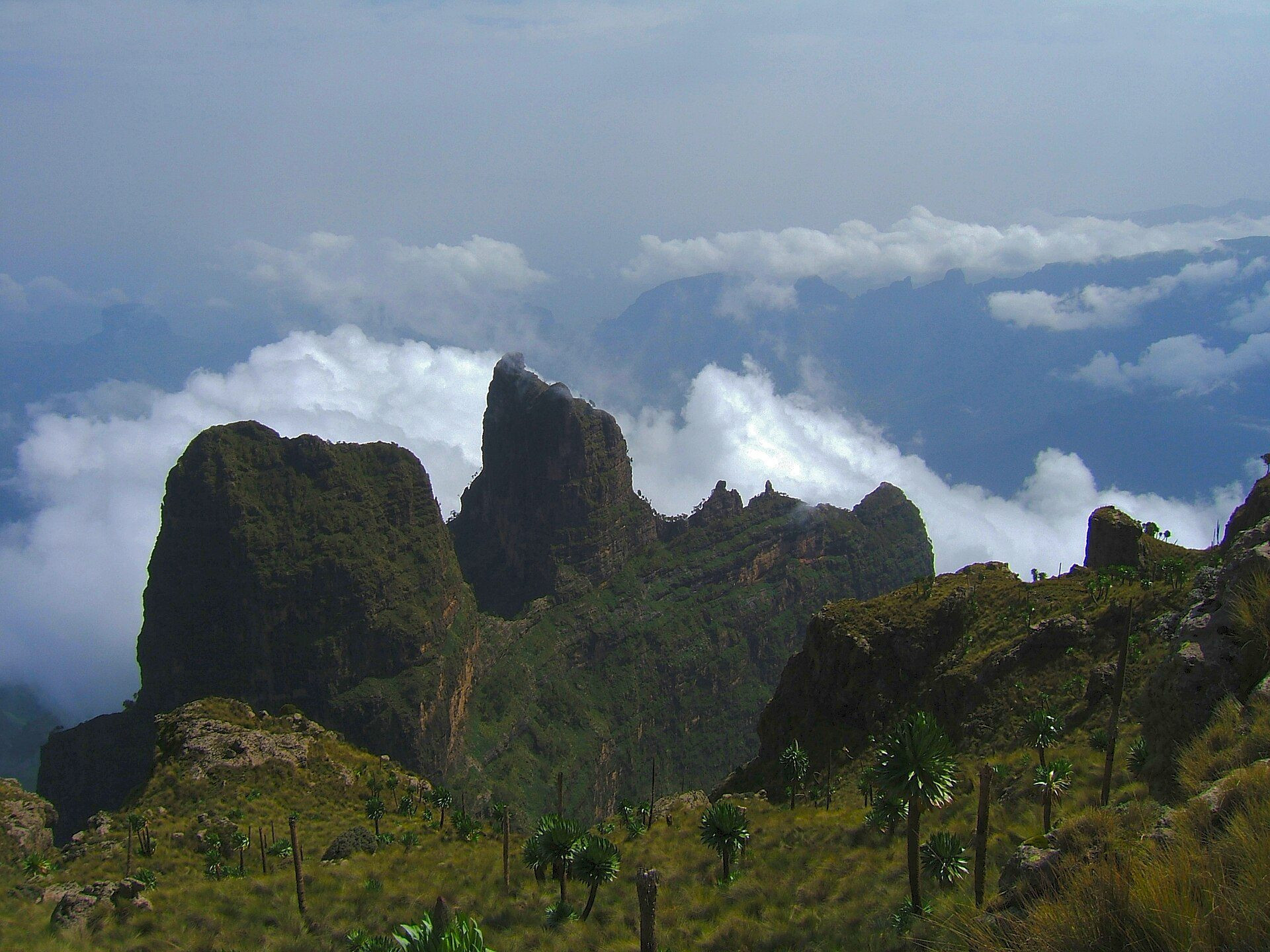
And Gondar sits at a threshold. To the north-east rise the Simien Mountains, a jagged escarpment of pinnacles and gelada baboons. Many travellers use the city as their staging point before climbing into that high, thin-aired country — a night or two among the castles, then the road up to the roof of Ethiopia.
The castle city, its churches & the highland setting
Gondar's draw is heritage, not wildlife — and it is exceptional. At its heart is Fasil Ghebbi, the fortified royal compound founded by Emperor Fasilides in the 1630s, a UNESCO World Heritage Site enclosing castles, palaces, a banqueting hall and a library within its walls. The oldest and grandest is Fasilides' Castle, its stone architecture blending Ethiopian, Portuguese, Indian and Moorish influences into something found nowhere else.
A short distance away lies Fasilides' Bath, a walled rectangular pool overhung with fig roots. Once a year it is filled and blessed, becoming the stage for Timkat, the Ethiopian Orthodox celebration of Epiphany — three days of chanting, white-robed processions and, at dawn, thousands leaping into the consecrated water. It is one of Ethiopia's most vivid festivals.
Then there is Debre Berhan Selassie, the "Trinity at the Mount of Light," among the most beautiful churches in the country. Its walls carry vivid biblical murals, but it is the ceiling that stops every visitor — row upon row of winged angel faces, dozens of them, gazing down. It is one of the defining images of Ethiopian sacred art.
Around the city spreads the highland setting itself: fertile plateau country at altitude, terraced fields, and on the horizon the wall of the Simien Mountains, home to gelada baboons, walia ibex and the Ethiopian wolf.
Best time to visit
Gondar sits at highland altitude, so its climate is milder than the lowlands and driven by the rains. The dry season, roughly October to March, is the most comfortable window — clear skies, cool highland air and easy road access up to the Simien Mountains. This is the prime time for both sightseeing and trekking.
The single most compelling date is Timkat, celebrated around 19 January, when Gondar becomes the finest place in Ethiopia to witness the Epiphany festival at Fasilides' Bath. Demand for this window is high, and journeys are shaped well in advance.
The main rains fall roughly June to September, greening the highlands but making some mountain roads harder and trekking wetter. For most travellers combining the castles with the Simiens, the dry months are the natural choice.
Things to do here
- Fasil Ghebbi royal compound — a guided walk through the UNESCO castle enclosure, the centrepiece of any Gondar visit.
- Fasilides' Bath — the walled pool and its fig-rooted walls; extraordinary during Timkat, atmospheric year-round.
- Debre Berhan Selassie church — for the winged-angel ceiling and the mural-covered walls.
- Timkat festival (January) — one of Ethiopia's great cultural spectacles, if your journey falls in the window.
- Debre Berhan Selassie and the old churches — Gondar's ecclesiastical heritage rewards an unhurried morning.
- Gateway to the Simien Mountains — Gondar is the launch point for trekking the escarpment and its gelada baboons.
- Cultural evenings — traditional music and the coffee ceremony, a warm introduction to highland Ethiopian life.
Know before you go
- Getting there: Fly into Gondar Airport (GDQ), well connected by domestic flights from Addis Ababa; the airport sits a short drive from the city. Gondar is a common stop on Ethiopia's northern historic circuit, reached by air between Bahir Dar, Lalibela and Axum.
- Entry and fees: an Ethiopia visa applies, and site entry fees are collected at Fasil Ghebbi and the churches — we confirm current requirements and include them in your quote.
- Altitude: Gondar sits at highland elevation; the air is thinner and cooler, and it is worth allowing for this before continuing higher into the Simiens.
- How long: 1 to 2 nights covers Gondar's castles and churches comfortably; add more if you are timing Timkat or continuing into the Simien Mountains, which it pairs with naturally.
Related Nobu journeys
When to go
Month by month — daytime warmth, days of rain and what the season brings.
Where to stay
From Essential to Private Collection — the camps and lodges we know first-hand here. Rates are indicative and confirmed on enquiry.
Signature
Goha Hotel
Signaturehotel · hillside
from $70 pp / night· indicative, confirmed on enquiry
Mayleko Lodge
Signaturelodge · garden
from $70 pp / night· indicative, confirmed on enquiry
Journeys through here
Signature routes that pass through Gondar — starting points we reshape around your season and pace.
Common questions
- What is Gondar in Ethiopia known for?
- Gondar was Ethiopia's imperial capital from the 17th century and is known as "the Camelot of Africa" for Fasil Ghebbi, its UNESCO-listed royal castle compound, along with Fasilides' Bath and the winged-angel ceiling of Debre Berhan Selassie church.
- When is the best time to visit Gondar?
- The dry season from October to March is the most comfortable for sightseeing and for reaching the Simien Mountains. If you can, time your visit for Timkat around 19 January, when Gondar hosts Ethiopia's most spectacular Epiphany celebration.
- What is Timkat and where is it celebrated in Gondar?
- Timkat is the Ethiopian Orthodox celebration of Epiphany. In Gondar it centres on Fasilides' Bath, which is filled and blessed for the festival — a dawn plunge into the consecrated water is its defining moment.
- How many days do you need in Gondar?
- One to two nights is enough to see the castles and churches at an unhurried pace; allow more time if you are attending Timkat or continuing into the Simien Mountains.
- Is Gondar a safari or wildlife destination?
- No — Gondar is a heritage city and highland gateway. The nearest wildlife is in the Simien Mountains, where gelada baboons, walia ibex and the Ethiopian wolf live, and for which Gondar is the usual staging point.
Tell us what you want from Gondar
We'll design the journey around it — places, pace and people matched to how you travel.