Simien Mountains
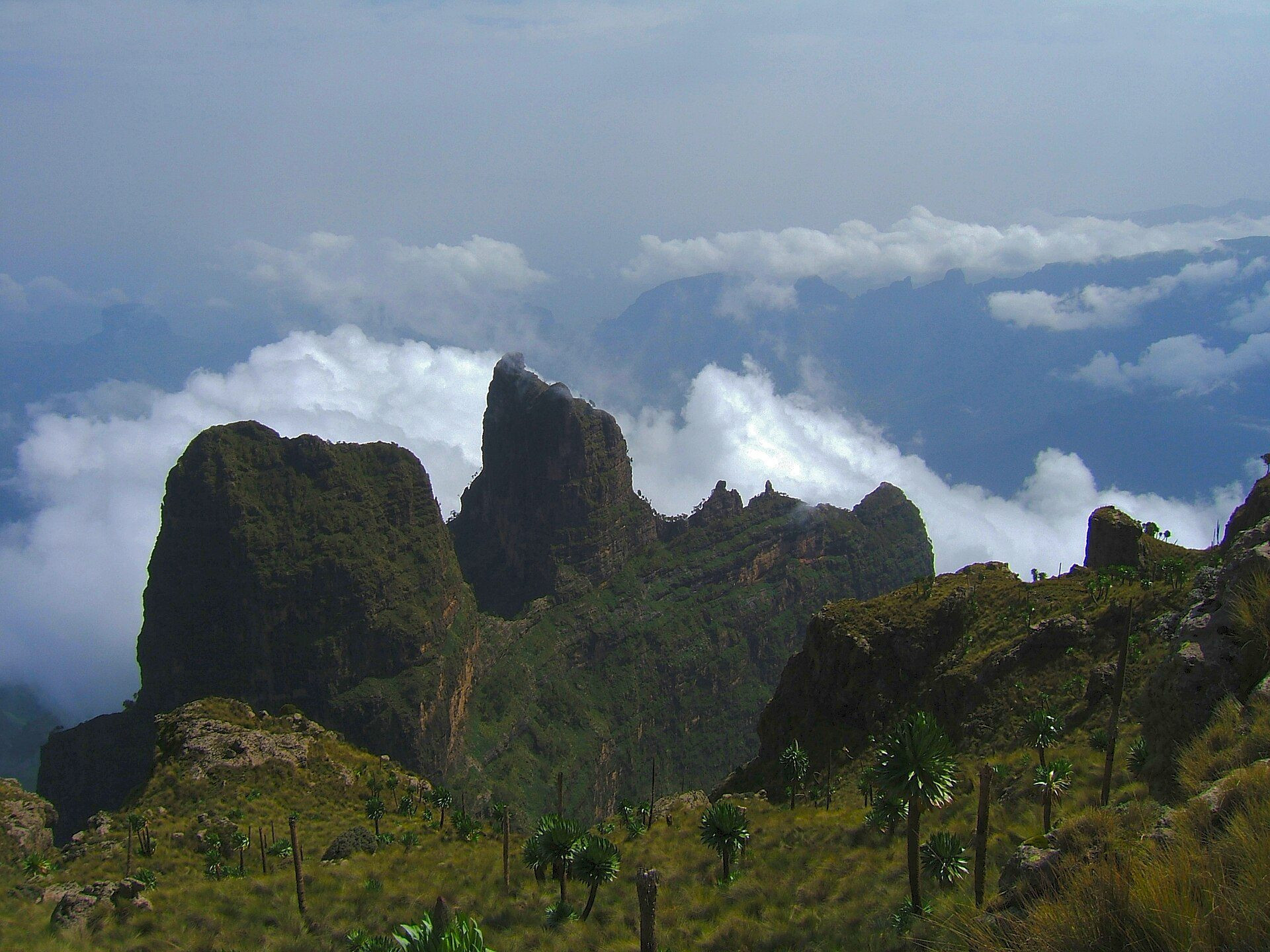
The Simien Mountains are a UNESCO World Heritage range in northern Ethiopia — a dramatic escarpment of eroded peaks, deep gorges and Afroalpine plateau that is the country's finest trekking country. They are home to endemic wildlife found almost nowhere else: large troops of gelada, the rare walia ibex, and the Ethiopian wolf. The dry months are best for trekking. It suits curious, active travellers more than classic Big-Five safari-goers.
Why visit
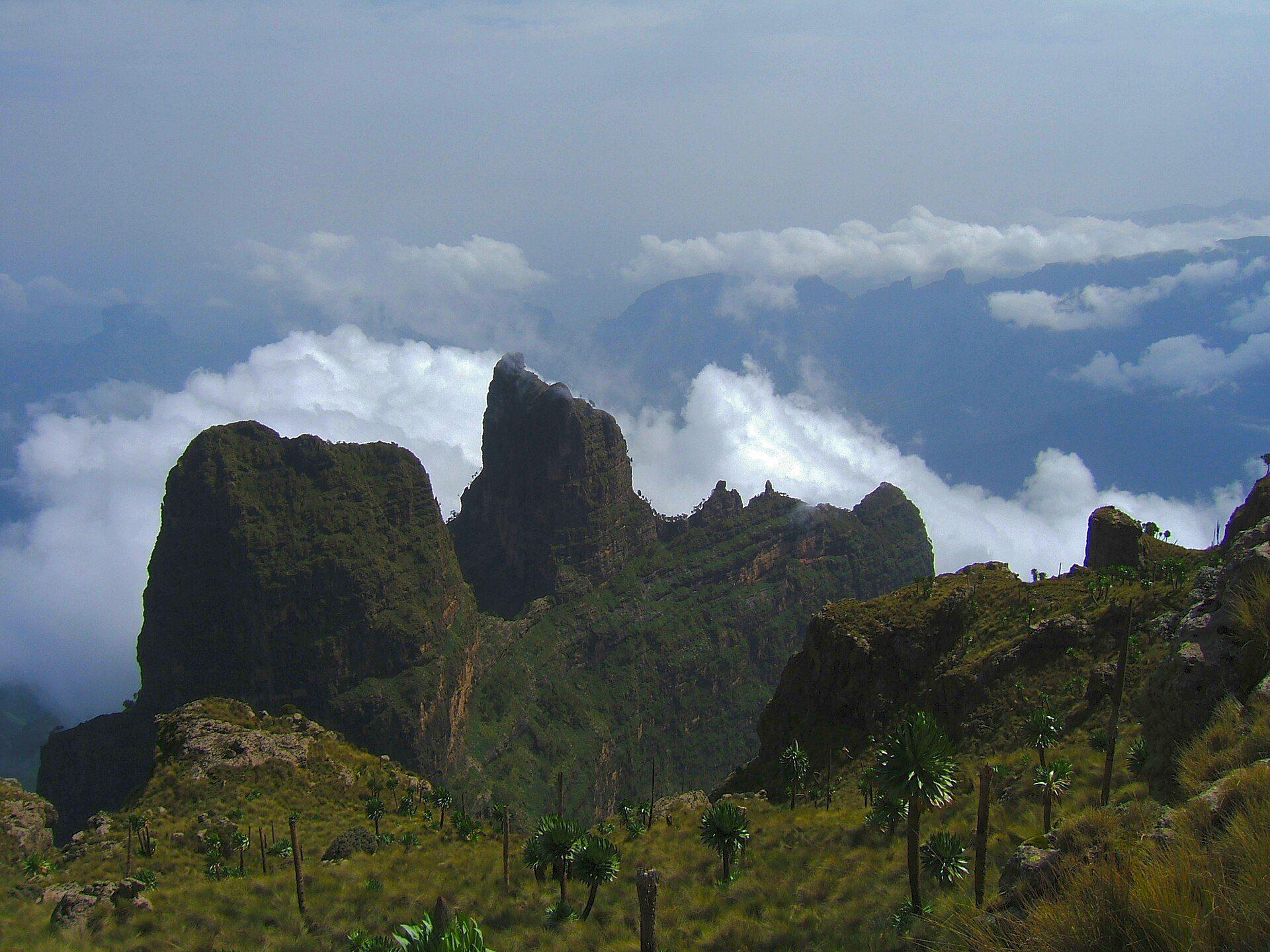
The Simien Mountains are the Africa few travellers picture — a vast, eroded escarpment where the highland plateau breaks off into a sea of pinnacles, buttresses and gorges thousands of metres deep. The light up here is enormous, the air thin and clean, and the silence broken mostly by the chatter of gelada moving along the cliff edge.
This is, above all, trekking country — and the finest in Ethiopia. You walk the rim of the escarpment from one viewpoint to the next, with the land dropping away beside you and the endemic wildlife close enough to study without disturbing. It is a UNESCO World Heritage Site, protected for exactly this combination of landscape and life found nowhere else on earth.
Come for the walking and the endemics, not for lions. The Simiens reward the traveller who wants to be in the landscape rather than watching it through a windscreen.
Wildlife & landscapes
The Simiens are endemic-wildlife country. The signature sight is the gelada — often called the "bleeding-heart baboon" for the patch of red on its chest — which graze the plateau in troops that can run to several hundred, unbothered by walkers who keep a respectful distance. The cliffs are the last stronghold of the walia ibex, a wild mountain goat found only here, and the high moorland holds a small population of the Ethiopian wolf, the rarest canid on earth (better seen in the Bale Mountains). Overhead, the lammergeier (bearded vulture) rides the updraughts along the escarpment.
The landscape is the other headline: the great escarpment itself, eroded into spires and amphitheatres, with Ras Dashen — Ethiopia's highest peak and one of the highest in Africa — rising at the range's eastern edge. Giant lobelia stud the Afroalpine moorland between the viewpoints.
Best time to visit
The prime window for the Simiens is the dry season, roughly October to March — clear skies, firm trails and long views along the escarpment. October and November, just after the main rains, bring the highlands at their greenest, with wildflowers across the moorland. The main rains fall roughly June to September, when trails turn slick, cloud often closes in on the peaks, and trekking becomes hard going. Nights are cold year-round at altitude, and can drop below freezing in the dry months — we pack and plan for it.
Things to do here
- Trekking & day walks — The core experience, from half-day escarpment walks to multi-day treks along the rim, with viewpoints at Geech, Imet Gogo and Chenek (see → Walking safari).
- Endemic-wildlife watching — Time with the gelada troops, scanning the cliffs for walia ibex and the skies for lammergeier.
- Summit of Ras Dashen — A longer, demanding trek to Ethiopia's highest point for experienced, acclimatised walkers.
- Scenic drives & viewpoints — For travellers who prefer not to trek far, the road to Chenek reaches dramatic escarpment views.
- Cultural visits — Highland villages and the market town of Debark, the range's gateway (see → Cultural Stories).
Know before you go
- Getting there: Fly Addis Ababa (ADD) to Gondar, then a road transfer of roughly 2–3 hours to Debark, the park gateway; treks begin from there.
- Fees & guiding: National park entry fees apply, and a local scout is required for trekking; we confirm current rates and arrange guides and scouts in your quote.
- Altitude: Trails run high — much of the trekking sits above 3,000m and Ras Dashen exceeds 4,500m — so itineraries are paced to acclimatise.
- How long: 2–4 nights suits most travellers; longer for the Ras Dashen route. Pairs naturally with Gondar and the historic route, or with the Bale Mountains for the full endemic set.
Related Nobu journeys
- Highlands & History — The Simien escarpment woven into the northern historic route. → Explore
- Roof of Africa Trek — The Simien and Bale Mountains on foot, after the endemics. → Explore (Ethiopia journeys are being added as the cluster fills in; start with → Plan Your Journey.)
When to go
Month by month — daytime warmth, days of rain and what the season brings.
Where to stay
From Essential to Private Collection — the camps and lodges we know first-hand here. Rates are indicative and confirmed on enquiry.
Expedition
Limalimo Lodge
Expeditionlodge · escarpment
from $200 pp / night· indicative, confirmed on enquiry
Elevated
Simien Lodge
Elevatedlodge · highland plateau
from $150 pp / night· indicative, confirmed on enquiry
Journeys through here
Signature routes that pass through Simien Mountains — starting points we reshape around your season and pace.
Common questions
- When is the best time to trek the Simien Mountains?
- The dry season, roughly October to March, with October–November the greenest after the rains; avoid the main rains of June to September, when trails are slick and the peaks often clouded.
- What wildlife can you see in the Simien Mountains?
- Endemic species above all: large troops of gelada along the escarpment, the rare walia ibex on the cliffs, the occasional Ethiopian wolf on the high moorland, and lammergeier overhead — not Big-Five game.
- How many days do you need in the Simien Mountains?
- Two to four nights suits most travellers, enough for the key viewpoints and good time with the gelada; allow longer for a Ras Dashen summit trek.
- Do you need to be very fit to trek the Simiens?
- There are options for most levels, from half-day escarpment walks to demanding multi-day routes; the main challenge is altitude, so we pace itineraries to acclimatise.
- How do you get to the Simien Mountains?
- Fly from Addis Ababa to Gondar, then transfer about two to three hours by road to Debark, the park gateway, where treks begin.
Tell us what you want from Simien Mountains
We'll design the journey around it — places, pace and people matched to how you travel.