Lalibela
Lalibela is a highland town in northern Ethiopia, famous for eleven medieval churches hewn downward out of solid volcanic rock in the 12th–13th centuries — a UNESCO World Heritage Site and one of the great wonders of the world. It remains a living centre of Ethiopian Orthodox Christianity, drawing pilgrims year-round, and is at its most extraordinary at dawn and during festivals such as Genna (Ethiopian Christmas). This is a heritage and cultural destination rather than a wildlife one.
Why visit
Some places you look at. Lalibela you descend into. Nine centuries ago, according to tradition, King Lalibela set out to build a new Jerusalem in the Ethiopian highlands — and rather than raise churches up from the ground, his masons cut them down into it, freeing whole buildings from the living rock. The result is unlike anything else on earth: sanctuaries, courtyards and tunnels carved as single pieces of stone, still standing after eight hundred years.
What lifts Lalibela beyond the archaeological is that it never became a monument. It is a working faith. White-robed pilgrims fill the trenches and passageways, priests read from illuminated manuscripts, and the chants of the Ethiopian Orthodox liturgy rise out of the rock at first light. You are not visiting a ruin; you are stepping quietly into someone else's living devotion.
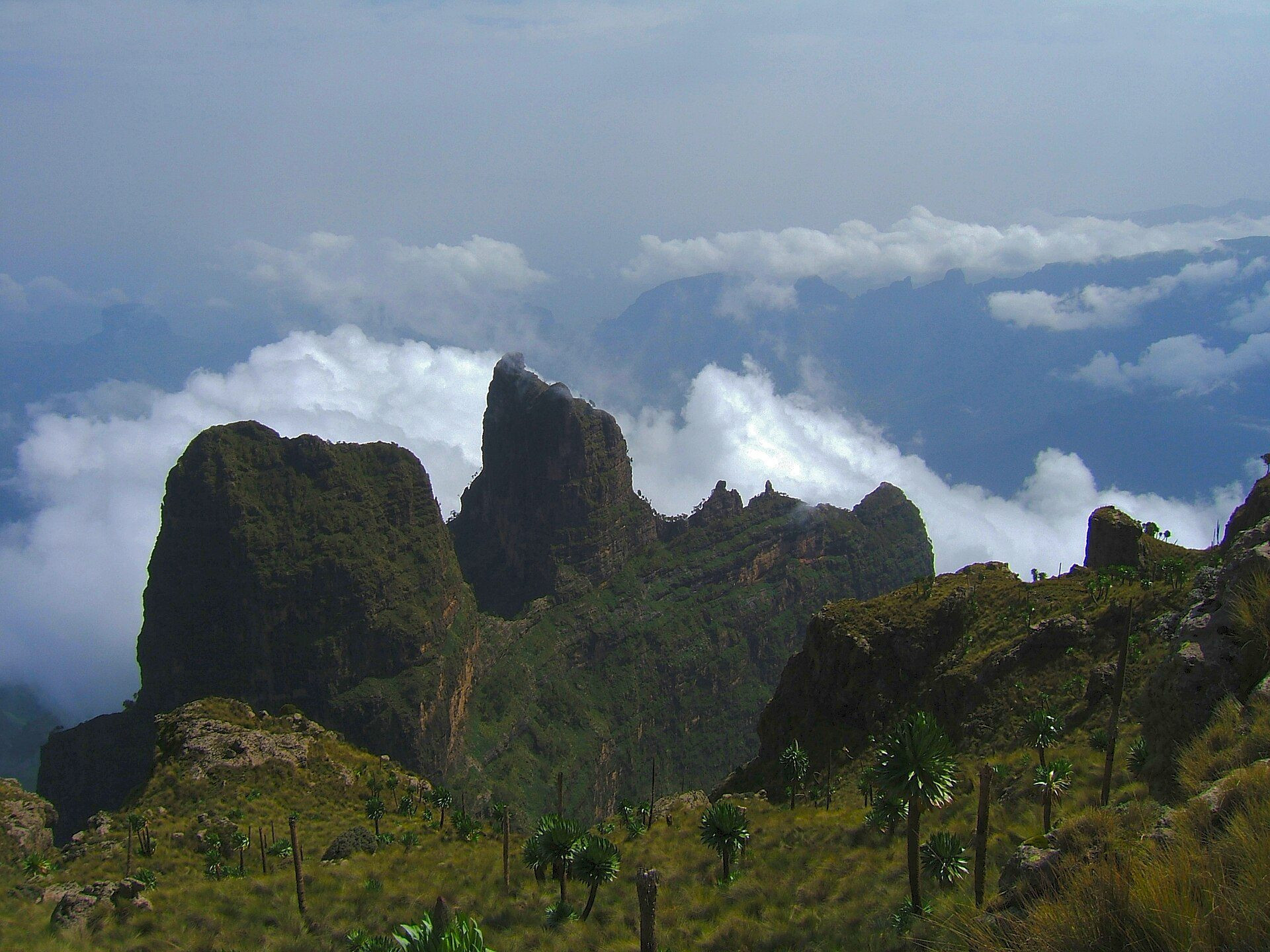
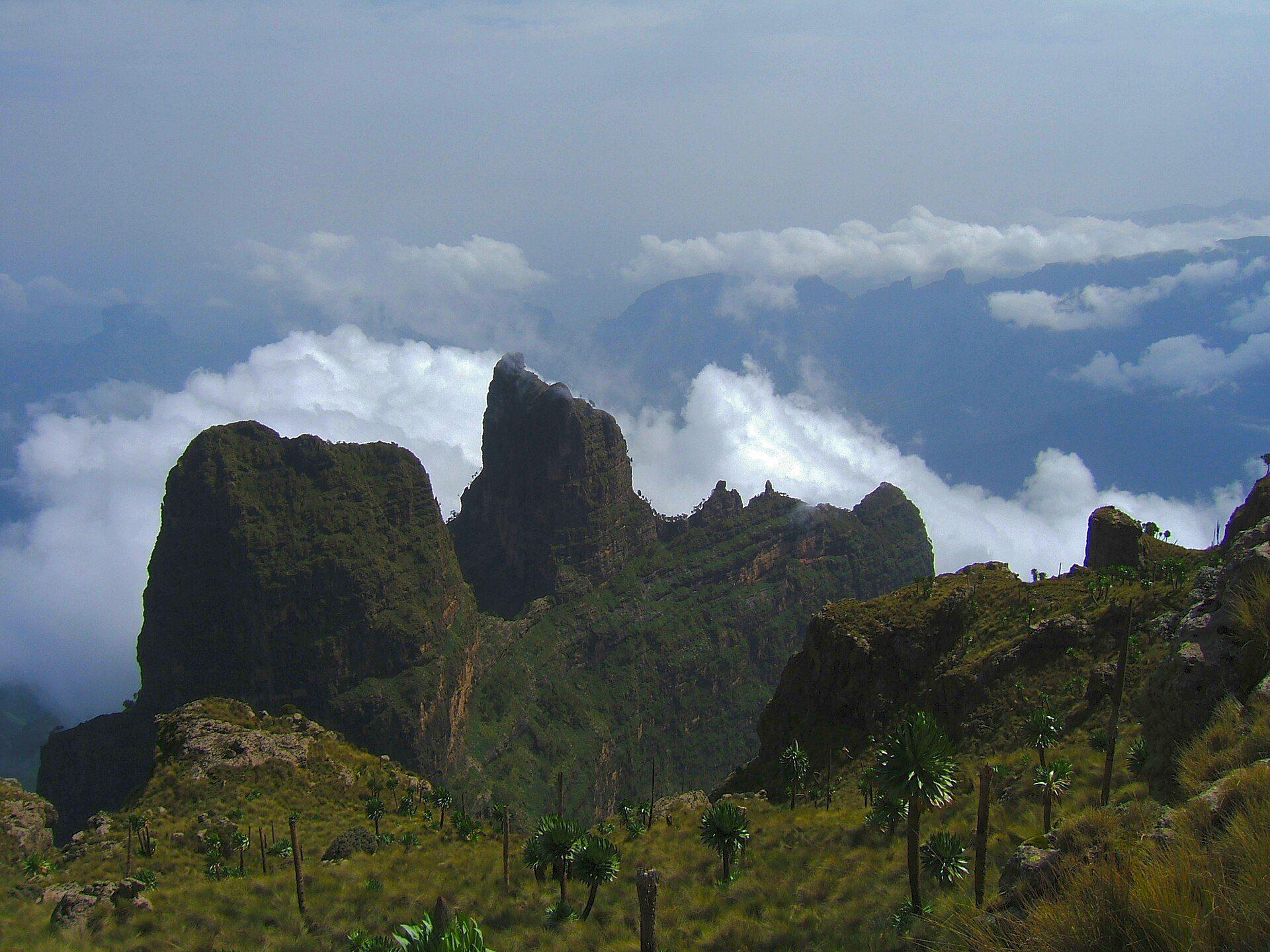
And then there is the setting. Lalibela sits high in the Lasta mountains, above 2,500 metres, where the air is thin and clear and the highlands fall away in ridges of ochre and green. At dawn, when mist hangs in the churchyards and the candles are still lit, it is one of the most moving arrivals in all of Africa.
Wildlife & landscapes
The draw at Lalibela is heritage and highland, not game — and it is extraordinary. The heart of it is the eleven rock-hewn churches, carved in the 12th–13th centuries and grouped into two clusters linked by a maze of tunnels and trenches. The icon is Bete Giyorgis — the Church of St George — a perfect cruciform tower cut down into the earth and best seen from above, one of the defining images of Ethiopia. Around it stand the great monolithic churches of the northern group, including Bete Medhane Alem, held to be the largest rock-hewn church in the world.
These are not carved facades but complete buildings released from the bedrock — with columns, windows, doorways and interiors of worn, candle-darkened stone. Many still hold ancient crosses, murals and illuminated manuscripts, and each remains an active place of worship watched over by resident priests.
The landscape frames all of it. Lalibela sits in the Lasta highlands of the historic north, a country of terraced escarpments and thin mountain light. For those with time, the surrounding hills hold rock-cut monasteries and hermitages — such as Asheton Maryam and Yemrehanna Kristos — reached on foot or by mule, deepening the sense of a whole sacred landscape rather than a single site.
Best time to visit
Ethiopia's highlands follow the rains, not the savannah. The dry season, roughly October to March, is the clearest and most comfortable window in Lalibela — bright days, cool nights and reliable footing on the churchyard stone. This is also when the town's most powerful moment falls: Genna, Ethiopian Christmas, on 7 January, when thousands of white-robed pilgrims converge on the churches for an all-night liturgy — unforgettable, and busy, so we plan well ahead for it. Timkat (Epiphany, around 19 January) is another major celebration.
The long rains, roughly June to September, bring green highlands and dramatic skies but also muddy paths and afternoon downpours; sightseeing is still possible, simply wetter. Whenever you come, dawn is the hour — the churches are quietest, coolest and most atmospheric before the day warms.
Things to do here
- The rock-hewn churches — a guided walk through both clusters, the linking tunnels, and Bete Giyorgis; a knowledgeable local guide turns the stone into story.
- Dawn liturgy — attending, or quietly witnessing, the early-morning Orthodox service is Lalibela's most moving experience; we brief you fully on how to be a respectful guest.
- Outlying monasteries — day walks or mule rides to hillside churches such as Asheton Maryam and Yemrehanna Kristos, set in caves and cliffs beyond the town.
- Highland walking — the Lasta escarpments reward gentle trekking, with vast views and encounters with highland farming villages.
- Cultural encounters — coffee ceremonies, local markets and the everyday texture of a highland Orthodox town, approached with genuine respect (see → Cultural safari).
- Festival travel — timing a visit to Genna or Timkat for one of the great living ceremonies of the Christian world.
Know before you go
- Getting there: Fly into Lalibela Airport (LLI), reached by short domestic flights from Addis Ababa (often via Gondar or Bahir Dar on the historic-route circuit). The airport sits roughly 20–30 minutes by road below the town.
- Entry and fees: Ethiopia visa requirements apply, and a site entry ticket covers the churches (valid across the visit); we confirm current requirements and fees, which are included in your quote.
- Respect and dress: These are active places of worship — modest dress is expected, shoes are removed before entering the churches, and photography of pilgrims and services should always be with permission. We brief you so you can visit as a welcome guest.
- How long: 2 to 3 nights does Lalibela justice, allowing an unhurried tour of both church clusters plus an outlying monastery. It pairs naturally with Gondar and Axum on the historic route.
Related Nobu journeys
When to go
Month by month — daytime warmth, days of rain and what the season brings.
Where to stay
From Essential to Private Collection — the camps and lodges we know first-hand here. Rates are indicative and confirmed on enquiry.
Signature
Cliff Edge Hotel
Signaturehotel · cliff-edge
from $50 pp / night· indicative, confirmed on enquiry
Maribela Hotel
Signaturehotel · hillside
from $80 pp / night· indicative, confirmed on enquiry
Panoramic View Hotel
Signaturehotel · hillside
from $50 pp / night· indicative, confirmed on enquiry
Tukul Village
Signaturehotel · heritage
from $60 pp / night· indicative, confirmed on enquiry
Elevated
Mezena Resort & Spa
Elevatedlodge · hillside
from $120 pp / night· indicative, confirmed on enquiry
Sora Lodge Lalibela
Elevatedlodge · cliff-edge
from $90 pp / night· indicative, confirmed on enquiry
Top Twelve Hotel
Elevatedhotel · hillside
from $90 pp / night· indicative, confirmed on enquiry
Journeys through here
Signature routes that pass through Lalibela — starting points we reshape around your season and pace.
Common questions
- Why are the churches of Lalibela famous?
- They were carved downward out of solid rock as complete buildings in the 12th–13th centuries — not built up from blocks but freed from the bedrock. Eleven survive, still in active worship, making Lalibela both a UNESCO World Heritage Site and a living Orthodox pilgrimage centre.
- When is the best time to visit Lalibela?
- The dry season from October to March is clearest and most comfortable. If you can, time your visit to Genna (Ethiopian Christmas, 7 January) or Timkat (around 19 January) for the great pilgrim festivals — but plan well ahead, as the town fills.
- What is Bete Giyorgis?
- Bete Giyorgis, the Church of St George, is Lalibela's most iconic church — a perfect cross-shaped tower cut down into the rock and best appreciated from the rim above. It stands slightly apart from the two main clusters.
- How many days do you need in Lalibela?
- Two to three nights is ideal: enough to explore both groups of churches unhurried, witness a dawn service, and walk to an outlying monastery in the surrounding highlands.
- Can I photograph the churches and the pilgrims?
- The churches themselves are photographable, but pilgrims, priests and services should only be photographed with permission and always respectfully — these are sacred, living spaces, and we brief you on the etiquette before you arrive.
Tell us what you want from Lalibela
We'll design the journey around it — places, pace and people matched to how you travel.