Konso
Konso is a UNESCO World Heritage cultural landscape in Ethiopia's southern highlands, home to the Konso people — an agricultural society whose dry-stone terraced hillsides, fortified hilltop villages (*paletas*) and carved wooden *waga* grave markers reflect a living tradition more than four centuries old. Reached from Arba Minch (nearest airport, AMH), it is the natural cultural gateway between the lakes of the Rift Valley and the Omo Valley to the south-west.
Why visit
Some places are famous for what nature made. Konso is remarkable for what people made — patiently, over generations, with their hands. Across these arid southern hills, the Konso people have raised thousands of kilometres of dry-stone terracing, turning steep, difficult ground into fertile, farmable land. It is one of the great feats of vernacular engineering in Africa, and it is still worked today. This is not a monument. It is a farm, a home, a way of life that has held its shape for centuries.
Above the terraces sit the paletas — walled, fortified hilltop villages, tightly built and centred on communal squares where the mora (a raised community house) anchors social life. Nothing here is decorative for its own sake. The layout, the walls, the generation-marking stones all carry meaning, and the community will tell you what they mean.
UNESCO inscribed the Konso Cultural Landscape as World Heritage in 2011, recognising exactly this: a living, adaptive tradition rather than a preserved ruin. To visit well is to come quietly, to be led by the community, and to leave having understood something rather than merely photographed it.
Wildlife & landscapes
Konso is a cultural landscape, not a game park — and its draw is the land itself and the people who shaped it. The signature sight is the terracing: dry-stone walls stepping up the hillsides in tier after tier, a system that holds soil and water in a dry climate and has been maintained by hand for roughly four hundred years. Walking these hills, you read the labour of generations in the stone.
The fortified villages (paletas) are the human heart of it — clustered stone-and-thatch houses within defensive walls, arranged around communal mora houses and public squares. Look for the generation poles (olahitas), tall wooden markers raised to count the passing of ruling generations, a calendar written in timber.
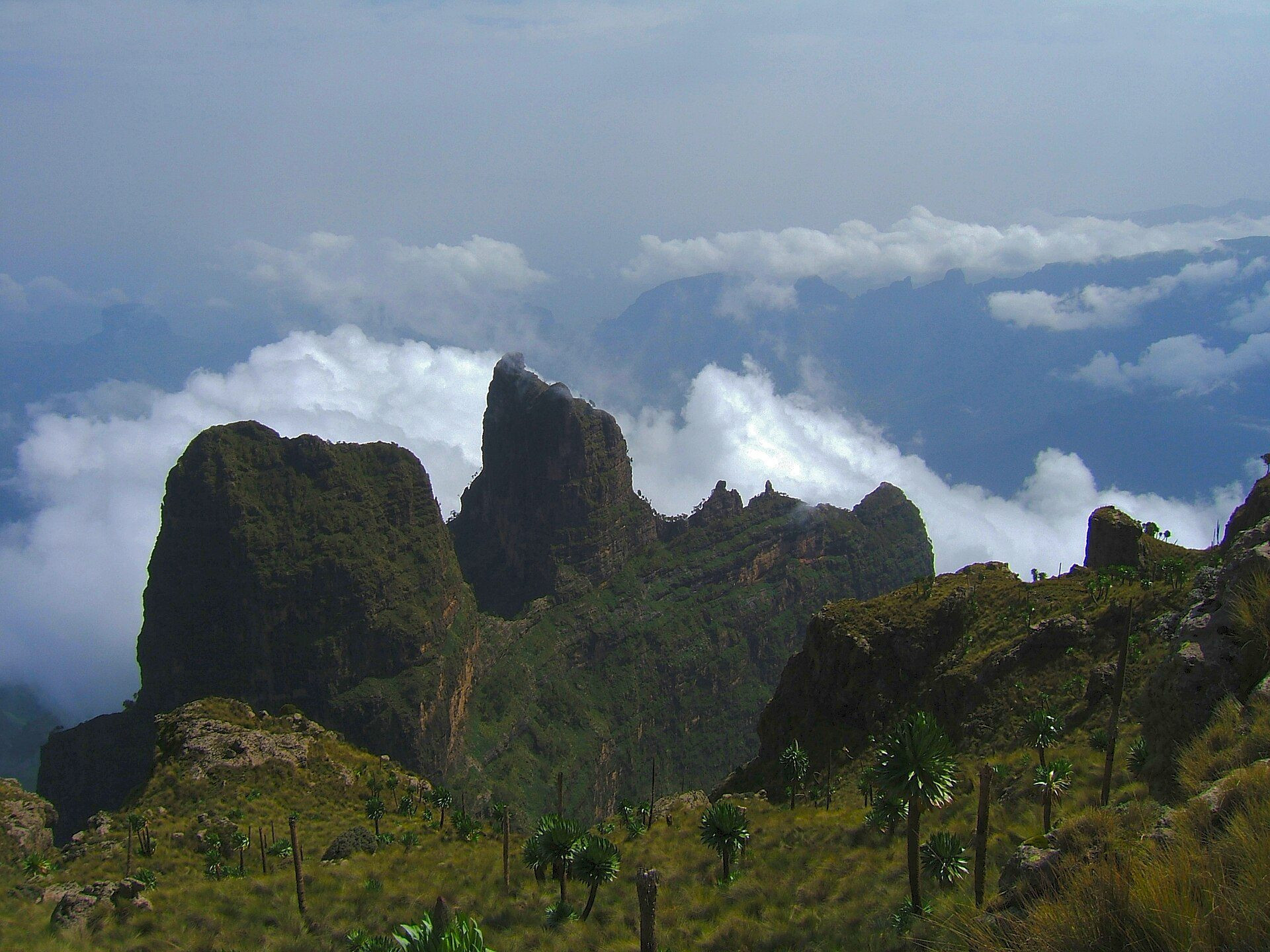
Most striking of all are the waga — carved wooden anthropomorphic grave markers raised to honour distinguished men and, in earlier times, those they had defeated. Grouped in weathered clusters, faces turned outward, they are among the most distinctive funerary art in Africa. Handle the subject with respect: these are memorials, not curiosities. Beyond the villages, the wider setting is highland Rift-margin country — dry ridges, seasonal streams and long views toward the lowlands that fall away toward the Omo.
Best time to visit
Konso sits in Ethiopia's southern highlands, and its rhythm follows the rains rather than any wildlife calendar. The most comfortable window is the dry season, roughly October to March, when roads are firm, the light is clear and travel between Arba Minch, Konso and the Omo Valley is easiest. This is also the most popular stretch for a southern-Ethiopia cultural journey.
The main rains fall around March to May, and a second, lighter rainy spell can arrive mid-year; these can make the unsealed roads toward the Omo slower and the hills greener. If you hope to align a visit with a Konso ceremony or a nearby cultural event, timing is best confirmed with your travel designer, as these follow the community's own calendar. Full context on planning a southern-Ethiopia route sits within our → Ethiopia safari story.
Things to do here
- Guided village walks — the essential Konso experience: a community-led walk into a paleta, reading the terraces, walls, mora houses and generation poles with someone who lives them.
- Waga grave-marker visits — respectful, guided encounters with the carved wooden memorials, understood in their cultural context rather than viewed in isolation.
- Terrace and landscape walking — following footpaths across the terraced hillsides, one of the finest ways to grasp the scale of the engineering (see → Walking safari).
- The Konso "New York" formation — a short excursion to a striking eroded sandstone canyon nicknamed locally for its tower-like pinnacles.
- Market days — the regional market draws Konso and neighbouring peoples; a vivid, everyday window on southern-highland life for those who visit when it falls.
- Cultural bridge to the Omo — Konso is the natural first cultural stop before continuing to the peoples of the Omo Valley to the south-west.
Know before you go
- Getting there: The nearest airport is Arba Minch (AMH), with domestic connections to Addis Ababa; Konso is roughly a 2 to 3 hour road transfer onward from Arba Minch. It sits on the main route between the Rift Valley lakes and the Omo Valley.
- Fees and guiding: Entry to the Konso Cultural Landscape and its villages is arranged through the local community, and visits are made with community guides; associated fees are confirmed in your quote. Guiding is not optional here — it is how the place is respectfully seen.
- How long: 1 to 2 nights suits Konso as a cultural stop; it combines naturally with Arba Minch and a continuation into the Omo Valley.
- Respect note: Photography of people, homes and waga markers should always be asked for, never assumed. Follow your community guide's lead.
Related Nobu journeys
When to go
Month by month — daytime warmth, days of rain and what the season brings.
Where to stay
From Essential to Private Collection — the camps and lodges we know first-hand here. Rates are indicative and confirmed on enquiry.
Signature
Kanta Lodge
Signaturelodge · hillside
from $70 pp / night· indicative, confirmed on enquiry
Common questions
- Why is Konso a UNESCO World Heritage Site?
- It was inscribed in 2011 as a cultural landscape: a living tradition of dry-stone terraced agriculture, fortified hilltop villages and carved *waga* grave markers, maintained by the Konso people for roughly four centuries.
- What are the waga statues in Konso?
- *Waga* are carved wooden grave markers raised to honour distinguished men, often grouped in clusters with outward-facing carved features. They are memorials, seen respectfully with a community guide.
- How do you get to Konso?
- Fly to Arba Minch (AMH) from Addis Ababa, then continue by road roughly two to three hours; Konso lies on the route between the Rift Valley lakes and the Omo Valley.
- How many days do you need in Konso?
- One to two nights is enough to walk the villages and terraces with a guide; most travellers fold Konso into a wider southern-Ethiopia route with Arba Minch and the Omo Valley.
- Is Konso a wildlife destination?
- No. Konso is a cultural landscape; the draw is the terraced hills, the fortified villages and the living heritage of the Konso people, not big game.
Tell us what you want from Konso
We'll design the journey around it — places, pace and people matched to how you travel.