Watamu
Watamu is a quiet beach village on Kenya's north coast, wrapped around the Watamu Marine National Park — one of the country's oldest protected reefs. Known for turtle nesting, snorkelling over coral gardens and the mangrove channels of Mida Creek, it suits travellers who want the ocean's natural side alongside white sand. The calmest, brightest months are roughly December to March.
Why visit
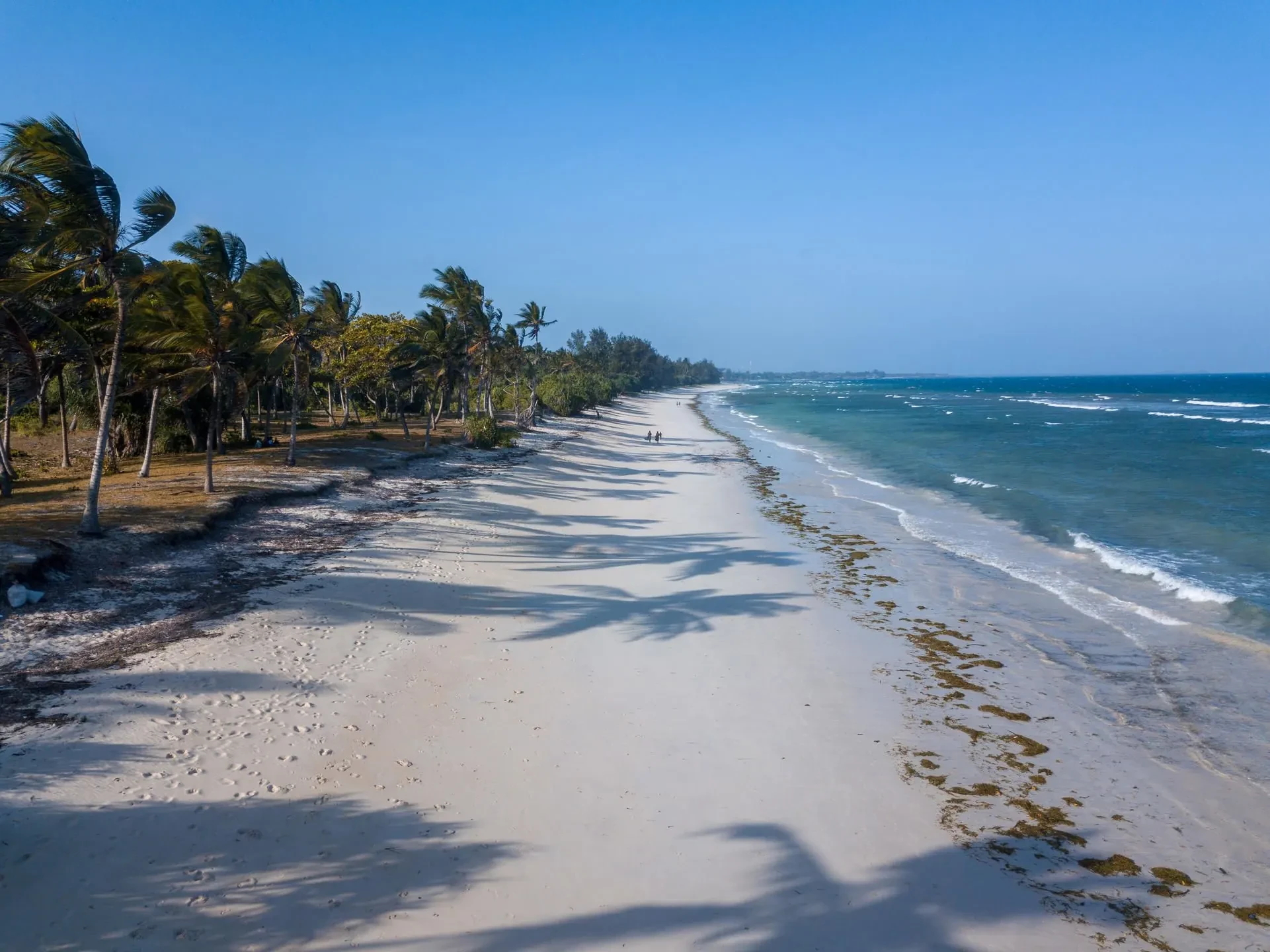
Watamu is the coast at its most natural. The bays here are sculpted into coves of white sand and weathered coral rock, the water glows turquoise over the reef, and much of what lies offshore has been protected for decades as marine parkland. It is calmer and more low-key than the big beach names — a place chosen by people who want the sea itself to be the point.
What sets Watamu apart is the wildlife in the water. This is one of the most important stretches of the Kenyan coast for sea turtles, with nesting beaches and a long-running local conservation effort, and the reef draws snorkellers and divers for its coral and its fish. Behind the beach, the tidal forest of Mida Creek adds birds, mangroves and some of the finest sunsets on the coast.
What to do here
The Watamu Marine National Park is the centre of gravity — snorkelling and diving over coral gardens, with reef fish, turtles and, in the right season, larger visitors offshore. Turtle watching and the work of the local marine conservancy give the place a naturalist's pull few beaches can match. Mida Creek is a world of its own: kayaking and dhow trips through the mangroves, birdlife on the flats, and a boardwalk for the sunset. Nearby, the overgrown Gede Ruins — a lost Swahili town swallowed by forest — make an atmospheric half-day inland. And the beach itself, broken into quiet coves, rewards slow days and long low-tide walks.
Best time to visit
Watamu is warm all year, but the clearest seas and brightest skies come in December to March, the prime window for diving and snorkelling. The long rains (April to June) are wetter with rougher water, quieter and gentler on rates. July to October is cooler and dry, breezier under the monsoon but still good for the beach. Larger pelagics, including the chance of whale sharks offshore, are most associated with the early-year months. For the wider picture, see → Best time to visit Kenya.
Getting there
The usual approach is to fly to Malindi Airport (MYD), around 30 minutes north by road, with connections from Nairobi and the safari airstrips. Moi International Airport, Mombasa (MBA) is the alternative for a longer coastal road transfer from the south. We arrange the flight and transfer to keep the bush-to-beach connection smooth.
How it fits into a journey
Watamu is the right coast when the sea itself should carry the stay. After safari, it offers rest without becoming blank: reef, turtles, mangroves, birds, ruins and quiet coves give each day a natural focus. It is particularly strong for travellers who want snorkelling, diving or conservation woven into the beach portion, and for families who want a gentler village feel than the larger resort strips.
We often use Watamu as a three- to five-night finish after the Mara, Amboseli or Laikipia. It can pair with Malindi for town and history, or with Kilifi for a quieter creek-and-villa rhythm. Timing matters more here than on a simple pool-and-sand stay: sea state, tides and seasonal visibility shape how much the reef can give.
Related Nobu journeys
- Safari & Beach Holiday — a Kenyan safari closed on Watamu's marine coast. → Explore
- Bush to Beach — the Mara or Amboseli paired with the north-coast reef. → Explore
When to go
Month by month — daytime warmth, days of rain and what the season brings.
Where to stay
From Essential to Private Collection — the camps and lodges we know first-hand here. Rates are indicative and confirmed on enquiry.
Essential
Turtle Bay Beach Club
Essentialresort · beachfront
from $80 pp / night· indicative, confirmed on enquiry
Signature
Ocean Sports Resort
Signatureresort · beachfront
from $120 pp / night· indicative, confirmed on enquiry
Temple Point Resort
Signatureresort · beachfront
from $100 pp / night· indicative, confirmed on enquiry
Elevated
Hemingways Watamu
Elevatedresort · beachfront
from $300 pp / night· indicative, confirmed on enquiry
Medina Palms
Elevatedresort · beachfront
from $150 pp / night· indicative, confirmed on enquiry
The Charming Lonno Lodge
Elevatedlodge · beachfront
from $250 pp / night· indicative, confirmed on enquiry
Watamu Treehouse
Elevatedlodge · beachfront
from $150 pp / night· indicative, confirmed on enquiry
Journeys through here
Signature routes that pass through Watamu — starting points we reshape around your season and pace.
Experiences here
Common questions
- What is Watamu known for?
- Its marine national park: a protected reef with snorkelling and diving, turtle nesting beaches and the mangrove channels of Mida Creek — the coast's most natural, wildlife-rich stretch.
- Can you see turtles in Watamu?
- Yes. Watamu's beaches are an important nesting site, supported by a long-standing local marine conservation effort, and turtles are regularly seen on the reef.
- Is Watamu better than Diani?
- They are different coasts: Watamu is quieter and more marine-park focused, Diani longer and livelier. Many of our journeys favour Watamu for snorkelling and nature, Diani for a broad beach scene.
- How far is Watamu from Malindi?
- About half an hour by road, which is also where the nearest airport (MYD) sits — making Watamu easy to reach by a short flight and transfer.
Tell us what you want from Watamu
We'll design the journey around it — places, pace and people matched to how you travel.