Wasini & Funzi
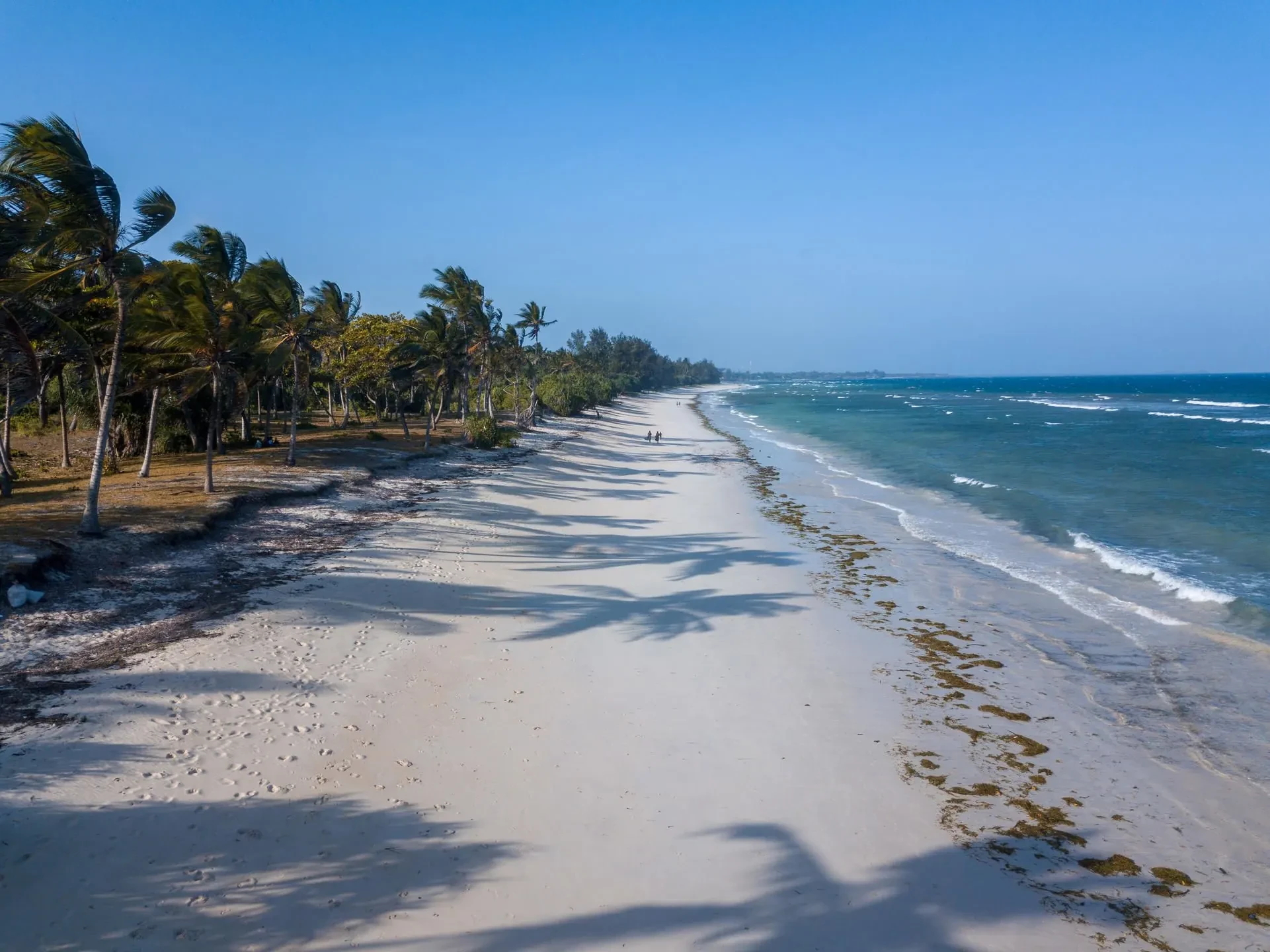
Wasini and Funzi are two small, car-free islands off Kenya's far south coast near the Tanzanian border, reached only by boat from Shimoni and the Ramisi estuary. They are known for mangrove creeks, shifting tidal sandbanks, working Swahili fishing villages, and access to the Kisite-Mpunguti Marine Park — among Kenya's best waters for dolphins, coral and snorkelling. This is a slow, dhow-led island experience of seafood and culture rather than a resort beach.
Why visit
Kenya's coast is better known for its long resort beaches, but its most distinctive corner sits far to the south, almost at the Tanzanian line. Here, past the fishing town of Shimoni, the mainland dissolves into a scatter of small islands, mangrove channels and sandbanks that appear and vanish with the tide. Wasini and Funzi are the two you come for — and neither has a single car.
That absence changes everything. On Wasini, footpaths thread between coral-rag houses, a village mosque, and boardwalks over a raised coral garden that fills and empties with the sea. On Funzi, the draw is a vast tidal sandbank that rises from the water at low tide — a bright, empty stage for a barefoot lunch before the ocean reclaims it. Life moves at the pace of boats and tides, not engines.
And the sea is the point. These islands are the gateway to some of the richest marine water in Kenya, where dolphins run alongside the dhow and the coral is close enough to slip straight in. It is a quieter, older, more textured coast — Swahili to its core.
The marine park, dolphins, coral & mangroves
The heart of this place is the Kisite-Mpunguti Marine Park, a protected reserve of open water, coral gardens and small islets reached by boat from Shimoni and Wasini. It is widely regarded as one of Kenya's finest marine areas for snorkelling and diving — clear water over living coral, dense with reef fish: parrotfish, angelfish, snapper, moray eels and, in season, larger visitors passing through.
Above all, this is dolphin water. Pods of bottlenose and humpback dolphins are frequently seen here, often riding the bow-wave of the dhow — one of the most reliable dolphin encounters on the East African coast. Sightings are wild and never guaranteed, but the reputation of these waters is well earned.
The islands themselves sit within a living mangrove ecosystem. The creeks around Funzi and the Ramisi estuary are lined with mangrove forest that shelters crabs, kingfishers, herons and the occasional saltwater crocodile deeper in the channels. At low tide the sandbanks emerge as pale islands of their own; at high tide the coral gardens flood and the snorkelling water opens up. It is a landscape shaped entirely by the rise and fall of the sea.
Best time to visit
The far south coast follows the Indian Ocean monsoon rather than the safari calendar. The dry season from roughly December to March brings calm, clear seas and the best underwater visibility — the prime window for the marine park, dolphins and snorkelling. June to October is cooler and breezier but still very usable, with green mangroves and fewer visitors. The long rains around April and May bring the heaviest downpours and rougher seas, and some marine trips pause during this period.
Boat trips are also governed by the tide: the sandbanks, coral gardens and marine-park crossings are timed to the water each day, so your itinerary is shaped around the tide chart. For wider Kenya-coast timing, see our → Best time to visit Kenya guide.
Things to do here
- Kisite-Mpunguti marine trips — a full day by dhow into the marine park for snorkelling over coral and dolphin encounters, usually with a Swahili seafood lunch on Wasini.
- Dhow days & sunset cruises — traditional sailing dhows are the way you move here; a slow sail through the channels is the defining experience (see → Dhow and the Swahili Coast).
- Funzi sandbank lunch — a boat out to the tidal sandbank for a barefoot seafood lunch on an island that exists only at low tide.
- Mangrove & creek exploration — quiet paddling and boat trips through the mangrove channels around Funzi and the estuary, rich in birdlife (see → Water and canoe safari).
- Wasini village & coral garden — a walk through the car-free village and its boardwalk over the raised coral garden, with genuine, respectful encounters with the island community.
- Snorkelling & diving — accessible reef for first-timers and richer sites for certified divers, all within the protected water.
Know before you go
- Getting there: Fly into Ukunda (Diani, UKA) or Mombasa (MBA), then transfer by road south to Shimoni (or the Funzi jetty), from where all access is by boat — there are no vehicles on the islands. Road transfers run a few hours depending on your starting point.
- Fees: a Kisite-Mpunguti Marine Park entry fee applies for marine trips, collected per person per day; we confirm current rates and include them in your quote.
- How long: 2 to 3 nights suits the islands as a slow, self-contained coastal chapter; pair with Diani or Msambweni for a fuller south-coast stay, or with a safari for a classic bush-and-beach journey.
- Character note: this is a barefoot, tide-led, seafood-and-culture experience — not a resort beach. Travellers wanting full resort amenities should discuss a pairing with their travel designer.
Related Nobu journeys
When to go
Month by month — daytime warmth, days of rain and what the season brings.
Where to stay
From Essential to Private Collection — the camps and lodges we know first-hand here. Rates are indicative and confirmed on enquiry.
Expedition
Blue Monkey Beach Cottages
Expeditionvilla · beachfront
from $20 pp / night· indicative, confirmed on enquiry
Wasini Island Bandas
Expeditionlodge · beachfront
from $20 pp / night· indicative, confirmed on enquiry
Elevated
The Funzi Keys
Elevatedlodge · beachfront
from $250 pp / night· indicative, confirmed on enquiry
Common questions
- Where are Wasini and Funzi islands?
- On Kenya's far south coast near the Tanzanian border, reached only by boat — Wasini from the town of Shimoni, and Funzi from the Ramisi estuary. Neither island has roads or cars.
- Can you see dolphins at Wasini?
- Yes. The waters of the Kisite-Mpunguti Marine Park off Wasini are among Kenya's most reliable for wild bottlenose and humpback dolphins, often seen alongside the dhow, though sightings are never guaranteed.
- Is Wasini or Funzi good for snorkelling?
- Very. The Kisite-Mpunguti Marine Park is regarded as one of Kenya's best marine areas, with clear water, living coral and abundant reef fish, accessible to both first-time snorkellers and divers.
- How do you get to Wasini and Funzi?
- Fly to Ukunda (Diani) or Mombasa, transfer by road to Shimoni or the Funzi jetty, then cross by boat. There is no vehicle access on the islands themselves.
- How many nights do you need on the islands?
- Two to three nights suits this slow, tide-led stay; many travellers pair it with Diani or Msambweni, or with a safari for a bush-and-beach journey.
Tell us what you want from Wasini & Funzi
We'll design the journey around it — places, pace and people matched to how you travel.