Shimba Hills
Shimba Hills National Reserve is a coastal rainforest reserve set on a range of hills just inland of Diani Beach on Kenya's south coast, roughly an hour from Mombasa. It is Kenya's last stronghold of the rare sable antelope, holds a population of coastal elephants, and is known for its butterflies, orchids and the forest walk to Sheldrick Falls — a cool, green counterpoint to the beach and an easy day trip or overnight from the south coast.
Why visit
Just inland of Diani, the coastal plain lifts into a range of low hills — and the air changes. Shimba Hills is cooler, greener and more still than the beach it overlooks, a rainforest reserve where mist gathers in the canopy and the Indian Ocean shimmers in the distance from the high viewpoints. It is one of the few places on the East African coast where you can drive up from the sand into genuine forest in under an hour.
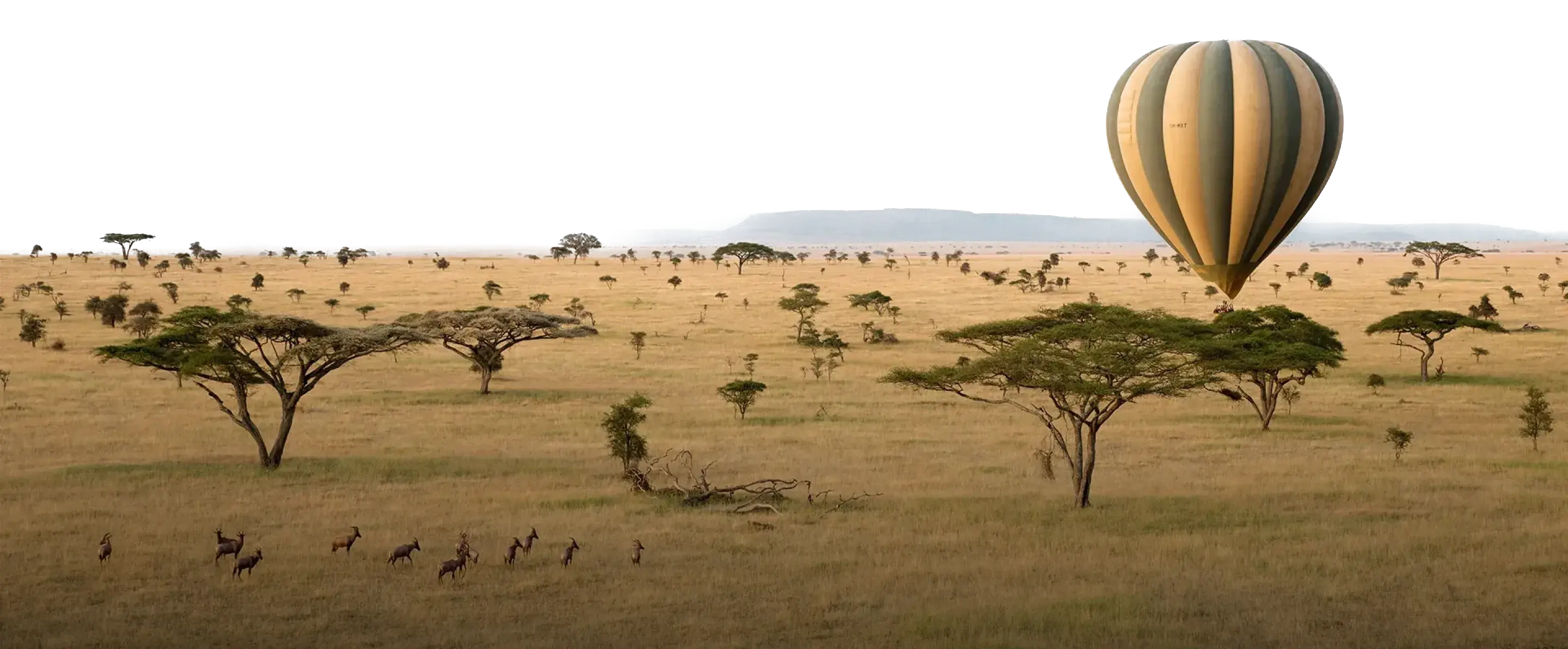
This is not the wide golden savannah of the Mara. Shimba is intimate, layered, close-textured — a place of dense woodland and open glades, of butterflies drifting through shafts of light and elephants moving unseen between the trees. It is Kenya's last refuge for the sable antelope, a species that survives nowhere else in the country, which gives the reserve a quiet significance out of proportion to its size.
Most of all, Shimba is the natural bush half of a south-coast journey. Pair a night or a morning here with the beaches of Diani or Galu, and you have Kenya's compact answer to bush-and-beach: forest and wildlife in the hills, the ocean a short drive below.
Wildlife & landscapes
The signature animal of Shimba Hills is the sable antelope — a large, dark, scimitar-horned antelope for which this reserve is Kenya's last stronghold. Nowhere else in the country holds a wild population, and seeing them here, grazing the forest glades, is the reserve's defining encounter.
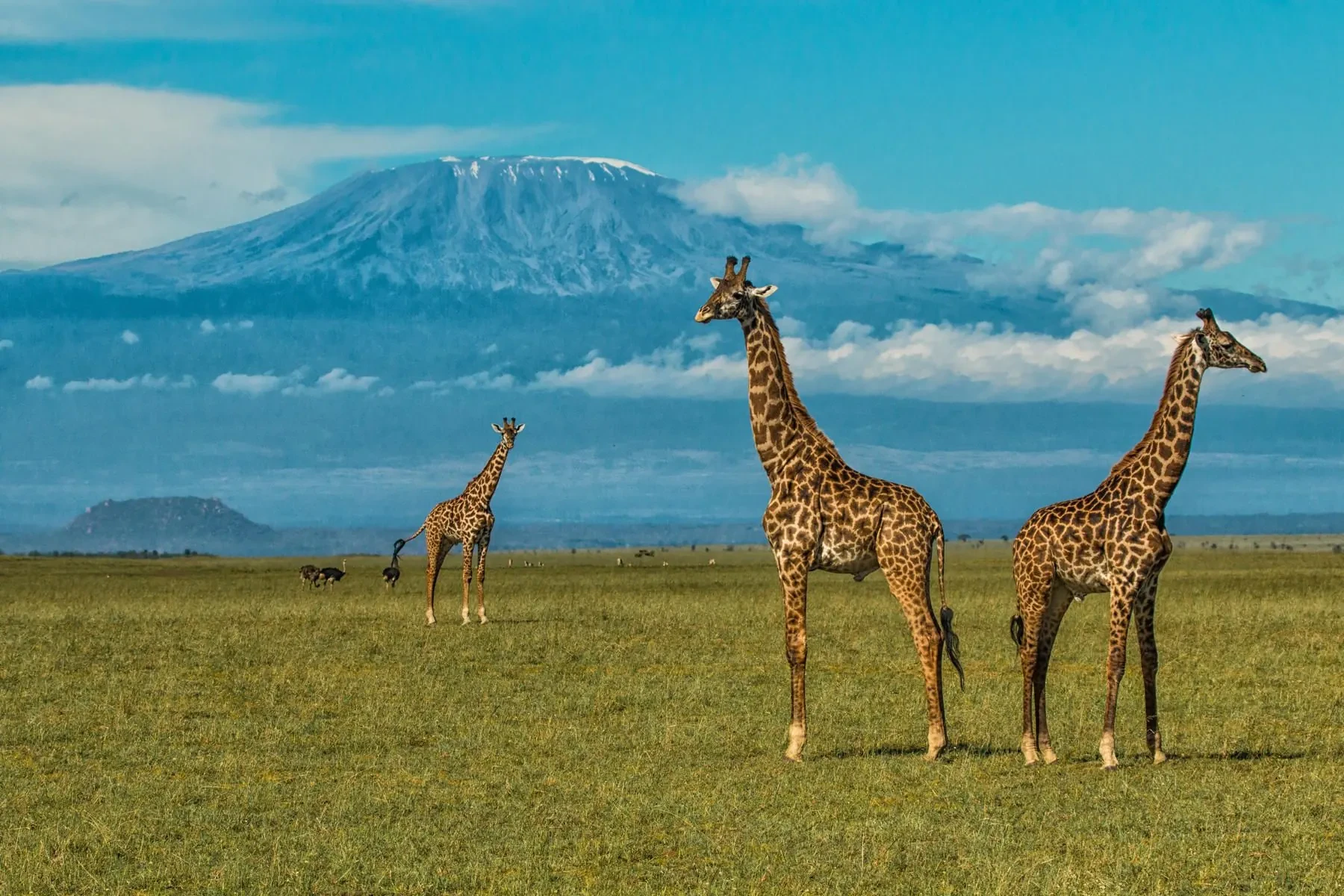
Shimba is also coastal elephant country. A resident population of elephants moves through the forest and adjoining Mwaluganje ecosystem, and the reserve's terrain — hills, glades and dense woodland — makes for a different kind of elephant sighting than the open plains inland. Other game includes buffalo, giraffe, bushbuck, waterbuck, and the shy forest-dwellers: colobus and Sykes' monkeys, and a rich birdlife through the canopy.
But the real texture of Shimba is the forest itself — one of the largest remaining stands of coastal rainforest in East Africa, cool and humid, threaded with streams. It is renowned for its butterflies and orchids, dozens of species that thrive in the damp shade, and for the walk down to Sheldrick Falls, where water drops into a forest pool you can swim in. This is a landscape of green rather than gold — a rainforest ecosystem perched above the coast, and all the rarer for it.
Best time to visit
Shimba Hills follows the coast's rhythm rather than the savannah's. The dry seasons — roughly January to March and July to October — bring the most reliable conditions for driving the forest tracks and walking to the falls, with firmer ground and clearer skies. Because this is rainforest, expect it to feel cooler and greener than the beach below in any month.
The long rains (April–May) and shorter rains around November deepen the forest and swell Sheldrick Falls, but tracks can turn slippery and some walking becomes harder. The reserve is rewarding year-round for those who don't mind the wet, and its elevation keeps it fresher than the coastal humidity. For wider planning across the country and the coast, see our → Best time to visit Kenya guide.
Things to do here
- Game drives — forest and glade drives in search of sable antelope, coastal elephants and plains game; the network of tracks winds through woodland and open viewpoints over the ocean.
- The walk to Sheldrick Falls — a guided forest walk down to a waterfall and swimming pool, one of the reserve's signature experiences; on foot, with a ranger (see → Walking safari).
- Butterfly and orchid spotting — the coastal rainforest is one of Kenya's richest for both; a slow, close-focus counterpoint to big-game viewing.
- Birding — the forest canopy and glades support a distinctive coastal-forest birdlife (see → Birding safari).
- Viewpoints over the coast — the hills give long views to the Indian Ocean, a rare vantage that ties the reserve to the sea below.
- Day trip or overnight from the south coast — Shimba works beautifully as a half-day or overnight from Diani and Galu Beach, the bush chapter of a coastal stay.
Know before you go
- Getting there: The nearest gateway is Mombasa (MBA — Moi International Airport), roughly an hour by road, crossing the Likoni channel to the south coast. From Diani or Galu Beach the reserve is a short drive inland — well under an hour — which is why it works so well as a coastal day trip.
- Fees: National reserve entry fees apply (per person, per day); we confirm current rates and include them in your quote.
- How long: A half-day or single overnight does Shimba justice for most travellers; pair it with two or three nights on the south-coast beaches for a complete bush-and-beach journey. It also combines with Tsavo for a fuller southern-Kenya loop.
Related Nobu journeys
- Bush to Beach — the classic East Africa pairing: wildlife first, then the Indian Ocean — and on the south coast, Shimba is the bush that sits right above the beach. → Explore
- Southern Safari and Spice — southern parks combined with the coast, for travellers who want the full range of bush and shore. → Explore
When to go
Month by month — daytime warmth, days of rain and what the season brings.
Where to stay
From Essential to Private Collection — the camps and lodges we know first-hand here. Rates are indicative and confirmed on enquiry.
Signature
Shimba Hills Lodge
Signaturelodge · forest
from $150 pp / night· indicative, confirmed on enquiry
Common questions
- What wildlife can you see in Shimba Hills?
- Shimba Hills is Kenya's last stronghold of the rare sable antelope, and holds coastal elephants, buffalo, giraffe and forest antelope, alongside colobus and Sykes' monkeys, a rich birdlife, and some of Kenya's finest butterflies and orchids.
- Why is Shimba Hills special for sable antelope?
- It is the only place in Kenya with a wild population of sable antelope, making the reserve their last national stronghold — the single reason many wildlife travellers seek Shimba out.
- Can you do Shimba Hills as a day trip from Diani?
- Yes. The reserve sits just inland of Diani and Galu Beach, well under an hour's drive, so it works as a half-day forest excursion or a single overnight from a south-coast beach base.
- What is the walk to Sheldrick Falls?
- A guided forest walk with a ranger down to a waterfall and natural swimming pool inside the reserve — one of Shimba's signature experiences and a highlight of its coastal-rainforest setting.
- Is Shimba Hills worth visiting with the beach?
- Very much so. Shimba is a cool, green rainforest counterpoint to the south coast's beaches, letting you combine bush and beach within a short drive rather than a long transfer inland.
Tell us what you want from Shimba Hills
We'll design the journey around it — places, pace and people matched to how you travel.