Mount Kenya National Park
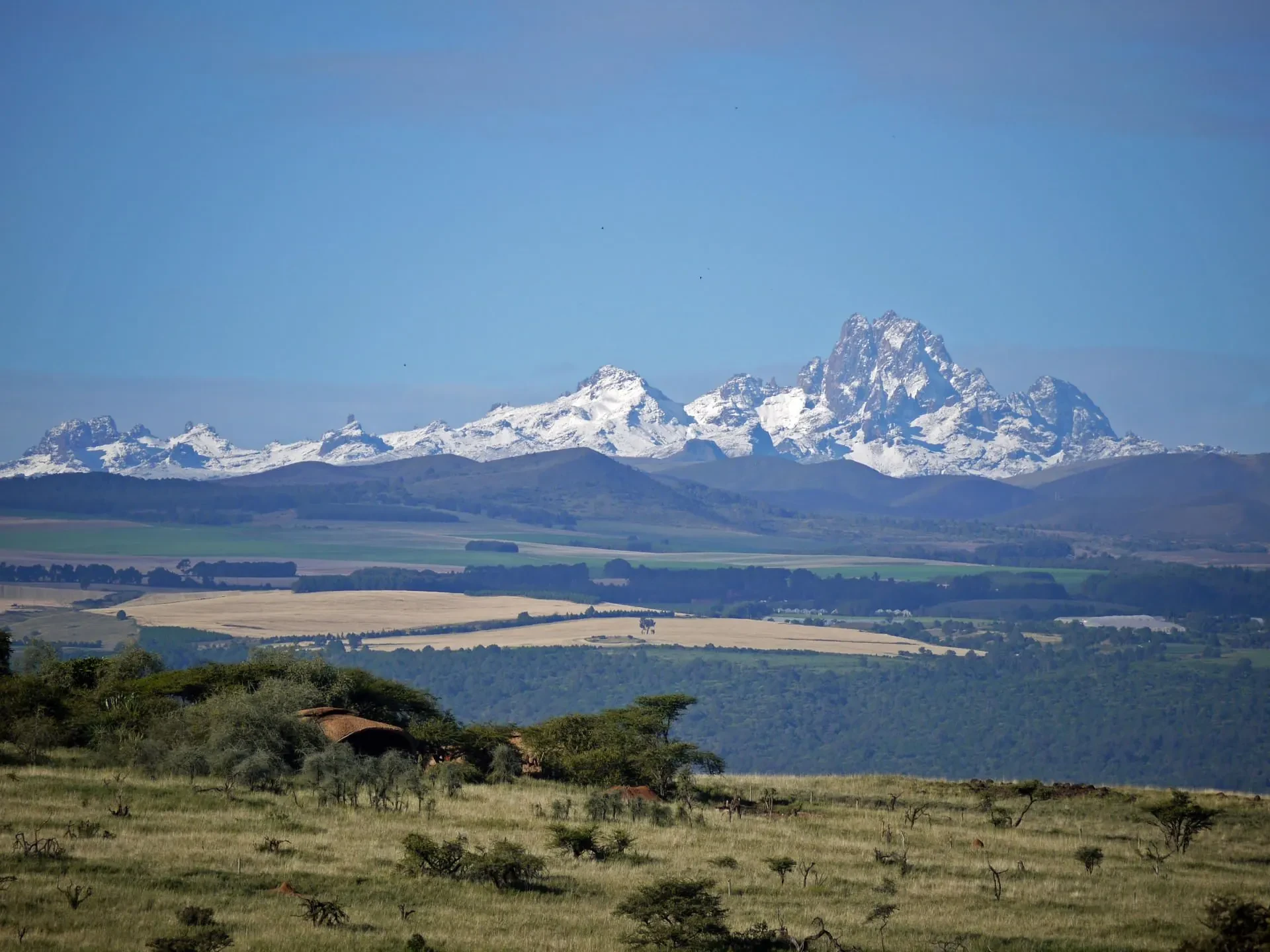
Mount Kenya National Park surrounds Africa's second-highest mountain, a UNESCO World Heritage site. It's primarily a trekking and climbing destination — forest and bamboo give way to afro-alpine moorland and glaciers, with Point Lenana the achievable summit for trekkers and the rock peaks of Batian and Nelion for technical climbers.
Why visit
Mount Kenya is for those who want to climb into the landscape, not just drive through it. A multi-day trek carries you from dense equatorial forest, up through surreal afro-alpine moorland of giant lobelias, to glaciers and the trekkers' summit at Point Lenana — sunrise over a sea of cloud at nearly 4,985 m. Serious climbers come for the technical peaks of Batian and Nelion. It's a mountain journey, and a powerful complement to a savannah safari.
Wildlife & landscapes
A mountain of distinct zones: montane forest and bamboo (elephant, buffalo, monkeys lower down), then afro-alpine moorland with giant groundsel and lobelia, then rock and glaciers at the summits. Wildlife is secondary to the landscape and the climb, though the forest belt holds good game and birds.
Best time to visit
Trekking is best in the drier windows — January–February and June–September — for clearer, safer conditions on the mountain. See → Best time to visit Kenya. (Note: this is a trekking-led destination; plan around mountain weather.)
Things to do here
- Trekking to Point Lenana — multi-day routes (Sirimon, Chogoria, Naro Moru) for fit trekkers.
- Technical climbing — Batian and Nelion for experienced mountaineers.
- Forest & foothill wildlife — on the lower slopes and surrounding conservancies.
- Day hikes & scenery — for those not summiting.
Know before you go
- Getting there: ~3–4 hours by road from Nairobi to the trailheads (Nanyuki, Chogoria, Naro Moru).
- Fees & logistics: park fees apply; treks need guides, porters and proper acclimatisation. Verify current rates.
- How long: 4–5 days for a Point Lenana trek; reasonable fitness and acclimatisation essential.
How it fits into a journey
Mount Kenya changes the contract of a safari. Instead of moving from camp to vehicle to viewpoint, the traveller earns the landscape on foot, slowly enough to feel the vegetation zones and the altitude shift. We use it for people who want achievement, silence and mountain weather as part of the story, not simply a scenic backdrop to wildlife.
It can sit before a safari, when fitness and acclimatisation are fresh, or after a gentler highland stay if the route needs a gradual build. Point Lenana is the usual trekking goal for fit walkers; the technical peaks belong to climbers with the right skills and support. A strong itinerary gives the mountain enough days, then contrasts it with Ol Pejeta, Laikipia, Samburu or the Mara so the journey moves from alpine air back into wildlife country.
The mountain also works for travellers who do not intend to summit. Forest lodges, foothill walks, trout streams, riding and views of the peaks can add highland texture without committing to a full trek. That flexibility is useful for mixed groups: one traveller may want a serious route to Point Lenana while another prefers the lower slopes and a slower recovery day before safari.
We build Mount Kenya conservatively, with proper acclimatisation, weather tolerance and guide support. The aim is not to squeeze the mountain into the itinerary, but to let it become one of the journey's defining landscapes.
It is the right choice when the traveller wants effort, altitude and a genuine sense of passage before returning to the warmth of camp life below.
Related Nobu journeys
- (Trekking journeys to be added; start with Plan Your Journey.)
When to go
Month by month — daytime warmth, days of rain and what the season brings.
Where to stay
From Essential to Private Collection — the camps and lodges we know first-hand here. Rates are indicative and confirmed on enquiry.
Essential
Naro Moru River Lodge
Essentiallodge · forest
from $80 pp / night· indicative, confirmed on enquiry
Signature
Serena Mountain Lodge
Signaturelodge · forest
from $250 pp / night· indicative, confirmed on enquiry
Expedition
Rutundu Log Cabins
Expeditionlodge · forest
from $250 pp / night· indicative, confirmed on enquiry
Elevated
Fairmont Mount Kenya Safari Club
Elevatedresort · forest
from $250 pp / night· indicative, confirmed on enquiry
Common questions
- Can you climb Mount Kenya without technical skills?
- Yes — **Point Lenana** is a trekking summit reachable by fit walkers with a guide; Batian and Nelion require technical climbing.
- How long does it take to trek Mount Kenya?
- Typically 4–5 days for Point Lenana, allowing for acclimatisation; routes include Sirimon, Chogoria and Naro Moru.
- Is Mount Kenya a wildlife safari?
- It's primarily a trekking/climbing destination; the forest belt has game, but the draw is the mountain itself — it pairs well with a savannah safari.
Tell us what you want from Mount Kenya National Park
We'll design the journey around it — places, pace and people matched to how you travel.