Start here
Nobody on a multi-generational safari should have to be the reason it goes wrong. A grandmother should not be rattled for six hours along a corrugated road. A seven-year-old should not be asked to sit still through a four-hour drive. And the parents in the middle should not spend the trip as referees. Designed well, each generation has its own version of the day, and everyone shares the same sundowner.
The detail
A place of your own. A sole-use camp, a camp booked only for your party, removes the dining room to be quiet in and the vehicle to share. Angama Safari Camp in the Mara Triangle has four tents for up to eight guests; in Tanzania, Singita Serengeti House takes eight guests in four suites, and only one party at a time. The cost is the whole camp, which is why a smaller party may prefer family tents in a shared camp. How a group shares a sole-use camp is covered on group safari, and the celebration on milestone birthday safari.
Two vehicles, two guides. One vehicle leaves at dawn with the early risers; the other after breakfast with the rest. The Mara reserve ticket runs 12 hours, 06:00 to 18:00, which leaves a long, quiet middle of the day. Night drives are not offered inside the reserve; the bordering conservancies allow night drives, walks and off-road driving. In a conservancy, a teenager can walk with a guide while a grandparent takes the vehicle to the same picnic spot.
What the animals are owed. Children copy adults, so the rules are the lesson. Everyone stays seated and quiet at a sighting. Walks go out only with an armed ranger or guide, in single file. Conservancies such as Ol Pejeta cap a sighting at six vehicles for ten minutes each, which is part of what the conservancy fees pay for. If your guide waits behind another vehicle, the rule is working.
Short hops, not long roads. From Wilson Airport the Mara is about 45 minutes by light aircraft, Laikipia (Nanyuki) about an hour, Samburu 1 hour to 1 hour 30 minutes with stops, and Diani on the coast about 1 hour 15 minutes. By road the Mara alone is 5 to 6.5 hours. For an eighty-year-old and a five-year-old, the flight is the kindest choice on every leg.
Balloons, walks and the oldest guest. The activities with age rules also have mobility rules. Balloon operators set minimum ages and heights for children, and the ride means climbing into a high basket, standing for about an hour and bracing for a landing that can be rough, so the oldest guest may be excluded as easily as the youngest. Children's minimum ages for balloons and walks are set out in family safari Kenya.
Steps, paths and medical cover. Raised walkways, steps to tented rooms and uneven paths are normal in camps, so mobility is checked room by room. The wheelchair-accessible safari guide and accessible travel cover more. Medical evacuation membership such as AMREF Flying Doctors' Maisha is air transport to Nairobi, not health insurance, and it depends on a usable airstrip; in Tanzania, evacuation within the country depends on the tier. This is general information, not medical advice — consult a travel clinic. Older travellers' comfort and health are the subject of safari for over 60s.
What it costs, in outline. The Mara reserve charges nothing for children aged 8 and under and US$50 per 12-hour ticket for ages 9 to 17, against US$100 or US$200 for an adult depending on the month. Each fee is per person per 12-hour ticket. Sole-use camps are priced for the whole camp, so the cost per person falls as the party grows. Nobu shows the family total, not a per-person headline.
Key facts
| Party | Camp | Vehicles |
|---|---|---|
| Under six | Family tents in a small camp | One, shared |
| Six to eight | A sole-use camp, such as four tents for eight | Two, with two guides |
| Eight to twelve | A sole-use camp or house | Two, with two guides |
Best country: Kenya, for short flights and conservancies. Flights from Wilson: Mara about 45 minutes, Laikipia about 1 hour, Diani about 1 hour 15 minutes. Length: eight to twelve nights.
Planning it with Nobu
The more different the travellers, the more the design matters. Nobu builds one journey around several people at once: the pace, the rooms, the vehicles and the flights, with the oldest and youngest travellers' limits checked before a camp is chosen. Evacuation membership is arranged on request.
Is it right for you?
This suits you if three generations want one trip, the oldest and youngest can both manage flights, and the party is somewhere between six and twelve. It needs dates that align for about a week, since a shorter trip spends too much of itself in transit.
Choose something else if the grandparents are not coming: family safari Kenya is built for the children. If your concern is an older traveller's health and pace, see safari for over 60s. If the children are 12 to 18 and the grandparents are staying home, safari with teenagers fits better. If a beach villa is the plan, read Zanzibar villa holiday. For Kenya or Tanzania as a country choice, see Kenya vs Tanzania safari.
Journeys to consider
- A little wild. A little barefoot — nine days, the Mara then Diani: bush for the elders, sea for everyone. → See the Mara and Diani journey
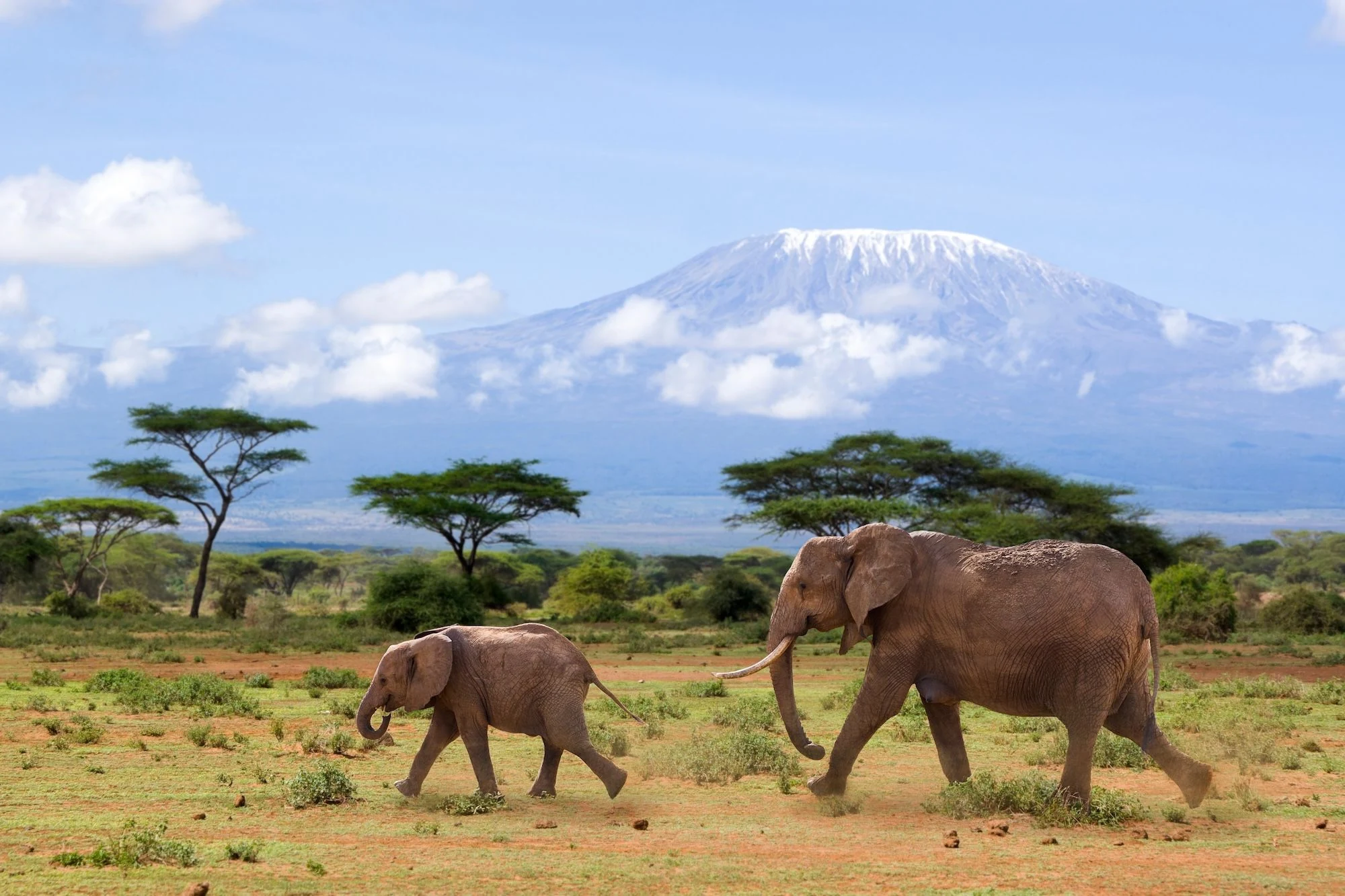
- In the company of giants — four days in Amboseli, one base and short transfers. → See the Amboseli journey
- North of the ordinary — seven days in Laikipia and Samburu, more remote, for active grandparents. → See the Laikipia and Samburu journey