 01
01First light in a conservancy
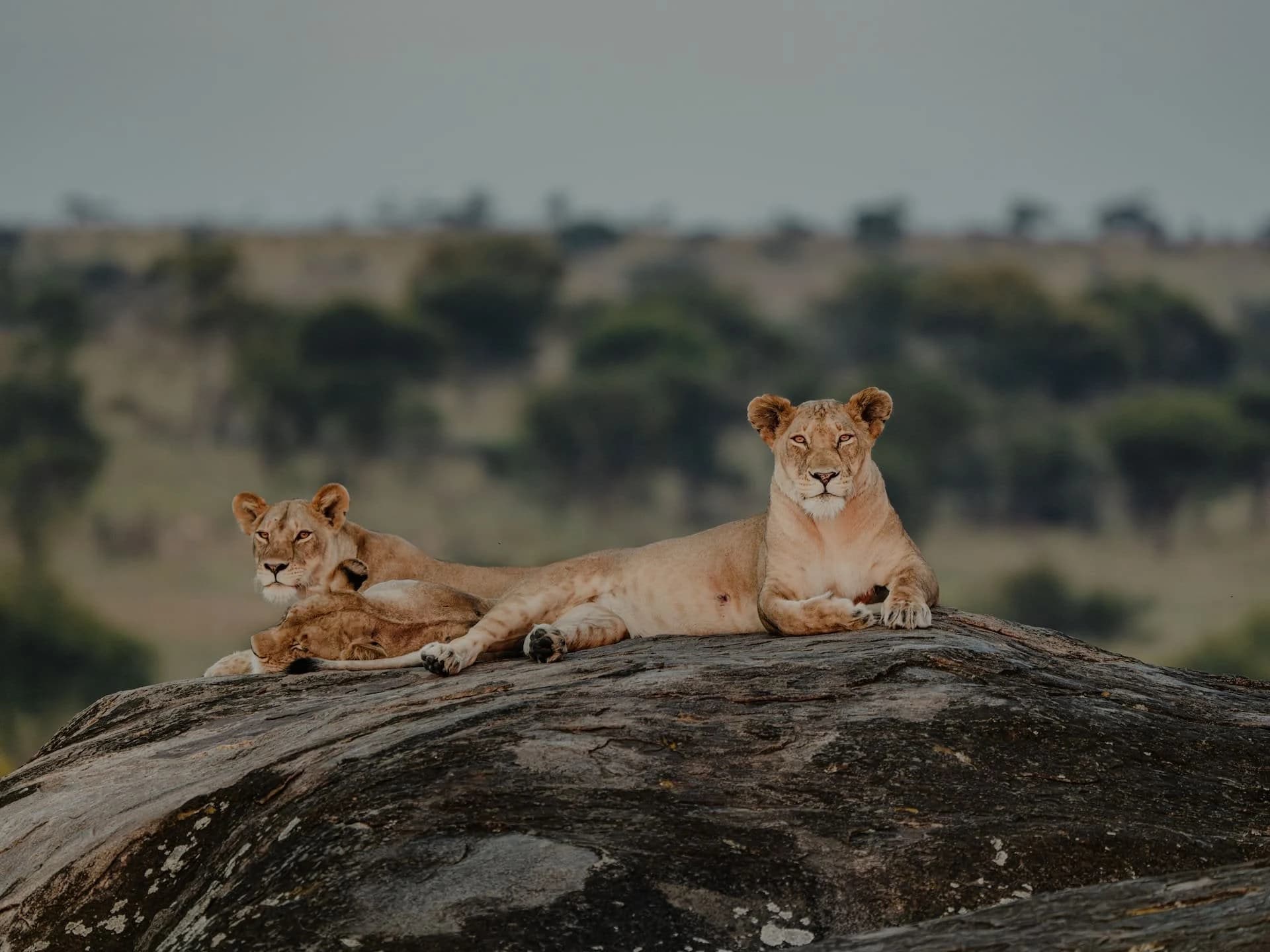
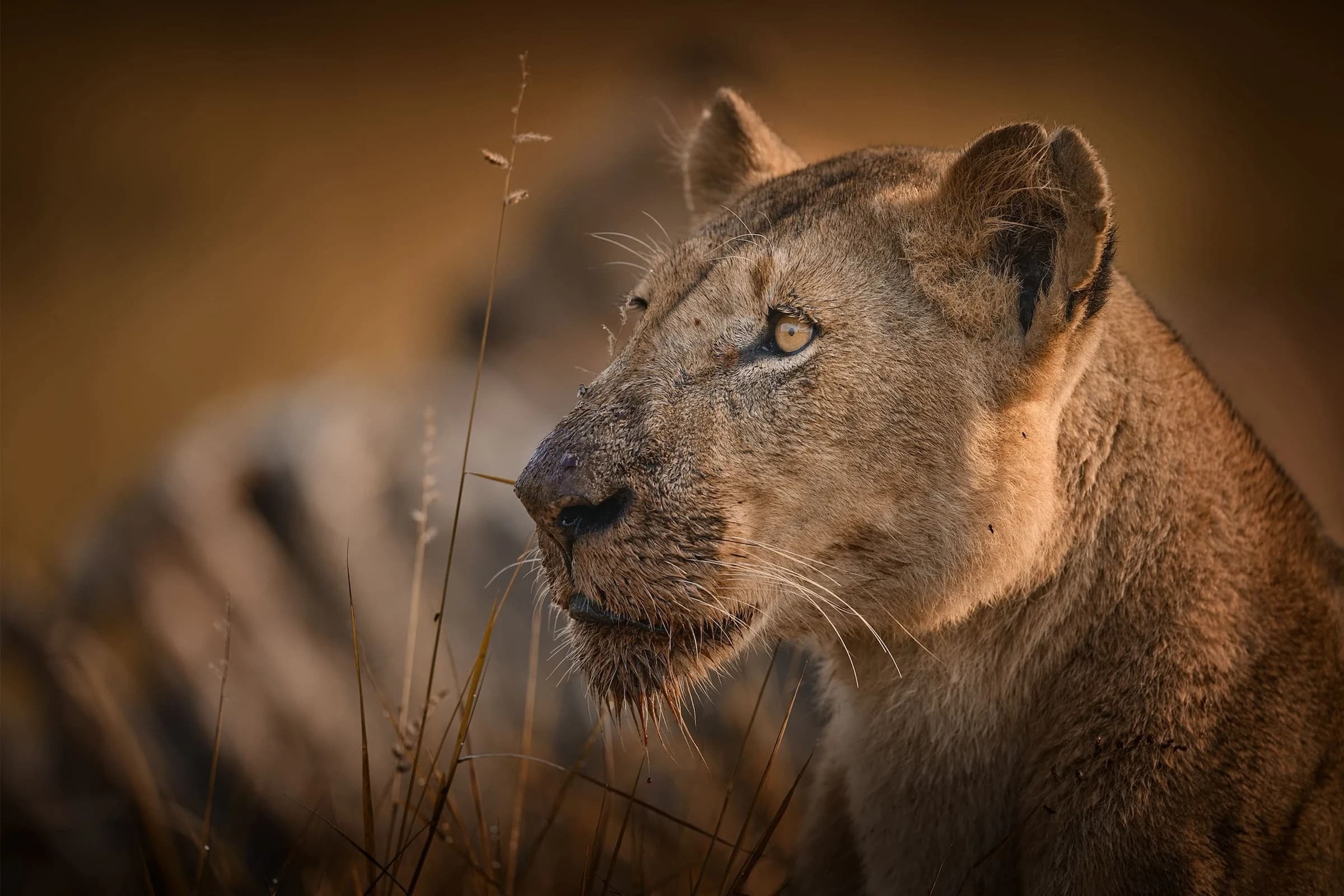
Lions finishing the night’s work, with fewer vehicles than in the reserve.
Safari / Kenya & Tanzania
Two countries, one ecosystem: from the Mara’s conservancies to the Serengeti and the Ngorongoro rim.
The journey
The Maasai Mara and the Serengeti are one stretch of grassland, split by a line on a map.
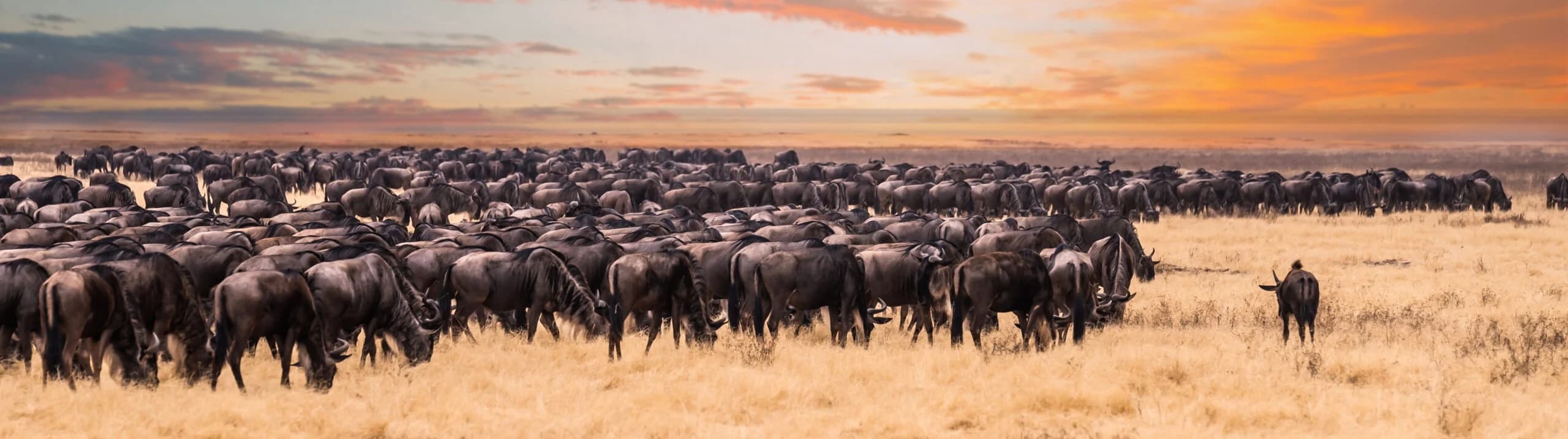
The herds ignore it, drifting between the two countries through the year, and the big cats work both sides. You begin in a Kenyan conservancy, fly south through Nairobi and Arusha into the Serengeti, and end on the rim of Ngorongoro Crater.
This suits travellers with ten to fourteen nights who want both halves of the migration country. The trade-offs are a border day through two airports, with a night near Arusha, and a long last drive. For the herds alone, or under a week, choose one country.
Kenya’s conservancies first, then Tanzania’s plains and crater, paced and shaped entirely on your terms.
Moments along the way
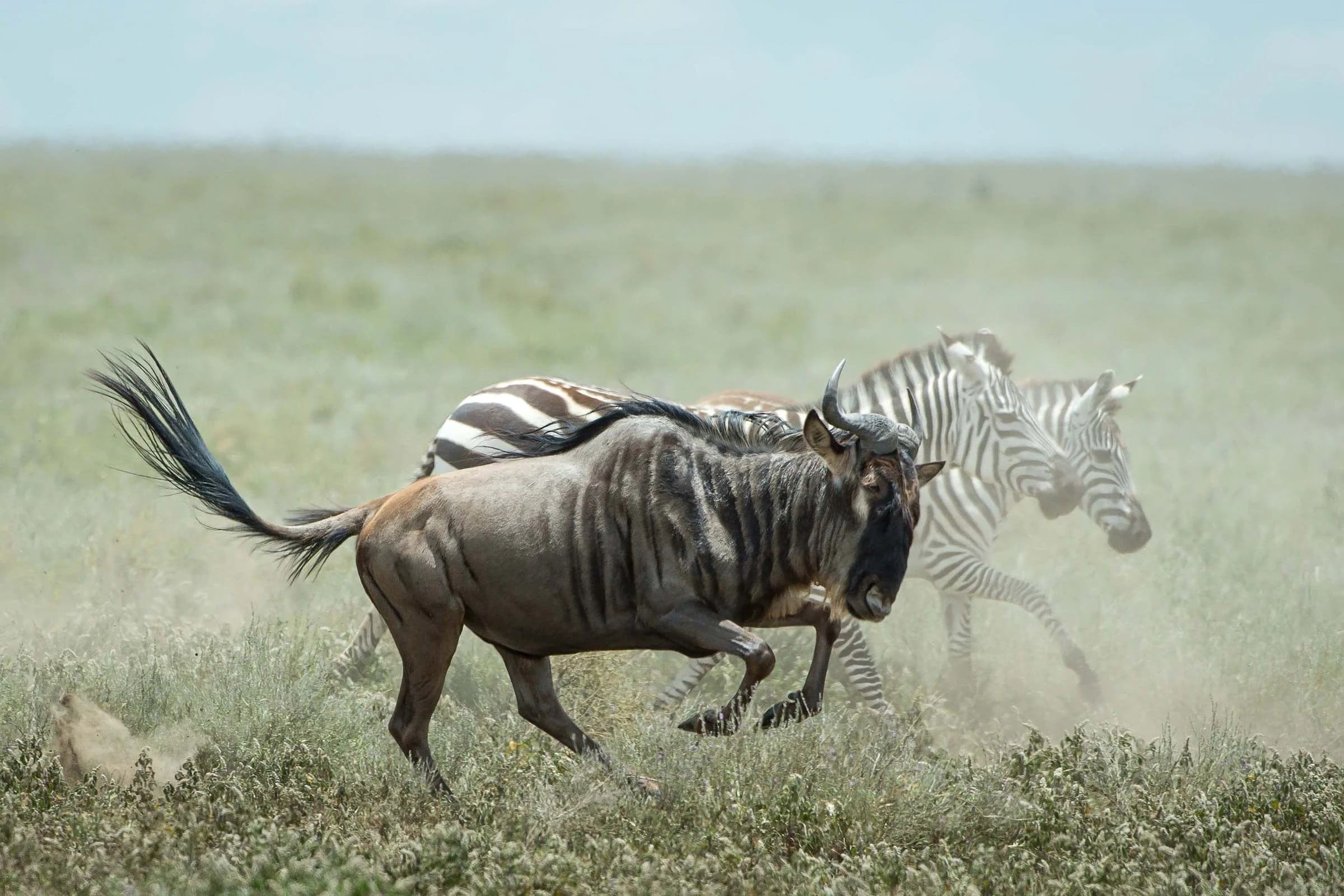
01Lions finishing the night’s work, with fewer vehicles than in the reserve.
Leave Kenya at Wilson, land in Arusha, and fly into the same grass under another flag.
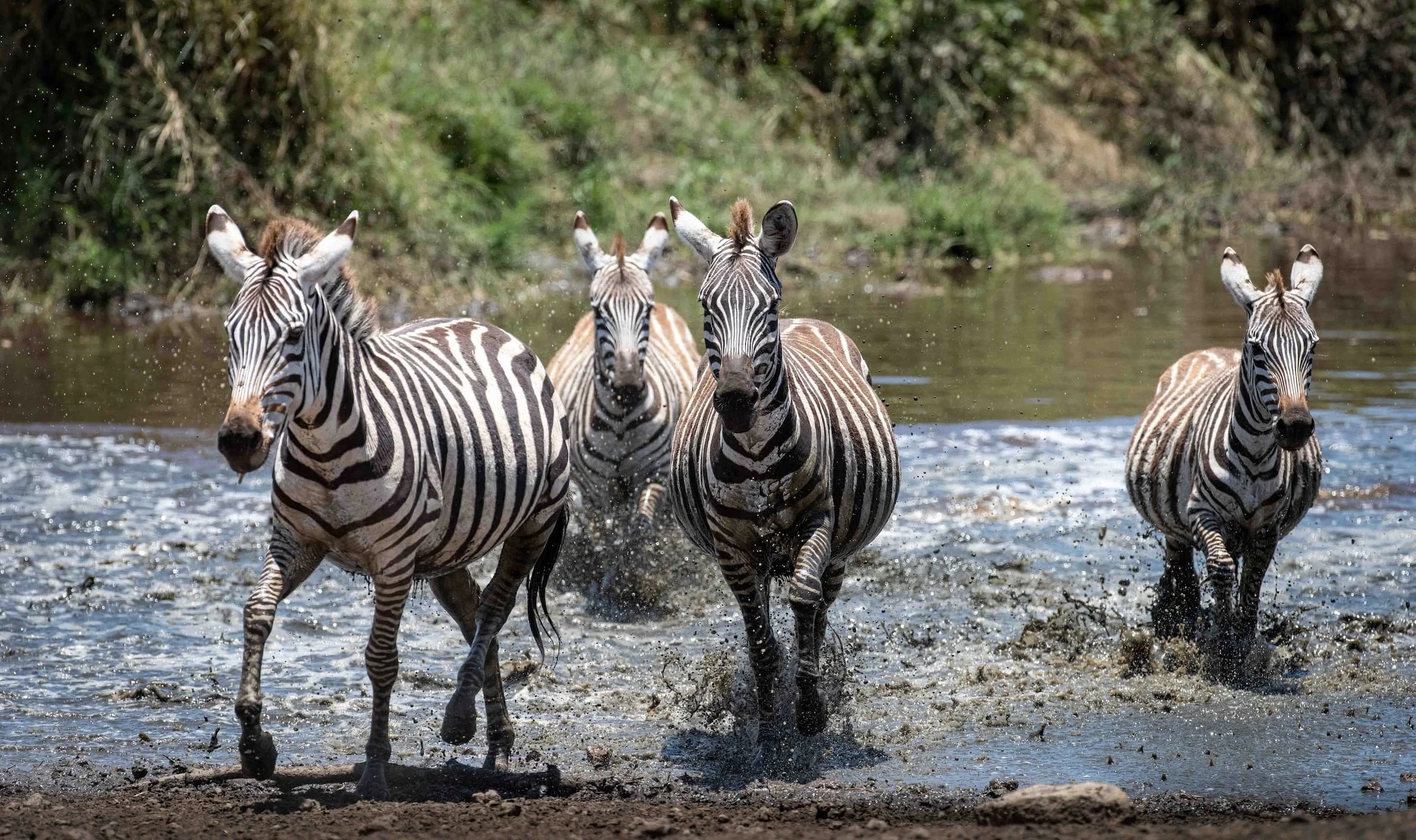
Vehicles crowd a few points on the bank; ask your guide to leave animals room.
A horizon with nothing on it, and granite kopjes rising like islands.
Cloud can pour over the edge, and the floor lies far below when it clears.
Different camps, the same red light, a few days apart.
Where you’ll stay
From a simple Essential camp in a Mara conservancy to a Private Collection camp on the Serengeti plains, each stay is chosen for what it adds. Serengeti camps sit inside the park, and some move with the herds.
MAASAI MARA
Where you might stay
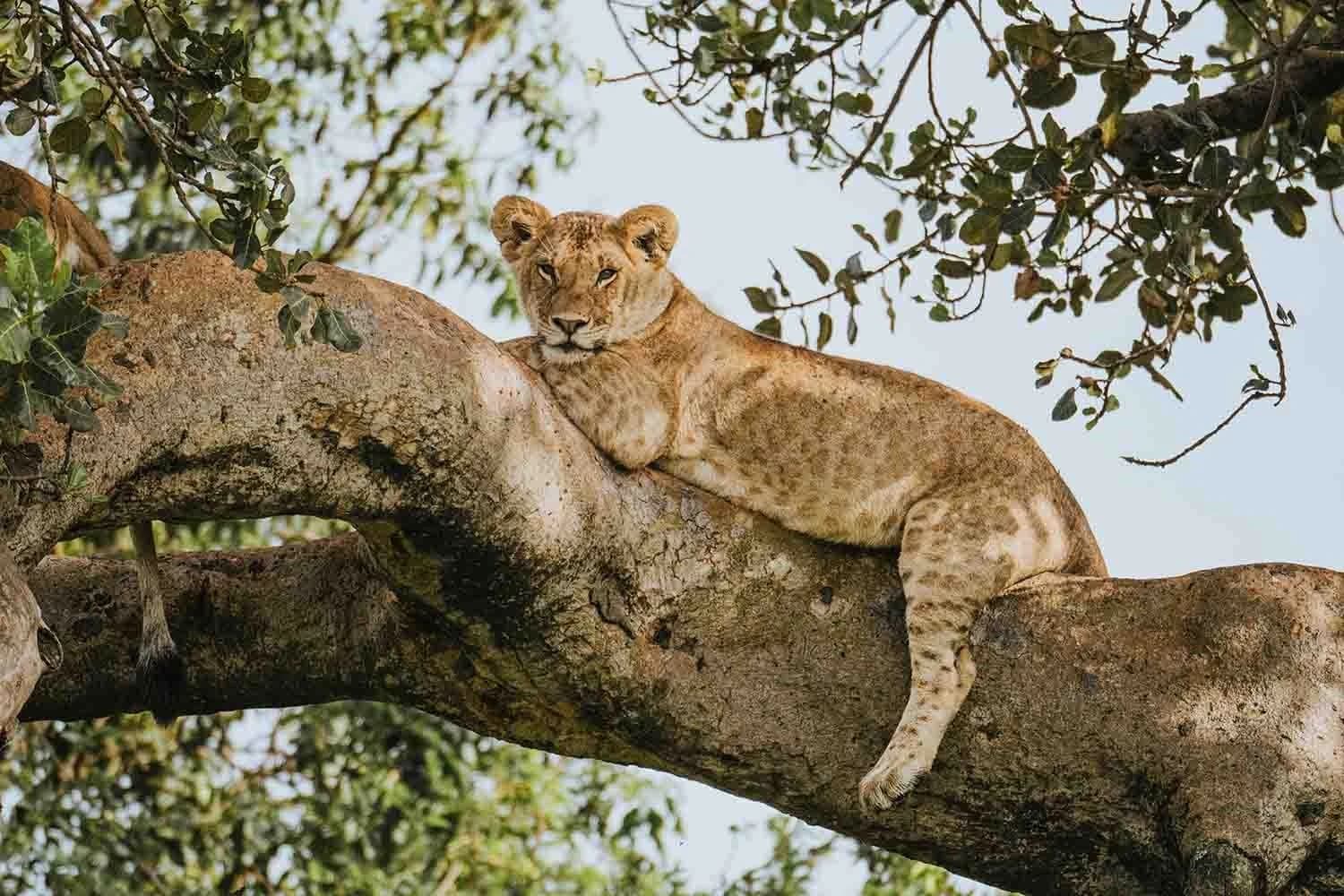
SERENGETI
Where you might stay
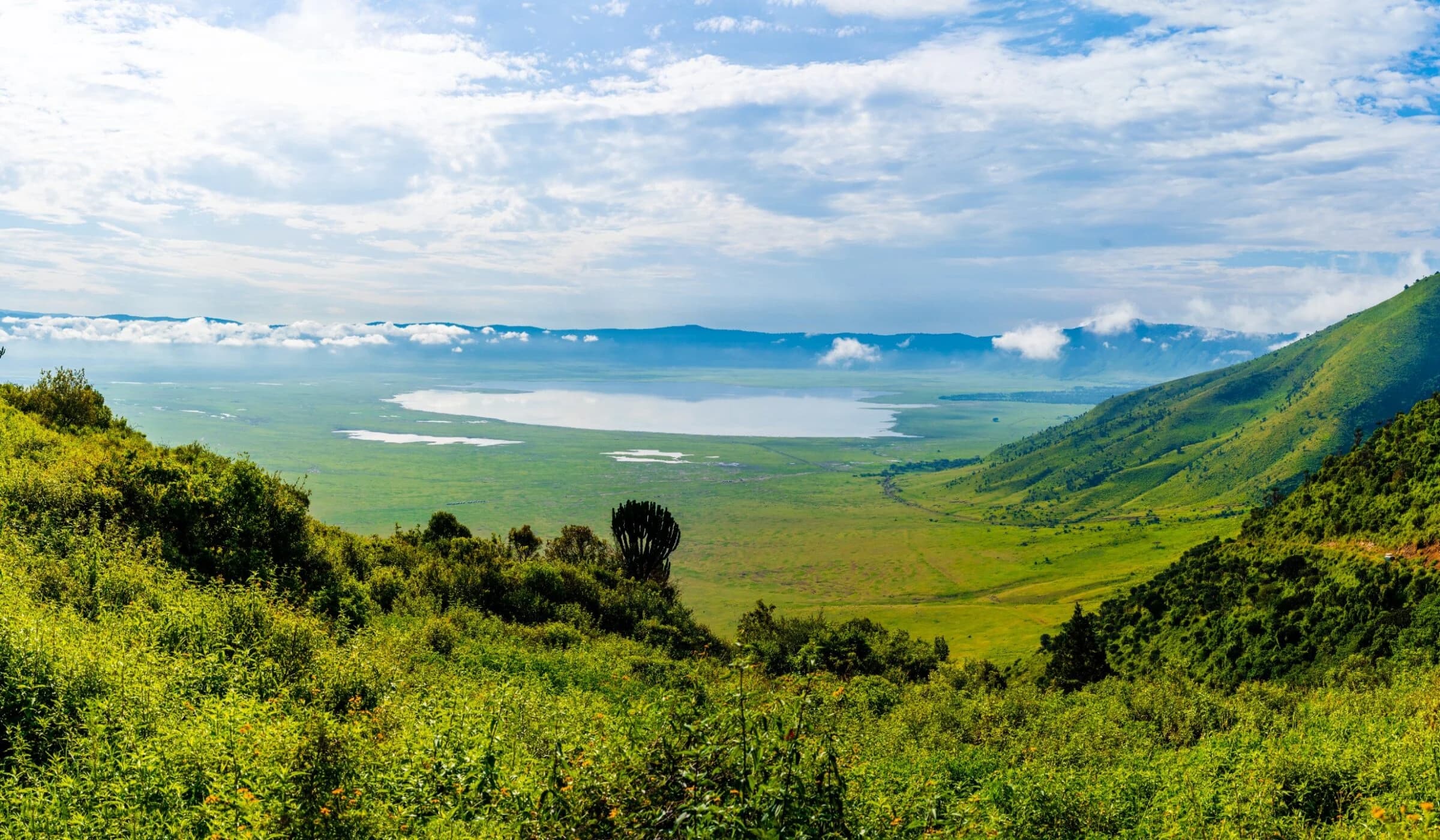
NGORONGORO RIM
Where you might stay
Your planner confirms each stay for your dates.
Add to your journey
Select an idea to carry into your brief. Nothing is added to a booking or priced automatically.
A route with room to breathe
Nairobi → Maasai Mara → Arusha → Serengeti → Ngorongoro → Kilimanjaro. Tanzania first runs the same legs in reverse, with a night in Nairobi. Your proposal confirms exact times.
A sense of the days
After the Nairobi night, the morning flight lands at an airstrip close to camp, and game viewing often starts on the transfer in. You have lunch, rest through midday, then go out again in the afternoon and are back by early evening. The flight time shapes the day: on a late arrival, the transfer may be the only drive before the next morning.
Mornings begin before dawn with a hot drink, and the first drive starts as the light grows. Breakfast is often taken in the bush, with the hottest hours left for shade. Conservancies, on land leased from Maasai landowners, allow night drives and guided walks, each camp setting its own age limits; the reserve allows neither. Ask your camp about walking outside the tents.
Breakfast comes early: the afternoon service to Arusha suits an early flight out of the Mara, while a later one may reach Wilson too late. Keep your passport, Tanzanian visa, insurance papers and yellow fever certificate in your day bag. Departure times can shift with the aircraft’s routing, so treat the evening as free. Pack something to read for the waits.
The breakfast flight lands on a bush strip in the far north, and the transfer to camp is your first look at the area. Drives keep to the park’s set hours, so expect to be back at camp by early evening. Moving to the central plains means a short flight or a day’s drive; a morning flight leaves the afternoon free for a drive.
The drive up to the rim takes a morning, longer if you stop for game or queue at a gate in busy months. Fasten your seatbelt on the dirt roads through the park, and bring a fleece for the rim. Next day your licensed guide drives you down into the crater, where you stay in the vehicle, as walking on the floor is not allowed.
The final day begins with a long drive towards Arusha. Seatbelts stay fastened for the whole drive; ask for a stop whenever you need one. The airport lies beyond the town, so your flight time sets how early you leave the rim: a later departure means a slower morning at the lodge. Allow the day for the road and the airport.
Typically one night in Nairobi, four in the Mara, one near Arusha, four in the Serengeti and two at Ngorongoro: 12 nights.
Clear from the beginning
Every journey is quoted in full, with no surprises.
Good to know
The Maasai Mara, in south-west Kenya, is the northern end of the Mara–Serengeti ecosystem, one stretch of grassland that the border cuts in two. The Serengeti, in Tanzania, is the far larger part, with the Ngorongoro Conservation Area to its south-east. A safari here crosses the border by air: light aircraft in the Mara, a scheduled flight from Wilson Airport to Arusha, then bush flights into the Serengeti and a road to the rim.
The Mara and the Serengeti are one ecosystem split by a border. Kenya adds conservancies with fewer vehicles and walking; Tanzania adds a far larger park and the crater. The cost is a border day through Nairobi and Arusha.
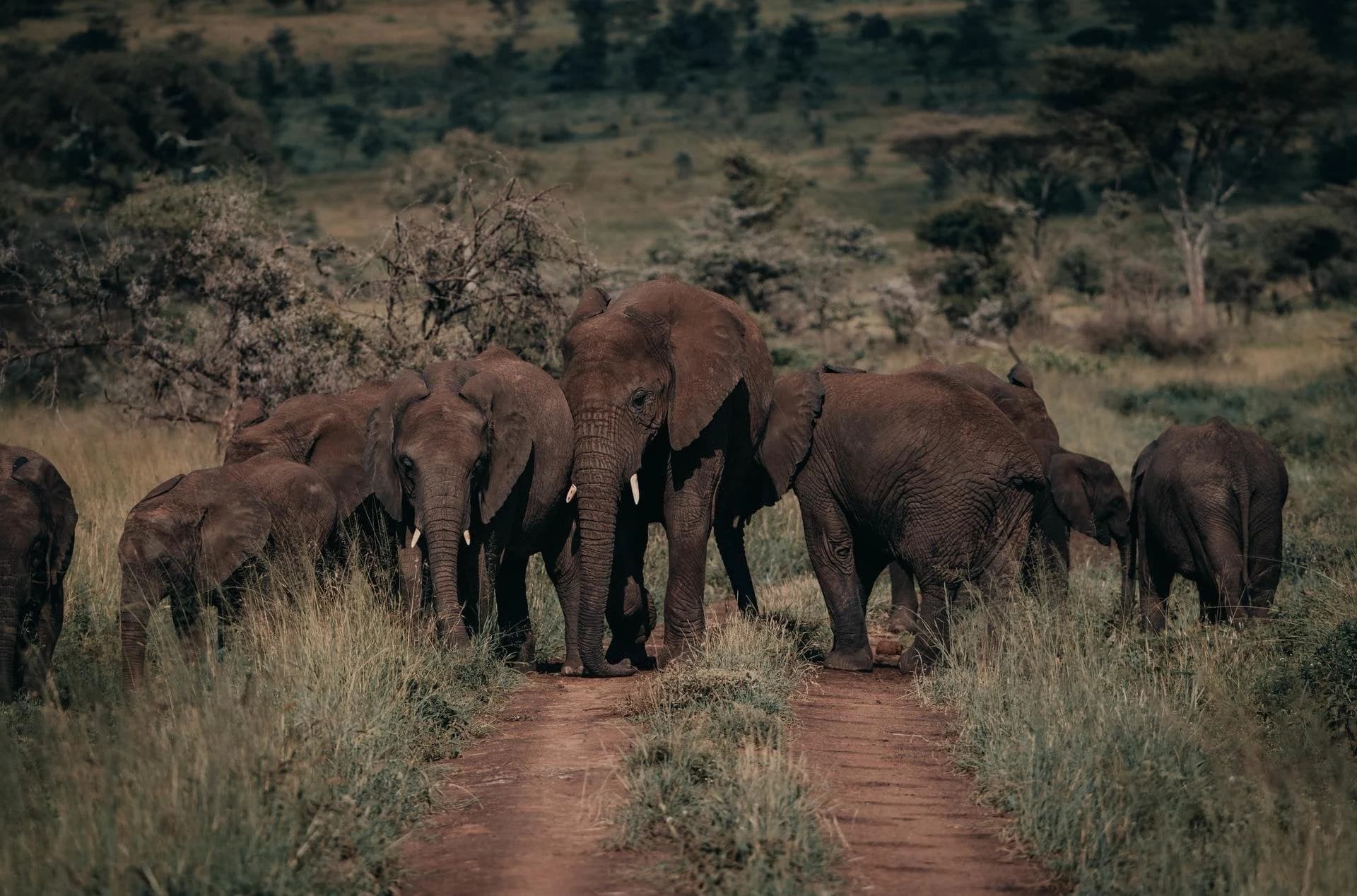
A fair chance, never a promise. Lion, leopard, elephant and buffalo live in the Mara and the Serengeti. Rhino are scarce in the Mara; Ngorongoro’s authority lists them among the crater’s animals, but no sighting is promised.
July to October if the herds matter most: they are usually in the Mara and northern Serengeti, though crossings keep no timetable. January and February suit calving on the southern plains. We set the country order by season.
Ten to fourteen, with at least three in each country. Twelve is a comfortable shape, with four in the Mara and four in the Serengeti. Seven to nine nights is tight; under seven, choose one country.
No scheduled flight links the two parks directly. You fly from the Mara to Wilson Airport, then AirKenya to Arusha in about 55 minutes, and sleep near Arusha. A same-day route via Migori and the Isebania border needs four passengers on its Kenyan flight; we use the Nairobi route.
Yes. Kenya asks most visitors, including UK and US passport holders, for an eTA, with travel health insurance added from 5 October 2026. Tanzania asks for a visa, applied for online, and government travel insurance for your first port of entry.
Government advice, checked October 2026: the US rates Kenya Level 2 (28 July 2026) and Tanzania Level 3, Reconsider travel (31 October 2025). The UK warns against travel to parts of Kenya and, in Tanzania, only within 20 km of Mozambique’s Cabo Delgado border. Neither list names the Mara, the Serengeti or Ngorongoro. The UK Air Safety List names Tanzania-certified airlines, which are banned from commercial services to, from and within the UK. Read both before travelling.
This is general information, not medical advice. Tanzania asks for a yellow fever certificate from travellers arriving from a country on its risk list, and Kenya is on it. Ask a travel clinic well before you fly.
Read before you decide: Best time to visit Kenya and Tanzania · Kenya entry requirements · Tanzania visa
Last checked: October 2026.
When to go
A seasonal snapshot for the Mara and the Serengeti. Your camps, country order and interests matter as much as the calendar.
Aug / Herds in the north
Dry from June. The herds usually reach the Mara and northern Serengeti in July, with crossings often between late July and September, never promised. The Mara reserve fee doubles on 1 July.
Broad seasonal guidance — not a forecast, availability calendar or migration promise. Picking a month sets it in your plan.Related journeys
A journey made around you
Tell us when you can travel and where you fly home, and we’ll shape Kenya & Tanzania around you.