 01
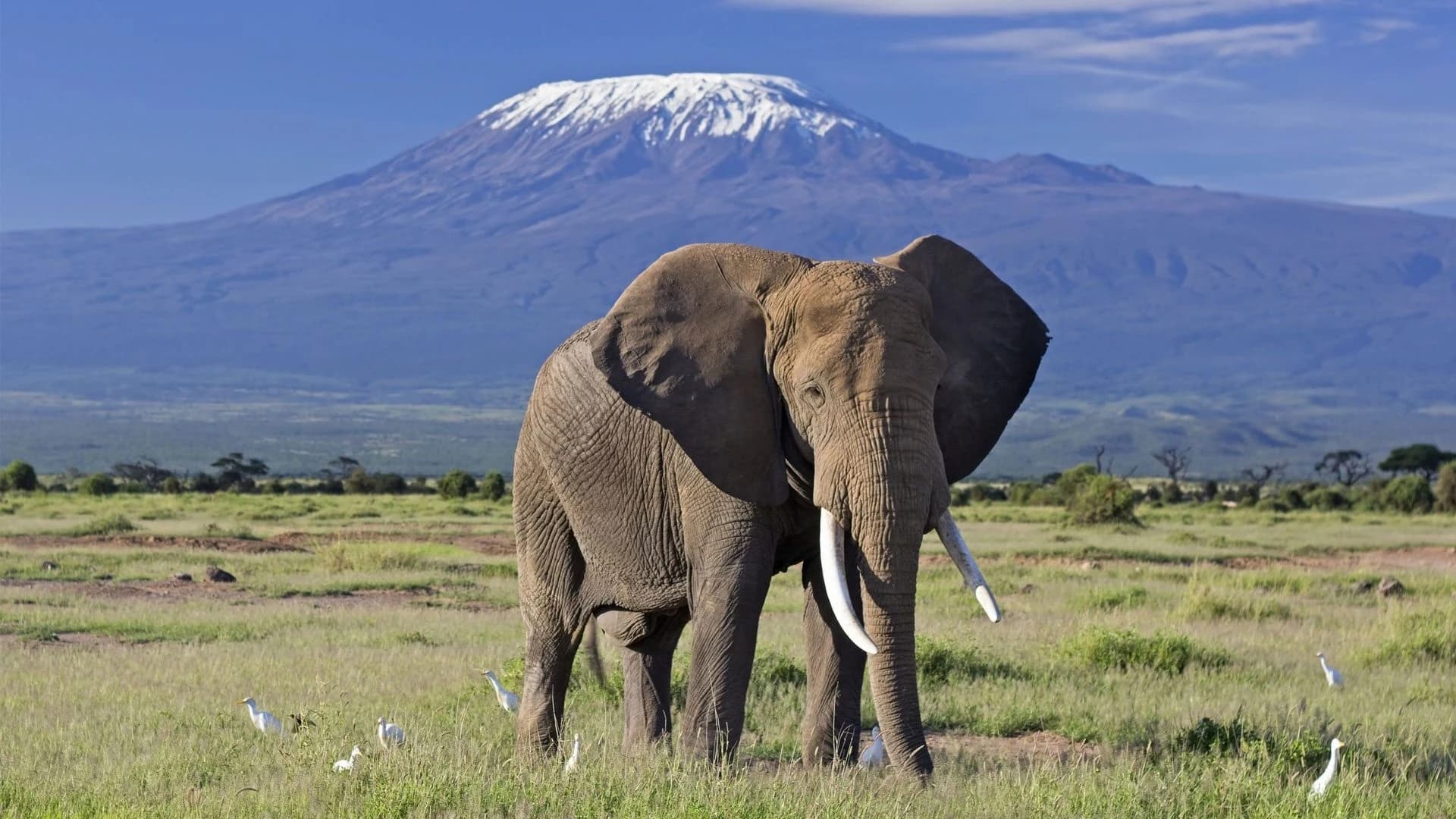
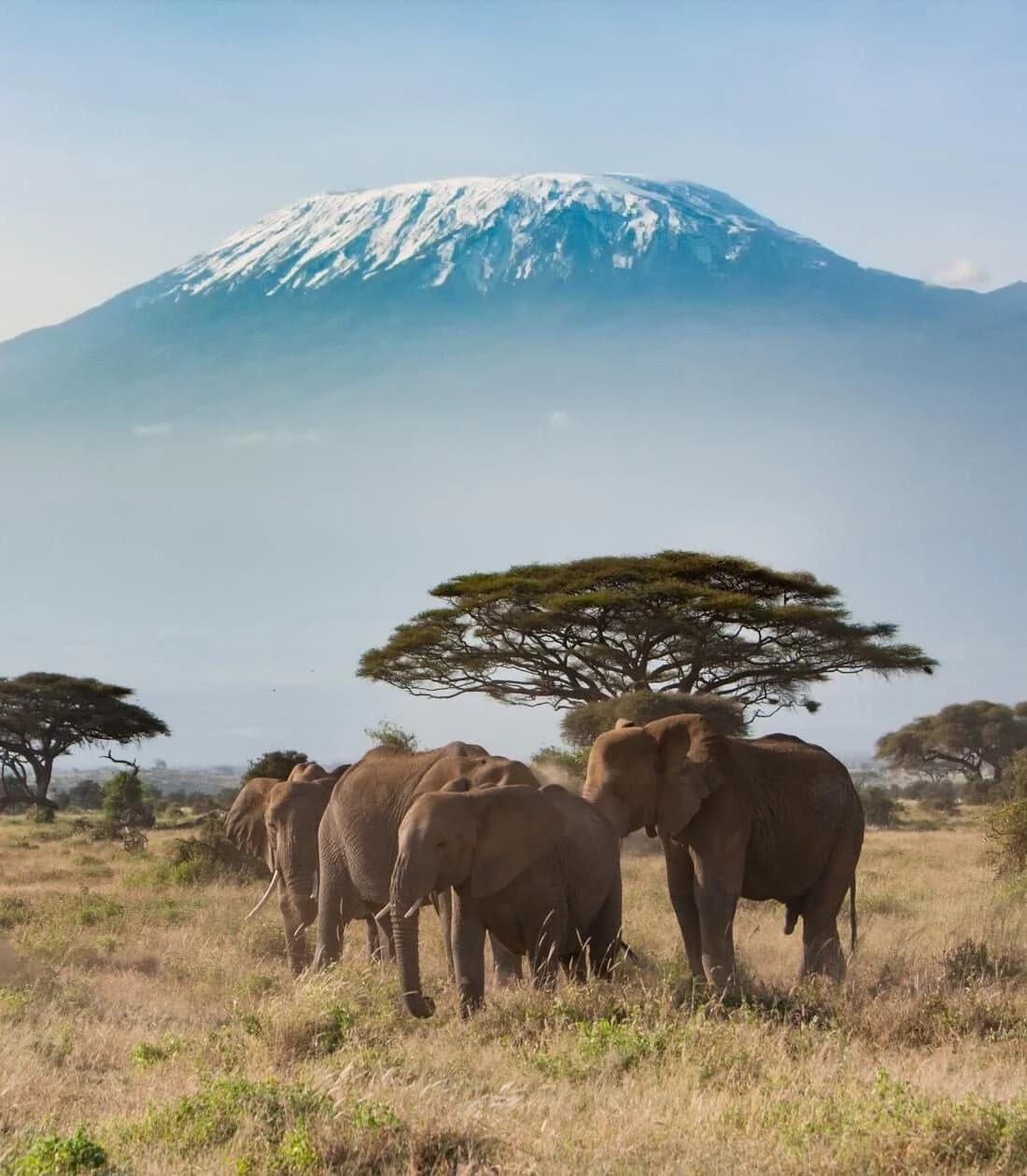
01Elephants in the marsh
Amboseli’s elephants wade and feed in spring-fed marsh; Kilimanjaro, across the border, shows itself or hides.
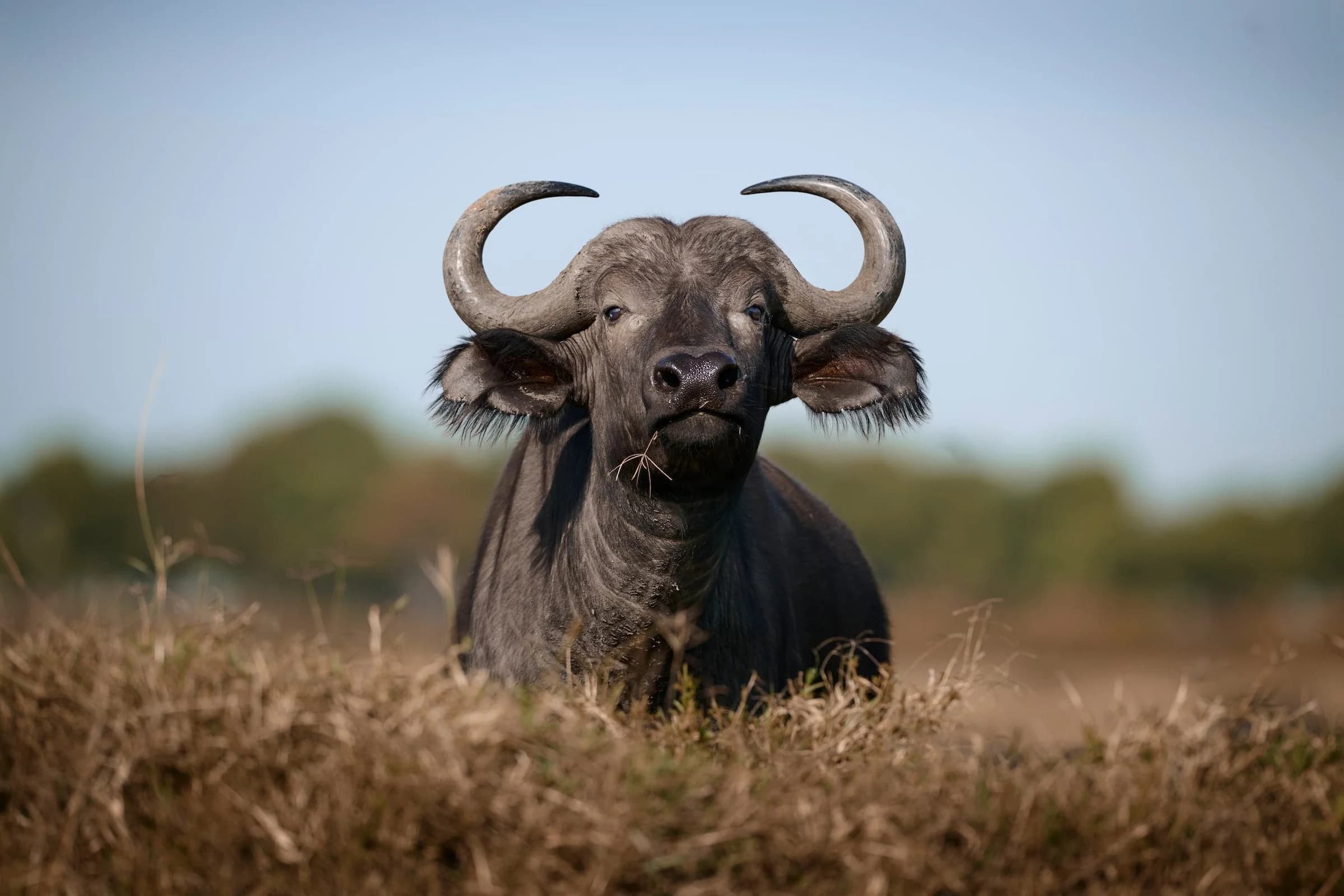
Safari / Kenya
From Amboseli’s elephants to Laikipia’s rhino and the Mara’s plains, twelve to fourteen nights flown between.
The journey
Three Kenyas, linked in one sweep of the map.
This 2 week Kenya itinerary opens in Amboseli, where elephants feed in swamps below Kilimanjaro. One early flight carries you north to Laikipia’s private conservancies and their rhino. A second flies west to the Maasai Mara, where big cats are resident all year and the herds usually arrive from July.
It suits travellers with twelve to fourteen nights who want three kinds of country without long road days. Four flight services replace the drives, though connections and stops vary; Safarilink allows 15 kg in soft bags. Laikipia needs the dated security check below. With a week, choose a shorter journey.
Mountain, plateau, plains: three regions linked by air, the nights divided and the pace set on your terms.
Moments along the way
01Amboseli’s elephants wade and feed in spring-fed marsh; Kilimanjaro, across the border, shows itself or hides.
A morning flight covers what the road does in seven or more hours via Nairobi.
 03
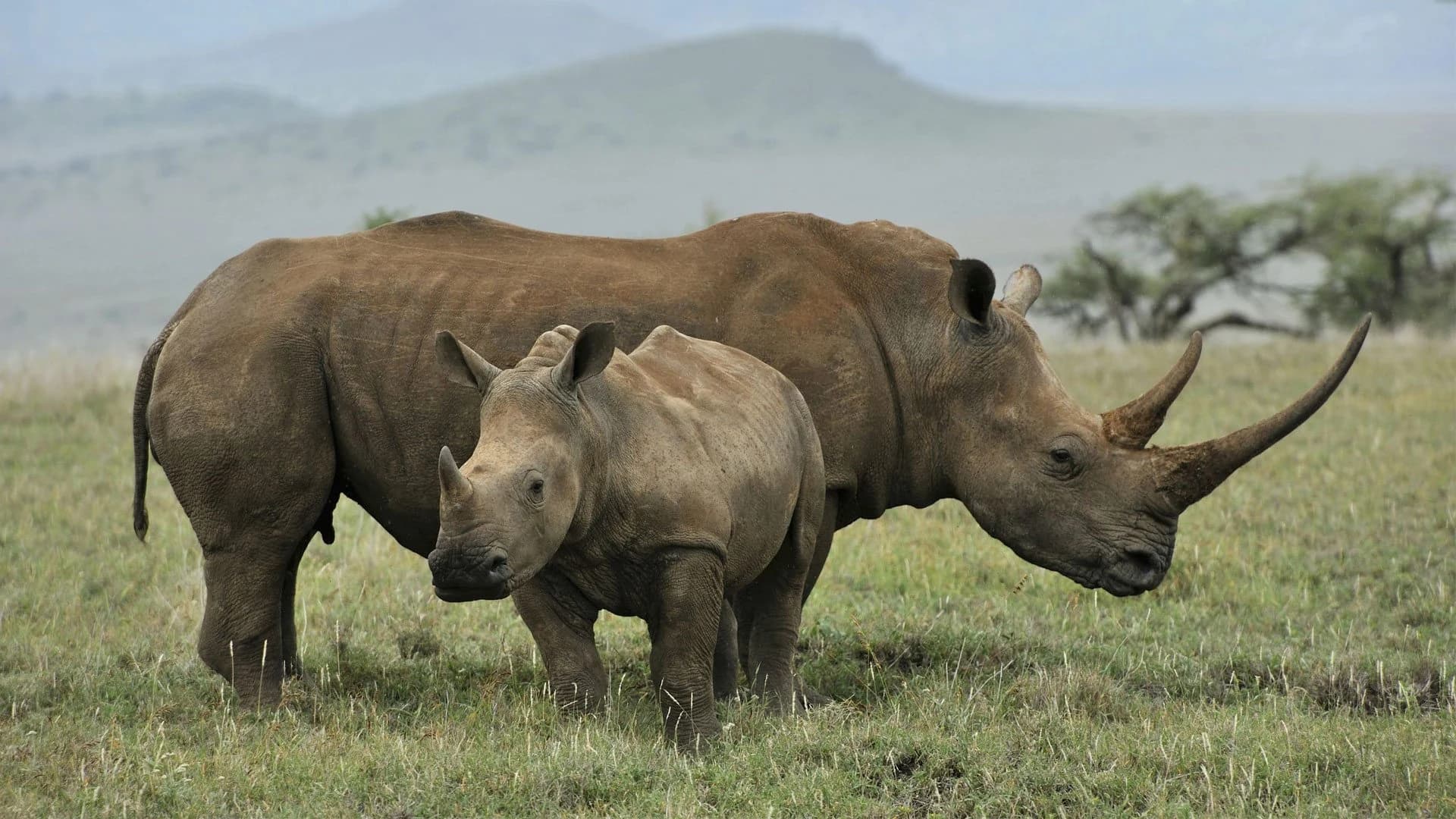
03Black and white rhino live in Laikipia’s conservancies; a drive is a search, never a schedule.
Conservancies, unlike the reserve, allow walks and night drives; each camp sets its own rules.
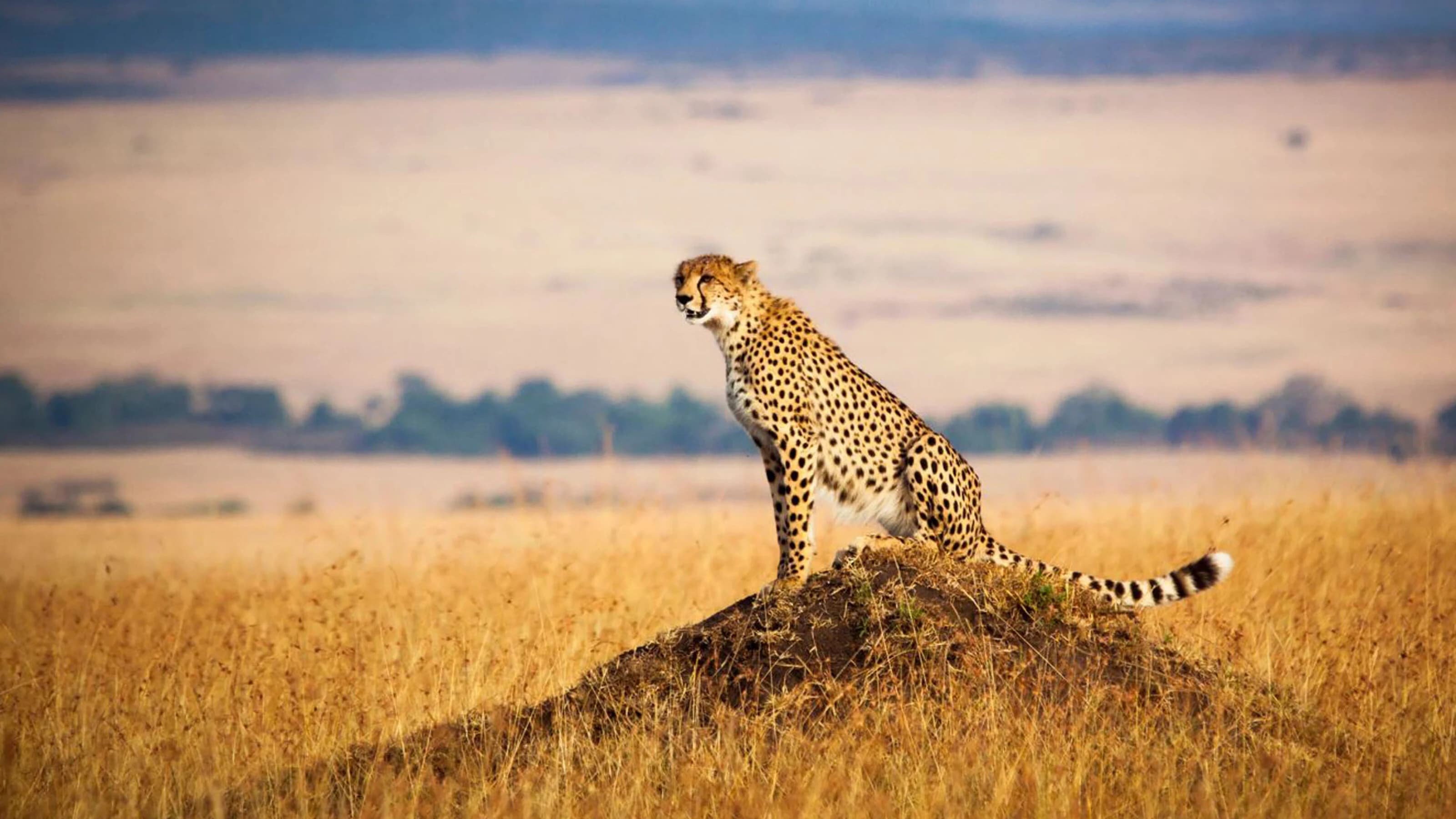
Watch resident cats from a respectful distance; your guide follows the reserve or conservancy’s rules.
After twelve early-start nights, a coast stay lets mornings run slowly.
Where you’ll stay
Choose a comfort level, Essential to Private Collection, for each region; they need not match. Add a Nairobi night before the first early flight, and a coast stay if you finish there.
AMBOSELI
Where you might stay
LAIKIPIA
Where you might stay
MARA
Where you might stay
Your planner confirms each stay for your dates.
Add to your journey
Select an idea to carry into your brief. Nothing is added to a booking or priced automatically.
A route with room to breathe
Nairobi → Amboseli → Laikipia → Maasai Mara → Nairobi. The map shows twelve safari nights; optional finishes add two. Flights may include stops or Wilson connections.
A sense of the days
A morning flight takes you from Wilson to Amboseli, and a vehicle meets you at the airstrip. Brunch and a rest come first, then the first game drive that afternoon, with you back at camp by early evening. Landing times move with the aircraft’s routing, so treat the afternoon drive as the plan and any earlier outing as a bonus.
Drives run at dawn and in the late afternoon. Kilimanjaro is often clearest then, before cloud gathers round the summit as the day warms, though the view is never promised. Midday is for rest in camp, and you stay in the vehicle outside designated areas. Set an early alarm on your first morning: a clear summit at first light may not last.
After an early breakfast you drive to the airstrip and fly north. On the direct days the flight lands in the middle of the morning; in the low seasons the same leg changes at Wilson and takes far more of the day. The aircraft can make other stops, and the day ends at a private conservancy camp. Ask which routing your dates fall under.
Each day opens with a drive over the plateau in the cool of the morning, then breakfast and a rest before a second drive after tea. Walks with a guide, and night drives, are offered at some camps and not others, within age limits, and some conservancies charge extra for them, so check what your camp includes before you arrive.
A second early start, then a flight west with possible stops on the way. A vehicle takes you from the Mara strip to camp for lunch and a rest, then out for the afternoon drive. How the day ends depends on where your camp sits: the reserve ticket runs to early evening, while a conservancy sets its own hours, so ask which applies to you.
Mara days follow the usual rhythm: a drive after first light, a rest, another drive that afternoon. On the last day, flights to Wilson leave in the morning, around midday and in the afternoon, and the earliest runs only in busy months. A midday flight connects with a same-day Diani flight; an afternoon one does not, so a Diani finish waits until the next morning.
Typically three nights in Amboseli, four in Laikipia, five in the Mara: twelve. Two on the coast or lakes make fourteen.
Clear from the beginning
Every journey is quoted in full, with no surprises.
Good to know
Kenya’s safari country comes in separate pieces. Amboseli lies in Kajiado County on the Tanzanian border; Laikipia is a plateau of private conservancies north-west of Mount Kenya; the Maasai Mara, in the south-west, forms the Kenyan end of the Mara–Serengeti ecosystem, and Narok County sets its reserve fees. This 2 week Kenya itinerary joins them by light aircraft from Wilson Airport, because by road Nairobi is the hub for every leg.
Safarilink’s published 2026 pattern links Amboseli to Laikipia, then Laikipia to the Mara. This order reduces backtracking in high season, although operational changes can still mean Wilson connections. Reverse routes need their own airline check rather than assuming the same pattern.
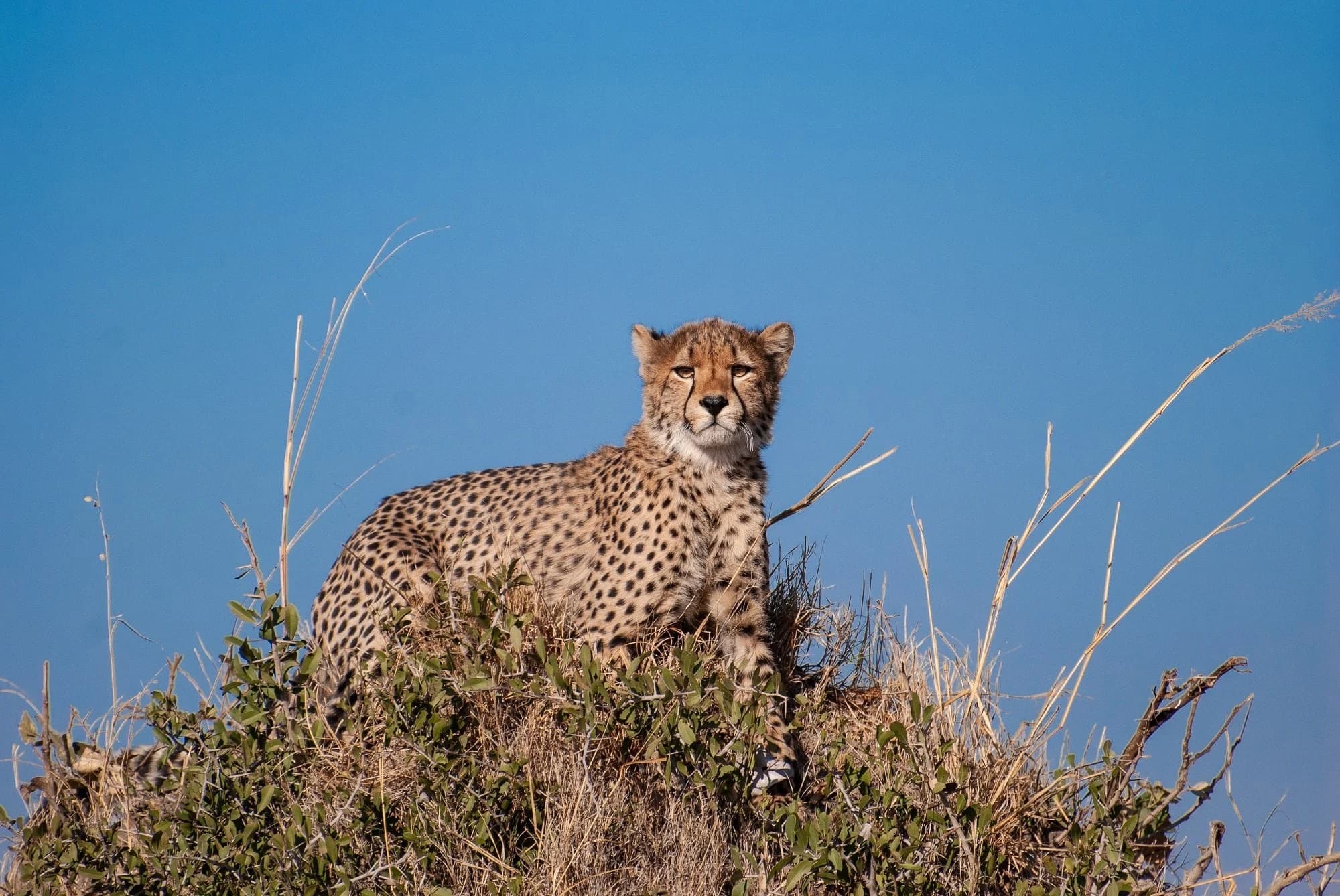
Amboseli is known for elephants, Laikipia for black and white rhino, and the Mara for resident lion, cheetah and leopard. None is promised; the herds usually come from July to October.
Safarilink schedules the inter-region links directly January–March, mid-June–October and late December in 2026, subject to operational rerouting. Herds usually reach the Mara from July. Other periods connect through Wilson; ask for the timetable covering your travel year.
Twelve to fourteen: three in Amboseli, four in Laikipia and five in the Mara, with two more on the coast or at the lakes. Under ten, flying days take too much of each stay. A Nairobi night comes extra.
You can, but Nairobi is the hub: about four to five hours to Amboseli, three to three and a half to Nanyuki and five to six and a half to the Mara, the last stretch rough. Flights replace those days.
With about a week, choose Mara & Amboseli Classic or Mara & Laikipia by Air. If the herds are the point, choose Into the Wild Mara. For Samburu, choose Laikipia & Samburu; for the lakes, Mara & the Lakes.
Government advice, checked October 2026: the US rates Kenya Level 2, Exercise increased caution (28 July 2026). The UK lists no travel exclusion for these three regions, but explicitly warns of continuing security operations in parts of Laikipia and Samburu. Specific camps, access roads and intermediate airstrips need a current check; a Laikipia flight may call at a Samburu strip. Read both governments’ full advice before deciding. This is not a safety verdict.
Malaria is present across Kenya below 2,500 m, including these regions and the coast. Ask about prevention well before you travel. This is general information, not medical advice — consult a travel clinic.
Before you choose your month: Best time to visit Kenya · What to pack for a safari · Kenya safety and travel advice
Last checked: October 2026.
When to go
Guidance, not a forecast. Exact examples use Safarilink’s dated 2026 PDF; current pages can differ, and low-season or operational Wilson routing may apply.
Aug / Main dry season
Safarilink schedules direct links from 16 June to 31 October 2026, subject to operational rerouting. Herds usually reach the Mara from July; reserve fees vary by season and must be confirmed.
Broad seasonal guidance — not a forecast, availability calendar or migration promise. Picking a month sets it in your plan.Related journeys
A journey made around you
Tell us when you can travel and which regions matter, and we’ll build Kenya in Two Weeks around you.