Start here
| Zanzibar | Seychelles | |
|---|---|---|
| Cost tier | Guesthouse to private island; mid-range is strong | Among the costliest in the Indian Ocean; more than Zanzibar for a comparable week |
| Beach | Long, white and flat; east coast drains at low tide | Granite coves; seaweed by season (see the beach section) |
| Culture | Stone Town, spice farms, Swahili food | Creole food, Victoria market, Vallée de Mai; nature-led |
| From a Kenya safari | About 1.5 h from Nairobi | Kenya Airways nonstop from Nairobi, five times a week |
| From a Tanzania safari | About 2 h from the Serengeti, no international leg | Via Dar es Salaam (Air Tanzania, three weekly) or Nairobi; allow a night en route |
| Entry paperwork | Tanzania visa plus mandatory insurance | No visa; online Travel Authorisation for every visitor; from Kenya, a yellow-fever certificate may be required (check before you travel) |
| Best months | June–October, December–February | April and October–November for calm water; May–October drier |
Both are Indian Ocean islands within a short flight of an East African safari. Zanzibar is a low coral island with an old trading port, a population of over a million and a coast that lives by the tide. The Seychelles is 115 granite and coral islands with fewer than 120,000 people, no old city to speak of, and beaches that have been photographed so often they can look like fiction until you stand on one. One is a culture with a shoreline. The other is a shoreline with a small, pleasant culture attached. Which you want is the whole decision.
The detail
Access from the safari. Zanzibar is a two-hour hop from the Serengeti airstrips and about an hour and a half from Nairobi, so the transfer day is short and the beach starts the same afternoon. The Seychelles is reached nonstop from Nairobi on Kenya Airways, five times a week, in roughly three to four hours. From Tanzania, Air Tanzania has flown Dar es Salaam to Mahé nonstop three times a week (Wednesday, Friday and Sunday, about 2 h 45) since spring 2026 (the planned 1 April start slipped), so a Tanzania safari routes Serengeti airstrip to Dar es Salaam on a domestic leg, then on to Mahé; the departure is in the early hours, so allow a night in Dar. From a Kenya safari the two are comparable in effort. From a Tanzania safari, Zanzibar is easier: fewer legs, and no fixed weekly flight days to plan the safari around. Inside the Seychelles you then add a ferry or a short flight to Praslin or La Digue if you want the famous beaches; Mahé's own are good but not the postcard.
What it costs. The Seychelles is one of the most expensive beach destinations in the Indian Ocean. Mid-range options exist (guesthouses and self-catering on Mahé and La Digue), but the resort tier starts higher than Zanzibar's, and food, taxis and boat trips are priced for a high-income island. Zanzibar's 109 properties on Nobu's property list sit across five tiers (Essential, Elevated, Signature, Private Collection and Expedition), with private islands at the top; we describe the tier rather than a rate, because prices depend on your dates. Add Zanzibar's $44 mandatory insurance (needed for your first Tanzanian port of entry; if you arrive via the mainland, the mainland policy applies instead; see the insurance guide) and a Tanzania visa; the Seychelles needs no visa, but every visitor needs the online Travel Authorisation with proof of onward travel and accommodation. Sources differ: travel-agency pages quote about EUR 10.90 and the airline quotes EUR 10, so the official Seychelles portal sets the final figure. Net: the Seychelles costs more for a comparable week, and the gap is widest at the top of the market.
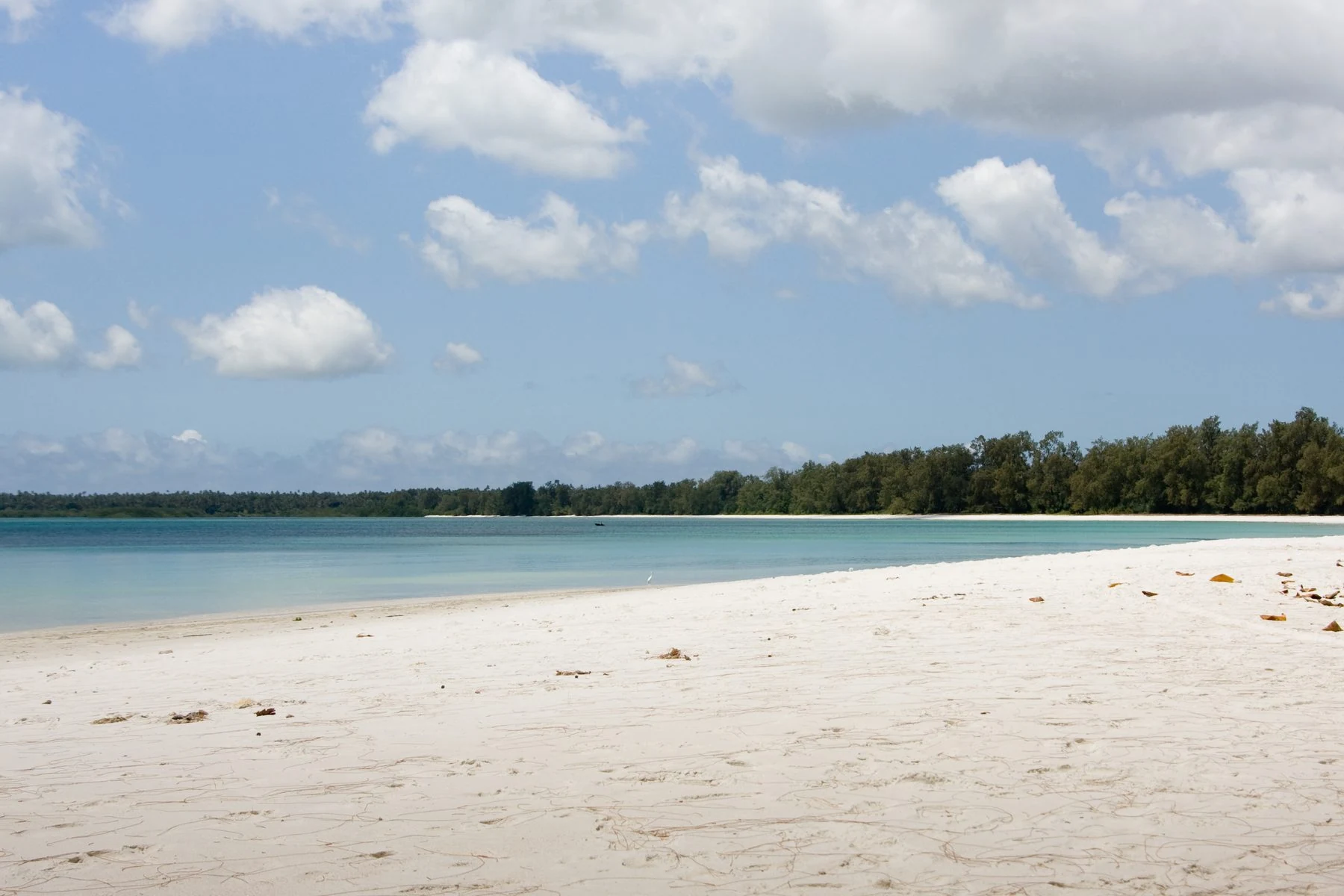
Beach and tide. This is the Seychelles' strongest card. The granite islands have small coves, and the sheltered ones are usually swimmable on most tides, backed by takamaka trees and boulders rather than resort lawns. Zanzibar's beaches are longer, whiter and flatter, and on the east coast the sea retreats twice a day — see how Zanzibar's tides work before choosing a coast. The Seychelles has its own quirk: seaweed. The south-east trade winds (May–October) push weed onto some south-facing beaches, and the north-west monsoon (roughly December–March) onto others, so the right beach moves with the season. It is a smaller inconvenience than Zanzibar's tide, but it is real.
Culture and things to do. Zanzibar wins by a distance. Stone Town is a UNESCO World Heritage port with a dhow harbour, carved doors, a spice market and the memorial at the old slave market. There are spice farms, Jozani Forest and its red colobus, Swahili food, and a Muslim rhythm to the day that is part of the place. Dress covering shoulders and knees in town, and ask before photographing people (see the Zanzibar dress code guide). The Seychelles offers Creole food, Victoria's small market, the Vallée de Mai's coco de mer palms, all charming, and all easily covered in a short visit. It is a nature-and-beach destination, not a cultural one.
Seasons. Zanzibar's dry windows are June–October and December–February; the rainy-season guide covers the wetter months. The Seychelles has no true dry season: the north-west monsoon (roughly December–March) is the wet, warm, calm-sea period, with December and January the heaviest; the south-east trades (May–October) are drier and breezier with choppier seas; April and October–November are the calm turnarounds and the best months for snorkelling and diving. For a June–October safari, both islands are in reasonable shape. Zanzibar is usually drier then, though the south-east kusi wind makes the east coast breezy (it is kitesurf season); the west and north coasts are more sheltered. The Seychelles is breezier then too.
Key facts
From Nairobi: Seychelles ~3–4 h nonstop; Zanzibar about 1.5 h. From the Serengeti: Zanzibar ~2 h; Seychelles via Dar es Salaam (Air Tanzania, 3 weekly) or Nairobi. Spend: Seychelles costs more for a comparable week; Zanzibar spans guesthouse to private island. Entry: Zanzibar visa plus $44 insurance; Seychelles Travel Authorisation, EUR 10 to 10.90 by source. Swimming: Seychelles beaches by season and wind (see section 2); Zanzibar by coast and tide. Culture: Zanzibar far stronger. Seasons: Zanzibar Jun–Oct & Dec–Feb; Seychelles best Apr and Oct–Nov, drier May–Oct, wettest Dec–Jan.
Planning it with Nobu
The right island follows the week, not the other way round. For culture, Zanzibar is the stronger island; for a beach-first week, the Seychelles earns its extra flight and spend. A travel designer will tell you plainly which one fits your dates. The Southern Safari and Spice journey is built around a Serengeti-to-coast finish; the journey page sets out the timing.
Is it right for you?
Zanzibar is right for you if: the beach follows a Tanzania safari and you want fewer flight legs; you want a town, a market and a history alongside the sand; you are a family of four or more watching the total; you are curious about the Swahili world. The Seychelles is right for you if: the beach is the destination; you are coming from a Kenya safari or straight from Europe; you want to sail between islands; the spend is not the constraint. Honeymoon: the Seychelles for scenery and seclusion, Zanzibar for atmosphere and a private island at a lower total. Family: Zanzibar's north coast or a resort with a pool is the easier choice with younger children.
Journeys to consider
- Southern Safari and Spice — the Tanzania safari with the island as its final chapter. → Explore the Southern Safari and Spice journey
- Shores of Zanzibar — the island alone, Stone Town to the east coast. → Explore the Shores of Zanzibar island journey
- The Great Migration Circuit — the Serengeti first, then two hours to the sea. → Explore The Great Migration Circuit with a beach finish