Start here
A photography safari for beginners can feel like a club for people with better kit. The photographs that made you want to go were probably taken by people with more equipment and more patience than you expect to have. You may have a new camera still in its box, or a phone you suspect is not enough, and a quiet worry that you will spend the trip fumbling with dials while a leopard walks out of frame.
That worry is reasonable, and it is solvable. A beginner's safari is not a smaller version of a professional's; it is a different design, with time to get things wrong, forgiving first days and a short list of settings you actually need to understand.
The detail
You need an interest, not a portfolio. What makes a safari picture is mostly where you are and when: the low side-light at the start and end of the day, an animal that stays put for a few minutes, a driver who turns the engine off. None of that depends on owning the most expensive body.
One zoom is enough. For most beginners a 100–400 mm is the better first lens: it is lighter to hold through a long drive. Choose a 200–600 mm only if birds are the point and you can manage the weight. If you are unsure, hire before you buy. A good bridge camera with a long zoom is a real alternative, and a phone is fine for landscapes, camp and portraits, though it will not reach a distant animal.
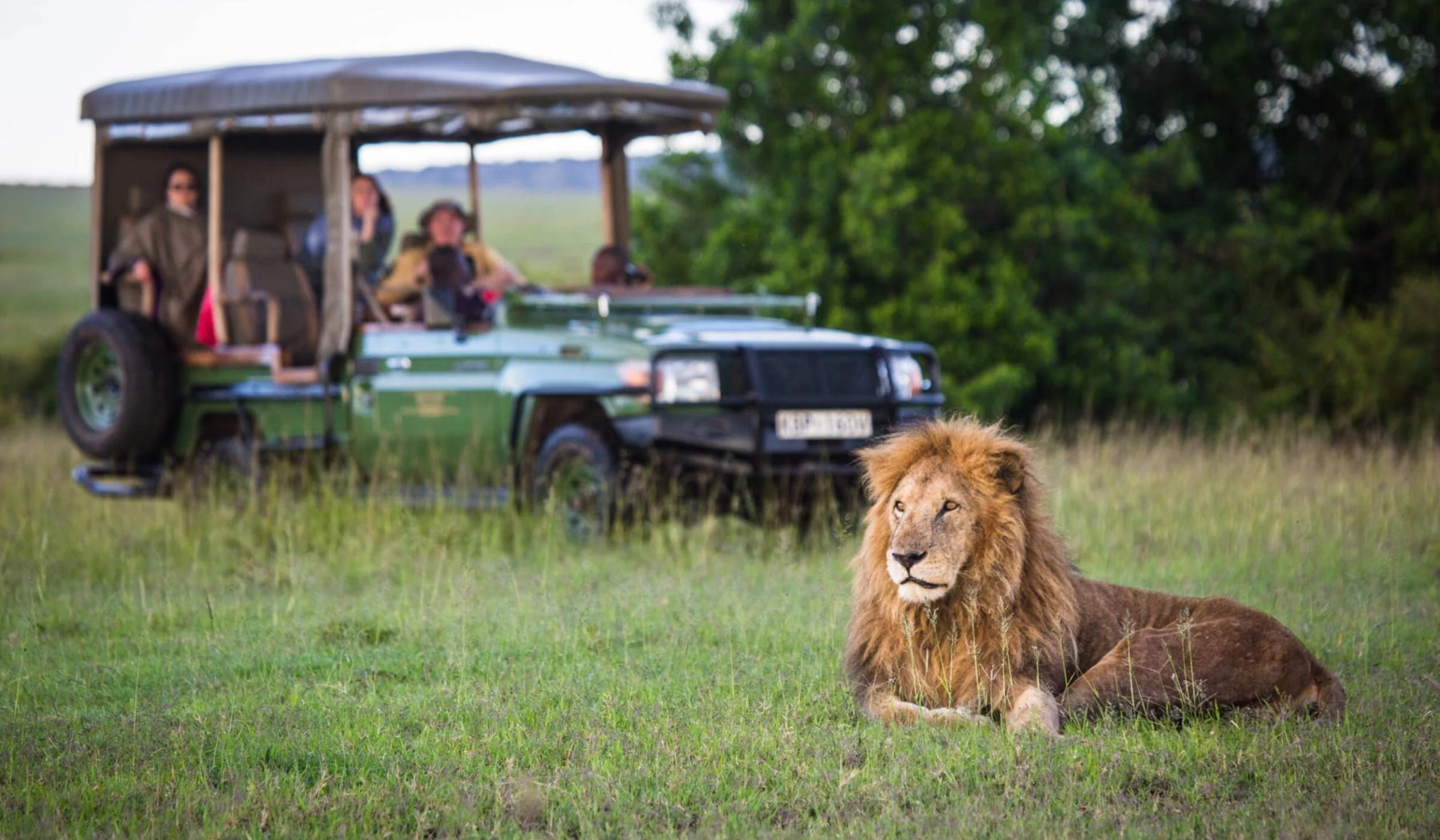
Support from a bean bag, not a tripod. A tripod's legs get in the way inside a safari vehicle. A bean bag rests on the window sill or roof hatch and steadies a long lens. Many vehicles carry them, so ask before you buy one.
Learn three things before you go. Practise at home on birds or a pet: a fast shutter speed for anything moving (1/1000 of a second is a common starting point), continuous autofocus so the camera keeps tracking, and one semi-automatic mode so you are choosing one setting, not four. It is far easier to learn these in a garden than from the passenger seat as lions walk by.
Expect the first days to produce more rejects than keepers. That is normal. Take the first morning somewhere forgiving, such as Nairobi National Park, where giraffe, rhino and buffalo are often seen against a city skyline, and let the settings become habit before the Maasai Mara.
Know the rules of the land you are on. In Kenya's private conservancies vehicles can usually leave the track to position for the light. In the Mara, leaving the track is limited and controlled: the Mara Triangle, the reserve's western sector, allows it only in signed zones, to approach big cats. If you add Laikipia, Ol Pejeta limits a rhino sighting to six vehicles with ten minutes each. The lesson is the same everywhere: get ready before the animal arrives, take a few good frames, then put the camera down and look. Vehicle positioning is covered on the photographic safari page.
Keep your kit light for small aircraft. Safarilink limits baggage on its light-aircraft flights to 15 kg including hand luggage, in soft bags, and your camera counts towards it; its coast and Zanzibar routes allow 20 kg. Weigh the camera bag with its lenses and batteries before you leave home. The flight from Nairobi's Wilson Airport to the Mara takes about 45 minutes.
Leave the drone at home and ask before photographing people. Don't bring one: Kenya needs civil-aviation approval and separate park or conservancy permission, and the rules on importing a drone are unclear. Ask before you photograph a person, especially in a community visit, and do not point a long lens at someone from the vehicle.
A five-line checklist.
- Lens: one 100–400 mm zoom, or a long-zoom bridge camera.
- Support: a bean bag for the window sill or roof hatch.
- Power and storage: spare batteries and extra cards.
- Settings: fast shutter speed, continuous autofocus, one semi-automatic mode.
- Bag weight: weighed at home, within 15 kg including hand luggage.
Key facts
Kit: one zoom reaching 400 mm or a good bridge camera; a bean bag; spare batteries and cards. Settings to learn first: fast shutter speed, continuous autofocus, one semi-automatic mode. Where to learn: Nairobi National Park for a gentle start; the Mara for big cats; Amboseli for elephants with Kilimanjaro behind them. Flight limit: 15 kg including hand luggage on Safarilink, in soft bags. Drones: do not bring one. Off-road driving: conservancies usually yes; in the Mara Triangle only in low-use zones and only to approach big cats.
Planning it with Nobu
Nobu asks what camera you have and what you hope to photograph before it shapes the days, then passes that on to the camps and guides so they know you are learning. The vehicles, hides and specialist guiding of a full photographic safari are on our photographic safari page; this page is for the traveller who is just starting. Plan your journey.
Is it right for you?
You would like the safari to be partly about the pictures, you are honest that you are learning, and you would rather improve on the Mara than on YouTube. It also works for a couple where one person photographs and the other watches; a quiet sighting suits both.
It is less right if you do not want to carry a camera at all. A standard first safari with a good guide will still give you phone pictures you will love, and our first-time safari page explains how to plan one. If you are an experienced photographer chasing specific behaviour, start with the photographic safari experience. If you are travelling as a couple and only one of you is keen, safari for couples covers how to share the days. For Zanzibar, see Zanzibar for photographers.
Journeys to consider
- In the company of giants — four days in Amboseli, where elephants walk in front of Kilimanjaro in clear weather. See the four-day Amboseli journey
- The Mara, unhurried — five days in the Maasai Mara, with time at each sighting to learn and practise. See the five-day private Mara journey