Start here
Last checked: October 2026.
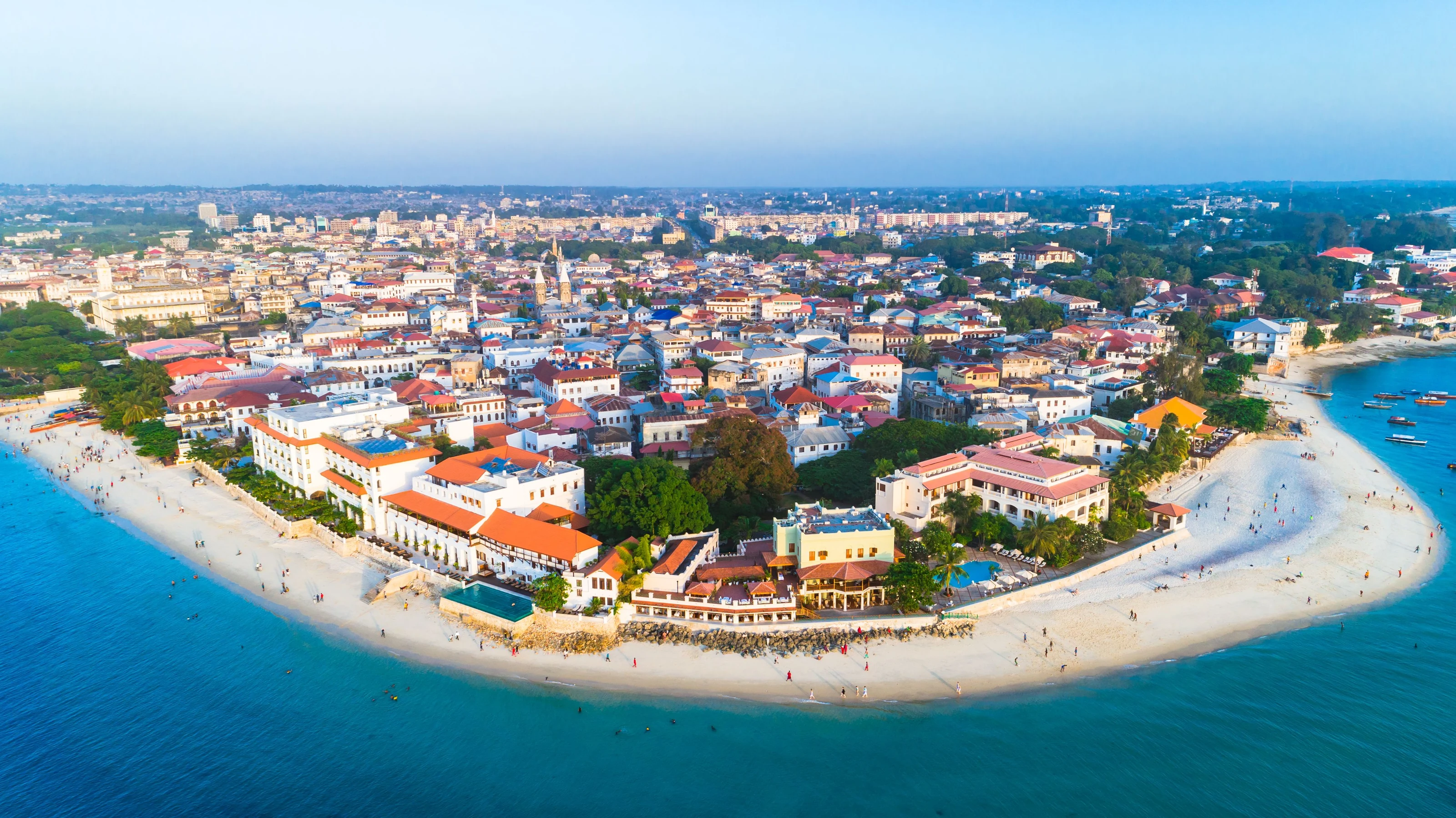
A Stone Town walking tour is worth doing with a guide, because the town is small and almost impossible to read on your own. The lanes fold back on themselves, the doors face inward, and the buildings that matter look like the ones that don't. A guide who grew up here turns the maze into a sequence: this courtyard, that balcony, the house where the trade was counted. After two hours with the right one, you can read a door, a balcony and a lane on your own.
The detail
What a knowledgeable guide adds. Anyone can name the House of Wonders. A good guide knows which family still lives behind a given door, why the Indian merchants' balconies lean out over the lane and the Arab houses don't, and where to buy a Zanzibar coffee at a street baraza. The best are licensed, local, often from Stone Town families, and will slow down when you do. Ask for one by name rather than taking the first offer outside the hotel; the difference between a licensed guide and a casual one is the whole experience.
The route, roughly. Most walks start at Forodhani Gardens on the seafront, take in the Old Fort and the House of Wonders from the outside (the interior has been closed since a balcony collapse in 2012; a large section collapsed during restoration in December 2020, what remains is seen from outside, and no reopening date has been found), then the Palace Museum and the old dhow harbour. From there the lane network leads inland past Jaws Corner, the Hamamni Persian baths and the Catholic St Joseph's Cathedral to the Darajani market — fish hall, spice stalls, the smell of it — and on to the Anglican cathedral and former slave market on Mkunazini. Good guides finish somewhere you will want to return to on your own: a rooftop, a coffee house, a door.
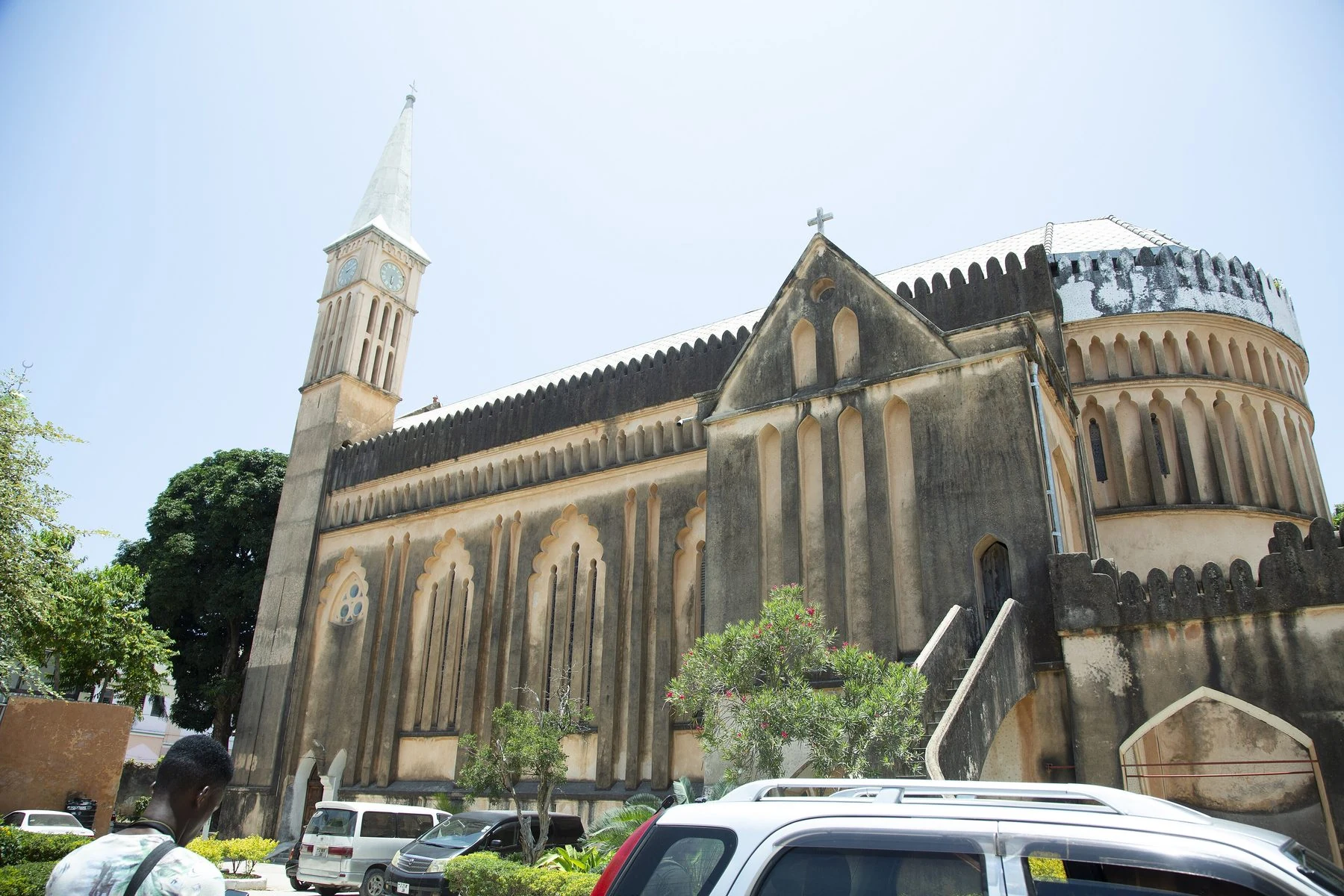
The slave market site, with respect. Christ Church cathedral was built on the ground of Zanzibar's great open slave market, which closed in 1873. Beside it, in the former St Monica's hostel, is the East Africa Slave Trade Exhibit and the holding chambers below. Entry is reported at about $5 per person, including a site guide, though some operators quote about $10, paid at the door. One fee covers the exhibit, chambers and cathedral grounds. This is the part of the walk that a guide's tone decides. The good ones give the facts, let the chambers do their work, do not perform grief and do not hurry you. The history itself — what the market was, who passed through it, what abolition looked like here — is told properly in → The slave market and the cathedral — visiting with respect.
Timing — early or late. Stone Town in the midday sun is a stone oven. Start at 8 a.m., when the market is at its busiest and the lanes are still in shadow, and finish by eleven; or start at 4 p.m. and end at Forodhani as the night market lights up and the dhows come in. Early light is the photographer's; late light is softer and golden on the coral-stone. Avoid Friday around midday prayers if your route passes the mosques, and during Ramadan expect quieter daytime streets and closed cafés — our → Visiting Zanzibar during Ramadan piece covers it.
Dress and manners. Stone Town is a working Muslim town, so cover shoulders and knees, wear shoes for cobbles and ask before photographing anyone, especially in the market. The detail is in → Zanzibar dress code and photography etiquette.
What it costs. Advertised prices for a two- to three-hour walk, as listed in October 2026:
| Format | Typical price | Basis | Source (Oct 2026) |
|---|---|---|---|
| Shared group walk | ~$25 | per person | Expedia listing |
| Private walk | ~$33.50–44.50 | per person | Expedia listing |
| Private small group | ~$45 | per group | Lokalee listing |
| Free walk, tip-based | You choose the tip; one guide's listing suggests €10 to $50 | per person | GuruWalk listings |
Verdict: a first visit with a lot to ask suits a private walk. A family or mixed-age group suits a shared walk, with the children's ages told to the guide in advance. A photographer suits a private walk at an early start, so you can stop when the light is right.
Some operators charge more for longer or specialist walks. Entrance fees are usually extra: about $5 (some operators quote about $10) for the slave-market exhibit, around $10 for the Freddie Mercury Museum, and $5–8 for the Persian baths — sources differ. Fees change.
What this page is not. The town's history, doors, spice-trade story and food each have their own cultural stories; the place itself — where to stay, how long — is on → Stone Town. This is the walk.
Key facts
What: 2–3 hour guided walk through the UNESCO old town. Start: Forodhani Gardens. Route: Old Fort, House of Wonders (exterior), Palace Museum, Jaws Corner, Darajani market, Anglican cathedral and former slave market. Best start: 8 a.m. or 4 p.m. Dress: shoulders and knees covered. Cost guide: ~$25 per person shared; ~$33–45 per person private; ~$45 per group for a small private walk. Entrance: slave-market exhibit ~$5 reported, some operators ~$10 (paid at the door); Freddie Mercury Museum ~$10; Persian baths $5–8 (sources differ).
Planning it with Nobu
The guide is the product. When a Stone Town walk is part of a journey we design, a travel designer can book a named, licensed guide and an early or late start, and suggest what fills the rest of the day, such as a spice farm or a slow lunch.
Is it right for you?
You want the town explained rather than merely seen, and you can manage two to three hours on your feet over uneven stone in heat. It suits curious travellers of any age, history-minded teenagers, and anyone with a single night in town between the airport and the beach. It is less right at midday, in the long rains of March–May when the lanes run with water, or for travellers who cannot manage steps and cobbles — there are smooth seafront stretches and a travel designer can shape a shorter, flatter version; see → Accessible Zanzibar.
Skip it if you are only in Zanzibar for the beach and would resent two hours in town, if steps and cobbles beyond the seafront are not manageable for you, or if you would rather visit the slave-market site separately and quietly, at your own pace, than as one stop on a longer walk.
Journeys to consider
- Shores of Zanzibar — a night or two in the old town, then the coast. → Shores of Zanzibar journey
- Southern Safari & Spice — Tanzania's parks, then Stone Town and the sea. → Southern Safari & Spice journey