Start here
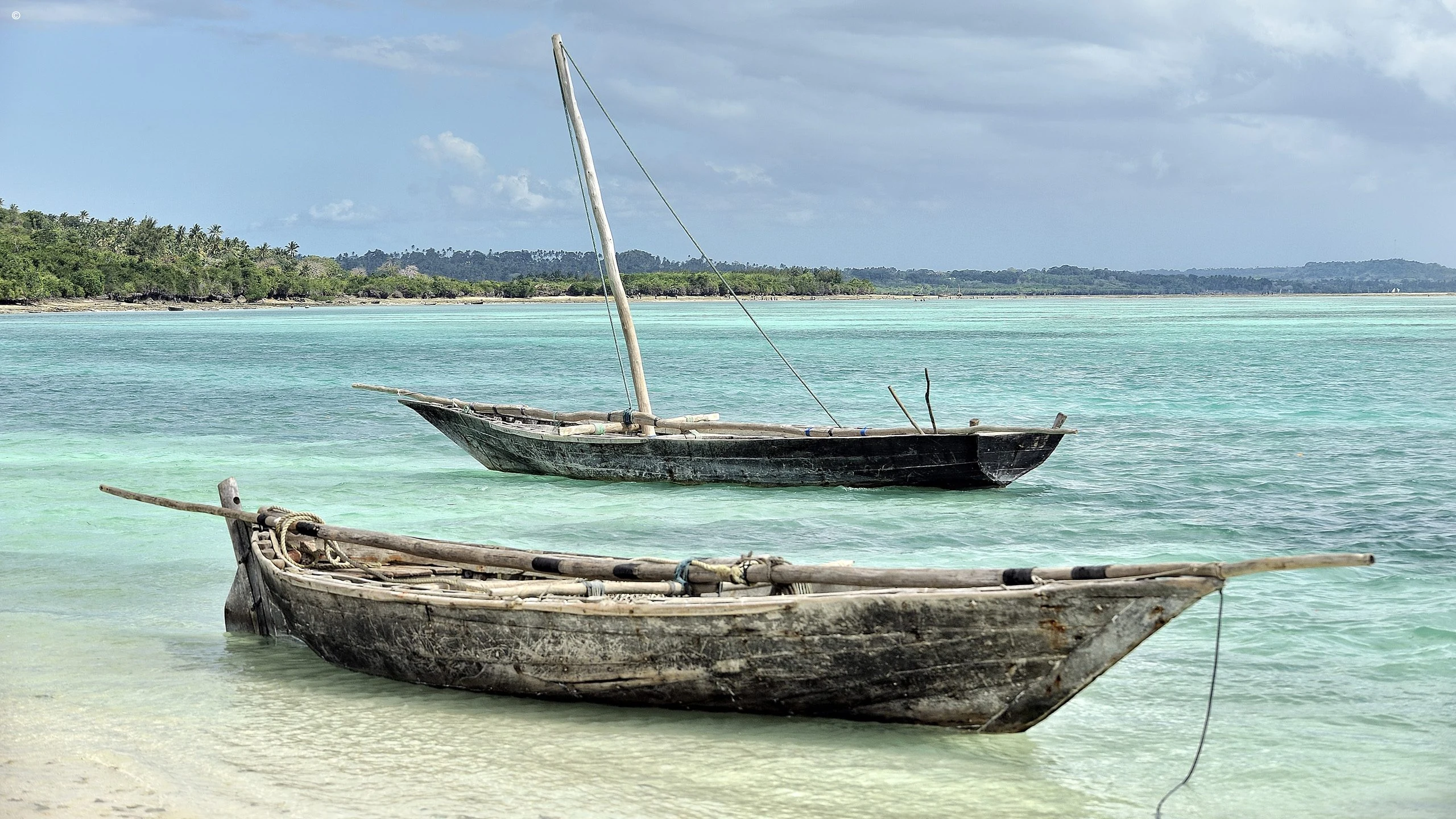
Dhow building in Zanzibar is easiest to understand at Nungwi in the early morning. Before the beach bars open, the boatyard can already be at work: on a busy morning, a half-finished hull propped on timber props, ribs exposed like a whale skeleton, and the smell of fresh-cut wood and oil. Further along, the finished boats lie at anchor, ready for the day's fishing or the sunset cruise.
Nungwi was a fishing and dhow-building village long before it became one of the island's busiest beach resorts, and the two economies now sit side by side. This page is about the craft and how to see it well. For time on the water, see dhow sailing and the Swahili coast.
The story
The monsoon made the boats. For centuries, Indian Ocean trade ran on the wind. Merchants from Arabia and western India sailed south with the north-east monsoon, the kaskazi, which blows roughly from December into February or March, and returned north when the wind swung round to the southerly kusi, from around June. Zanzibar, at the southern end of that loop, became a meeting point for cargoes of cloth, dates, spices, ivory and, for much of the nineteenth century, enslaved people. The dhow, a family of sailing vessels with a triangular lateen sail, was the truck of that trade. The Stone Town walk and the slave-market memorial carry that story in full.
From sewn hulls to nails. The oldest East African boats were sewn. The mtepe, once associated with Lamu, Mombasa and the waters around Zanzibar, had planks stitched together with coconut-fibre cord and wooden pegs, which made the hull flexible in surf. Sewn boats gave way to nailed construction, and the mtepe now survives mainly in photographs and museum models.
The boats on the sand. Names vary by village and builder, but three are worth knowing. The jahazi is the general Swahili word for a large wooden dhow, the cargo carrier and now the typical sunset-cruise boat. The ngalawa is a small dugout canoe, about five to six metres long, with an outrigger on each side and a single triangular sail; its design and name come from the Austronesian outrigger tradition carried to Madagascar. Between them sit planked fishing boats of various sizes, often called mashua or dau. The builders' own names for a boat may differ from the textbook.
How a hull goes together. Early dhows were built shell first: the outer planks were shaped and fastened into a hull before the internal frames were fitted, the reverse of most European shipbuilding. Builders today combine planking and framing, set out by eye without plans, using saws, chisels, hand drills and adzes; accounts of the exact tool kit vary. Seams are caulked and the hull is oiled to keep out water and shipworm.
Where the big boats were built. Near Stone Town, the yard at Maruhubi sits beside the mangroves that supplied its timber; by the late 1990s the big ocean-going builds there had all but stopped.
A craft under pressure. The shortage that the scholarly account of the trade names most clearly is timber: imported hardwoods such as mahogany, teak and mango have become scarce, and the traditional ocean-going dhow is judged to be at risk. The yards have not disappeared. Today's visitors are more likely to see repairs or small fishing boats than a large cargo dhow under construction.
Key facts
Where: the beach boatyard at Nungwi, northern tip of Unguja. Method: hand tools; hulls shaped by eye; early boats built shell first. Boat types: jahazi (large dhow), mashua and dau (planked fishing boats), ngalawa (double-outrigger canoe, about 5–6 m). History: monsoon trade with Arabia and India; earlier sewn mtepe now survive only as models and replicas. Best time to watch: morning, on working days. Etiquette: photograph only with permission; keep out of the work area unless invited. Worth it: as a morning add-on to a Nungwi stay; not worth a special trip from the south coast.
How to experience it
What and where. The boatyard is on the beach at Nungwi, within walking distance of most of the village's hotels. There is no visitor centre and no ticket; you are looking at someone's workplace. If you are choosing a base, Nungwi or Kendwa sets out the difference between the two northern beaches.
When. Mornings are usually busiest and coolest. Often what you see is repair work or a small fishing boat rather than a large ocean-going jahazi. Work depends on orders, so there may be nothing under construction during your stay.
With whom. A local guide from the village makes the introduction easier, because builders are more at ease explaining their work to someone they know, and you learn the boat names in Swahili. Agree the guide's fee in advance. If a builder spends time showing you around, a tip is appropriate.
Hands-on courses. World Unite lists a volunteer programme in Nungwi where participants help build a traditional sailing dhow. Nobu does not run or endorse it; check its dates and costs with the provider.
Etiquette. Get permission before photographing anyone, Naweza kupiga picha? ("may I take a photo?"), and accept a no. Do not climb on hulls, sit on timber or pick up tools. Dress modestly in the village, away from the beach-bar strip; our dress and photography guide has the detail. Keep children close: there are sharp tools, props and heavy timber.
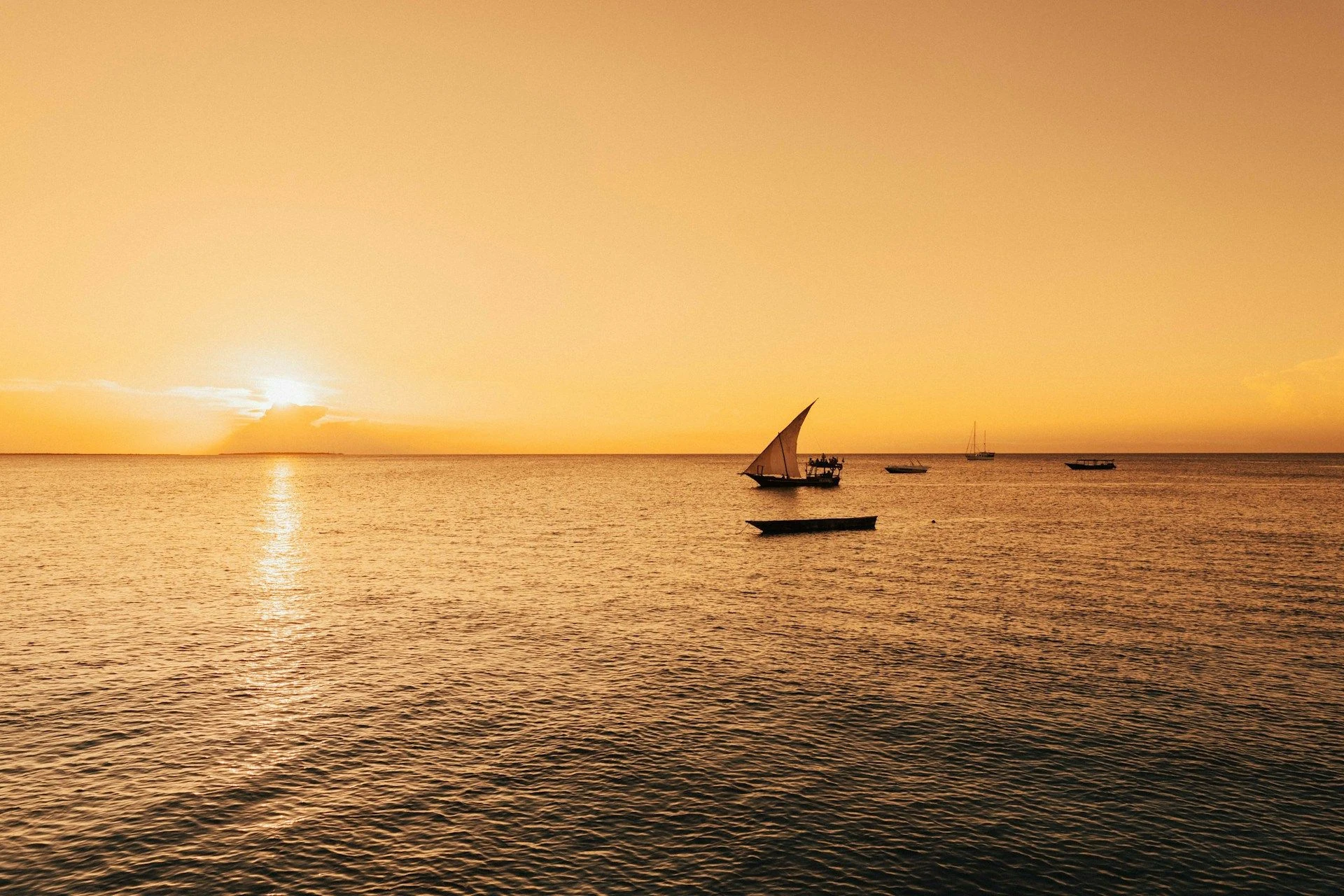
Combine it with. For a sunset sail, see dhow sailing and the Swahili coast. The deep-sea fishing boats also leave from the Nungwi shore, and a walk along the point is a short add-on.
Why it matters to how we travel
Nobu's journeys are built around the stories of the places they pass through, and on the Swahili coast that story is carried by boats. A morning watching a hull take shape explains the monsoon, the spice trade and Stone Town's mixed heritage better than any museum panel. A travel designer can arrange a village guide for your dates.
Journeys to consider
- Stone Town, the east coast and Mnemba — ten nights — the long island journey, with time in the north. → See the ten-night island journey
- Shores of Zanzibar — the shorter island journey; Nungwi works as a beach base. → See the Shores of Zanzibar journey
- Zanzibar and Pemba island-hop — two islands, both shaped by the dhow trade. → See the Zanzibar and Pemba journey