
Start here
Last checked: October 2026.
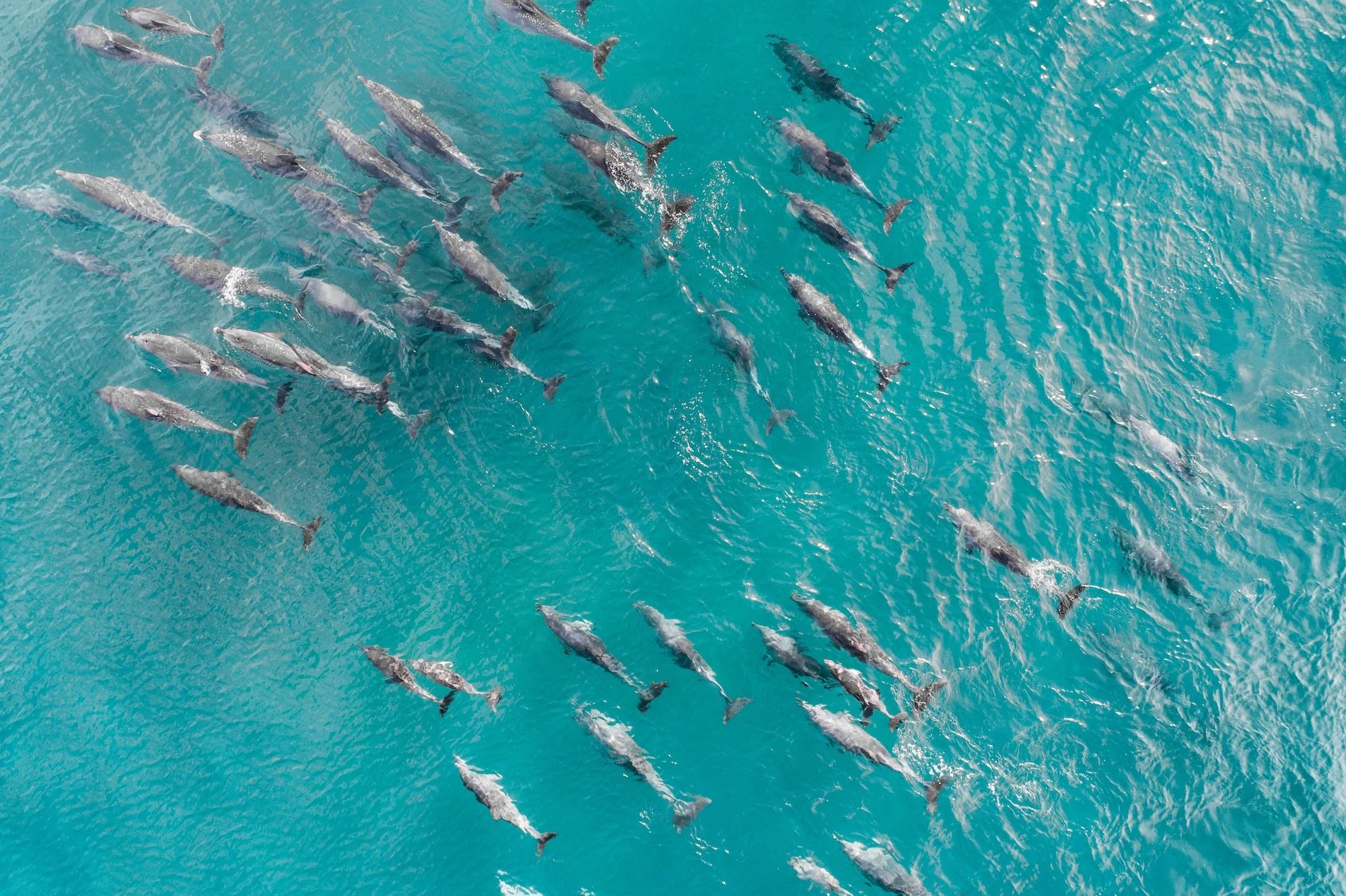
A Kizimkazi dolphin tour has a version worth having. On a calm morning the sea off the village can be flat and silver by seven, the skipper cuts the engine, and a pod of bottlenose can surface fifty metres off the bow, breathing, unhurried, deciding for themselves whether to come closer. Then there is the other version, which is what most people get: a line of boats racing a pod across the bay, swimmers thrown in ahead of the animals, and dolphins diving to get away. The difference is the operator, the hour and your willingness to accept a distant sighting as the right one.
The detail
Practical. The essentials, before the ethics:
| Distance | About 1 h 15 by road from Stone Town; about 40 minutes from Paje or Jambiani — staying in the south makes the early start easy on a holiday based there |
|---|---|
| Best hour | 06:00–08:00, before the crowd; the sea is often calmer in the early morning, though it depends on the day |
| Cost | Private trips about US$76–140 per adult in resale listings, depending on length and pickup (operators not yet checked); shared boats cost less, so confirm what is included |
| Fees | Menai Bay conservation fee US$10 adult / US$5 child (ages 5–15; under-5s free) |
| Sightings | Not guaranteed. The dolphins are resident in the bay, but where they are on a given morning is up to them. |
| Good booking | Pickup time, boat size, group size, and whether the fee is included |
Bring reef-safe sunscreen only. The dolphins are resident year-round, so the month matters less than the hour and the operator. When you book, ask how many boats will be near the pod, what time the boat leaves, and whether swimmers are put in.
The problem, plainly. Kizimkazi has gone from a fishing village to a dolphin-watching hub that draws more than 20,000 visitors a year, and the model that grew up around it is "swim with dolphins": find the pod, get ahead of it, drop the guests in. One operator guide reports more than thirty boats on a single pod. A 2013 field study found boat captains did not fully know the interaction guidelines they were supposed to follow, and that dolphin groups had shifted where they spent their time under boat pressure. The humpbacks have fared worst. A study published in 2019 gave a 2015 estimate of just 19 non-calf Indian Ocean humpback dolphins left in Menai Bay, a 63% fall since 2002, and found the local population meets the IUCN criteria for Critically Endangered. The main cause is entanglement in fishing gillnets; boat tourism adds pressure on animals that cannot afford it.
The rules that exist. Zanzibar has a watersports standard covering dolphin boats, as summarised by Duma Explorer in 2024; the primary document has not been seen. The standard sets limits on boats and distance; ask your operator to show you them. No touching and no feeding is standard guidance everywhere. On a busy morning the limits are often ignored (one operator guide reports 30+ boats).
What a responsible operator does. Leaves early — six to seven, before the crowd. Runs one boat with a small group and a skipper who knows the limits and will say no to guests who ask for more. Approaches from the side, slows, switches off, and waits; if the dolphins come to the boat, that is their choice. Does not put swimmers in ahead of a pod. If swimming is on the table at all, it is only when the animals are already settled around a stationary boat, from the side, without fins slapping and without chasing — and the skipper calls the end of it, not the guest. Leaves the moment the animals move off or another cluster of boats arrives.
When we say don't. A Kizimkazi trip is the wrong choice if you want a guaranteed swim with dolphins — nobody responsible can offer one. If you are travelling in high season and can only go mid-morning, when the bay is at its busiest, something else is the better choice. If the only boats available on your date sell on "we'll get you in the water", they are not the ones to book. And if you are uneasy after reading this, skipping it is a fair conclusion.
The alternatives. Dolphins are sometimes seen from the Menai Bay dhow day out of Fumba, where the boats are not there for them and simply pass by. Spinner and bottlenose dolphins are sometimes sighted from the snorkelling boats at Mnemba Atoll in the north-east, usually on the way out — the reef is the point of that trip and the dolphins are a bonus. Both give you a sighting on the animals' terms. Neither is a swim.
Key facts
What: a 2–3 hour early-morning boat trip to watch resident bottlenose and Indian Ocean humpback dolphins. Where: Kizimkazi, southern Zanzibar, inside the Menai Bay Conservation Area. Rules: a code of conduct sets limits on boats and distance; no touching or feeding. Cost: private about US$76–140 per adult with pickup; shared boats cost less; conservation fee US$10 adult / US$5 child (ages 5–15; under-5s free). Best time: 06:00–08:00. Who it suits: early risers and children old enough to sit still in a boat. Ethics: watch from the boat; humpbacks here are Critically Endangered in Menai Bay. Alternatives: dolphins seen incidentally from Mnemba or Menai Bay boats.
Planning it with Nobu
A travel designer looks for a boat that meets the code, in an early slot, and can tell you when the honest answer is to go snorkelling at Mnemba instead. We design journeys around the traveller, but not at the animals' expense. If you want the dolphins to be part of your story, we would rather they were a sighting you earned than a swim you were sold.
Is it right for you?
You are staying in the south of the island, you are happy to be on the water by seven, and you would rather watch a wild animal choose to approach than be put in front of it. Right for photographers and for children old enough to sit still in a boat. Not right if a swim is non-negotiable, if you can only go mid-morning in peak season, or if you want certainty — the dolphins are resident, not reliable.
Journeys to consider
- Shores of Zanzibar — the island's coasts, including the south. → See Shores of Zanzibar
- Southern Safari & Spice — Tanzania's southern parks, then the island. → See Southern Safari & Spice