Start here
Last checked: October 2026.
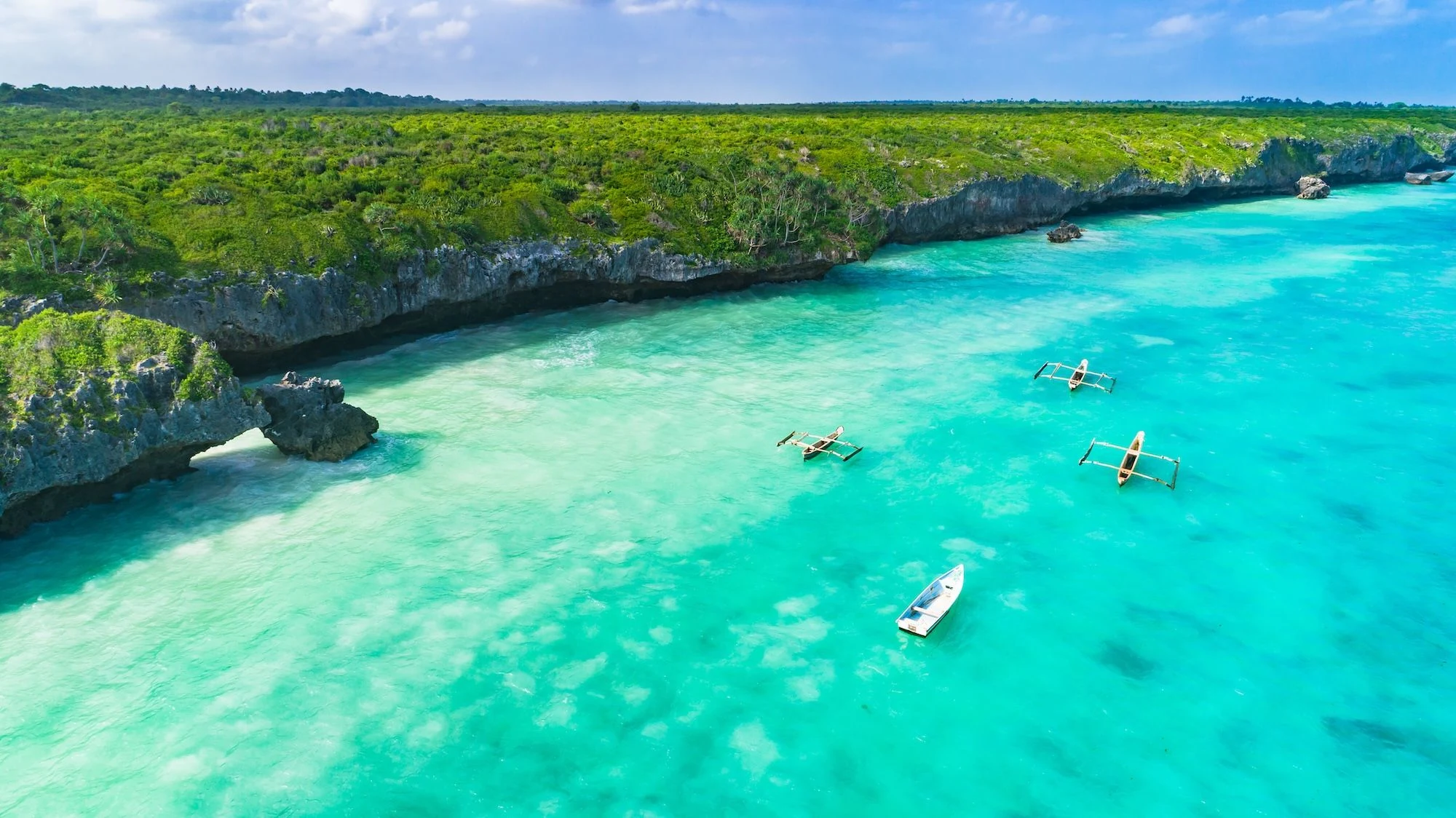
From a boat over Mnemba the reef looks endless: blue water, then a sudden brightness of sand and coral, then shoals of fish turning together like a single thought. Zanzibar coral reef conservation is a younger, more human story than that. Most of the island's protected reefs date from the 1990s, when dynamite fishing and coral-breaking nets were wrecking them, and they survive today because fishers, rangers, scientists and visitor fees keep them going.
This page explains who protects the reefs and why. For where to snorkel, see the best snorkelling in Zanzibar; for the trips themselves, snorkelling at Mnemba and a day on Chumbe Island.
The story
Menai Bay: the villages' reef. In August 1997 the Menai Bay Conservation Area was set up across about 470 square kilometres of the south-west coast, Zanzibar's largest marine protected area. The World Wide Fund for Nature (WWF) started the project; it is managed jointly by the fisheries authorities and conservation committees in 19 villages. The target was destructive fishing: dynamite, beach seines and kigumi, a method in which coral is deliberately broken to drive fish into nets. Menai Bay is also where the Kizimkazi dolphin trips run, and the area is reported to have a code for boats near dolphins. Our responsible dolphin guide explains it.
Chumbe: the reef that pays for itself. In 1994 Chumbe Island's reef sanctuary and forest were legally gazetted, making it the first marine protected area in Tanzania. A not-for-profit company, Chumbe Island Coral Park, took on the cost of setting it up and running it, funded by a small eco-lodge of seven bungalows that opened in 1998. The park describes itself as the first privately managed marine protected area in the world, and later the first to pay its own way. Its rangers are former fishers, recruited and trained to guard the reef they once fished. The United Nations Environment Programme added the project to its Global 500 Roll of Honour in 2000.
Mnemba: the busy one. The Mnemba Island Marine Conservation Area surrounds the private island off the north-east coast, where an oval reef runs about seven by four kilometres. It is managed collaboratively by government, local communities and conservation organisations. Green turtles nest on the island between February and September, and nesting has been monitored since 1996. Mnemba is also one of the island's busiest snorkelling reefs, and its visitor fee is the highest.
Restoring the house reef. Coral cover on Mnemba's house reef is reported to have fallen by nearly 90% over two decades. Restoration with coral nurseries and artificial reef began in 2021. In 2022 the area was given stronger protection, with a visitor cap of 80 people and a higher fee, and artificial reefs were installed in 2025. Figures for how much of the reef has been restored are not given here, as they rest on press reports alone.
Pemba Channel: deep water, local faith. Off Pemba, the Misali Island conservation area began in 1998 and was later folded into the legally protected Pemba Channel Conservation Area. Misali's name comes from the Swahili for "prayer rug", and conservation there has worked with Islamic environmental teaching: religious leaders have used verses of the Qur'an to encourage reef protection. Its reefs hold more than 300 fish species and are a nesting site for green and hawksbill turtles.
Heat: the threat no ranger can patrol. Protection stops spearguns and nets, not warm water. When seas stay too hot, corals expel the algae that feed them and turn white: bleaching. In the 1997–98 event, much of the Indian Ocean bleached, and coral cover losses of up to 90% were reported in places including Kenya and Tanzania. Mass bleaching hit the region again in 1998, 2007 and 2016, and a fourth global event began in February 2023. Reefs in Zanzibar are in comparatively good condition except near towns and busy sites, according to a University of Dar es Salaam status report. Reefs that are not also battling pollution, broken coral and overfishing have the best chance of recovering, which is exactly what the protected areas are for.
Key facts
| Main protected reefs | Menai Bay, Mnemba, Chumbe, Changuu-Bawe, Pemba Channel |
|---|---|
| Largest | Menai Bay Conservation Area, about 470 km², set up August 1997 |
| First in Tanzania | Chumbe, gazetted 1994; privately managed, eco-lodge opened 1998 |
| Visitor fee | From 1 Sept 2025: Mnemba US$25 adult / US$10 child (5–15); other areas US$10 / US$5, reported |
| Turtles | Green turtles nest on Mnemba, February–September |
| Biggest threat | Marine heatwaves and bleaching, plus damage from boats, anchors and feet |
| What visitors can do | Mineral, non-nano sunscreen or a rash vest; no touching or standing on coral; a careful operator |
How to experience it
What and where. Every snorkel or dive in a conservation area is also a visit to a protected place. Chumbe is the clearest example of a reef managed for conservation first; Mnemba and Menai Bay are busier, so your behaviour counts for more.
The fee. Since 1 September 2025, non-East African visitors pay US$25 per adult and US$10 per child aged 5 to 15 at Mnemba, and US$10 and US$5 in the other conservation areas, including Menai Bay, Changuu-Bawe and the Pemba Channel. Children under five do not pay. Find out whether your boat operator includes it. On Misali, fee income has supported ranger patrols and village projects such as mangrove restoration. A published breakdown of how the newer island-wide fee is spent is hard to find; asking your operator is a fair question.
| Reef | Managed by | Visitor fee (non-East African adults) | Busy or quiet | Best for |
|---|---|---|---|---|
| Menai Bay | Fisheries authorities with 19 villages | US$10 (child US$5) | Check with your operator | Dolphin trips and a village-run reef |
| Mnemba | Government, local communities and conservation groups | US$25 (child US$10) | Among the busiest | Snorkellers who want a well-run reef |
| Chumbe | Chumbe Island Coral Park, a not-for-profit company | Confirm with the operator | Quiet by design; a small eco-lodge | Visitors who want a reef managed for conservation first |
| Pemba Channel (including Misali) | Government and village committees | US$10 (child US$5) | – | Divers and deep reef walls |
Choosing an operator. Ask how the boat moors over the reef: a fixed mooring buoy does far less harm than an anchor dropped on coral. Look for how many people go in each group, a guide's briefing before you enter the water, and distance kept from turtles and dolphins.
In the water. Float, don't stand. A single footstep can break coral that took years to grow, and the east coast's shallow lagoon makes it tempting. Keep fins up and away from the reef, and don't touch, chase or feed anything. Shells, coral and turtle-shell items sold on beaches came from somewhere; leave them.
Sunscreen. The US National Oceanic and Atmospheric Administration (NOAA) lists oxybenzone, octinoxate and several other chemical filters as harmful to corals, and includes nano-sized zinc oxide and titanium dioxide too. Mineral sunscreen without nano particles is the better choice; a long-sleeved rash vest is better still, because it washes nothing into the sea.
Why it matters to how we travel
A reef day is one of the great pleasures of Zanzibar, and one of the easiest to do badly. We would rather plan one excellent morning with a careful operator than three crowded ones.
This story is for you if you snorkel or dive and want your reef days to do good rather than harm, you are choosing between Mnemba and the Pemba Channel's deep walls, or you are a family wanting a first snorkel that leaves the reef as it was. It may not be if you want an empty reef: Mnemba is among the busiest snorkelling spots, so go early or choose a quieter one. If you would rather stay dry, a dhow sail or the Jozani Forest walk shows the island's wild side without entering the water.
Journeys to consider
- Shores of Zanzibar — the island journey, with a reef morning placed where the water and the operator suit you. → See Shores of Zanzibar
- Zanzibar and Pemba — Zanzibar first, then the Pemba Channel's deep reefs and quiet lodges. → See Zanzibar and Pemba
- Ten nights in Zanzibar — Stone Town, the east coast and Mnemba at a slower pace. → See the ten-night journey