
Experience
Walking safaris
A walking safari explores the bush on foot with an expert armed guide, trading the long lens for tracks, detail and the small wonders a vehicle drowns out. In Kenya they run mainly in the private conservancies, where off-vehicle walking is permitted, and are best in the dry season.
Intro
Step out of the vehicle and the Mara stops being a view and becomes a place you're in — tracks in the dust, an alarm call, the weight of the silence. A walking safari is the bush at its most intimate.
The point is not to cover distance. It is to learn how much the vehicle has been editing out: the pressure of a paw print, the crushed grass where buffalo passed, the smell of wild basil, the way a guide pauses because one bird has changed its call. Walking makes the safari smaller in scale and larger in meaning.
The detail
Led by armed, expert guides — usually in the conservancies bordering the big reserves, where walking is allowed — walks last a few hours, morning or late afternoon, and move at the pace of curiosity. You read tracks, learn the plants the Maasai have used for generations, and meet the plains at eye level.
In East Africa, walking is usually strongest on private conservancy land and in designated wilderness areas, not inside the busiest national reserves. That matters because the permissions, guide standards and wildlife distances are what make the experience safe. A good walk begins with a briefing: how to move, where to stand, how to listen, and what to do if the guide asks for stillness.
Most walks are two to three hours and pair beautifully with vehicle-based game drives. You might walk after sunrise, rest through the heat, then drive again in the late afternoon. The walk gives context; the drive gives range. Together they make the landscape feel less like a checklist and more like a living system.
Walking also gives guides room to teach. You begin to understand wind direction, animal comfort zones, why certain trees matter, what old dung can reveal, and how much information sits in the ground. Even a short walk can make every later game drive richer.
Key facts
Where: Kenya conservancies (Mara, Laikipia, Samburu). Best: dry season (Jun–Oct), shorter grass. Duration: 2–3 hrs, often paired with game drives. Suits: reasonably mobile travellers. Special: intimacy and detail no vehicle gives. Guide model: armed, licensed guides in permitted areas.
Why Nobu for this
Walking is one of our expedition experiences — woven into journeys with the guides and conservancy access that make it safe and remarkable. We choose walking locations carefully, because a good walking safari is never just "leave the car and wander." It depends on permission, guide quality, wildlife density, season and terrain.
We also design the walk at the right intensity. Some travellers want a gentle interpretive walk near camp; others want a longer wilderness morning or multi-day walking chapter. The difference should be deliberate.
Suitability — "right for you if…"
You want the bush up close, you're comfortable on your feet for a couple of hours, and you'd rather understand it than just photograph it. We can design gentler or → accessible alternatives.
It suits travellers who are curious, patient and happy with a safari that sometimes stops for tracks instead of racing toward a sighting. It is less right if your priority is covering large distances, seeing as many headline animals as possible, or avoiding uneven ground altogether.
Related Nobu journeys
- On Foot and in the Saddle — walking as a central rhythm. → Explore
- Into the Wild Mara — walking woven into the days. → Explore
- Conservancy and Rhino — private land, walking and conservation access. → Explore
Common questions
- Are walking safaris safe?
- Yes, with armed licensed guides, small groups and full briefings, in permitted areas.
- Can you walk inside the Maasai Mara reserve?
- Walking is generally restricted in the reserve itself; it takes place in the surrounding conservancies.
- Do I need to be very fit?
- No — walks are a gentle couple of hours, though basic mobility helps.
- What's the difference between a walking safari and a game drive?
- A game drive covers ground and finds big animals from a vehicle; a walking safari trades distance for detail and immersion on foot. Most journeys pair the two — drives for the big sightings, walks for the close ones (best in the Mara and Laikipia conservancies).
- What will I see on foot?
- Tracks, plants, insects, bones, birds, smaller mammals and sometimes larger wildlife at a respectful distance; the emphasis is understanding, not chasing.
- When is walking best?
- Dry months usually give shorter grass and firmer footing, while morning and late afternoon keep the temperature gentler.
- Can children join walking safaris?
- Sometimes, depending on age, lodge rules and terrain; we confirm this before building it into a family journey.
More ways to travel
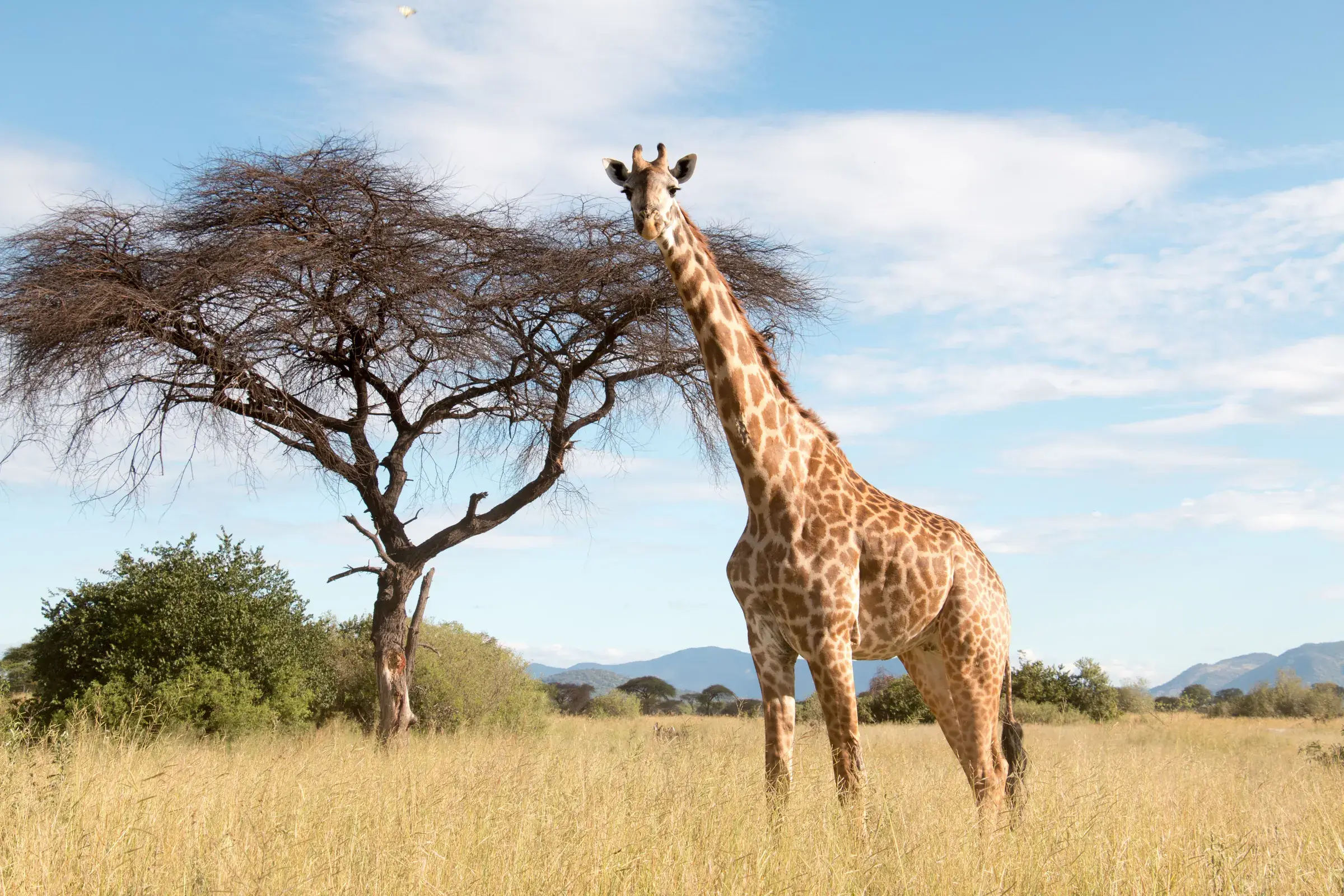 Self-drive safari KenyaA self-drive safari in Kenya: your own 4x4, a planned route and 24-hour support. The freedom of the road with a safety net. Your Africa, beautifully told.
 Self-drive safaris in AfricaSelf-drive safaris across East Africa, including Tanzania — prepared 4x4s, planned routes and local backup. Freedom-led exploration, beautifully told.
- Birding safarisEast Africa is one of the world's great birding regions — over 1,000 species across Kenya and Uganda, from the shoebill to Albertine Rift endemics. Your Africa, beautifully told.